Practice identifying parts of the cell membrane, explaining the fluid mosaic model, and predicting how substances move across selectively permeable membranes.
Read each problem carefully. Use complete sentences when explaining your reasoning. Show your work in the space provided.
How membrane structure controls what enters and leaves cells
Biology - Grade 9-12
- 1
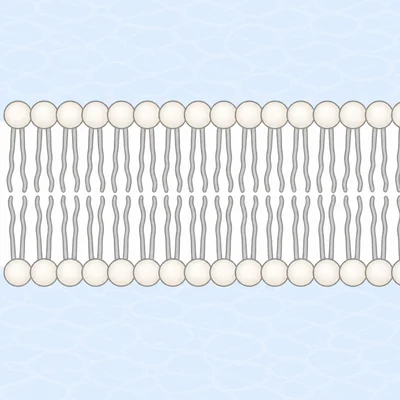
Describe the basic structure of the phospholipid bilayer. Include the terms hydrophilic and hydrophobic in your answer.
- 2
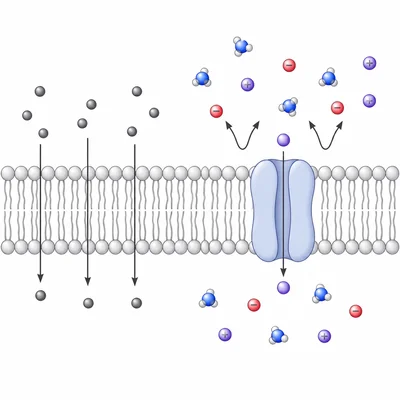
Explain why the cell membrane is called selectively permeable.
- 3
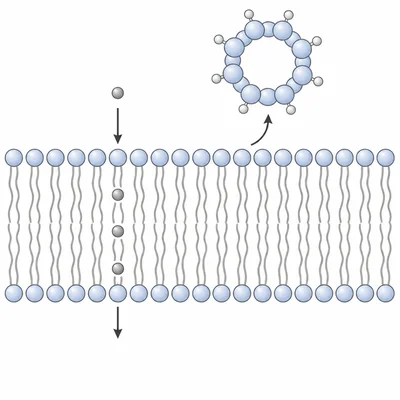
A small nonpolar oxygen molecule and a large polar glucose molecule are both outside a cell. Which one is more likely to diffuse directly through the phospholipid bilayer, and why?
- 4
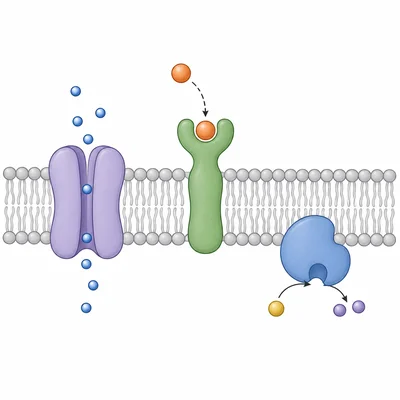
Identify two functions of membrane proteins.
- 5
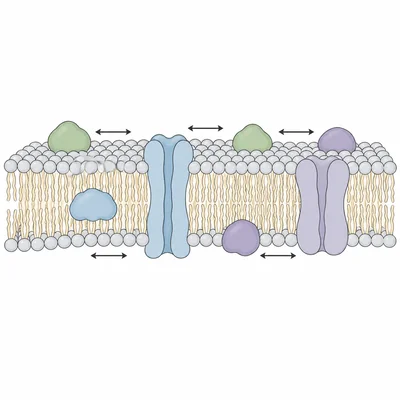
In the fluid mosaic model, what does the word fluid mean, and what does the word mosaic mean?
- 6
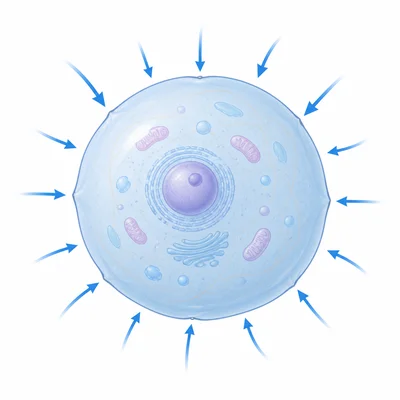
A cell is placed in a hypotonic solution. Predict what will happen to the movement of water and explain the effect on the cell.
- 7
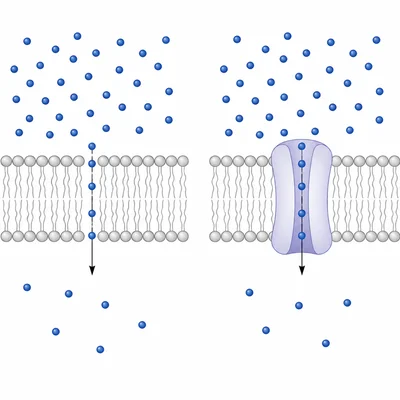
Compare diffusion and facilitated diffusion. State one similarity and one difference.
- 8
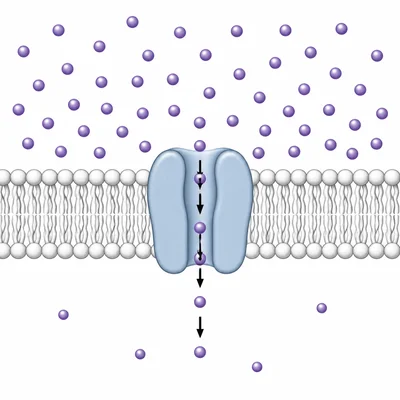
A diagram shows more sodium ions outside a cell than inside. Sodium ions move into the cell through a channel protein without ATP. What type of transport is occurring?
- 9
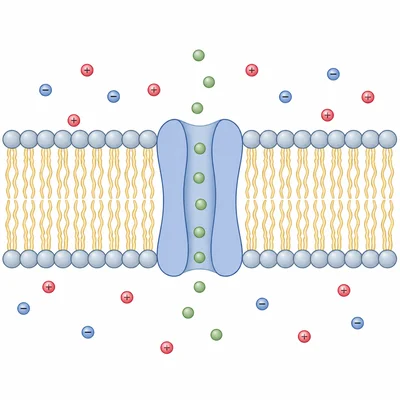
Explain why ions such as Na+ and Cl- usually need protein channels to cross the cell membrane.
- 10
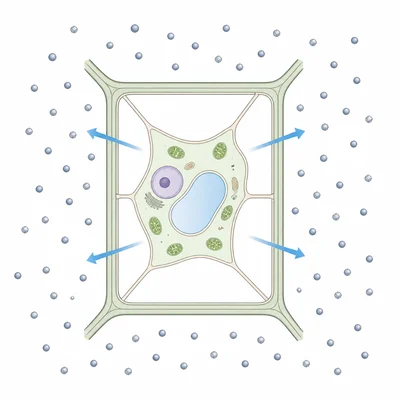
A plant cell is placed in a hypertonic salt solution. Predict what happens to the cell membrane and central vacuole.
- 11
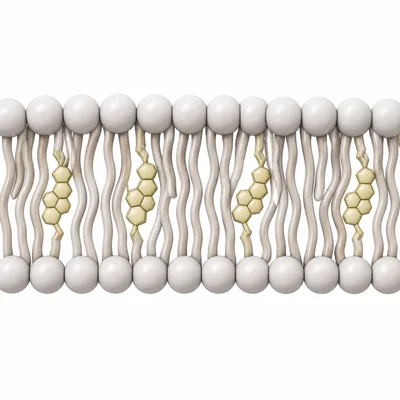
What role does cholesterol play in animal cell membranes?
- 12
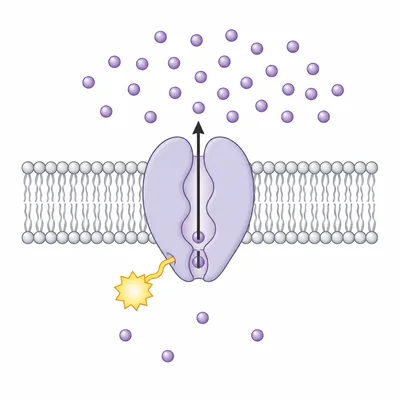
A cell uses ATP to move calcium ions from an area of low concentration to an area of high concentration. What type of transport is this, and why?
- 13
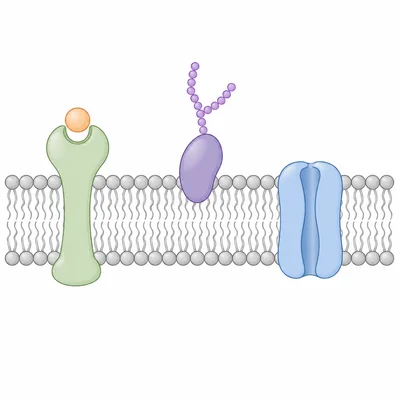
Label the following membrane components by function: A forms the main barrier, B recognizes chemical signals, C helps identify the cell to other cells, and D moves specific molecules across the membrane.
- 14
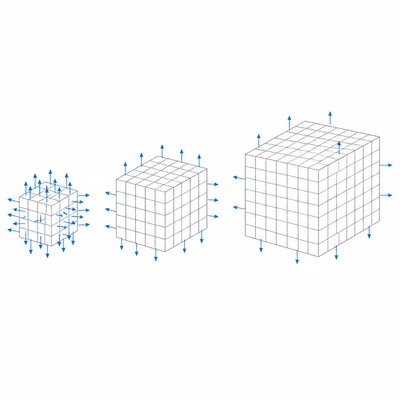
Explain how surface area to volume ratio affects how efficiently a cell exchanges materials with its environment.
- 15
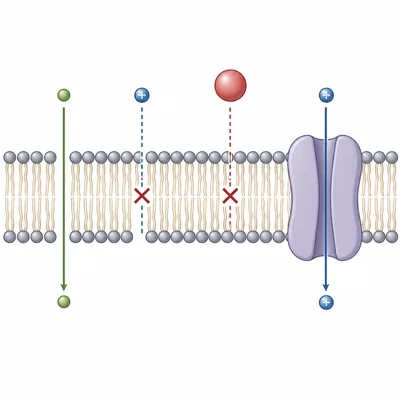
A student says, "All molecules can cross the cell membrane if they are small enough." Explain why this statement is incomplete or incorrect.