Understanding Blood Type Compatibility Tool
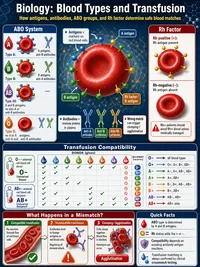
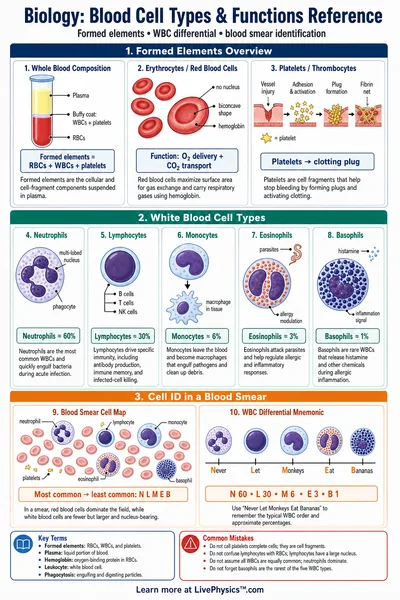
Red blood cells have surface markers that the immune system can recognize as familiar or foreign. If a person receives cells carrying an unfamiliar A or B marker, antibodies in their plasma can attach to those cells and make them clump together. This can block small blood vessels and lead to the breakdown of red blood cells, which is why matching is a safety requirement rather than a label on a chart.
The Rh factor matters because Rh negative people usually do not have strong anti Rh antibodies at first. After exposure to Rh positive blood through a transfusion or pregnancy, their immune system may become sensitized and begin making these antibodies. A later exposure can then cause a much faster reaction, so doctors take Rh status seriously even when the first exposure caused no obvious problem.
Compatibility depends on which part of blood is being given. Packed red cell transfusions are common, and the donor red cell antigens must be safe for the recipient's antibodies. Plasma transfusions work in the opposite direction because the donor plasma contains antibodies, so a type that is useful for red cells is not automatically useful for plasma.
Emergency transfusions sometimes use O negative red cells when there is no time to identify the patient. This choice lowers the chance of an ABO or Rh reaction, but it is not a perfect substitute for testing and supplies are limited. Hospitals identify the patient, determine blood type, and perform a crossmatch that mixes a small sample of recipient plasma with donor cells before most transfusions.
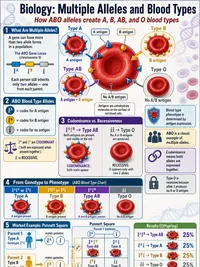
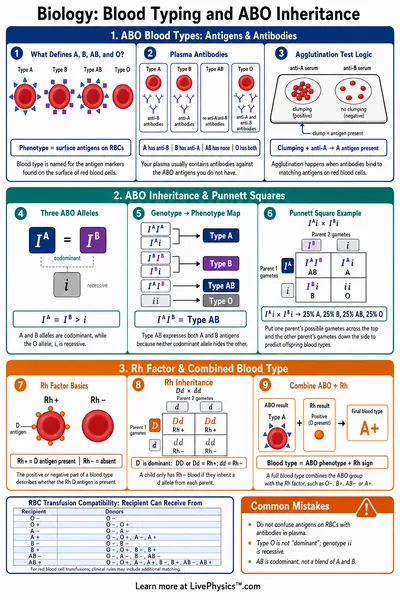
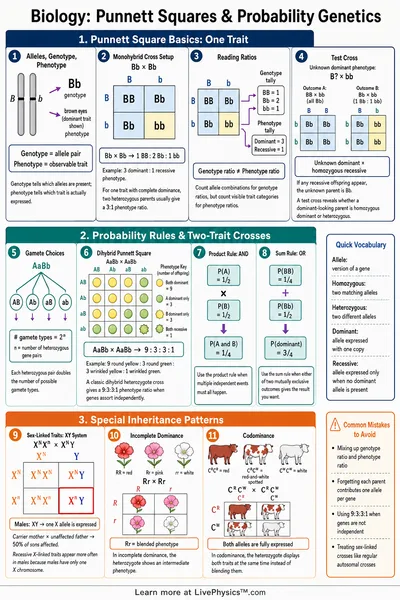
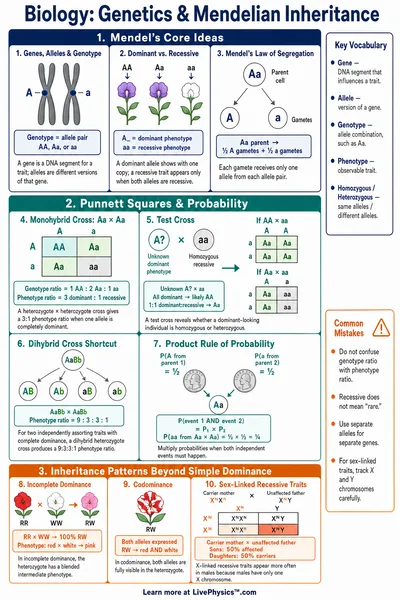
ABO inheritance comes from versions of one gene called A, B, and O. A and B can both be expressed together, which produces type AB, while O is expressed only when a person receives an O version from each parent. Punnett squares show possible combinations, not guarantees for one particular child, because each pregnancy is an independent event.
Rh inheritance is often taught as a simple dominant pattern, where Rh positive is more common than Rh negative. Real Rh biology includes several related markers and more genetic variation than a basic classroom model shows. The simple model is still useful for predicting many family patterns, as long as students remember that clinical testing gives the actual blood type.
During pregnancy, blood group testing helps identify cases where maternal antibodies could affect fetal red cells. Rh negative pregnant people may receive an injection that prevents their immune system from becoming sensitized to Rh positive fetal cells. This prevention has greatly reduced a serious form of newborn anemia caused by maternal antibodies crossing the placenta.
When using a compatibility chart, pay attention to the direction of the transfusion. A donor type listed as safe for one recipient does not mean the same recipient can donate safely back to that donor. Read whether the chart refers to red cells or plasma, since confusing those two directions is a common learning mistake.
Blood type is only one part of transfusion safety. Medical teams also test for infections, check storage conditions, confirm identity at the bedside, and monitor the patient during the transfusion. A compatibility tool is useful for learning the biological logic, but real transfusion decisions require laboratory testing and trained clinical staff.