Practice classifying living things by shared traits, taxonomic groups, domains, kingdoms, and scientific names.
Read each problem carefully. Use complete sentences when explaining your thinking. Show your work in the space provided.
Using traits, taxonomy, and scientific names
Biology - Grade 6-8
- 1
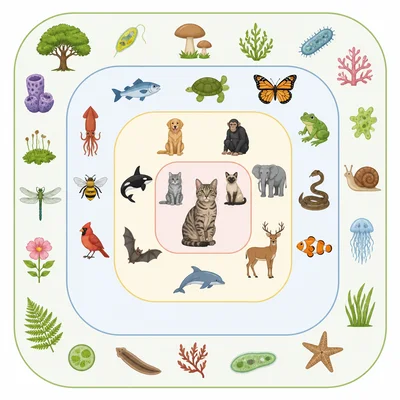
List the main levels of biological classification from broadest to most specific.
- 2
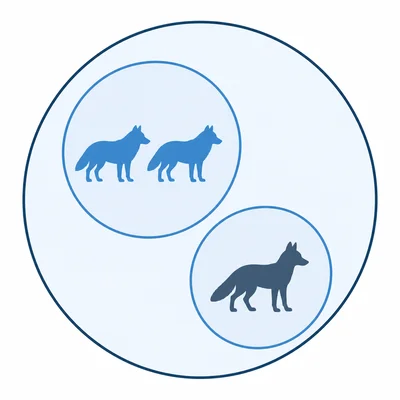
Two organisms are in the same genus but different species. Are they more closely related than two organisms in the same family but different genera? Explain.
- 3
The scientific name for the gray wolf is Canis lupus. Which word is the genus, and which word is the species name?
- 4
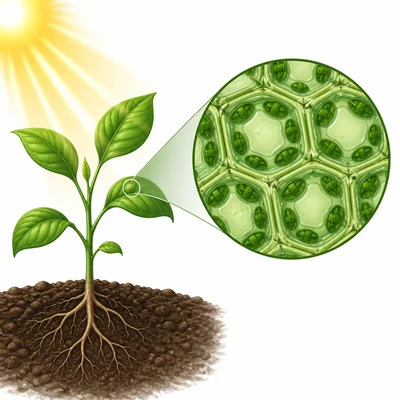
A student finds an organism that is made of many cells, has cell walls, and makes its own food using sunlight. Which kingdom does it most likely belong to?
- 5
Explain why scientists use scientific names instead of only common names.
- 6
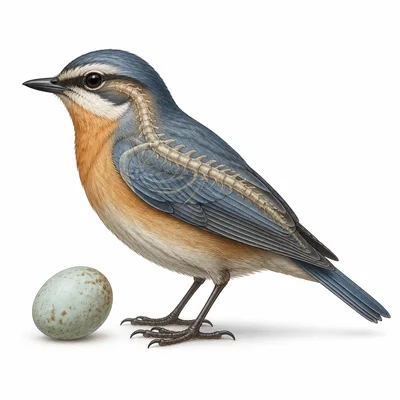
Use these traits to classify the organism: it has a backbone, feathers, wings, a beak, and lays eggs. What class of vertebrate is it most likely in?
- 7
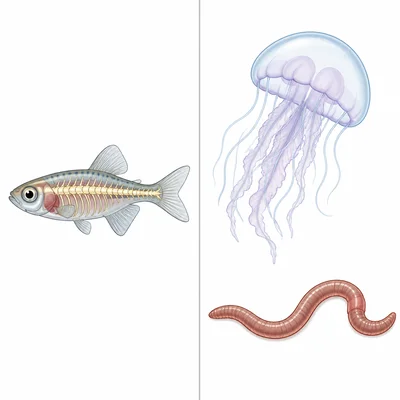
What is the difference between a vertebrate and an invertebrate?
- 8
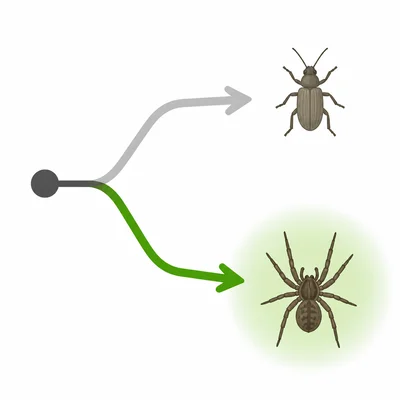
A dichotomous key step says: 1a. Has six legs, go to step 2. 1b. Does not have six legs, go to step 3. An unknown animal has eight legs. Which step should you go to next?
- 9
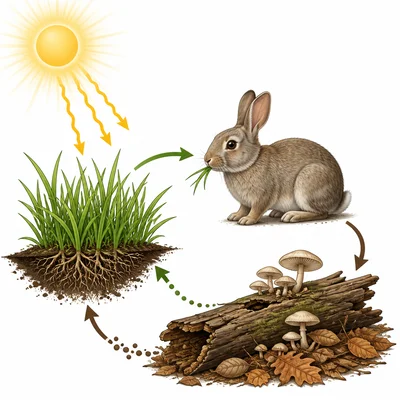
Classify each organism as producer, consumer, or decomposer: grass, mushroom, rabbit.
- 10
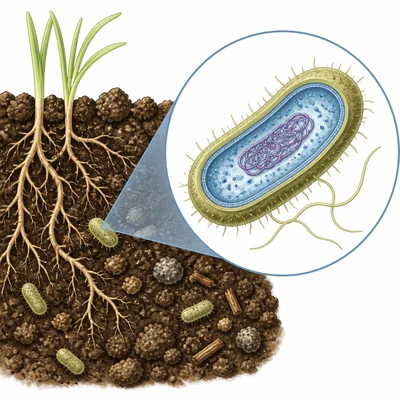
A bacterium is single-celled, has no nucleus, and has DNA. Which domain does it belong to if it lives in normal soil and is not an extreme environment microbe?
- 11
Look at these classification levels for a house cat: Animalia, Chordata, Mammalia, Carnivora, Felidae, Felis, Felis catus. Which level is the family?
- 12
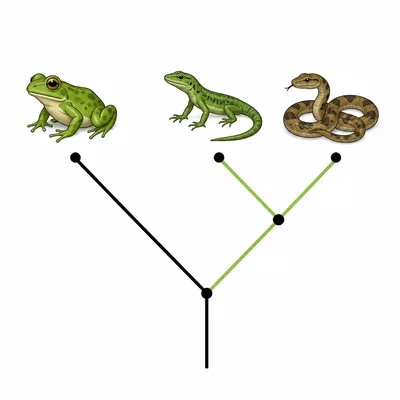
A cladogram shows that lizards and snakes share a more recent common ancestor with each other than either does with frogs. Which pair is more closely related: lizards and snakes, or lizards and frogs?
- 13
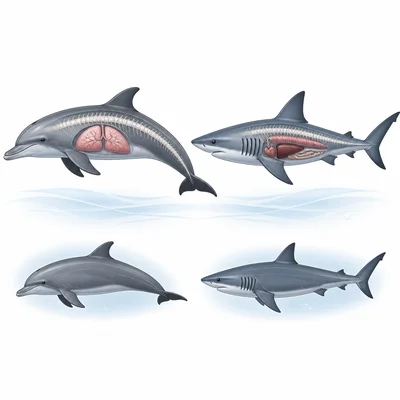
Why can physical appearance alone sometimes be misleading when classifying organisms?
- 14
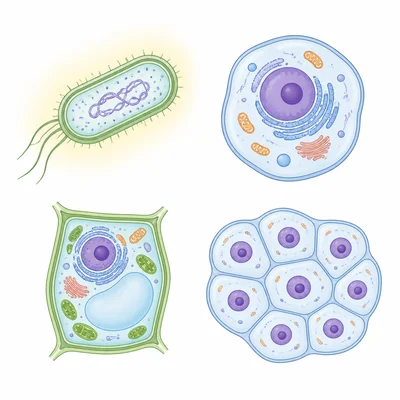
A table lists four organisms. Organism A has a nucleus and is multicellular. Organism B has no nucleus and is single-celled. Organism C has a nucleus and is single-celled. Organism D has a nucleus and is multicellular. Which organism is definitely a prokaryote?
- 15
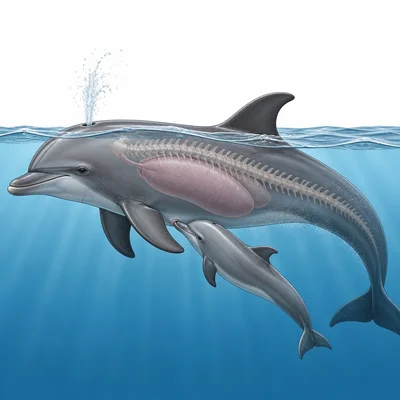
Create a short classification description for a dolphin using these facts: it is an animal, has a backbone, breathes air with lungs, gives birth to live young, and nurses its young with milk.