Practice identifying traits of healthy relationships, setting boundaries, communicating clearly, and responding to unhealthy relationship behaviors.
Read each situation carefully. Answer in complete sentences and show respectful thinking. If a situation involves harm, threats, or pressure, include a safe next step such as talking to a trusted adult or seeking support.
Recognizing respect, communication, consent, and personal limits
SEL - Grade 9-12
- 1
List three qualities of a healthy relationship and explain why each quality matters.
- 2
A friend keeps reading your private messages after you asked them to stop. Identify the boundary being crossed and write one clear statement you could use to respond.
- 3
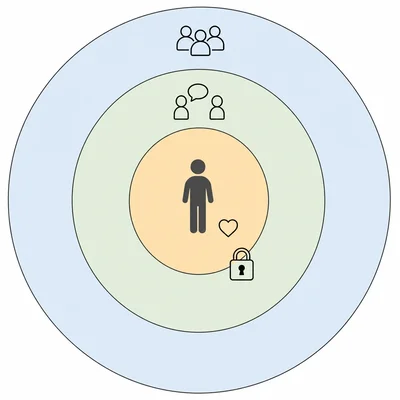
Look at a diagram of personal boundaries with three circles labeled public, social, and private. Give one example of information or behavior that belongs in each circle.
- 4
Explain the difference between a request and pressure in a relationship. Give one example of each.
- 5
A partner says, "I get jealous because I love you, so you should stop talking to those friends." Identify one unhealthy behavior in this statement and write a healthier alternative.
- 6
Read this conflict: Two classmates are working on a project. One person feels ignored because the other keeps making decisions alone. Write an assertive, respectful message the ignored classmate could use.
- 7
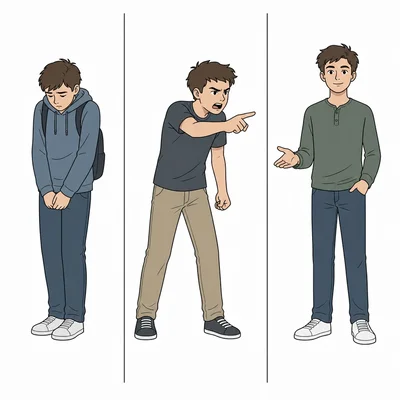
Study a chart with three columns labeled passive, aggressive, and assertive communication. For each style, describe how it might sound during a disagreement.
- 8
A friend tells you a secret but says they are planning to hurt themselves or someone else. Explain why this is not a secret you should keep and name one safe action to take.
- 9
Describe two signs that a digital relationship or online interaction may be unhealthy.
- 10
Write a short personal boundary plan for a social situation. Include one boundary, one way to communicate it, and one support person you could contact if the boundary is not respected.