Practice recognizing mental health concerns, choosing trusted adults, using supportive language, and knowing when to seek help right away.
Read each scenario carefully. Write a thoughtful response that shows safe decision-making, respect, and care. If a scenario involves danger or possible harm, choose immediate help from a trusted adult or emergency support.
Practicing safe, respectful ways to ask for help and support others
Health - Grade 6-8
- 1
Jordan has seemed very quiet for two weeks, stopped sitting with friends at lunch, and has not turned in several assignments. You are worried but do not want to embarrass Jordan. What is one caring way to start a conversation?
- 2
A friend texts you, "I cannot do this anymore. Everyone would be better off without me." What should you do next?
- 3
Maya wants to talk to the school counselor but worries that other students will think she is weak. Write one sentence Maya could tell herself to challenge that worry.
- 4
List three trusted adults a middle school student could ask for help with a mental health concern.
- 5
Sam says, "I am stressed about my grades, but I do not want to bother anyone." Write a supportive response that encourages Sam to seek help.
- 6
Read the options and choose the safest response. Your friend tells you they have been skipping meals because they feel bad about their body. A: Joke about it to make them feel less serious. B: Tell them you are concerned and encourage them to talk to a trusted adult. C: Ignore it because it is their choice. Explain your answer.
- 7
Why is it usually not helpful to say, "Just get over it," to someone who is feeling anxious or depressed?
- 8
Create a simple three-step help-seeking plan for a student who feels overwhelmed by school, friendships, and family stress.
- 9
Taylor tells you a secret: they have been feeling sad every day for a month but do not want any adult to know. Taylor is not in immediate danger, but you are concerned. What should you do?
- 10
Write two signs that stress may be becoming too much for a student to handle alone.
- 11
A classmate has a panic attack before a presentation. They are breathing fast and look frightened. What are two helpful things you can do in the moment?
- 12
Choose the better statement for supporting a friend and explain why. Statement 1: "Other people have it worse, so stop being upset." Statement 2: "That sounds really hard. I am here with you, and we can find help if you want."
- 13
A student wants privacy when talking about mental health. What is one way a school can support privacy while still keeping students safe?
- 14
Your friend says they do not want therapy because "therapy is only for people with huge problems." How could you respond in a respectful and accurate way?
- 15
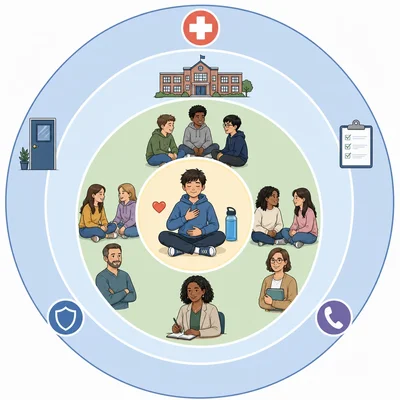
Look at the support circle idea: self-care strategies, friends, trusted adults, school supports, and emergency help. Give one example of when each level might be useful.