Practice calculating vector magnitude and direction, writing component form, performing vector operations, and using dot products in precalculus.
Read each problem carefully. Show your work and round angle measures to the nearest tenth of a degree when needed.
Finding vector length, angle, components, sums, and products
Math - Grade 9-12
- 1
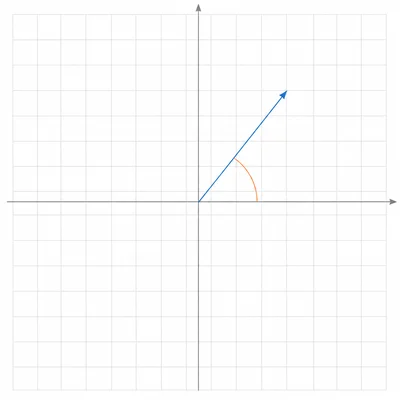
Find the magnitude and direction angle of the vector v = <3, 4>. Measure the direction angle counterclockwise from the positive x-axis.
- 2
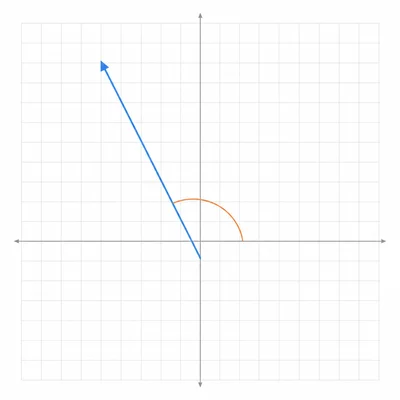
Find the magnitude and direction angle of the vector u = <-5, 12>. Measure the direction angle counterclockwise from the positive x-axis.
- 3
Let a = <2, -7> and b = <-4, 3>. Compute 2a - b.
- 4
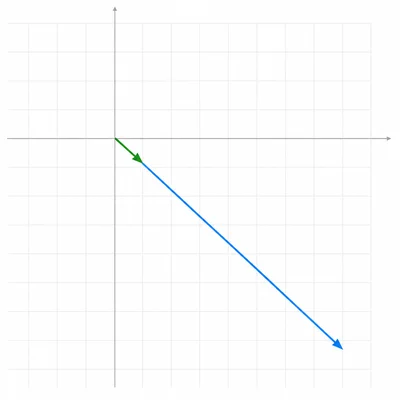
Find a unit vector in the same direction as <6, -8>.
- 5
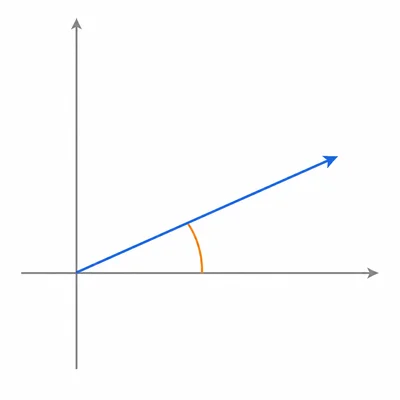
Write a vector in component form with magnitude 10 and direction angle 30°.
- 6
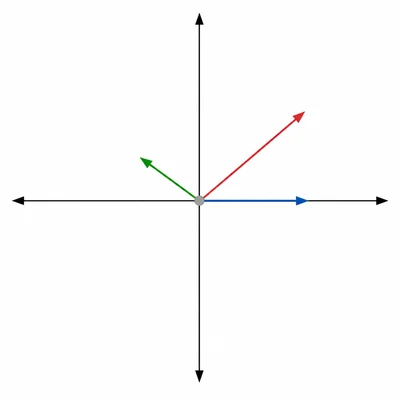
Two forces act on an object: F1 = <8, 0> and F2 = <-3, 4>. Find the resultant force vector, its magnitude, and its direction angle.
- 7
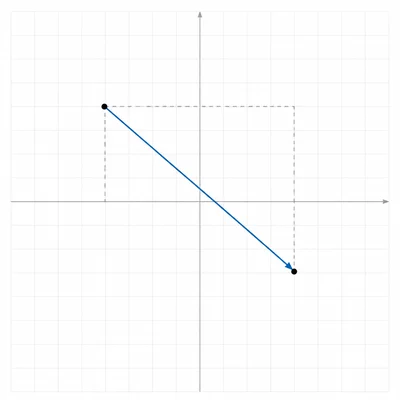
Find the vector from A(-2, 5) to B(4, -1), then find the distance from A to B.
- 8
Let v = <4, -2> and w = <1, 5>. Find v + w, v - w, and 3w.
- 9
Find the dot product of p = <2, 3> and q = <-4, 5>.
- 10
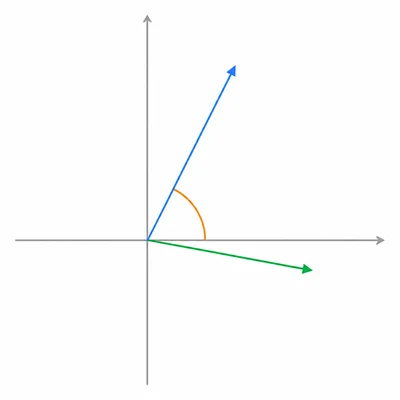
Find the angle between a = <1, 2> and b = <3, -1>. Round to the nearest tenth of a degree.
- 11
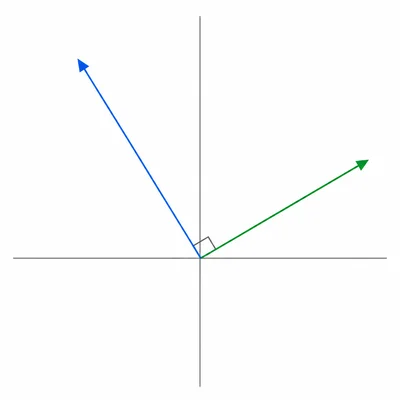
Determine whether the vectors <6, -9> and <3, 2> are perpendicular. Explain your reasoning.
- 12
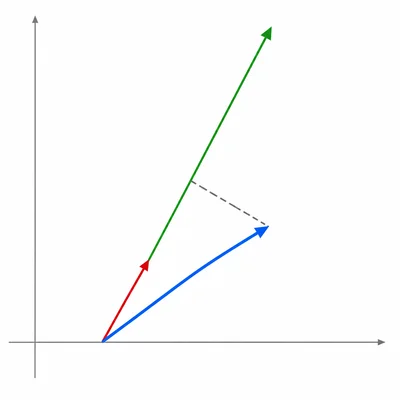
Find the projection of a = <5, 2> onto b = <1, 3>.
- 13
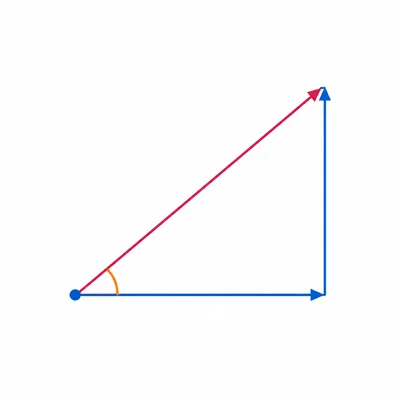
A hiker walks 12 miles east and then 5 miles north. Write the displacement vector, then find its magnitude and direction north of east.
- 14
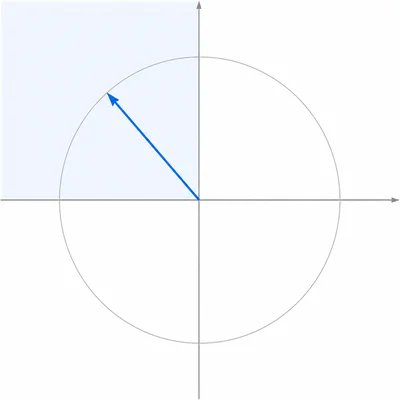
Find the value of k if the vector <k, 4> has magnitude 5 and points into Quadrant II.
- 15
Let p = <7, -1> and q = <-2, 6>. Find p + q and the magnitude of p + q.