Practice using Punnett squares, dominant and recessive alleles, genotypes, and phenotypes to predict patterns of inheritance.
Read each problem carefully. Complete the Punnett square or explain the inheritance pattern. Show your work in the space provided.
Using allele combinations to predict inherited traits
Biology - Grade 6-8
- 1
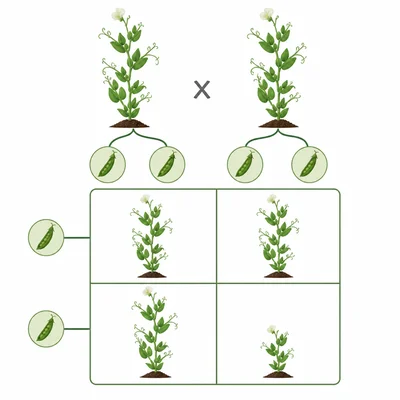
In pea plants, tall (T) is dominant to short (t). One parent is Tt and the other parent is tt. What are the possible genotypes of the offspring, and what fraction of the offspring are expected to be short?
- 2
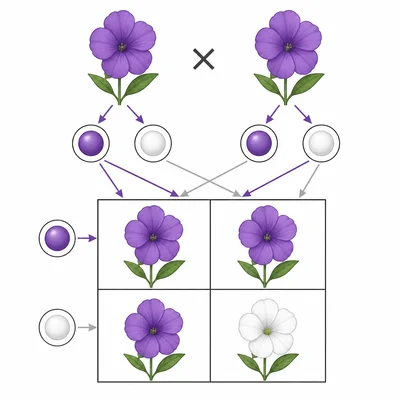
A trait for purple flowers (P) is dominant over white flowers (p). Cross two heterozygous plants, Pp x Pp. What genotype ratio do you expect?
- 3
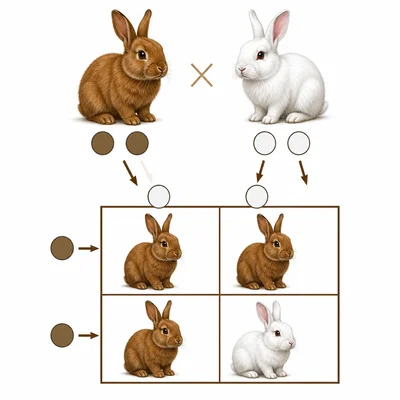
Using the cross Bb x Bb, where brown fur (B) is dominant over white fur (b), what phenotype ratio is expected in the offspring?
- 4
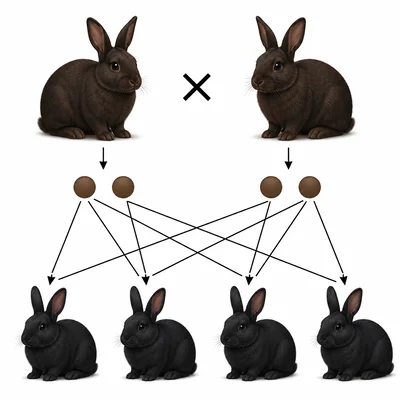
In rabbits, black fur (B) is dominant over brown fur (b). If a homozygous dominant rabbit is crossed with a homozygous recessive rabbit, what will the genotypes and phenotypes of the offspring be?
- 5
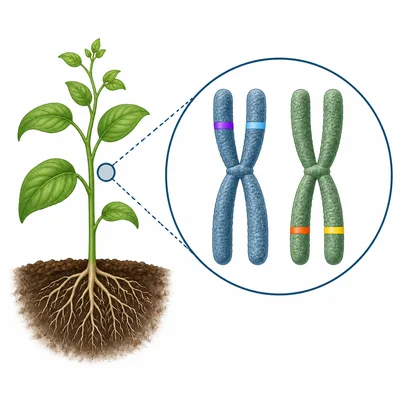
A plant has genotype Aa. What does this genotype tell you about the plant's alleles, and is the plant homozygous or heterozygous?
- 6
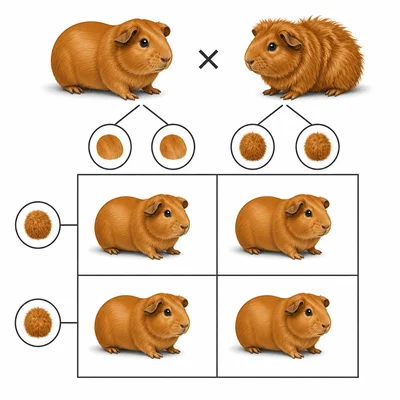
In guinea pigs, smooth coat (S) is dominant over rough coat (s). Cross Ss with ss. What percentage of the offspring are expected to have rough coats?
- 7
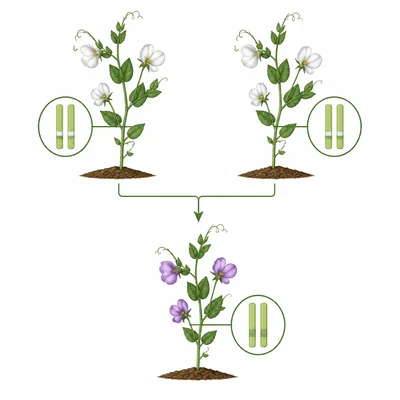
Two plants produce some offspring with a recessive trait. What must be true about the parents' alleles for that trait?
- 8
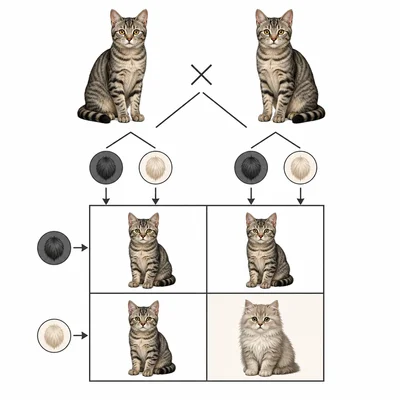
In cats, long hair (l) is recessive to short hair (L). A short-haired cat has genotype Ll. Another short-haired cat also has genotype Ll. What fraction of their kittens are expected to have long hair?
- 9
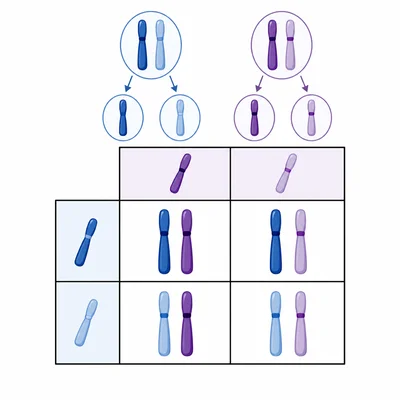
A Punnett square shows the possible allele combinations from a genetic cross. What information does it help predict, and what can it not tell with certainty?
- 10
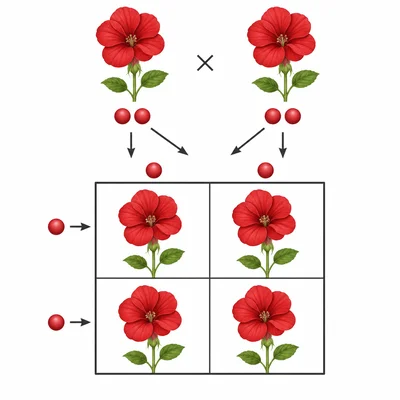
In a flower species, red color (R) is dominant over yellow color (r). If one parent is RR and the other is Rr, what percentage of offspring are expected to have red flowers?
- 11
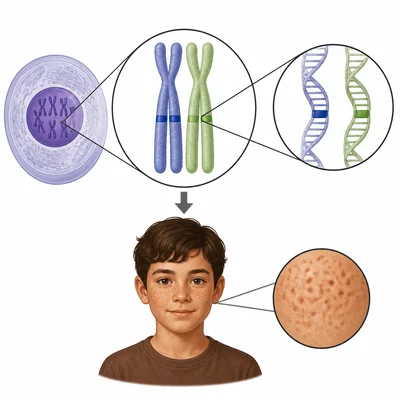
Explain the difference between genotype and phenotype using the example Ee for a trait where E is dominant.
- 12
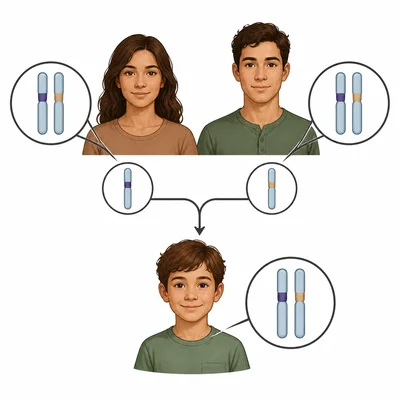
A student says that if a dominant allele is present, the recessive allele disappears. Is this correct? Explain your answer.