Practice recording Moon observations, using a simple calendar, and noticing how the Moon appears to change over time.
Read each problem carefully. Use the calendar information and your own observations when asked. Show your work or write your answer in the space provided.
Observing the Moon and looking for patterns
Science - Grade 2-3
- 1
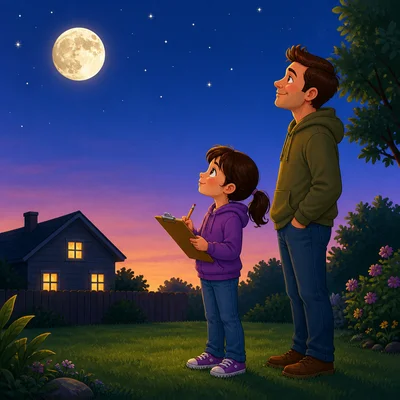
Look at the Moon tonight or ask an adult to help you check the sky. Write the date, time, and what the Moon looks like.
- 2
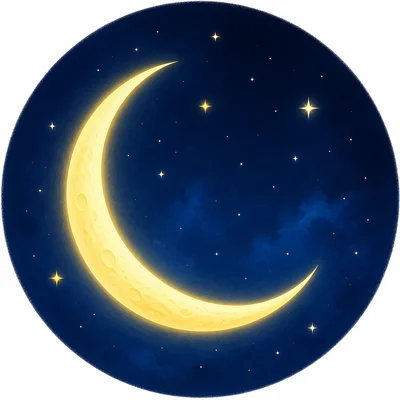
Mia observed the Moon on Monday. She wrote, 'The Moon looked like a thin banana.' Which Moon shape did Mia most likely see?
- 3
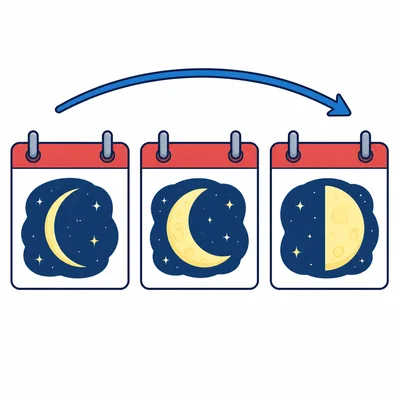
A class Moon calendar shows these observations: Day 1: thin crescent, Day 4: larger crescent, Day 7: half Moon. What pattern is happening?
- 4
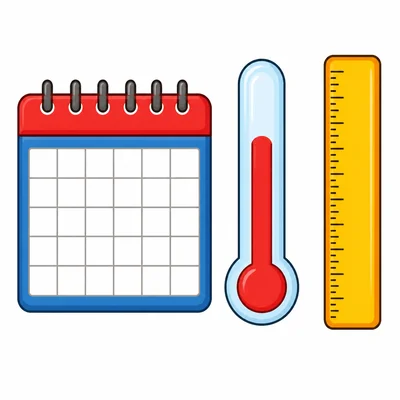
Circle the best tool for keeping track of Moon observations for many days: a calendar, a thermometer, or a ruler. Explain your choice.
- 5

On a Moon observation calendar, Lily drew clouds on Tuesday and wrote 'Moon not visible.' What is one reason the Moon might not be visible?
- 6
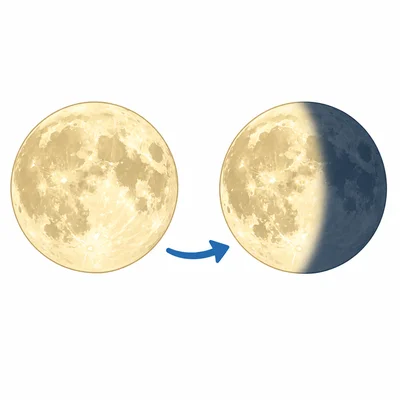
Sam saw a full Moon on the 10th day of the month. About one week later, the Moon looked smaller and only part of it was lit. Did the Moon really shrink? Explain.
- 7
Read this observation: 'Date: April 6. Time: 8:00 p.m. Sky: clear. Moon: half circle.' What important information is missing?
- 8
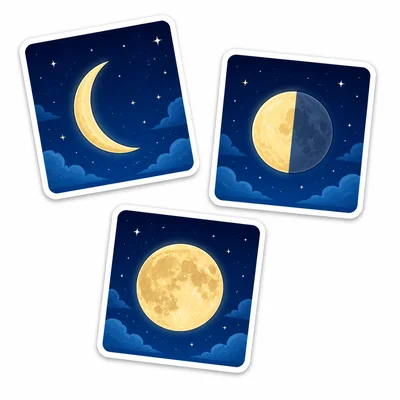
Put these Moon shapes in an order that shows the lit part getting bigger: full Moon, thin crescent, half Moon.
- 9
A student observed the Moon at 7:30 p.m. for three nights. Why is it helpful to observe at about the same time each night?
- 10
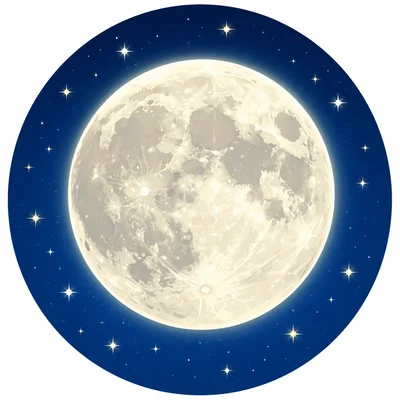
Draw or describe what a full Moon looks like.
- 11
Nora forgot to write the date on her Moon drawing. Why is the date important on a Moon observation calendar?
- 12
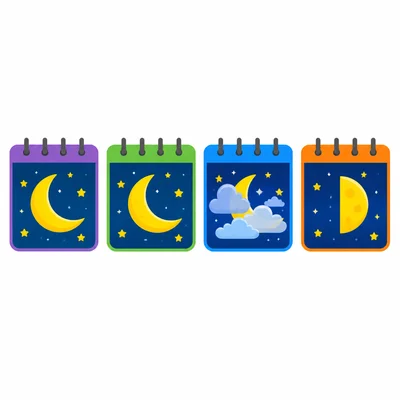
Here are four observations from a class calendar: Monday: crescent, Tuesday: crescent, Wednesday: cloudy, Thursday: half Moon. What should the class write for Wednesday?
- 13
After many days of observations, a student says, 'The Moon's shape changes in a pattern.' Is this a good science statement? Explain why.