Analyze evidence for climate change and evaluate how governments, organizations, and citizens respond through policy choices.
Read each problem carefully. Use evidence and clear reasoning in your responses. Show your work when a chart, table, or written explanation is requested.
Examining scientific evidence, public policy, and civic decision-making
Social Studies - Grade 9-12
- 1
Define climate change in your own words. Then explain the difference between weather and climate.
- 2
List two types of evidence scientists use to show that Earth's climate is warming. For each one, explain what it shows.
- 3

A graph shows atmospheric carbon dioxide rising from about 315 parts per million in 1960 to over 420 parts per million today. What conclusion can you draw from this trend, and why does it matter for climate policy?
- 4
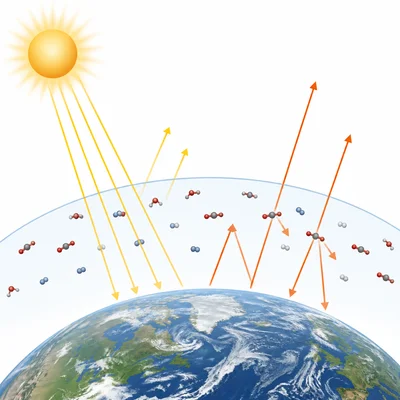
Explain how the greenhouse effect works. Then describe how human activities can strengthen it.
- 5
Identify one economic impact and one social impact of climate change on a community. Explain each with a specific example.
- 6
Compare mitigation and adaptation. Give one example of each climate policy.
- 7
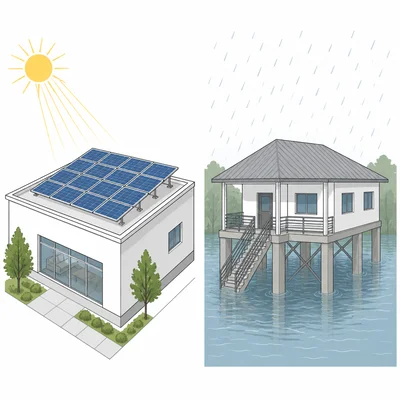
A city is choosing between two policies: Policy A gives tax credits for solar panels, and Policy B updates building codes to require better flood protection. Which policy is mainly mitigation, which is mainly adaptation, and why?
- 8
Why do climate change policies sometimes create political disagreement? Give two reasons based on social studies themes such as economics, government power, or public values.
- 9
Describe one reason why international cooperation is important in addressing climate change.
- 10
Read this claim: 'Climate policy should focus only on the future, not on current inequalities.' Write a short response agreeing or disagreeing and support your answer with one reason.
- 11
What is one role citizens can play in shaping climate policy in a democracy? Explain how that action can influence decision-makers.
- 12
A state government is deciding whether to invest public money in public transit, wildfire prevention, and coastal protection. Choose one of these and argue why it should be a priority using evidence-based reasoning.