Sign in to save

Bookmark this page so you can find it later.

Sign in to save

Bookmark this page so you can find it later.

Biology middle-school May 24, 2026

Why Do Some People Have Allergies?

When protection reacts to the wrong target
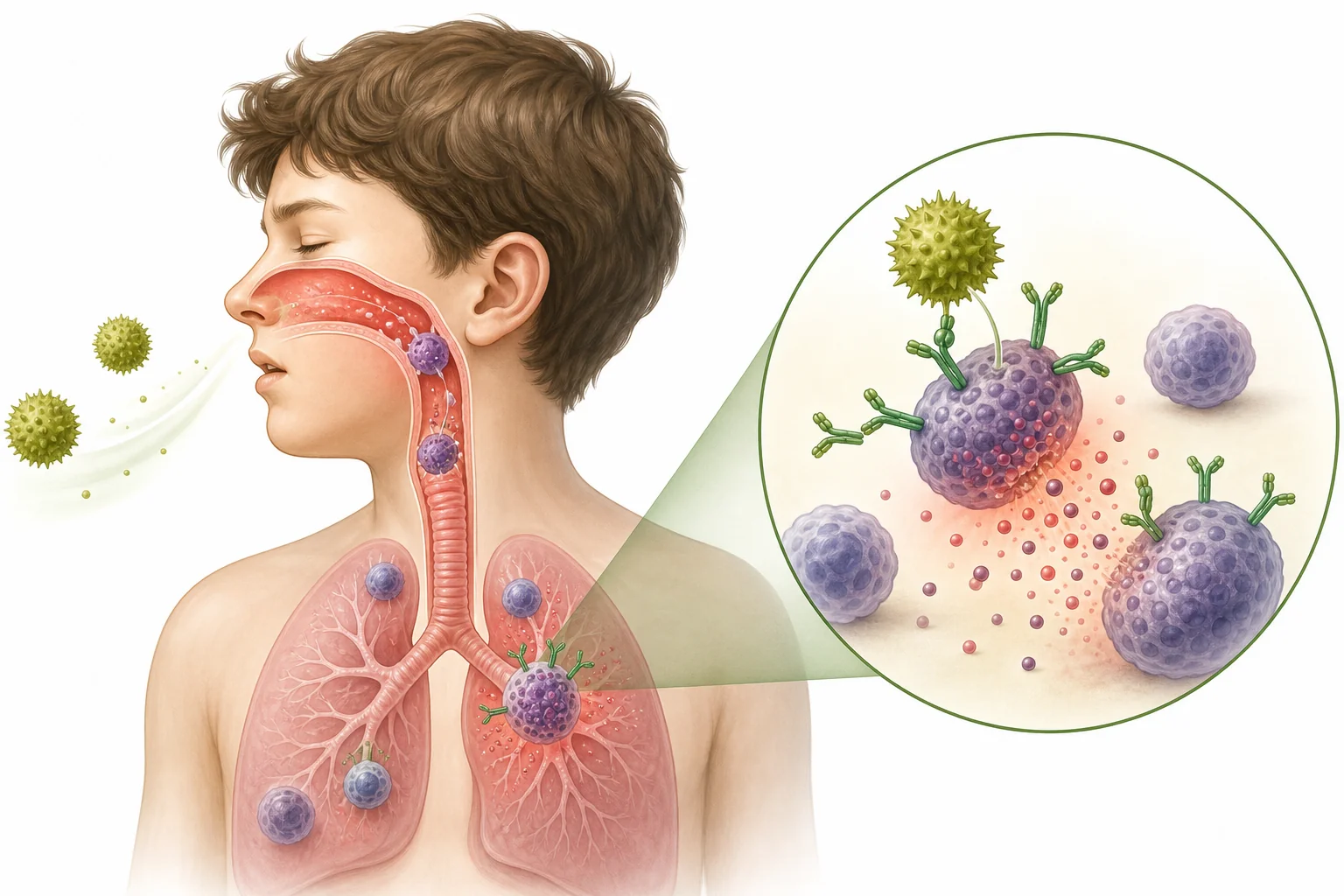
A student near pollen grains while immune cells react inside a simplified body diagram

Allergies happen when the immune system treats a harmless thing, such as pollen or peanut protein, like danger. The body then sends signals that cause swelling, itching, mucus, or trouble breathing. Genes, early life exposures, and the places people live can change the chance of having allergies.

Big Idea. NGSS MS-LS1-3 connects allergies to how body systems interact as cells, tissues, and organs respond to signals.

Your immune system is built to notice trouble. It helps protect you from viruses, bacteria, and other things that can make you sick. Allergies happen when that defense system reacts to something that is usually harmless. Pollen, dust mites, pet dander, mold, certain foods, and insect stings can all trigger allergies in some people. The same particle may do nothing to one person and cause sneezing, hives, or wheezing in another. That difference comes from how each immune system has learned to sort the world. Genes matter. So do early life exposures, infections, air pollution, diet, and the mix of microbes that live in and around the body. Scientists study allergies because they show how body systems use signals. A tiny particle outside the body can set off a chain reaction inside cells, tissues, and organs.

The immune system sorts signals
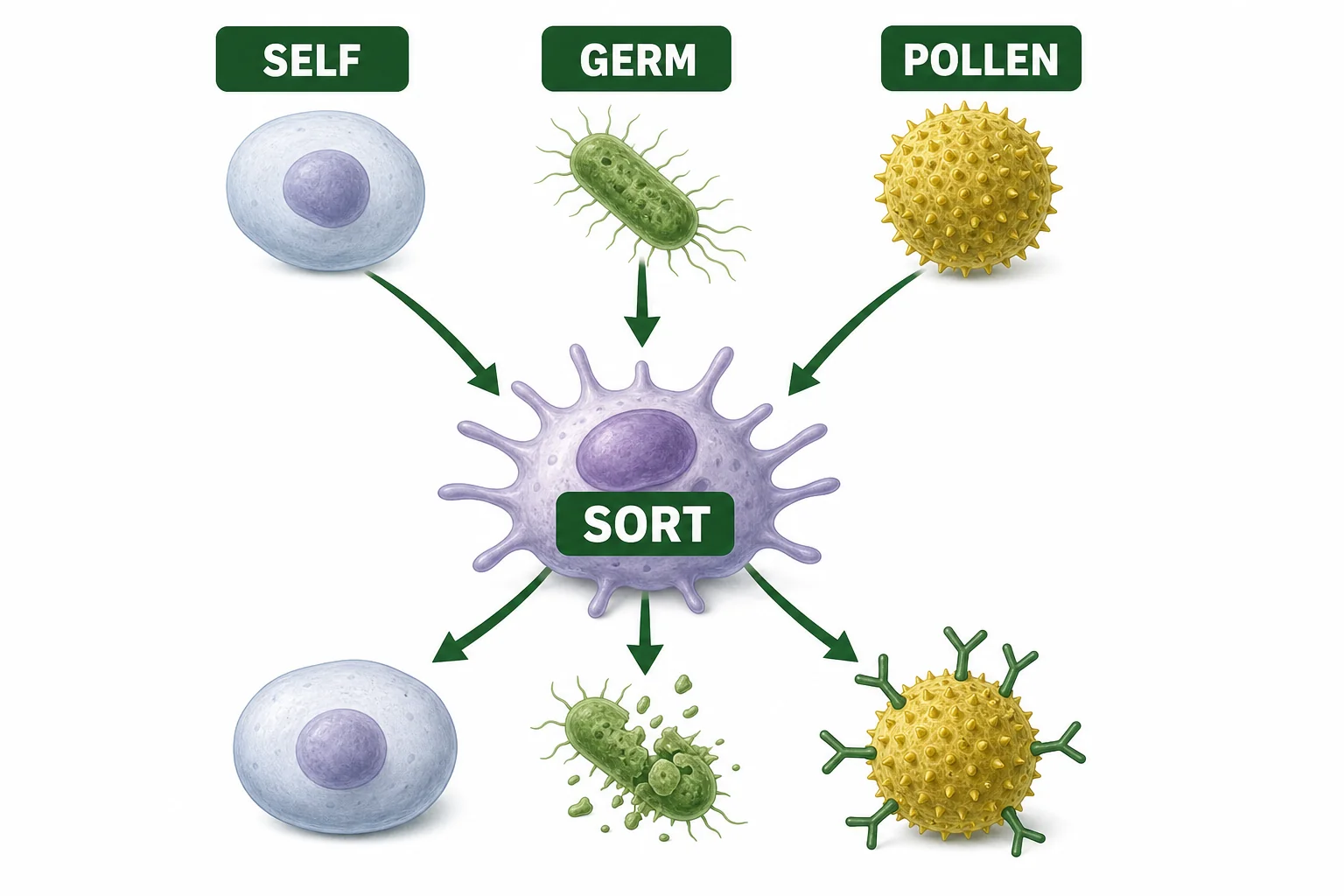
Immune cells sorting body cells, germs, and harmless particles into different response paths
Allergies begin with a sorting error
The immune system is not one organ. It is a network of cells, tissues, and chemicals that share information. Some immune cells patrol the body and sample particles they find. They help decide whether a particle looks like part of the body, a harmless visitor, or a possible threat. When the system finds a real threat, it can call in other cells, make antibodies, and cause inflammation. Inflammation brings extra blood flow and immune cells to a place that may need repair or defense. This response is useful when the target is a virus or a splinter full of bacteria. It becomes a problem when the target is harmless. In an allergy, the immune system sorts a safe particle into the wrong category. The reaction is real, but the danger signal is mistaken.

An allergy is a real immune response to the wrong target.

How the mistake gets remembered
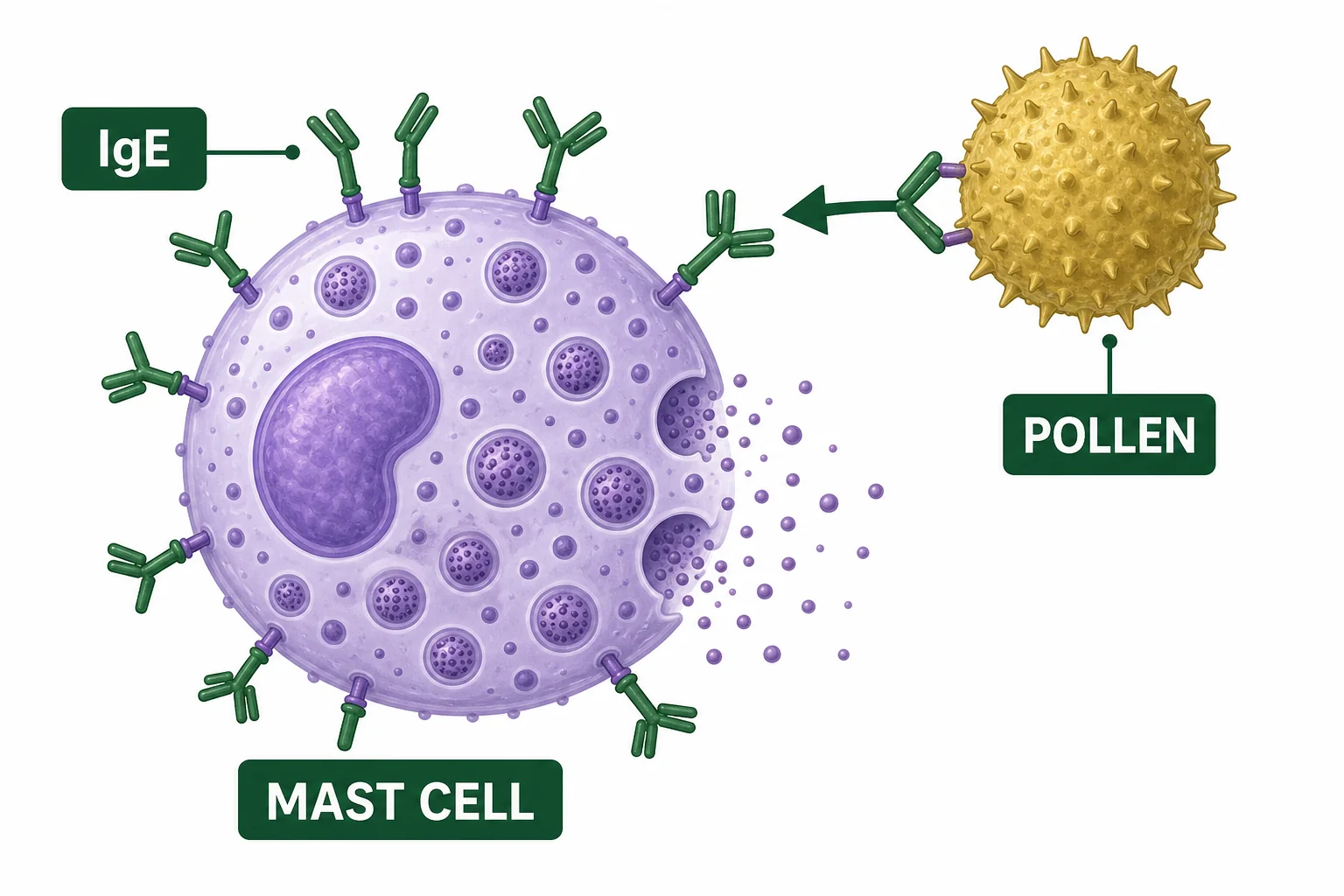
A pollen grain linking to IgE antibodies on a mast cell surface
IgE can prime mast cells for a later reaction
Allergies often begin with a first exposure that does not cause obvious symptoms. A person breathes in pollen or eats a food protein. Immune cells pick up pieces of that particle and present them to other immune cells. In some people, the immune system makes a type of antibody called IgE. Antibodies are proteins that recognize specific targets. IgE can attach to immune cells called mast cells, which sit in tissues such as the skin, nose, lungs, and gut. This creates a memory of that harmless particle. Later, when the same particle appears again, it can stick to IgE on mast cells. That contact can flip the mast cells into action. The body responds faster because it has already stored the mistaken signal.

The immune system can remember a harmless particle as if it were dangerous.

Histamine causes many symptoms
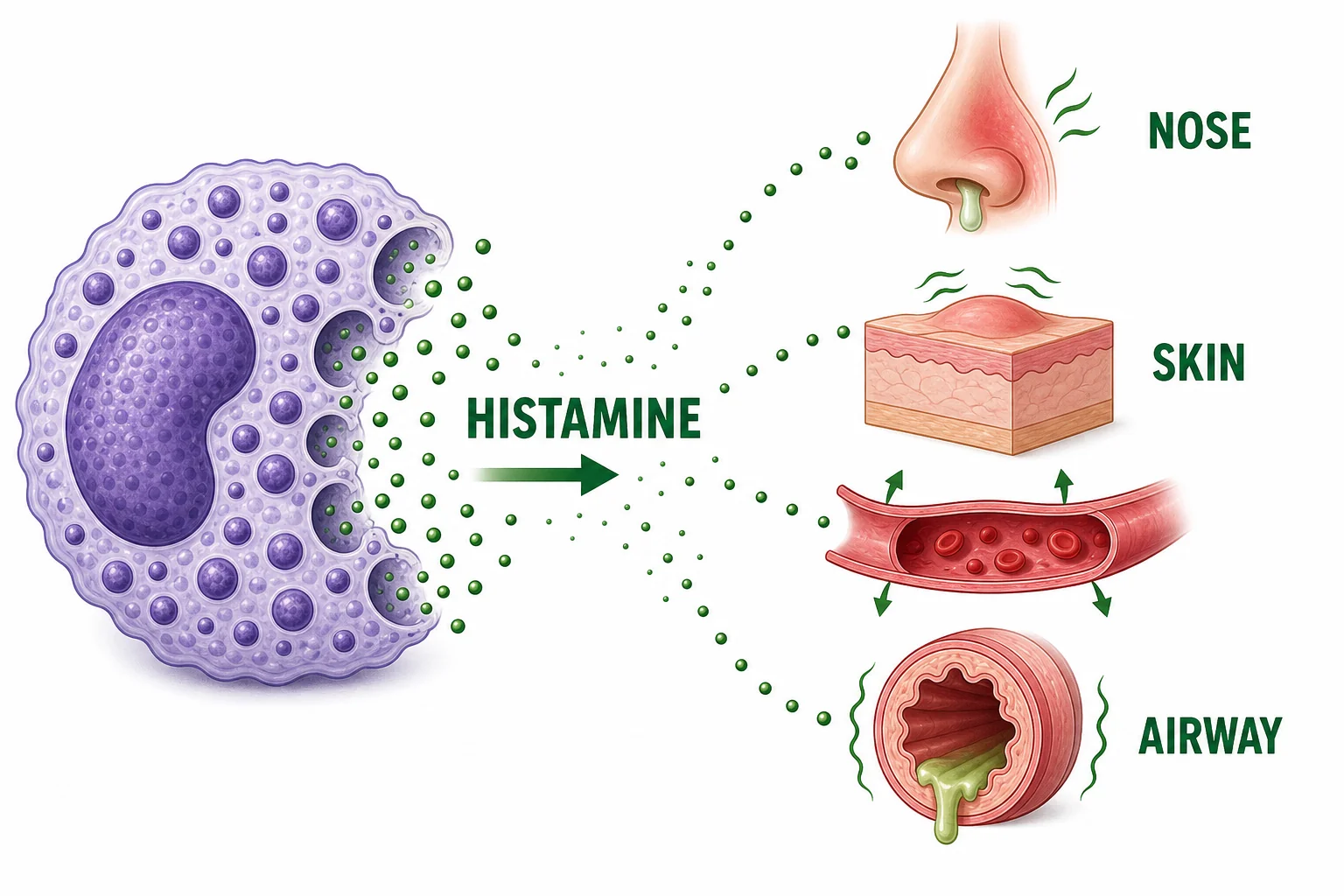
Mast cell releasing histamine near blood vessels, nose tissue, skin, and airway
Histamine changes tissues and creates symptoms
When mast cells are activated, they release chemicals into nearby tissue. One important chemical is histamine. Histamine helps open small blood vessels and makes them leakier. That can cause redness, warmth, swelling, and itching. In the nose, histamine can lead to sneezing and extra mucus. In the eyes, it can cause watering and itching. In the airways, it can tighten muscles and make breathing harder. These effects are meant to help the body respond quickly during defense. During an allergy, the same tools create uncomfortable or dangerous symptoms. Most allergic reactions stay in one area, such as the nose or skin. Some reactions spread through the body. A severe whole-body reaction is called anaphylaxis and needs emergency treatment.

Symptoms come from the body's defense chemicals, not from the allergen itself.

Why risk differs from person to person
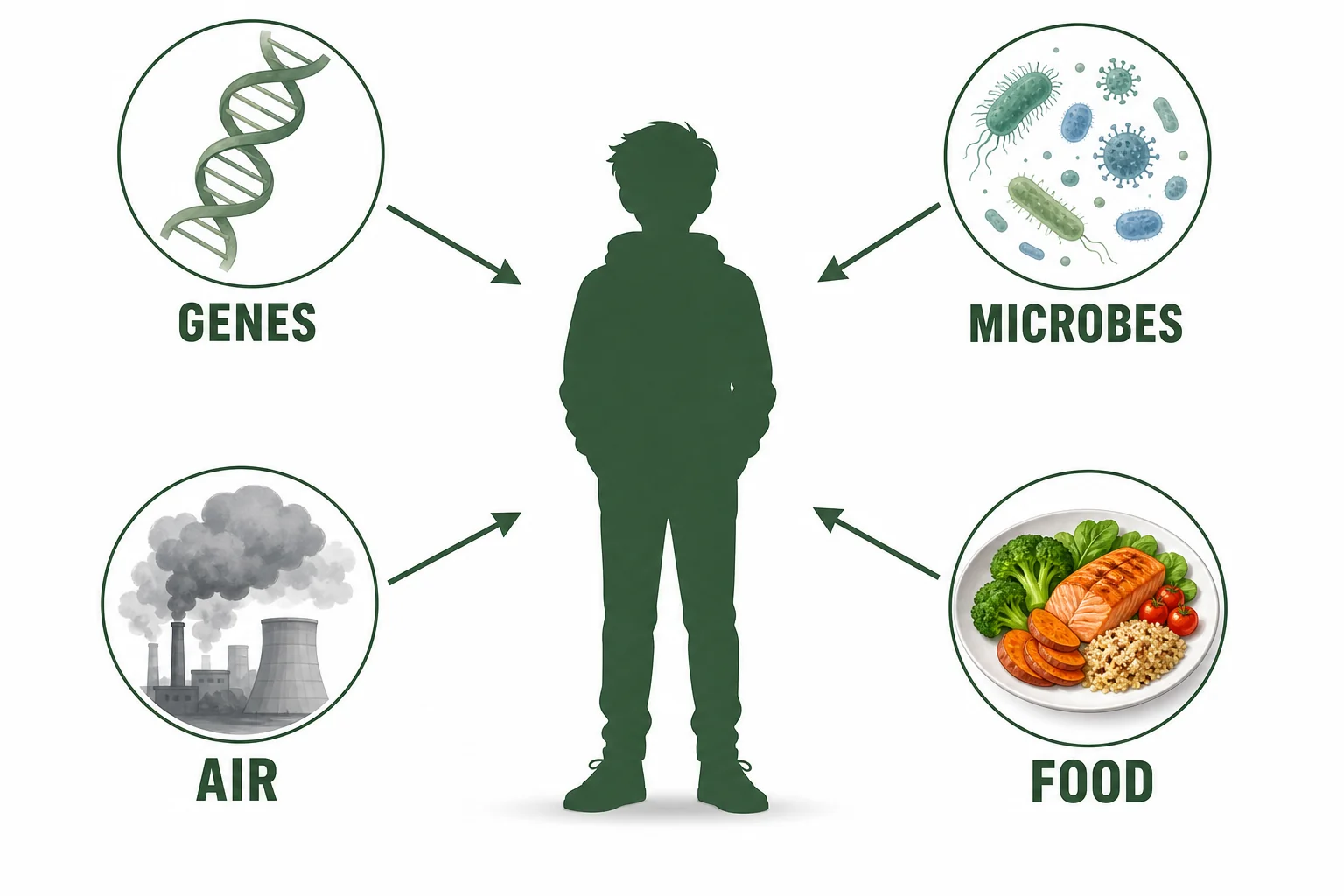
Factors that influence allergy risk, including genes, microbes, pollution, and food exposure
Allergy risk comes from inherited traits and life experiences
Allergy risk is shaped by both genes and environment. A person with close family members who have allergies is more likely to have them too. Genes can affect how strongly the immune system reacts and which particles it notices. Environment also matters. Early contact with pets, farm animals, soil microbes, air pollution, tobacco smoke, infections, and foods can all influence immune development. Scientists often discuss the hygiene hypothesis. It suggests that some children may have fewer chances to train their immune systems when early life is very low in microbial exposure. The idea is not that dirt is always good or that cleanliness is bad. Handwashing, vaccines, and safe food still prevent disease. The main point is that immune systems develop through experience, and different experiences can lead to different allergy risks.

No single factor explains every allergy.

Managing the response
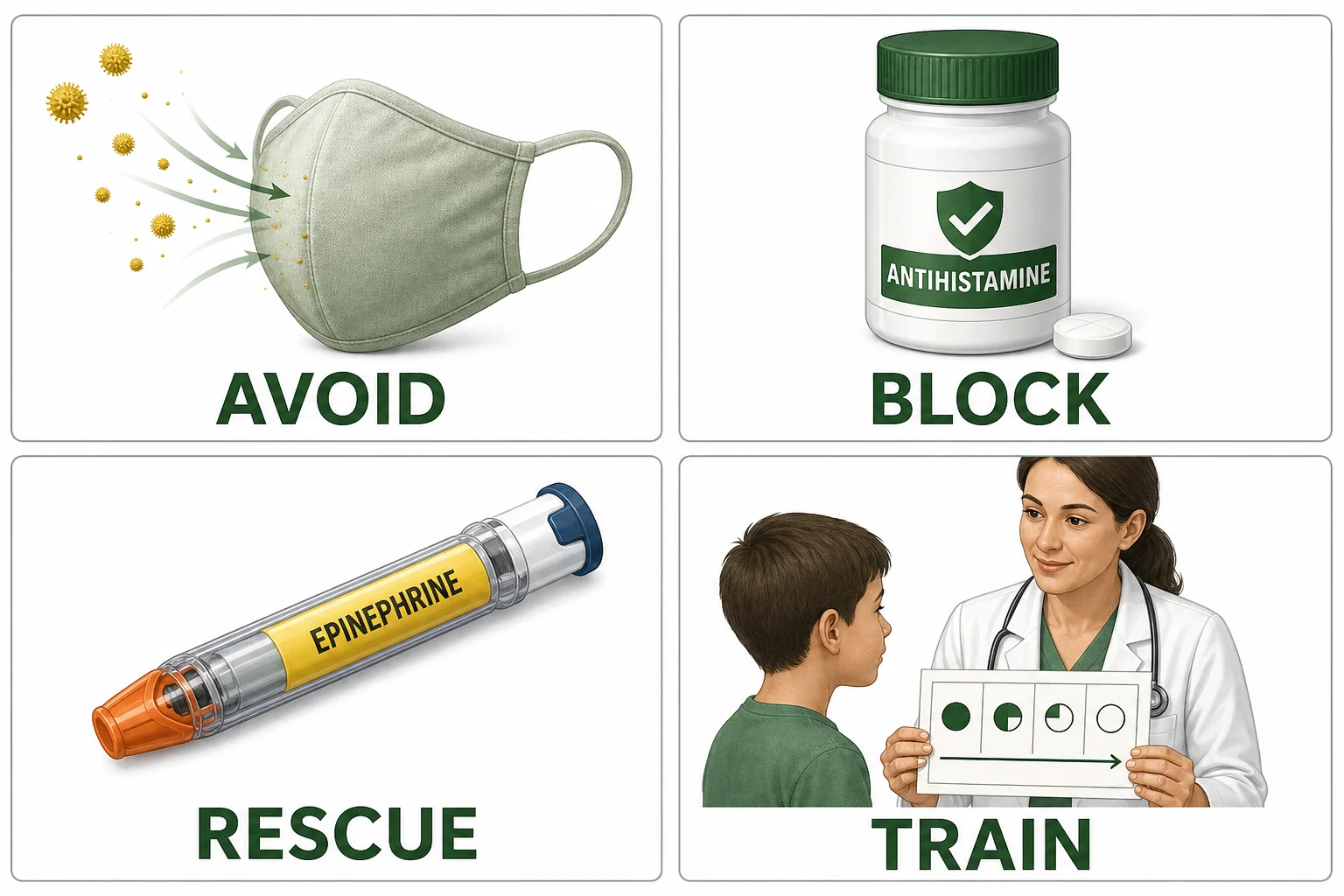
Allergy management tools including trigger avoidance, medicine, epinephrine, and immunotherapy
Treatment aims to reduce or retrain the response
Allergies can be managed in several ways. Avoiding a trigger can reduce symptoms, but it is not always simple. Pollen moves through air. Dust mites live in bedding. Food proteins can hide in mixed foods. Some medicines block histamine or calm inflammation, which reduces symptoms after the immune reaction starts. People with severe allergies may carry epinephrine, a medicine that helps reverse a dangerous whole-body reaction. Doctors may also use allergy testing to find likely triggers. For some allergies, immunotherapy can train the immune system over time using small controlled exposures. This does not work for every person or every allergy. It shows that immune responses can change. Learning about allergies helps students see the immune system as a signaling system that can protect, remember, and sometimes make mistakes.

Managing allergies means changing exposure, blocking signals, or retraining the response.

Vocabulary

Allergen
A usually harmless substance that can trigger an allergic reaction in some people.
Antibody
A protein made by the immune system that recognizes a specific target.
IgE
A type of antibody involved in many allergic reactions.
Mast cell
An immune cell found in tissues that can release chemicals during an allergic reaction.
Histamine
A chemical released by immune cells that can cause itching, swelling, mucus, and redness.
Hygiene hypothesis
The idea that some early life microbial exposures may help train the immune system.

In the Classroom

Model an allergic reaction chain

25 minutes | Grades 6-8

Students build a paper or card model showing allergen, IgE, mast cell, histamine, and symptoms. They explain which step is the original mistake and which steps cause symptoms.

Compare immune sorting decisions

20 minutes | Grades 6-8

Give students cards for body cells, bacteria, viruses, pollen, foods, and dust. Students sort them into likely helpful response, no response, or mistaken response, then revise their groups after a short reading.

Genes and environment concept map

30 minutes | Grades 6-8

Students create a concept map that links family history, microbes, pollution, foods, and immune learning to allergy risk. They must include at least one link showing that a factor can change risk without guaranteeing an allergy.

Key Takeaways

  • Allergies happen when the immune system reacts to a harmless substance as if it were dangerous.
  • IgE antibodies can attach to mast cells and help the immune system remember an allergen.
  • Histamine and other chemicals cause many allergy symptoms, including itching, swelling, sneezing, and mucus.
  • Genes and environment both affect allergy risk.
  • Allergy care can include avoiding triggers, using medicines, carrying emergency treatment, or retraining the immune system.