Practice identifying the layers, parts, and functions of the skin and the integumentary system.
Read each problem carefully. Use complete sentences when explaining your answers. Show your thinking in the space provided.
Exploring skin structure, function, and protection
Biology - Grade 6-8
- 1
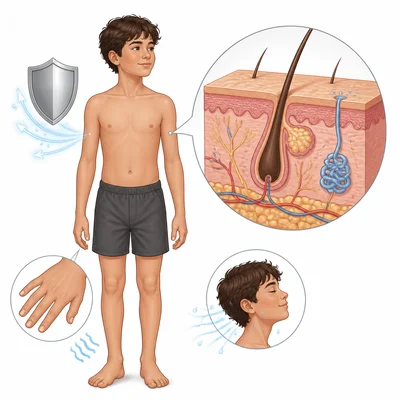
The integumentary system includes the skin, hair, nails, sweat glands, and oil glands. Name two major functions of this body system.
- 2
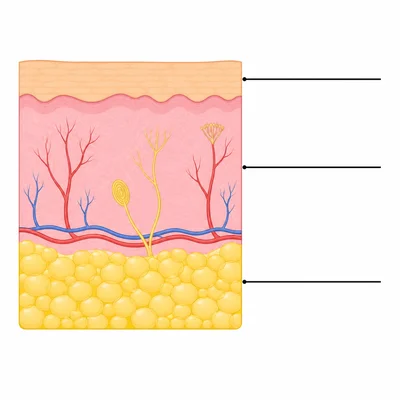
Label the three main layers of the skin from outside to inside.
- 3
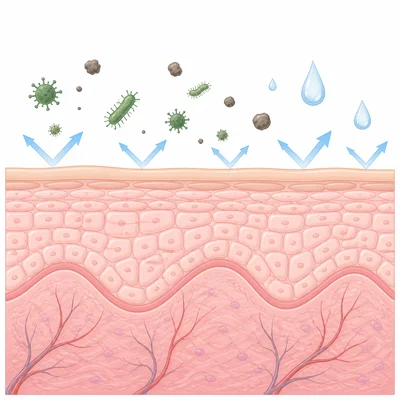
The epidermis is the outer layer of the skin. Explain why the epidermis is important even though it is thin.
- 4
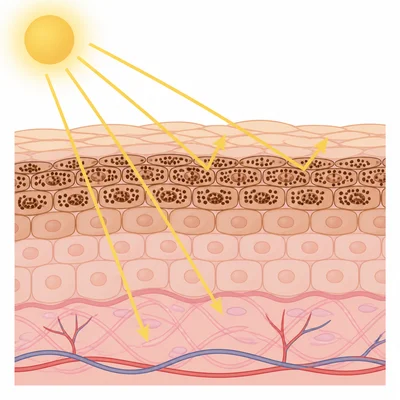
Melanin is a pigment made by cells in the skin. Describe one way melanin helps protect the body.
- 5
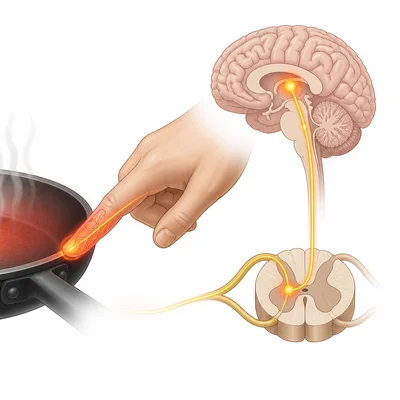
A student touches a hot pan and quickly pulls their hand away. Which part of the integumentary system helped detect the heat, and what information did it send to the nervous system?
- 6
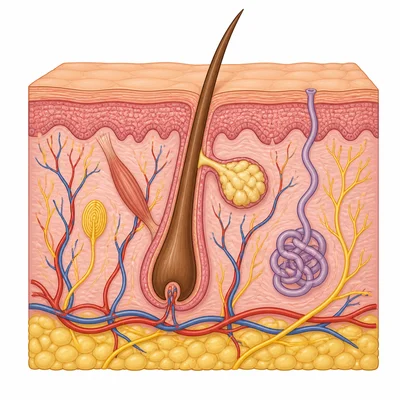
Look at a diagram of skin that shows a hair follicle, sweat gland, oil gland, blood vessels, and nerves. Choose two structures and explain what each one does.
- 7
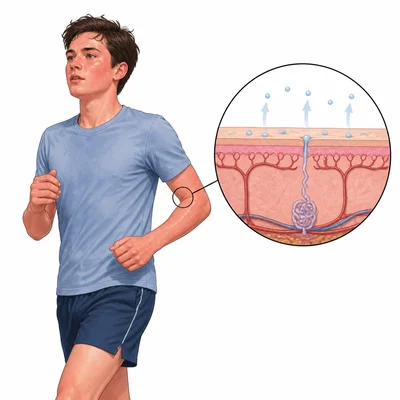
When you exercise on a warm day, your skin may become red and sweaty. Explain how these changes help maintain homeostasis.
- 8
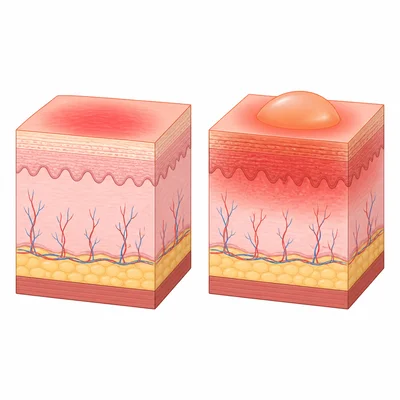
Compare a first-degree burn and a second-degree burn. Include the skin layers affected and one possible symptom of each.
- 9
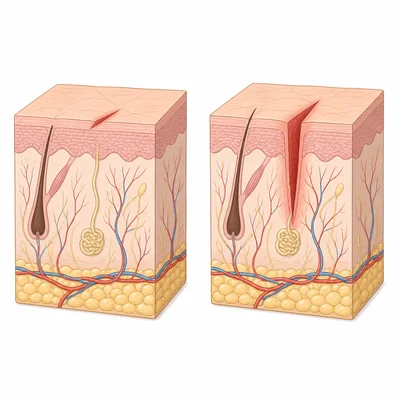
The dermis contains blood vessels, nerves, sweat glands, and hair follicles. Why would damage to the dermis be more serious than a shallow scratch on the epidermis?
- 10
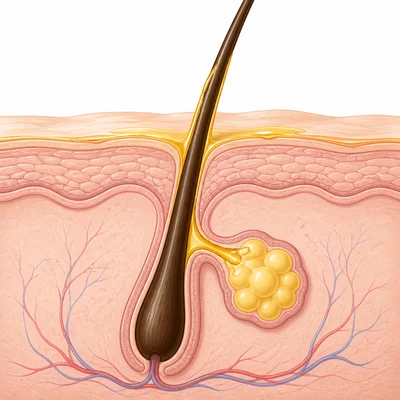
Explain how oil glands help the skin and hair.
- 11
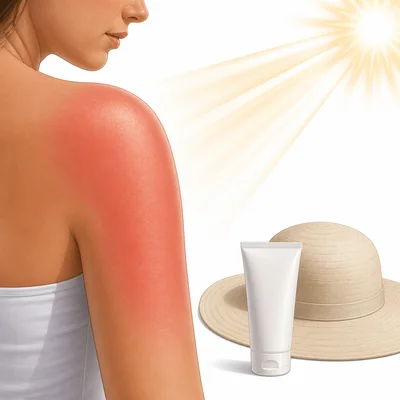
A person spends several hours in strong sunlight without sunscreen and gets a sunburn. Explain what caused the sunburn and name one way to help prevent it in the future.
- 12
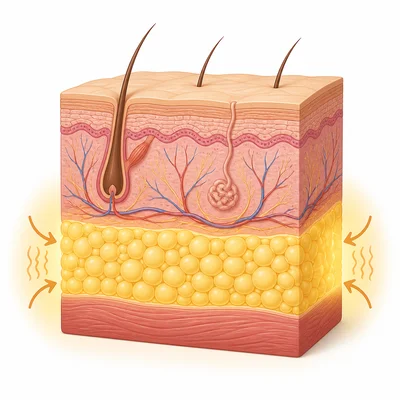
The hypodermis contains fat tissue under the dermis. Describe two ways this layer helps the body.