Why Do Vaccines Teach the Body?
How a safe preview builds immune memory
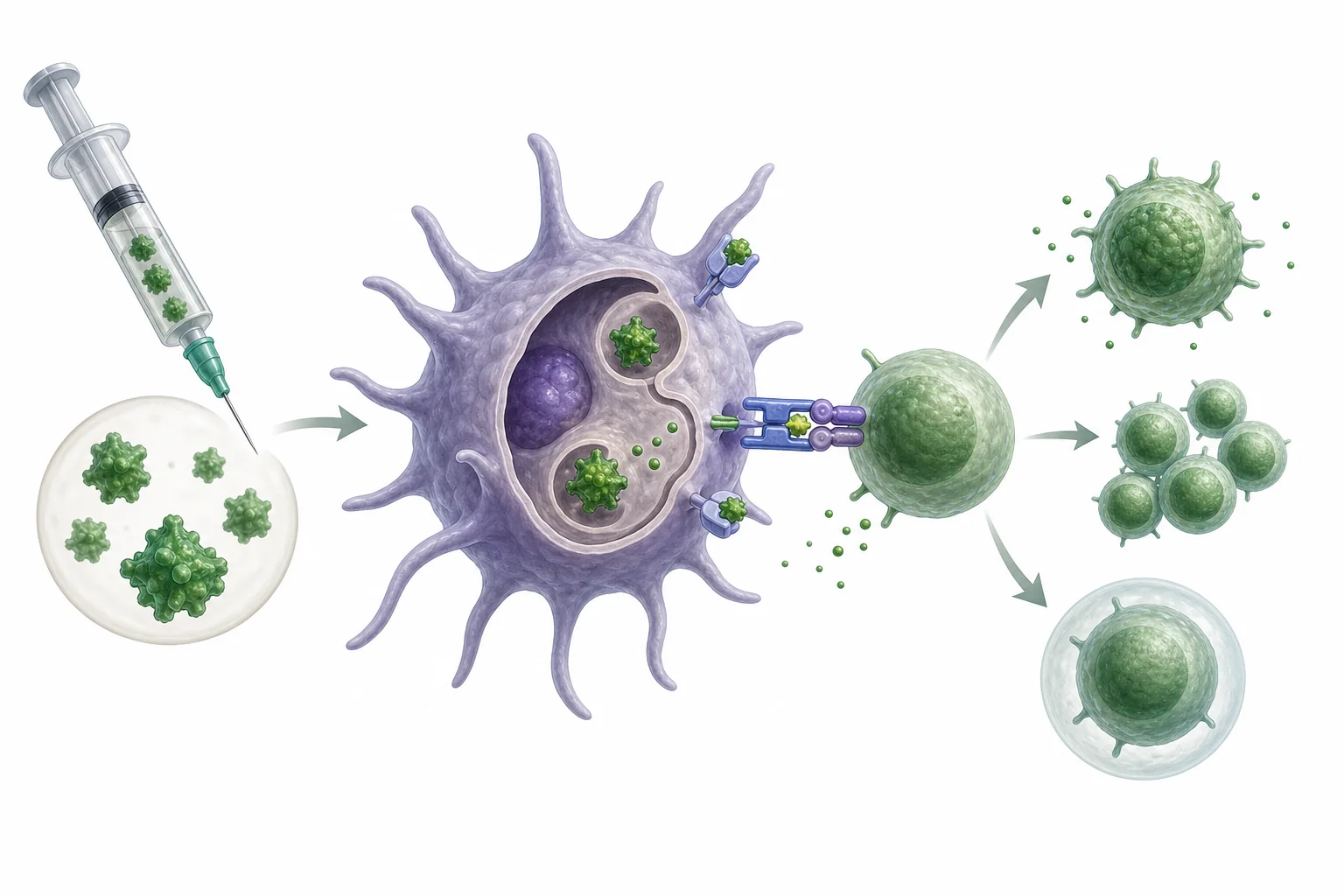
Vaccines give the body a safe preview of a germ. Immune cells learn which shape to watch for and make defenses that fit it. If the real germ appears later, the body can respond faster and keep you from getting very sick.
A vaccine is not a force field. It is a lesson for the immune system. The lesson starts with a harmless part of a germ, a weakened germ, or instructions that help your cells briefly make a germ shaped target. That target is called an antigen. Immune cells inspect it, choose matching defenders, and build memory. The next time the same germ enters the body, the response can start sooner and grow stronger. This is why vaccines can prevent serious disease even though they do not make the body germ proof. In high school biology, this connects cell communication, protein shape, homeostasis, and feedback. The body has to tell self from not self, activate the right cells, and store information without using a brain. Vaccines use that natural system. They train it before the risk is high.
A safe preview
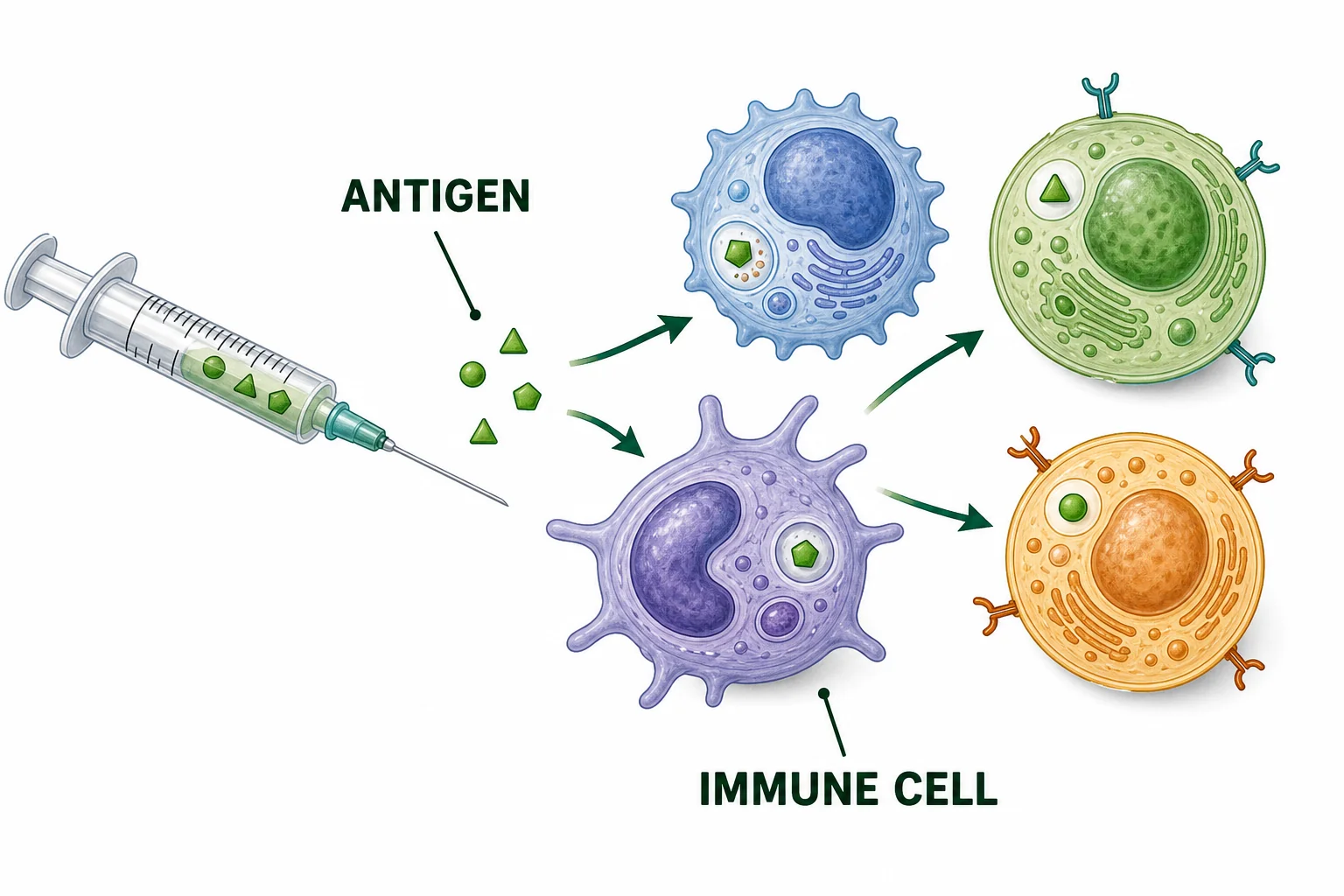
A vaccine starts with a target the immune system can safely recognize.
Shape is the signal
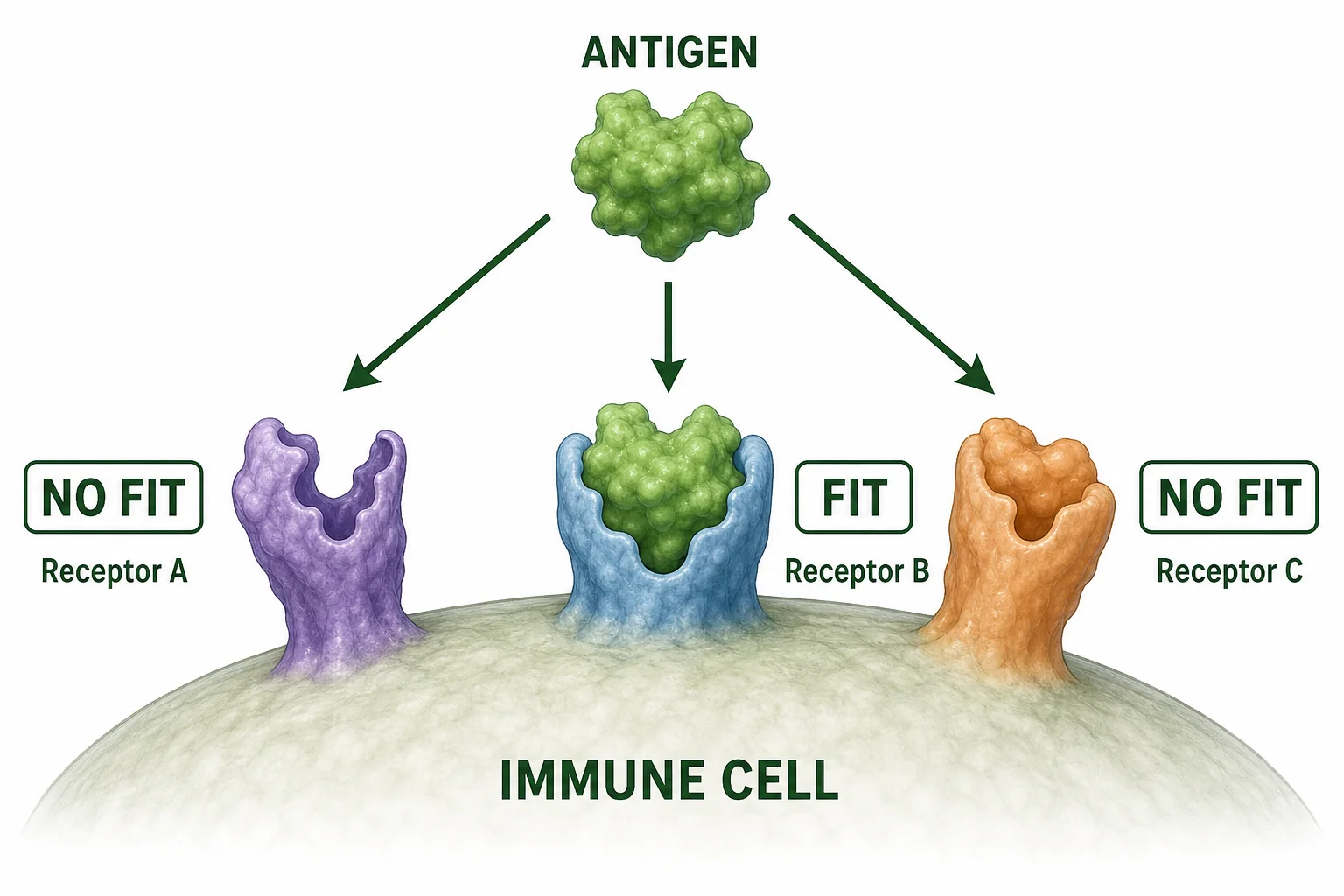
Immune cells respond when their receptors fit an antigen well enough.
B cells make antibodies
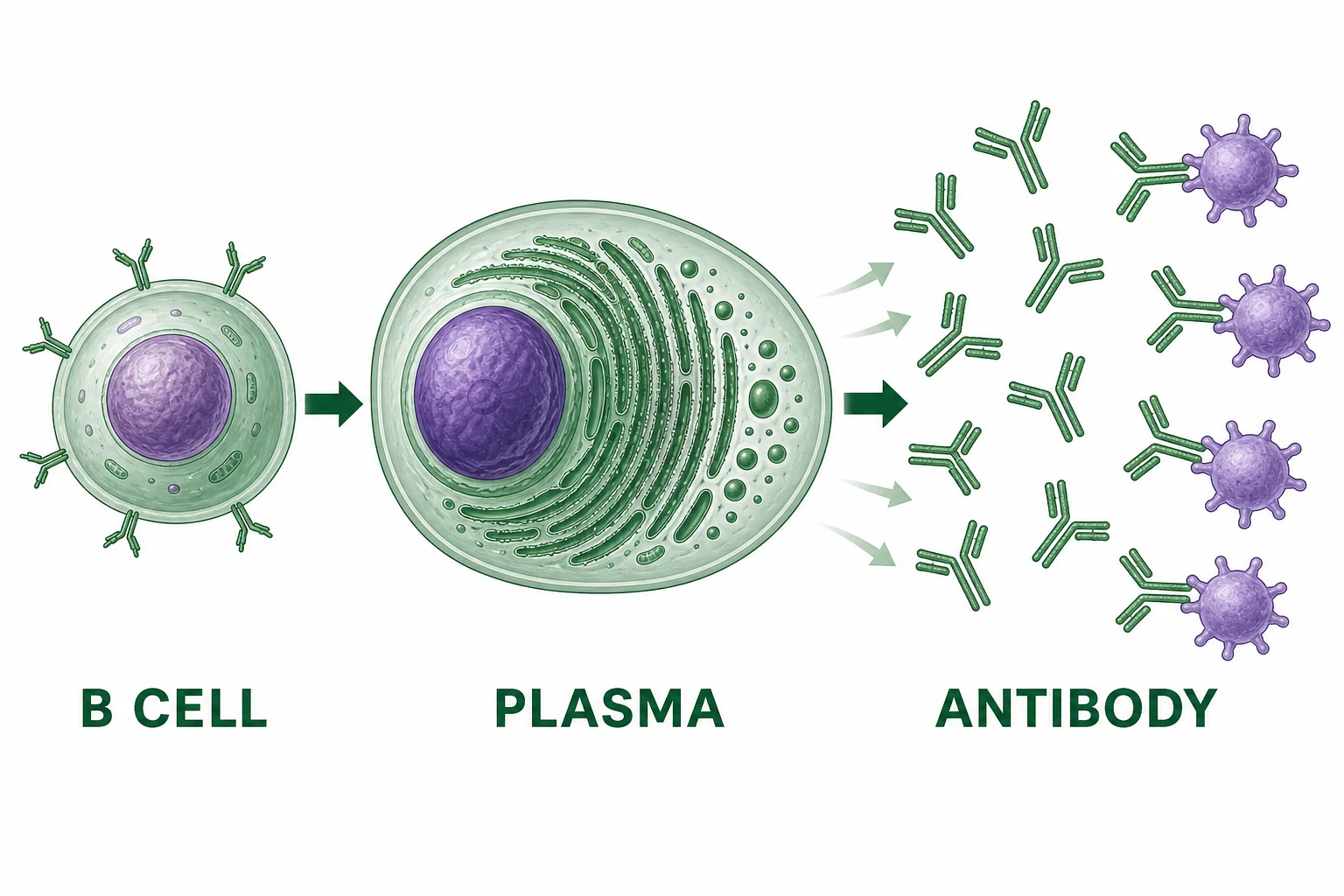
Antibodies are matching proteins made after B cells are activated.
T cells add control
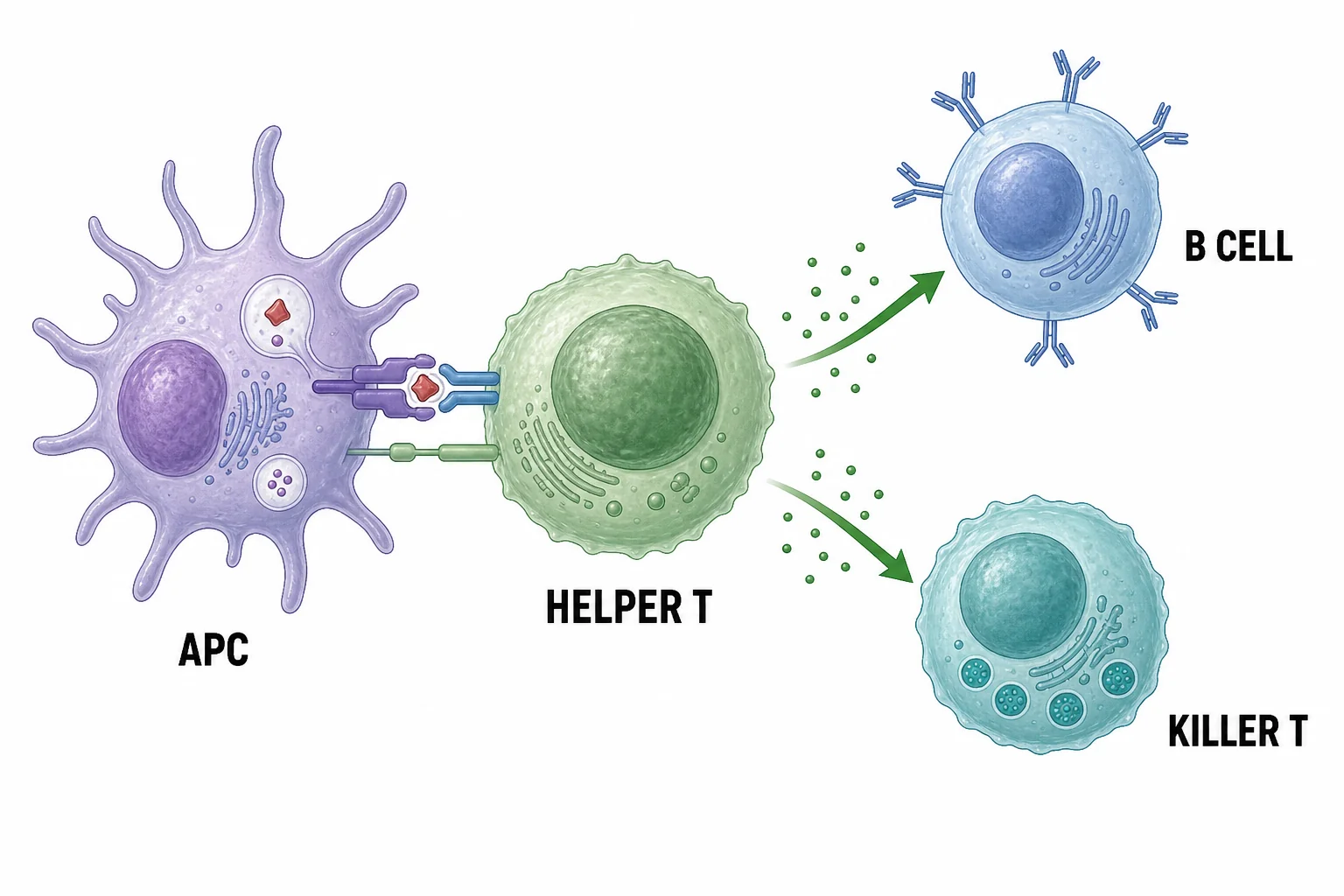
T cells help match the immune response to the kind of infection.
Memory speeds the future
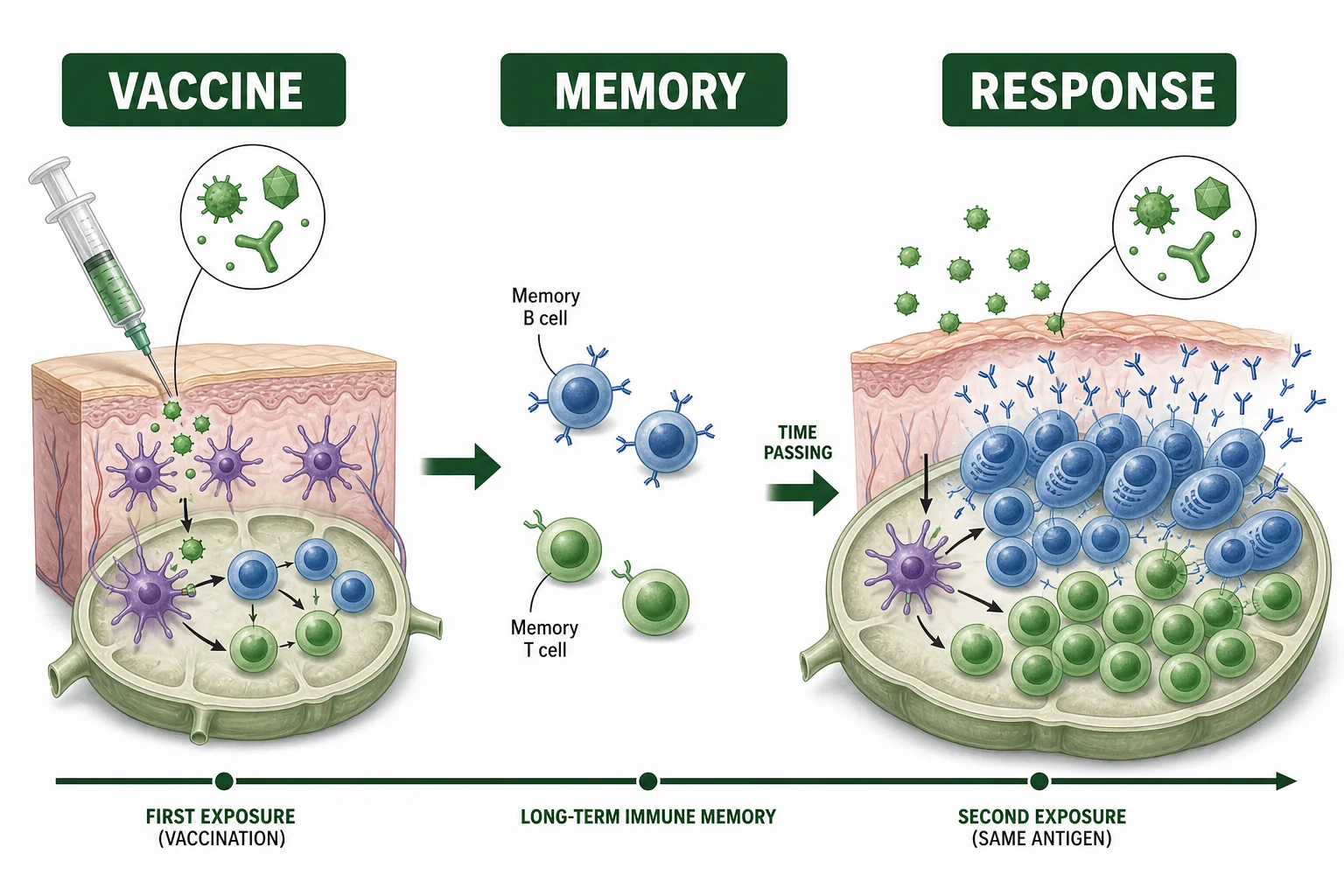
Immune memory turns a first lesson into a faster second response.
Vocabulary
- Antigen
- A molecule or molecular shape that immune cells can recognize as a target.
- Antibody
- A protein made by B cells that binds to a specific antigen.
- B cell
- An immune cell that can become a plasma cell or memory B cell after activation.
- T cell
- An immune cell that helps control immune responses or kills infected body cells.
- Memory cell
- A long lived immune cell that responds quickly if the same antigen appears again.
- Booster
- An extra vaccine dose that refreshes or strengthens immune memory.
In the Classroom
Model antigen matching
20 minutes | Grades 9-12
Students cut out several paper antigen shapes and receptor shapes. They test which receptors fit and use the matches to explain why only some immune cells activate.
Build a vaccine response timeline
30 minutes | Grades 9-12
Students arrange cards for antigen exposure, B cell activation, antibody production, T cell help, and memory cell formation. Then they compare a first response with a second response.
Claim, evidence, reasoning on boosters
25 minutes | Grades 9-12
Students read a short data table showing antibody levels after dose one, dose two, and a later booster. They write a claim about why boosters can improve protection and support it with evidence from the data.
Key Takeaways
- • Vaccines give immune cells a safe preview of an antigen.
- • Immune recognition depends on a fit between antigen shapes and cell receptors.
- • B cells can become plasma cells that release matching antibodies.
- • T cells help coordinate responses and can destroy infected cells.
- • Memory B cells and memory T cells help the body respond faster later.