Practice analyzing how cells receive, process, and respond to signals through receptor proteins, second messengers, phosphorylation cascades, feedback, and cell-to-cell communication.
Read each problem carefully. Use complete sentences, include key vocabulary, and show your reasoning where calculations or pathway analysis are required.
Receptors, pathways, amplification, and cellular responses
Biology - Grade 9-12
- 1
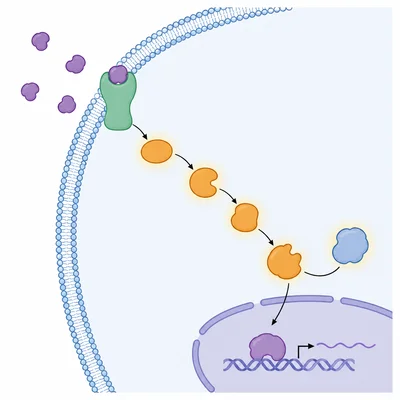
Describe the three main stages of a signal transduction pathway: reception, transduction, and response. Use a hormone binding to a target cell as your example.
- 2
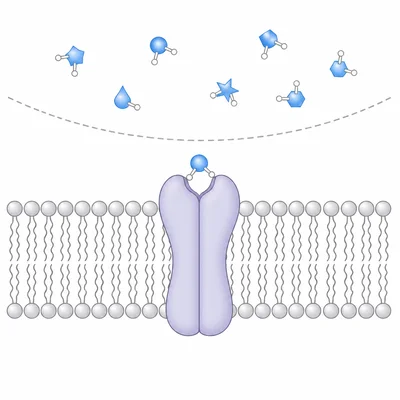
A signaling molecule is polar and cannot pass through the phospholipid bilayer. Predict whether its receptor is more likely to be located on the plasma membrane or inside the cytoplasm. Explain your reasoning.
- 3
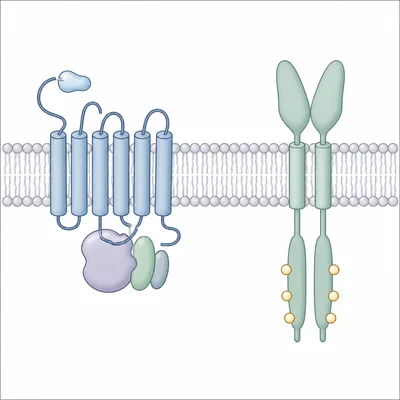
Compare G protein-coupled receptors and receptor tyrosine kinases. Include one similarity and one key difference in your answer.
- 4
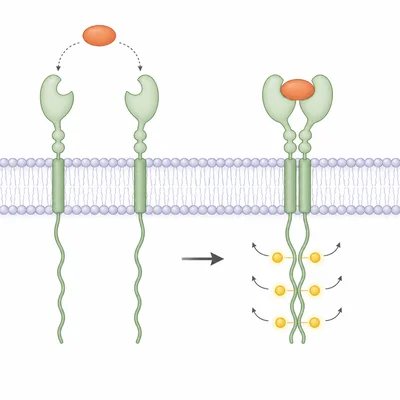
A scientist adds a ligand to a cell culture and observes that a receptor tyrosine kinase forms a dimer. Explain why dimerization is important for this type of receptor.
- 5
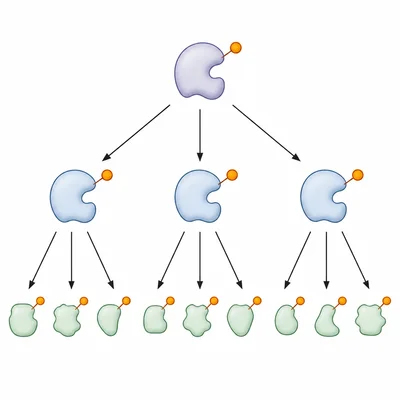
In a phosphorylation cascade, one activated protein kinase can activate many target proteins. Explain how this can amplify a signal.
- 6
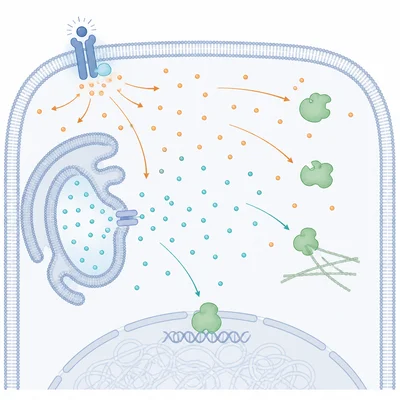
Cyclic AMP, calcium ions, and IP3 are examples of second messengers. Explain what a second messenger is and why second messengers are useful in cell signaling.
- 7
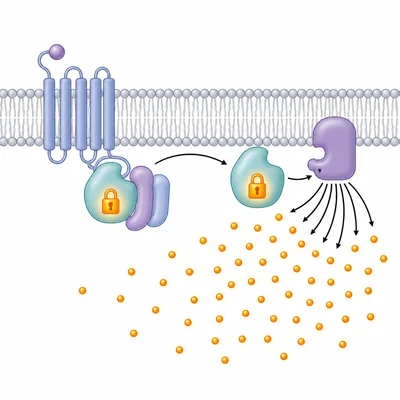
A mutation prevents a G protein from hydrolyzing GTP to GDP. Predict how this mutation could affect the signaling pathway.
- 8
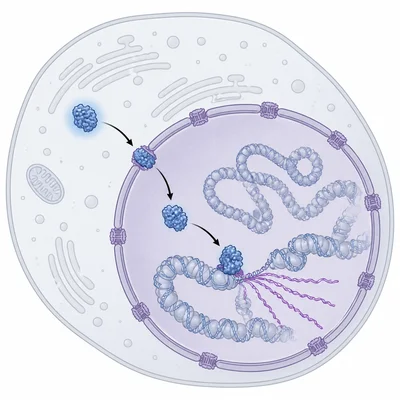
A pathway activates a transcription factor that enters the nucleus. Explain how this can change the phenotype of a cell.
- 9
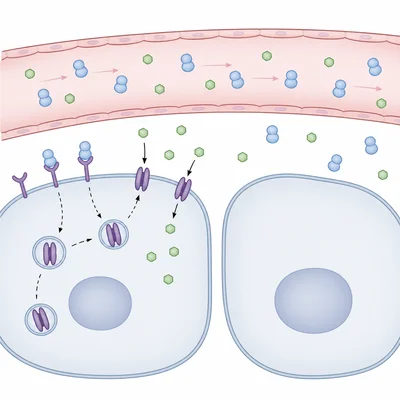
Insulin signaling causes many body cells to increase glucose uptake. Explain why only target cells respond strongly to insulin, even though insulin travels through the bloodstream.
- 10
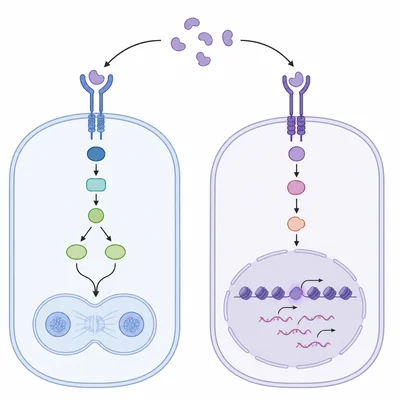
Two cell types receive the same signaling molecule, but one cell type divides and the other cell type changes its gene expression without dividing. Explain how the same signal can cause different responses.
- 11
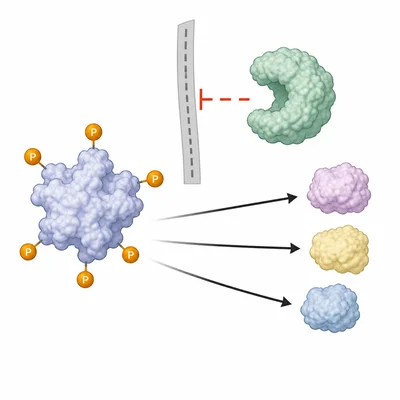
A drug blocks a protein phosphatase in a signaling pathway. Predict how this drug could affect proteins that are normally turned off by dephosphorylation.
- 12
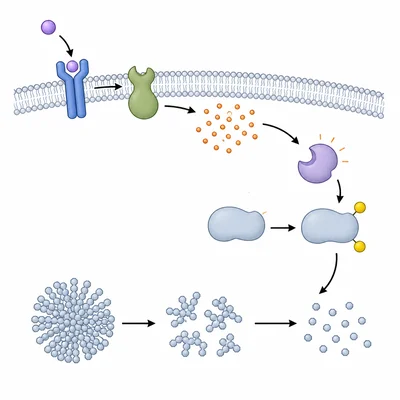
Analyze this pathway: A ligand binds a receptor, the receptor activates adenylyl cyclase, adenylyl cyclase increases cAMP, cAMP activates protein kinase A, and protein kinase A phosphorylates enzymes that break down glycogen. Identify the second messenger and describe the final cellular response.