Sign in to save

Bookmark this page so you can find it later.

Sign in to save

Bookmark this page so you can find it later.

Biology middle-school May 21, 2026

Why Do We Need Oxygen?

How cells turn food into usable energy
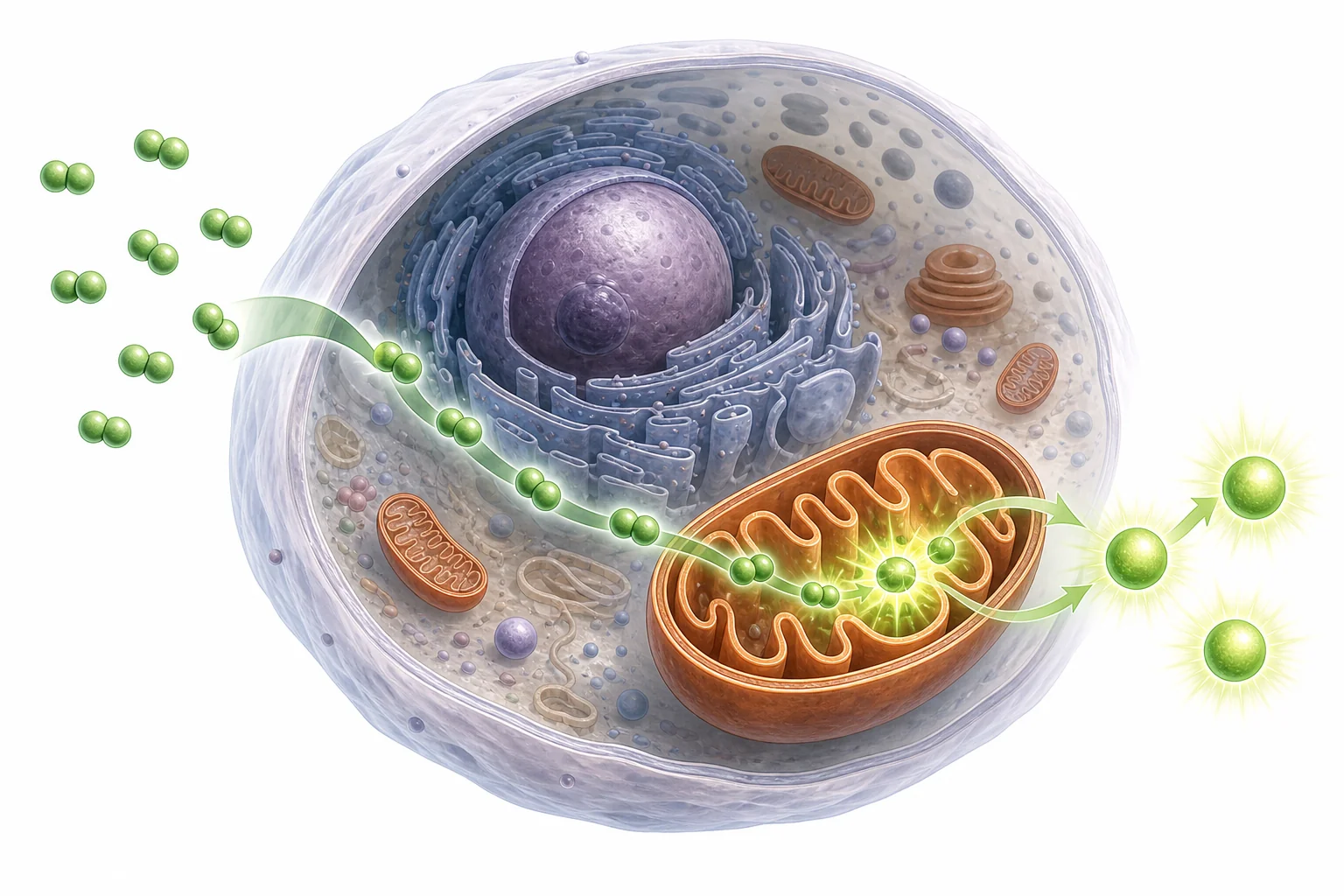
Diagram of oxygen moving from the lungs into the blood and then to body cells that use it to release energy from food.

Your body needs oxygen because it helps cells release energy from food. That energy powers movement, warmth, thinking, growth, and repair. Without oxygen, cells can only get a small amount of energy, so organs fail quickly.

Big Idea. NGSS MS-LS1-7 connects oxygen, food molecules, and cellular respiration to show how cells get matter and energy for life.

Every breath brings oxygen into your lungs, but oxygen is not used only in your lungs. It travels through your blood to nearly every cell in your body. Cells need a steady energy supply to build proteins, move materials, divide, send signals, and keep the body warm. Food supplies energy-rich molecules, especially glucose. Oxygen helps cells get much more usable energy from those molecules than they could get without it. This process is called cellular respiration. It happens in tiny cell structures called mitochondria. The overall reaction can be written as glucose plus oxygen make carbon dioxide, water, and usable energy. That usable energy is stored in a molecule called ATP. You breathe out the carbon dioxide and your cells use the ATP right away. Oxygen matters because it lets the chemistry of food become the energy of living.

Oxygen rides in the blood
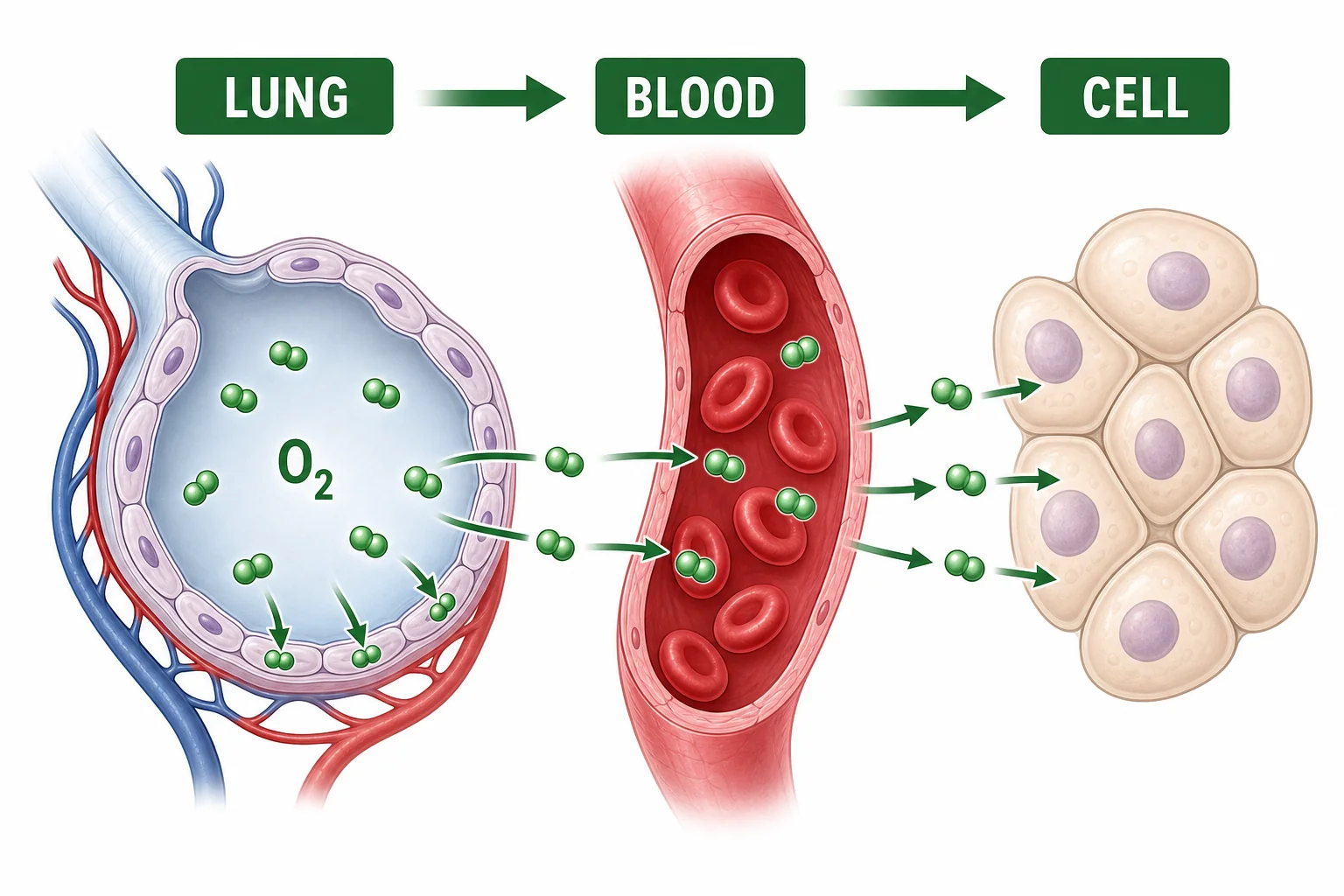
Oxygen moving from lung air sacs into blood vessels and then toward body cells.
Oxygen moves from lungs to blood to cells.
When you inhale, air moves through your nose or mouth, down your windpipe, and into your lungs. Inside the lungs are many tiny air sacs. Their thin walls let oxygen pass into nearby blood vessels. Red blood cells carry most of that oxygen with a protein called hemoglobin. The heart then pumps oxygen-rich blood through arteries to the body. Muscles, brain cells, skin cells, and gut cells all take oxygen from nearby capillaries. This delivery system matters because cells cannot store much oxygen. They need a constant supply. That is why breathing and heartbeat are linked. When you run, your cells use oxygen faster. Your breathing speeds up, and your heart pumps more blood each minute. The goal is simple. Keep oxygen moving from the air to the cells that need it.

Breathing starts the delivery of oxygen, but blood finishes the trip.

Food carries stored energy
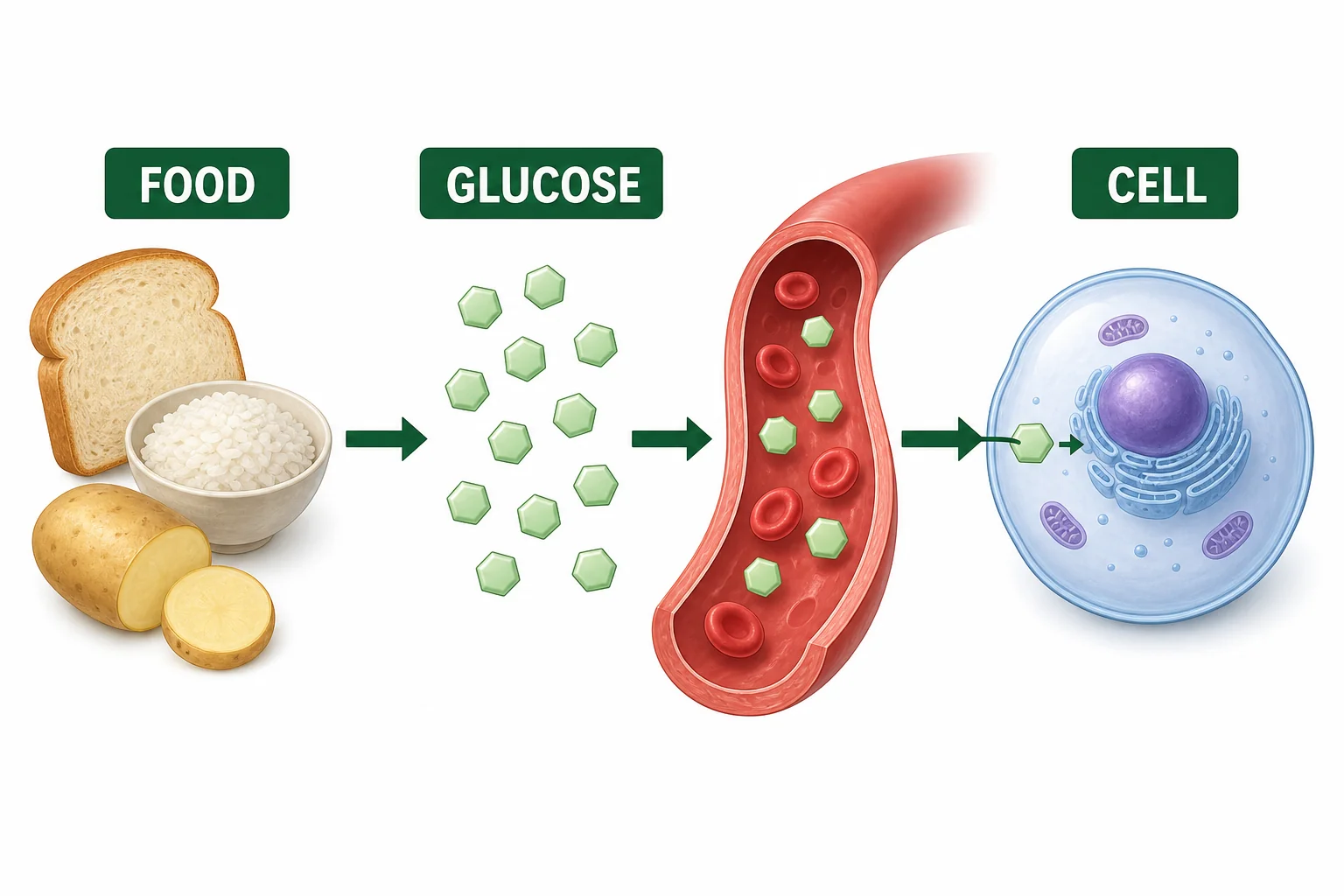
Food being digested into glucose molecules that enter the bloodstream and reach a cell.
Food supplies glucose fuel for cells.
Oxygen alone does not power your body. Cells also need fuel from food. During digestion, large food molecules are broken into smaller molecules. One important fuel is glucose, a simple sugar that travels in the blood. Glucose contains chemical energy stored in its bonds. Cells can break glucose apart and transfer some of that energy into ATP. Oxygen makes this transfer much more complete. Without oxygen, cells can still split glucose in a short pathway, but the energy harvest is small. With oxygen, cells can keep breaking down the fuel and capture far more usable energy. This is why eating and breathing belong in the same story. Food provides the fuel. Oxygen helps cells get the fuel’s energy in a controlled way. The process does not happen like a fire. It happens step by step inside cells.

Cells need both fuel from food and oxygen from air.

Mitochondria use oxygen
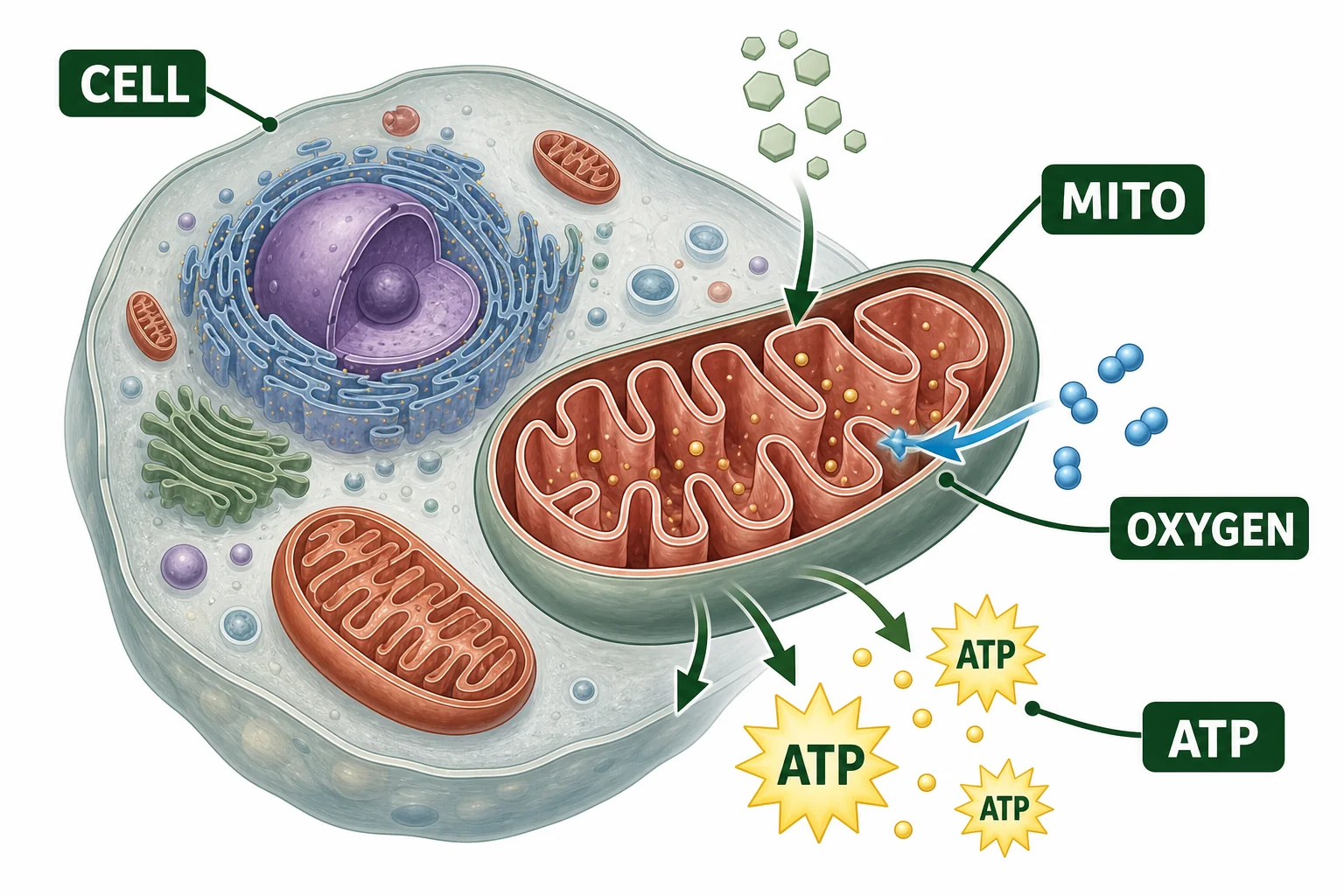
Cutaway view of a cell with mitochondria using oxygen to help make ATP.
Mitochondria are major sites of oxygen use.
Most oxygen use happens in mitochondria. These small structures are found inside many kinds of cells. They act like energy processing sites. Glucose is first partly broken down in the cell fluid. The products then enter mitochondria, where more reactions take place. Oxygen is used near the end of the process. It accepts tiny charged particles after energy has been transferred through a chain of molecules. That may sound small, but it keeps the whole chain working. If oxygen is not available, the chain backs up. The mitochondria cannot make ATP at their usual rate. Cells then switch to lower-energy pathways for a short time. This is one reason muscles burn during hard exercise. They are working faster than oxygen delivery can fully support. Oxygen is not the fuel itself. It is the final helper that lets mitochondria keep the energy transfer going.

Oxygen keeps the main ATP-making pathway running.

ATP is the cell’s spendable energy
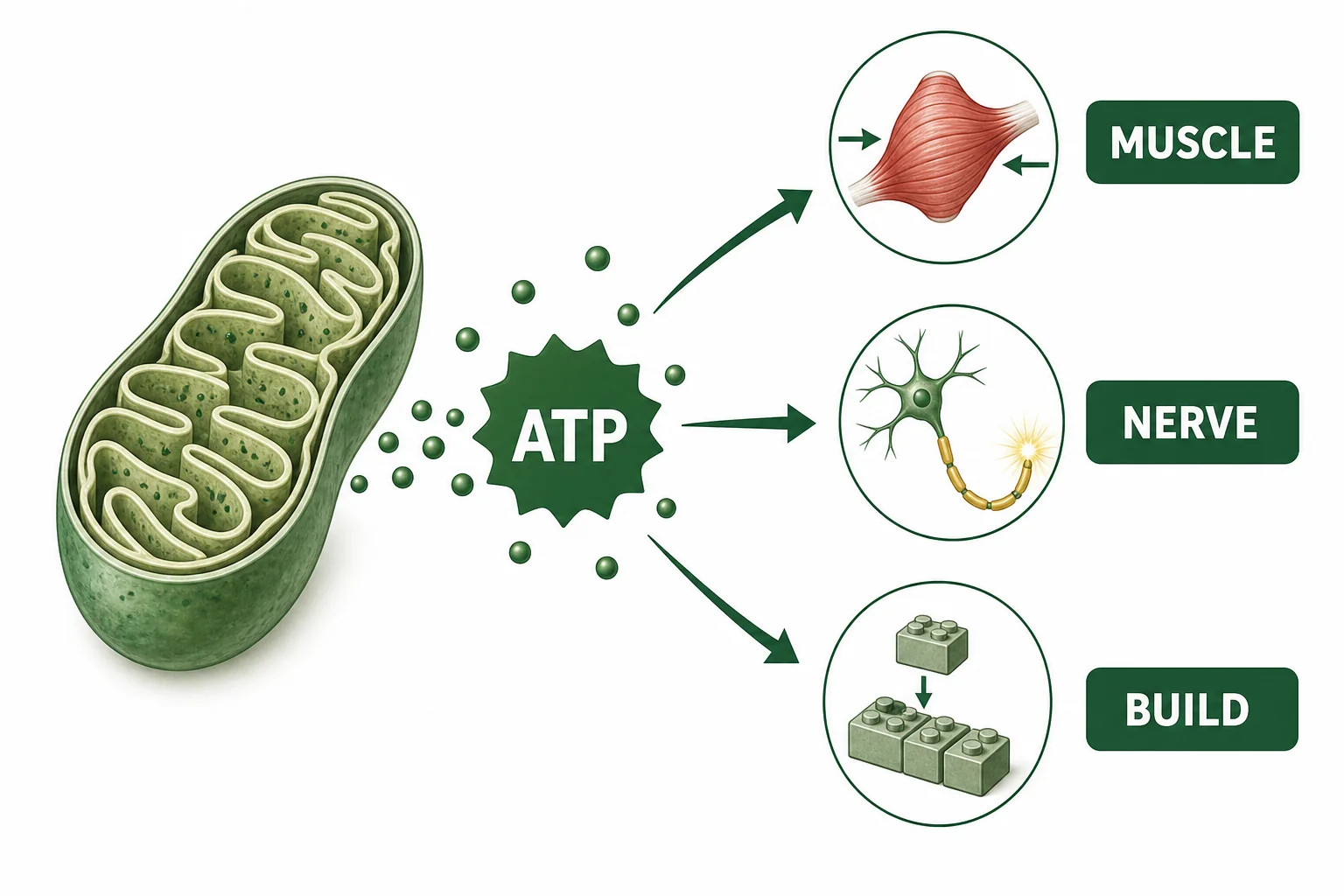
ATP molecules moving from a mitochondrion to cell activities such as muscle contraction and nerve signaling.
ATP powers many cell jobs.
ATP is a small molecule that cells use quickly. It is often described as a cell’s spendable energy because it can transfer energy to many jobs. A muscle cell uses ATP to contract. A nerve cell uses ATP to reset signals. A growing cell uses ATP to build new materials. Cells do not store huge piles of ATP. They make it and use it again and again. Cellular respiration is important because it refills the ATP supply. With oxygen, one glucose molecule can help produce much more ATP than it can without oxygen. The exact number can vary by cell type and conditions, but the pattern is clear. Oxygen makes energy release from glucose more efficient. That efficiency matters most in organs with high energy demand. Your brain, heart, and active muscles depend on a steady ATP supply every second.

ATP is made for immediate work inside cells.

Carbon dioxide is the waste
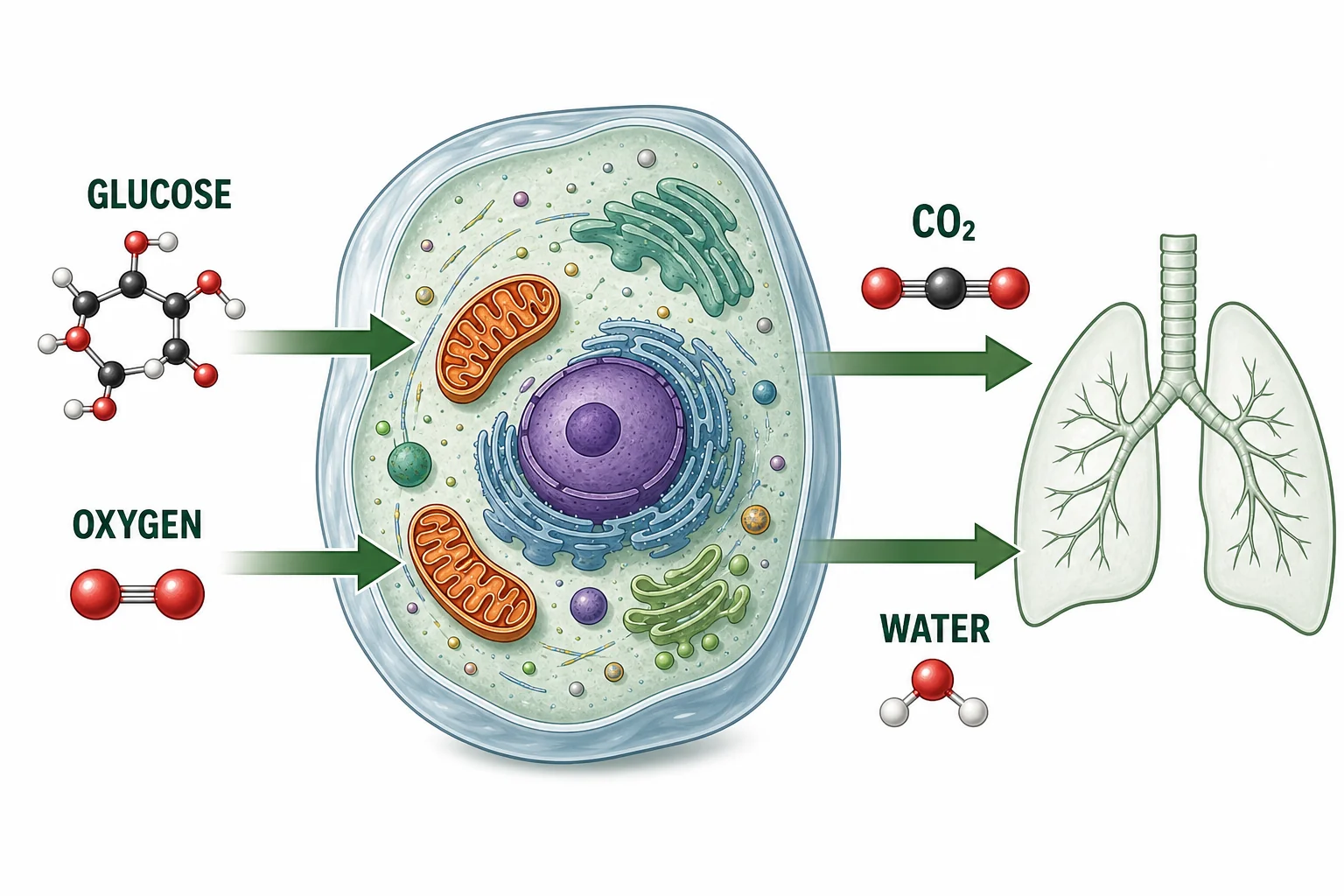
Cellular respiration shown as glucose and oxygen entering a cell, with carbon dioxide and water leaving.
Cellular respiration rearranges atoms.
Cellular respiration changes matter as well as energy. Glucose and oxygen do not disappear. Their atoms are rearranged into carbon dioxide and water. The carbon dioxide leaves cells, moves into the blood, and returns to the lungs. You breathe it out with each exhale. Water can be used by the body or removed in several ways. This matter flow links body systems together. The digestive system brings in food molecules. The respiratory system brings in oxygen and removes carbon dioxide. The circulatory system moves these materials between organs and cells. The cells do the chemical work. This is why oxygen is part of a larger life process, not just a gas we breathe. It connects air, food, blood, cells, and waste removal. The body survives because all those steps keep happening together.

Breathing out removes carbon dioxide made by cells.

Vocabulary

Cellular respiration
The process cells use to release usable energy from food molecules, usually with oxygen.
Mitochondria
Cell structures where many steps of cellular respiration happen.
ATP
A molecule that transfers energy to cell activities.
Glucose
A simple sugar that cells use as an important fuel.
Carbon dioxide
A waste gas made during cellular respiration and removed when you exhale.

In the Classroom

Trace the oxygen path

20 minutes | Grades 6-8

Students draw a path from air to lungs, blood, heart, capillaries, and body cells. They add arrows for oxygen going in and carbon dioxide coming out.

Model respiration with cards

25 minutes | Grades 6-8

Give groups cards labeled glucose, oxygen, carbon dioxide, water, and ATP. Students rearrange the cards to show inputs and outputs, then explain why ATP is not the same as oxygen or food.

Breathing rate and energy demand

30 minutes | Grades 6-8

Students measure resting breathing rate, then compare it after one minute of safe light activity. They connect the change to increased oxygen delivery and carbon dioxide removal.

Key Takeaways

  • Oxygen helps cells release usable energy from food.
  • Glucose is a fuel molecule that stores chemical energy.
  • Mitochondria use oxygen during major steps of cellular respiration.
  • ATP carries energy to many cell jobs.
  • Carbon dioxide is a waste product that leaves the body when you exhale.