Why Are Coral Reefs Turning White?
A stress signal from a living partnership
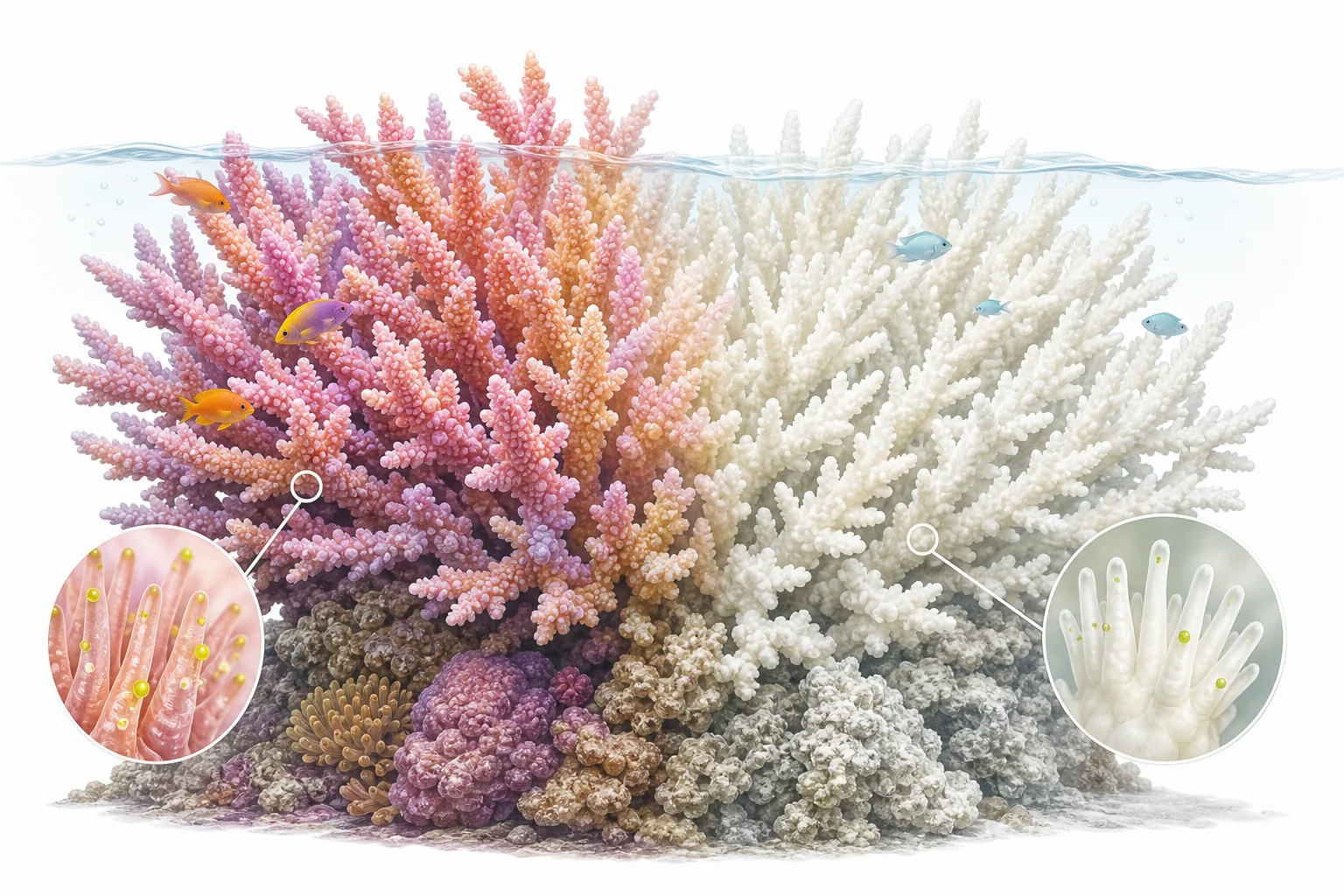
Corals turn white when warm water makes them lose the tiny algae that live in their tissues. Those algae help feed coral and give reefs much of their color. If heat lasts too long, corals can starve, get sick, or die.
A coral reef is built by tiny animals, but it works like a crowded city. Fish, crabs, snails, sea turtles, algae, and microbes all use the reef for food or shelter. The coral animals are the builders. They make hard skeletons from minerals in seawater. Inside their tissues live tiny algae that capture sunlight and share food with the coral. This partnership is why many reefs grow in clear, warm, shallow water. It is also why heat can cause trouble. When water stays too warm, the partnership can break down. The algae leave or are pushed out, and the coral’s pale skeleton shows through its clear tissue. This is coral bleaching. The Coral Reef Ecosystem cheat sheet can help connect this process to food webs, habitats, and ecosystem change.
Coral is an animal
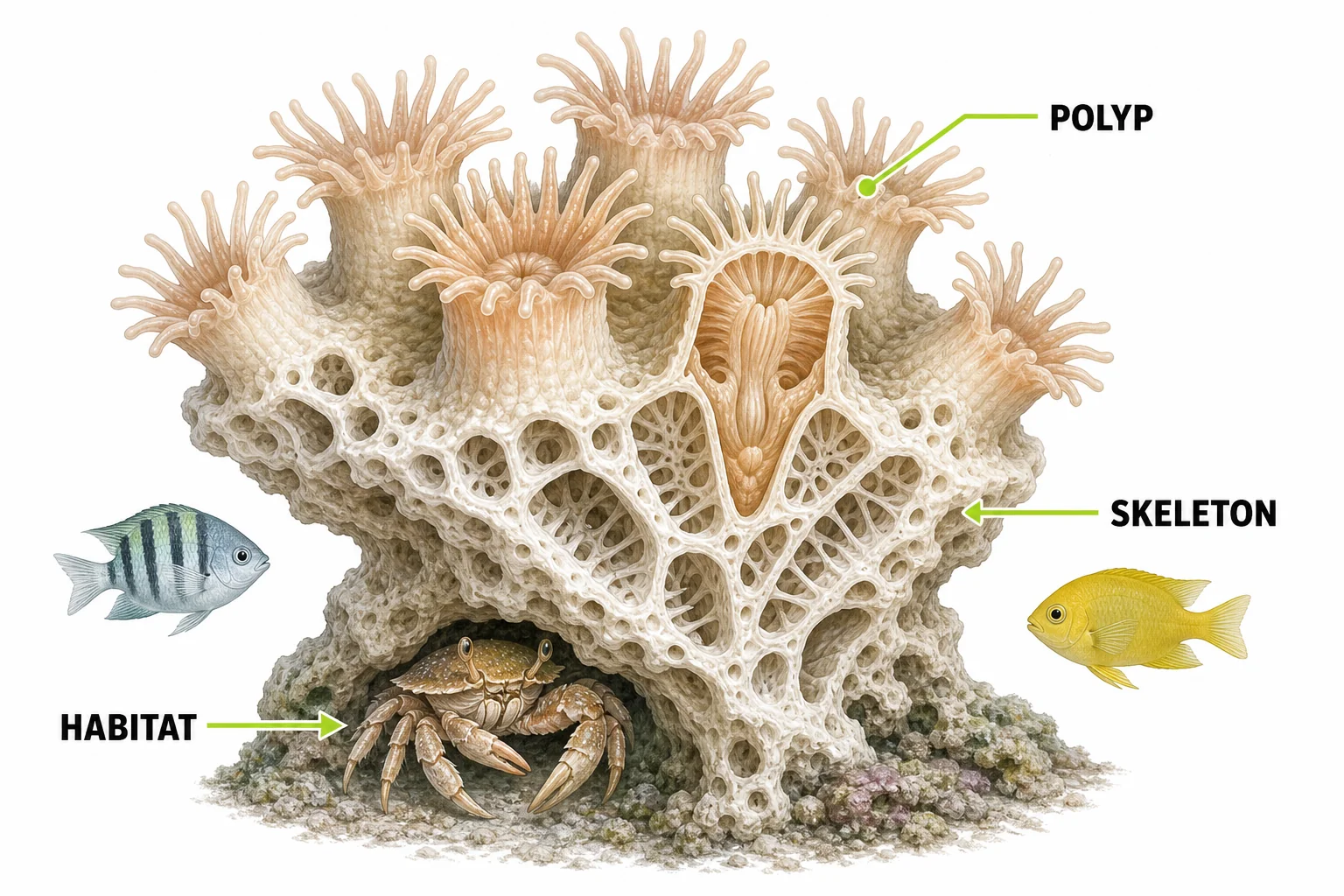
A reef is made by animals that also create habitat.
A tiny algae partnership
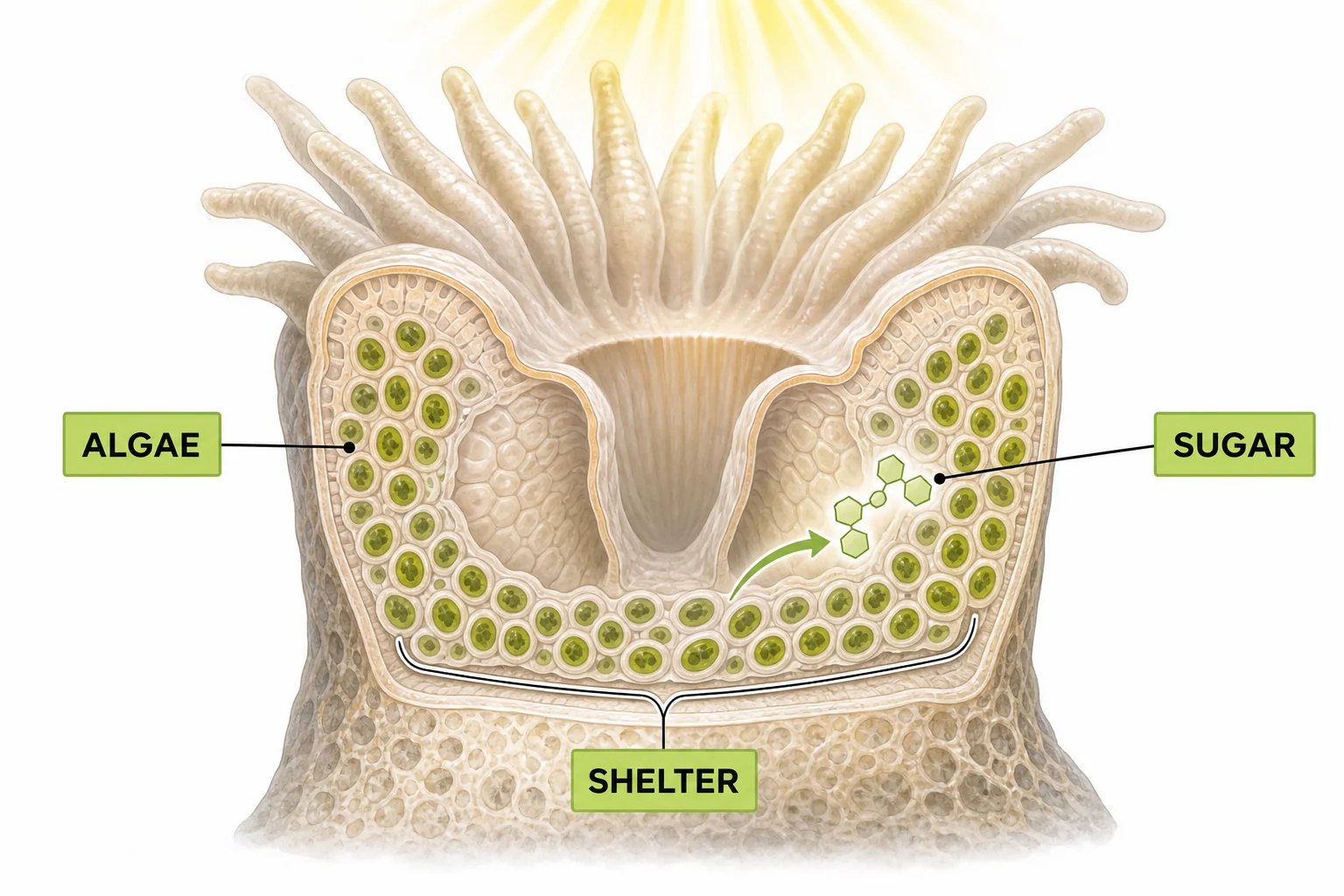
Healthy coral depends on food made by tiny algae.
Heat breaks the balance
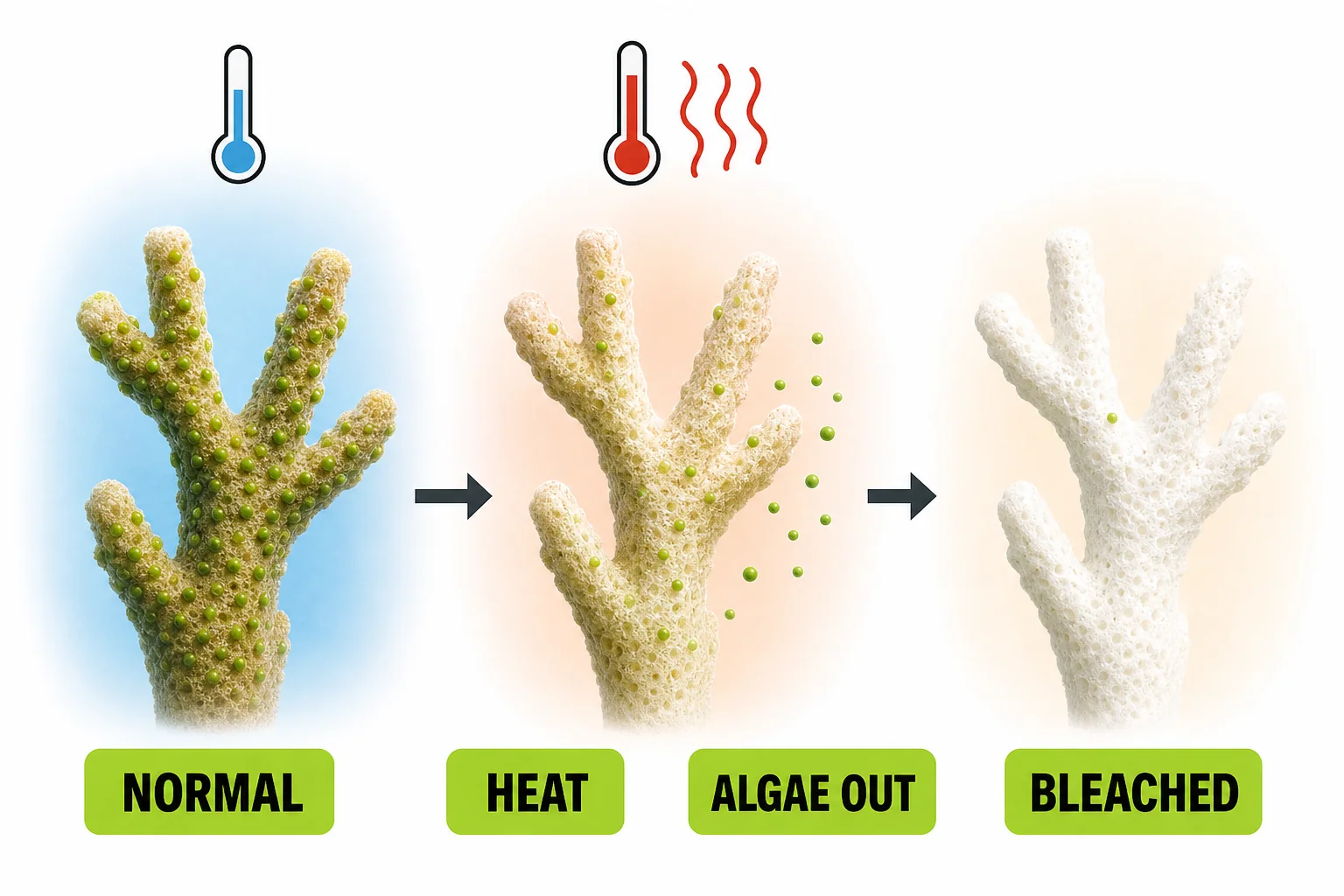
Bleaching is a sign that coral is stressed, not proof that it is already dead.
Acid makes building harder
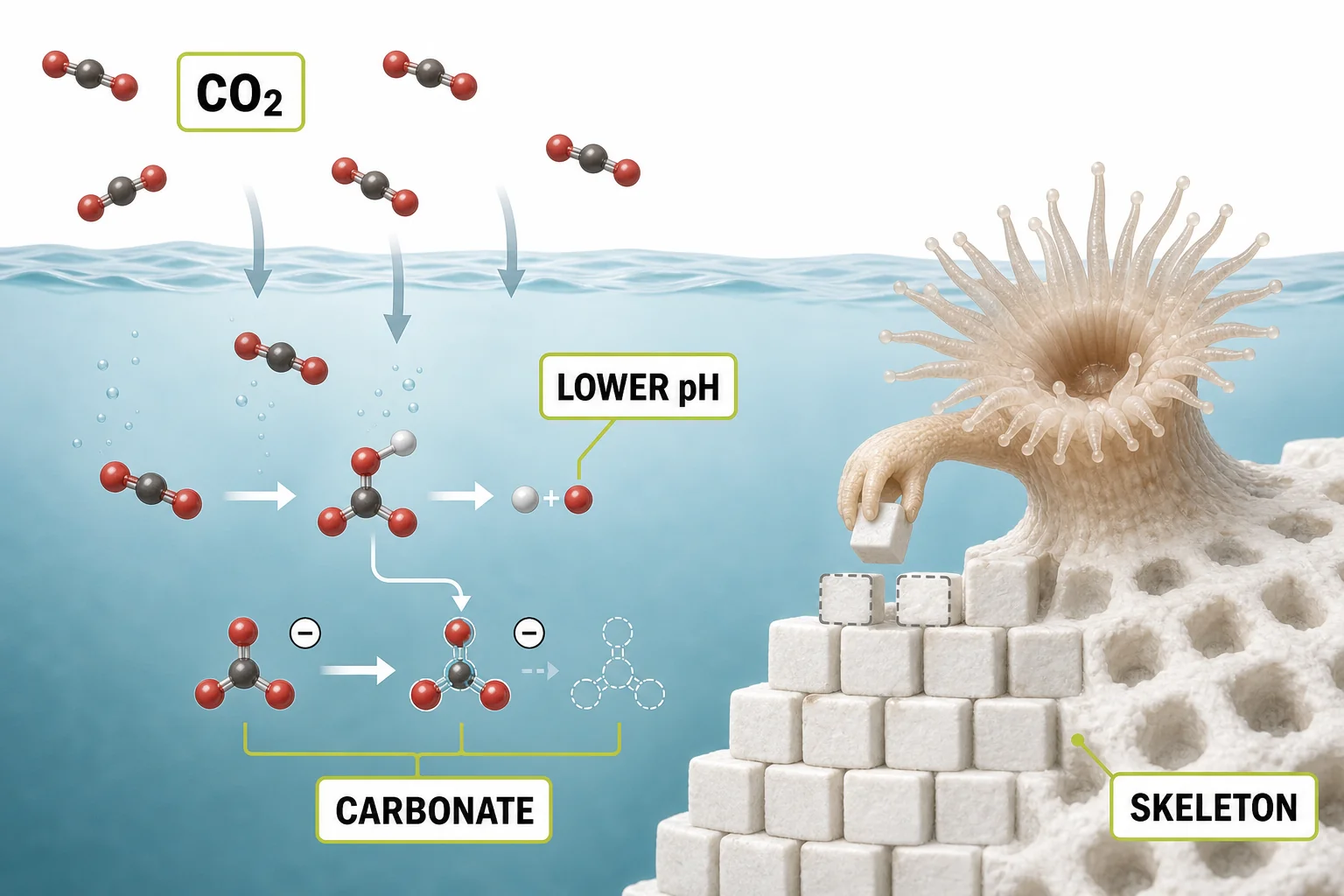
Acidification does not bleach coral directly, but it can weaken reef growth.
Recovery depends on time
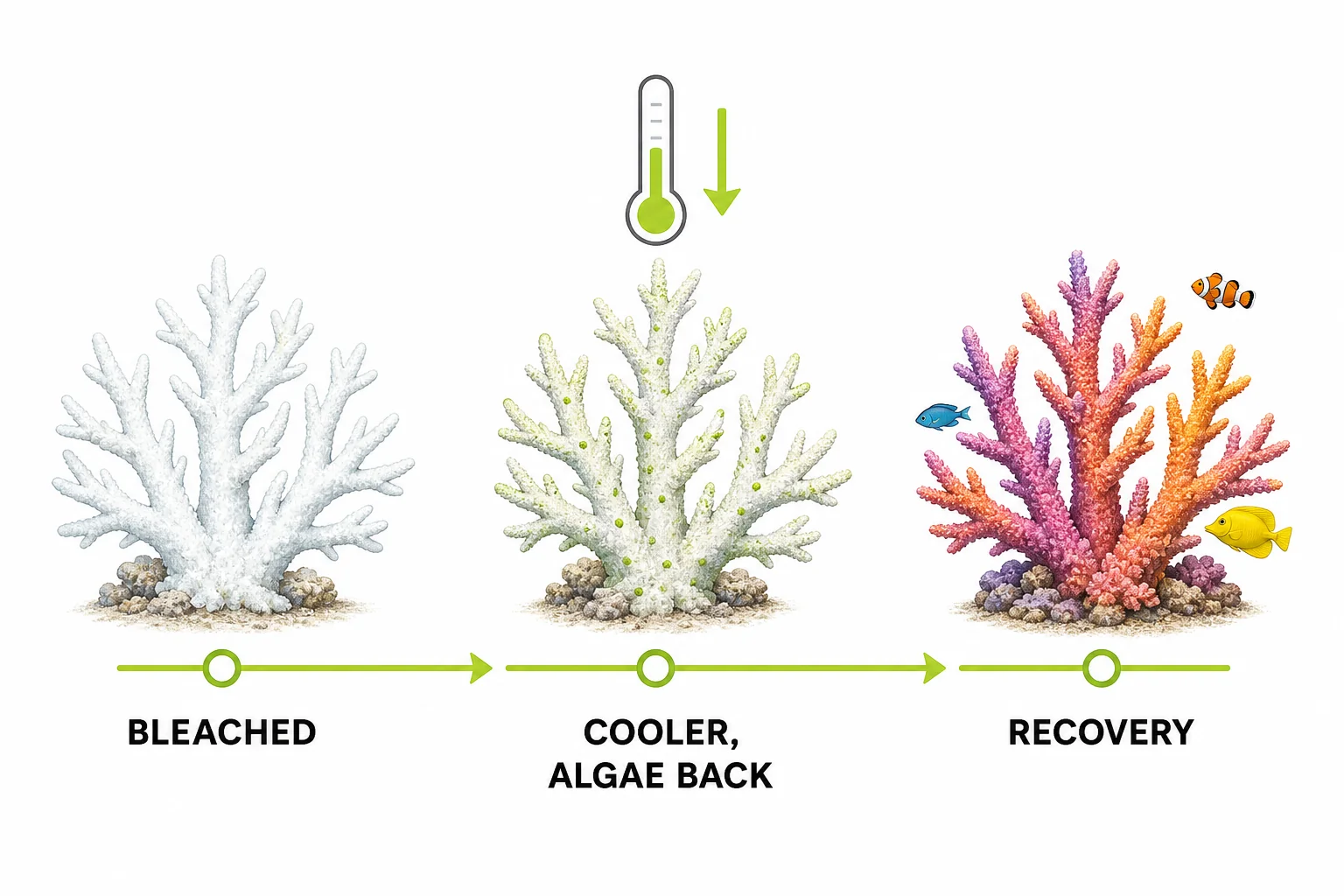
Less stress gives coral time to rebuild its partnership with algae.
Vocabulary
- coral polyp
- A small coral animal that lives with many other polyps in a colony and builds a hard skeleton.
- zooxanthellae
- Microscopic algae that live inside coral tissue and make food using sunlight.
- bleaching
- The whitening of coral after it loses many of its algae or their color pigments during stress.
- symbiosis
- A close relationship between different organisms, such as coral and its algae.
- ocean acidification
- A change in seawater chemistry caused when extra carbon dioxide dissolves in the ocean and lowers pH.
- abiotic factor
- A nonliving part of an ecosystem, such as temperature, light, water chemistry, or sediment.
In the Classroom
Bleaching stress model
20 minutes | Grades 6-8
Students use colored paper dots or beads to model algae living inside coral tissue. They remove dots during a simulated heat wave, then discuss how losing algae affects energy flow in the reef.
Reef stress web
30 minutes | Grades 6-8
Small groups make a concept map linking heat, acidification, pollution, algae loss, coral growth, and fish habitat. Students mark each link as a living factor, a nonliving factor, or a human impact.
Recovery timeline claim
25 minutes | Grades 6-8
Students compare two simple bleaching timelines, one with short heat stress and one with repeated heat stress. They write a claim with evidence about which reef is more likely to recover and why.
Key Takeaways
- • Corals are animals that build hard skeletons and create reef habitat.
- • Tiny algae inside coral tissue provide food and much of the coral’s color.
- • Warm water lasting too long can cause coral to lose those algae and turn white.
- • Bleached coral may recover if conditions improve before it runs out of energy.
- • Ocean acidification and other stresses can make reef growth and recovery harder.