Predator-Prey Population Lab
Watch rabbit and fox populations rise and fall together as students explore the Lotka-Volterra equations. Adjust starting populations, growth rates, and predation pressure, then run the simulation to see boom-and-bust cycles emerge from simple rules of ecology.
Guided Experiment The Classic Predator-Prey Cycle
Predict what will happen to fox and rabbit populations over time when they share an ecosystem. Will they reach a constant number, both go extinct, or do something else?
Write your hypothesis in the Lab Report panel, then click Next.
Controls
Starting Populations
Rate Parameters
Live Results
N is prey count, P is predator count. Parameters a, b, c, d are the growth, predation, predator gain, and predator death rates.
Data Table
(0 rows)| # | Trial | Time(t) | Prey(rabbits) | Predators(foxes) | Prey Growth(a) | Predation(b) | Pred Growth(c) | Pred Death(d) |
|---|
Reference Guide
The Lotka-Volterra Equations
Two coupled equations describe how prey (N) and predator (P) numbers change over time.
Prey grow at rate a and are eaten at rate b. Predators grow from eaten prey at rate c and die naturally at rate d.
Biology Context
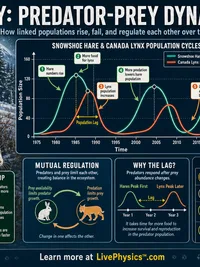
Real ecosystems show similar cycles. The famous lynx and snowshoe hare data from Hudson Bay records a roughly 10-year oscillation.
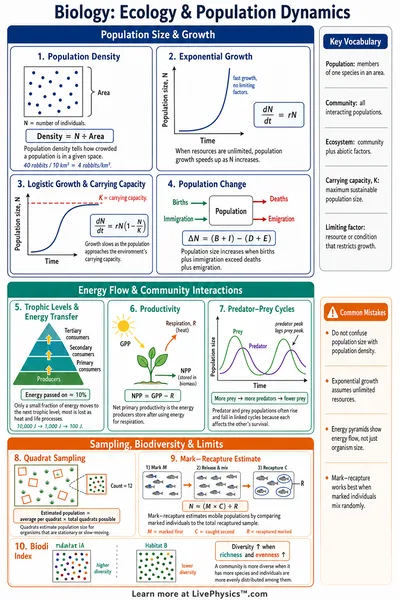
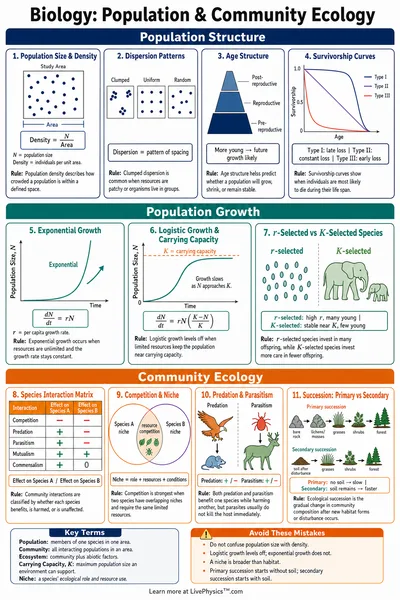
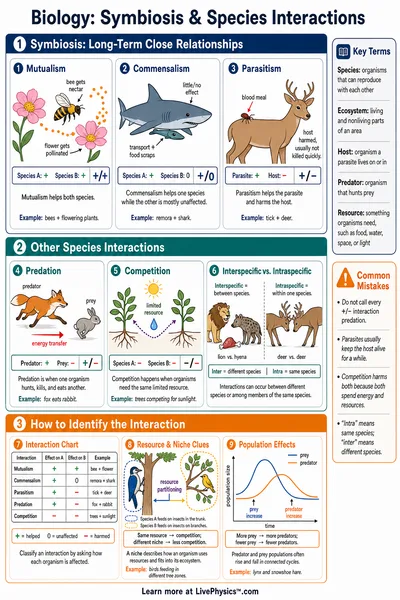
Prey grow when predators are rare. Predators grow when prey are abundant. Each population lags the other, producing waves.
NGSS MS-LS2-1, MS-LS2-2, MS-LS2-4 cover resource availability, interactions among organisms, and how disrupting one population affects others.
Equilibrium Point
The populations can sit at a steady value where neither grows nor shrinks.
This equilibrium is unstable. Any small disturbance starts the cycles again, which is why real populations rarely stay flat.
How to Run an Experiment
Pick a preset or set your own values. Click Run and watch the chart fill in.
Press Record Data Point at intervals to build a data table you can export as CSV.
Write a hypothesis, observations, and conclusions in the Lab Report, then download a PDF for class.