Sign in to save

Bookmark this page so you can find it later.

Sign in to save

Bookmark this page so you can find it later.

Health elementary May 24, 2026

Why Are Some Foods Called 'Junk' and Others Aren't?

How food choices fuel a growing body
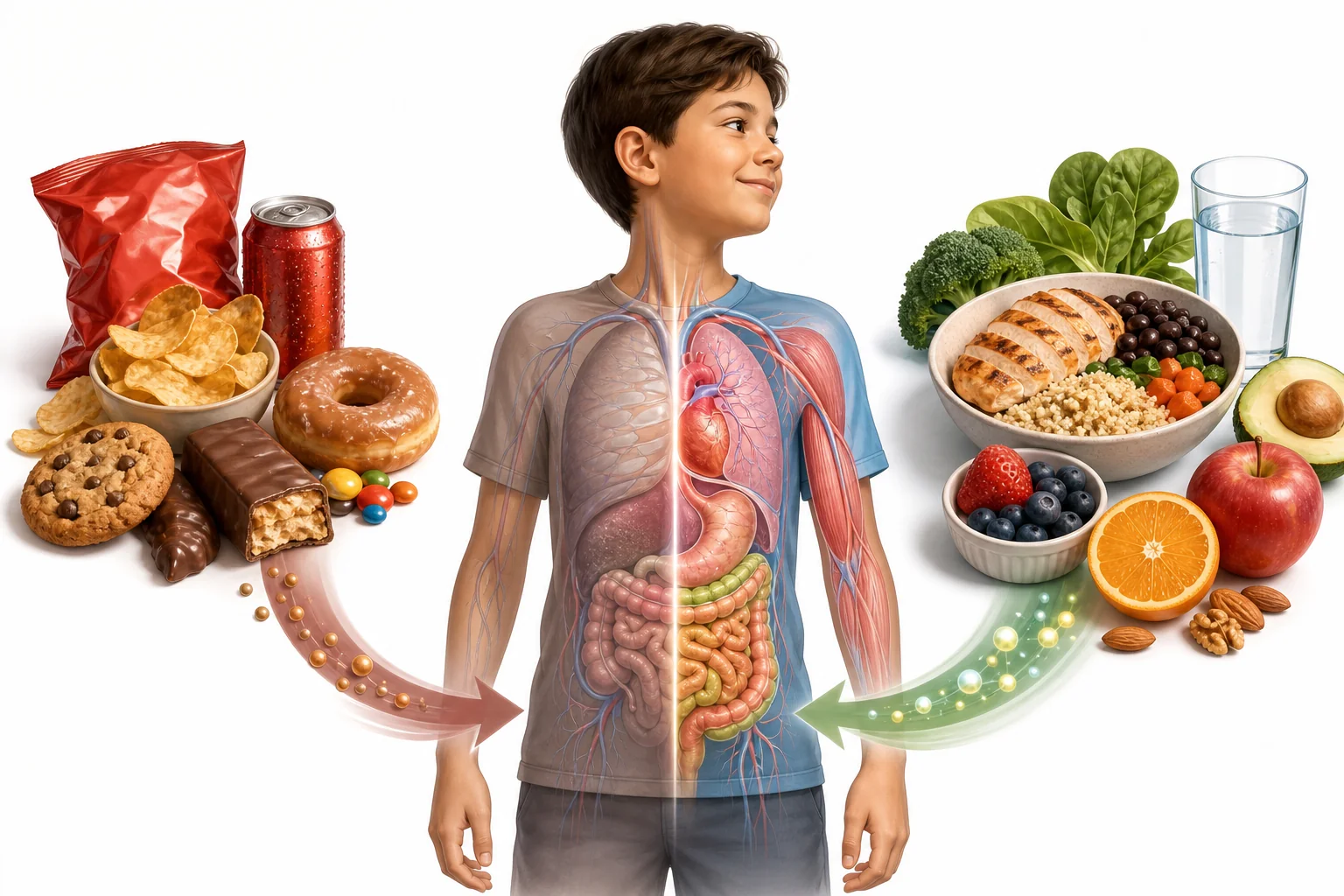
A balanced meal plate with fruits, vegetables, grains, protein, and a small treat shown beside it for comparison

Junk food is not poison, but it usually gives many calories without many helpful nutrients. Foods like fruits, vegetables, beans, grains, dairy, eggs, fish, and meats help bodies grow, move, heal, and learn. A balanced plate leaves room for treats sometimes, while making everyday foods do most of the work.

Big Idea. National Health Education Standard 7.5.1 asks students to identify healthy practices that support personal health.

People call some foods “junk” because those foods often give the body quick energy but not much else. Candy, chips, soda, and many sweet baked snacks can taste good. They can also be high in sugar, salt, or fat. That does not make them poison. It means they are not the best foods to rely on every day. A body needs fuel, but it also needs building materials. Nutrients help make bones, blood, muscles, teeth, skin, and brain cells. A meal with colorful plants, grains, protein foods, and water can do jobs that a bag of candy cannot do well. The word “junk” can also feel unfair, because families eat different foods for many reasons. A kinder way to ask is whether a food helps the body often, sometimes, or only a little.

Energy is only one job
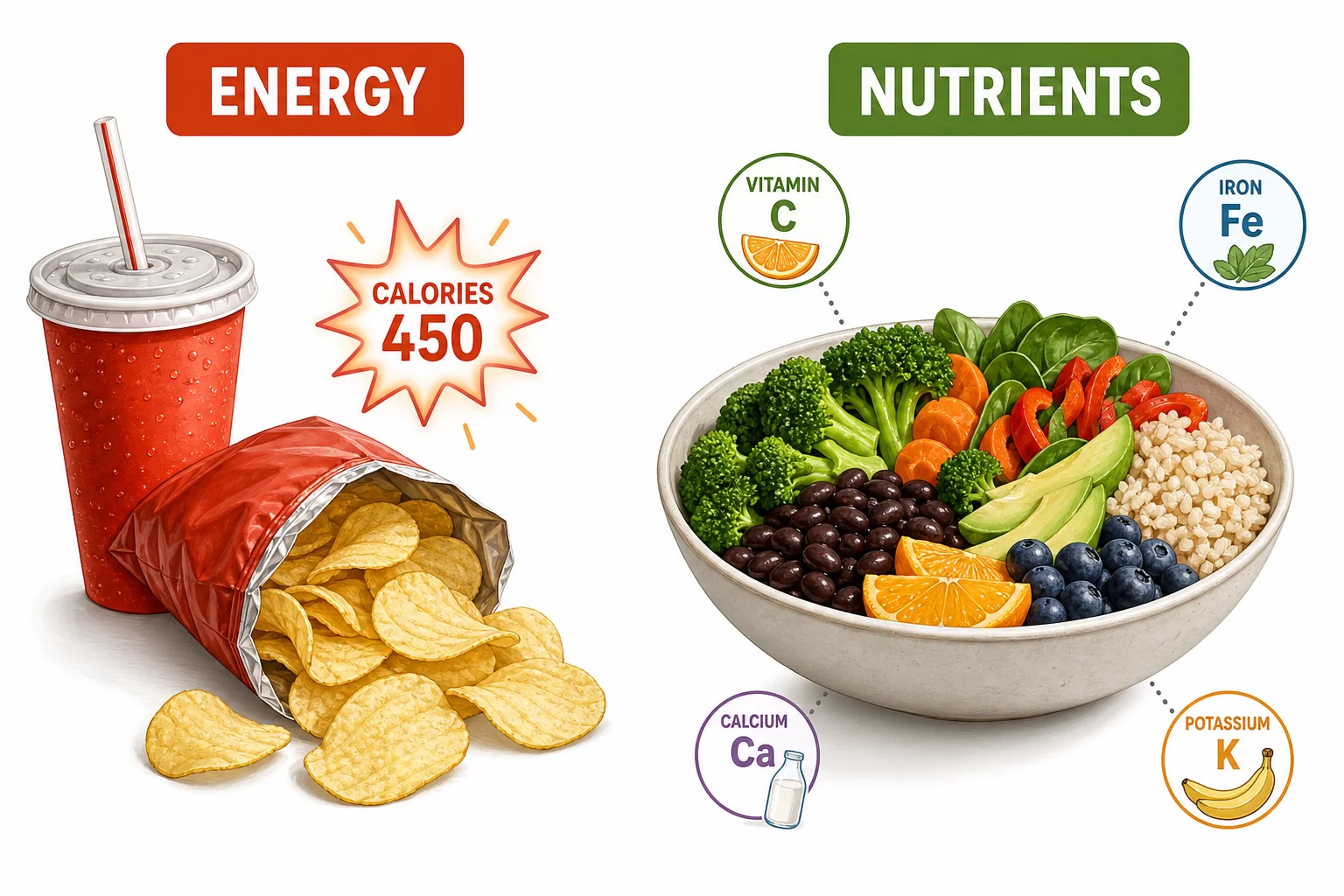
A simple comparison of a small pile of chips and soda beside a larger bowl of vegetables, fruit, and grains, showing that energy and nutrients are different ideas
Calories measure energy, not food quality
Food gives the body energy. Energy lets kids run, think, breathe, sleep, and grow. Some foods pack a lot of energy into a small bite. That is called high energy density. A cookie or a handful of chips can have many calories in a small space. Calories are a way to measure food energy. Other foods, like vegetables or fruit, may have fewer calories in a large serving. They also bring water, fiber, vitamins, and minerals. A food is not good or bad only because of calories. The question is what else comes with the energy. If a snack gives lots of energy but few helpful nutrients, it may not keep the body satisfied for long. If a meal gives energy plus useful nutrients, it can support many body systems at once.

Calories tell us about energy, but not the whole food story.

Nutrients build and repair
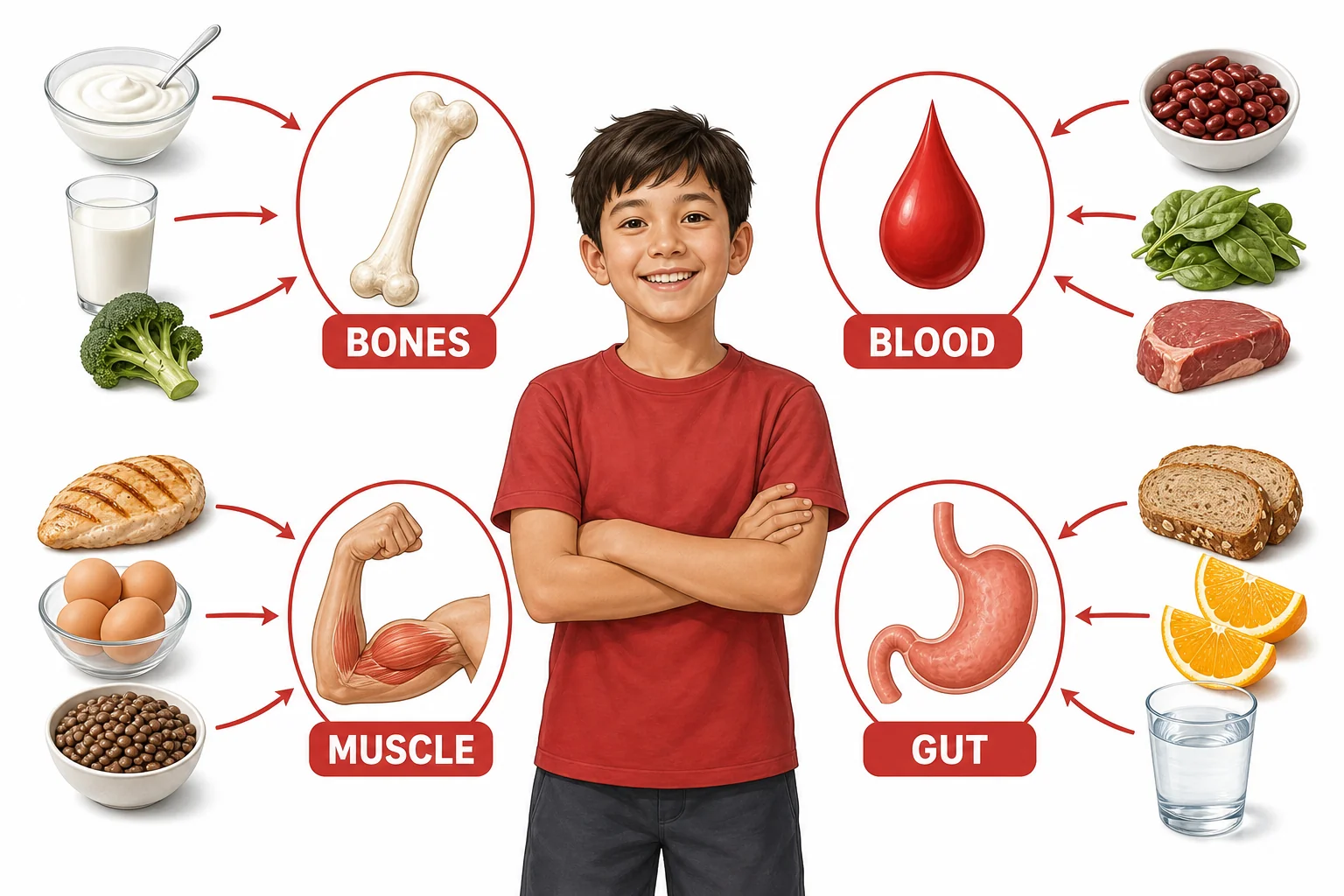
A child with simple body icons for bones, blood, muscles, and digestion connected to foods that provide nutrients
Nutrients have jobs in the body
Nutrients are useful parts of food. Protein helps build and repair body tissues. Calcium helps bones and teeth. Iron helps blood carry oxygen. Vitamin C helps the body heal. Fiber helps food move through the digestive system. Water helps every cell work. These jobs are why a carrot, egg, bean, apple, yogurt, or piece of whole grain bread can be more than a source of energy. It can help the body do real work. Many highly processed snacks have some nutrients, but often not many compared with their calories. This is where the phrase “empty calories” comes from. It does not mean the food has nothing in it. It means many calories arrive without many nutrients that the body can use for growth and health.

A strong meal gives energy and materials the body can use.

Why some calories feel empty
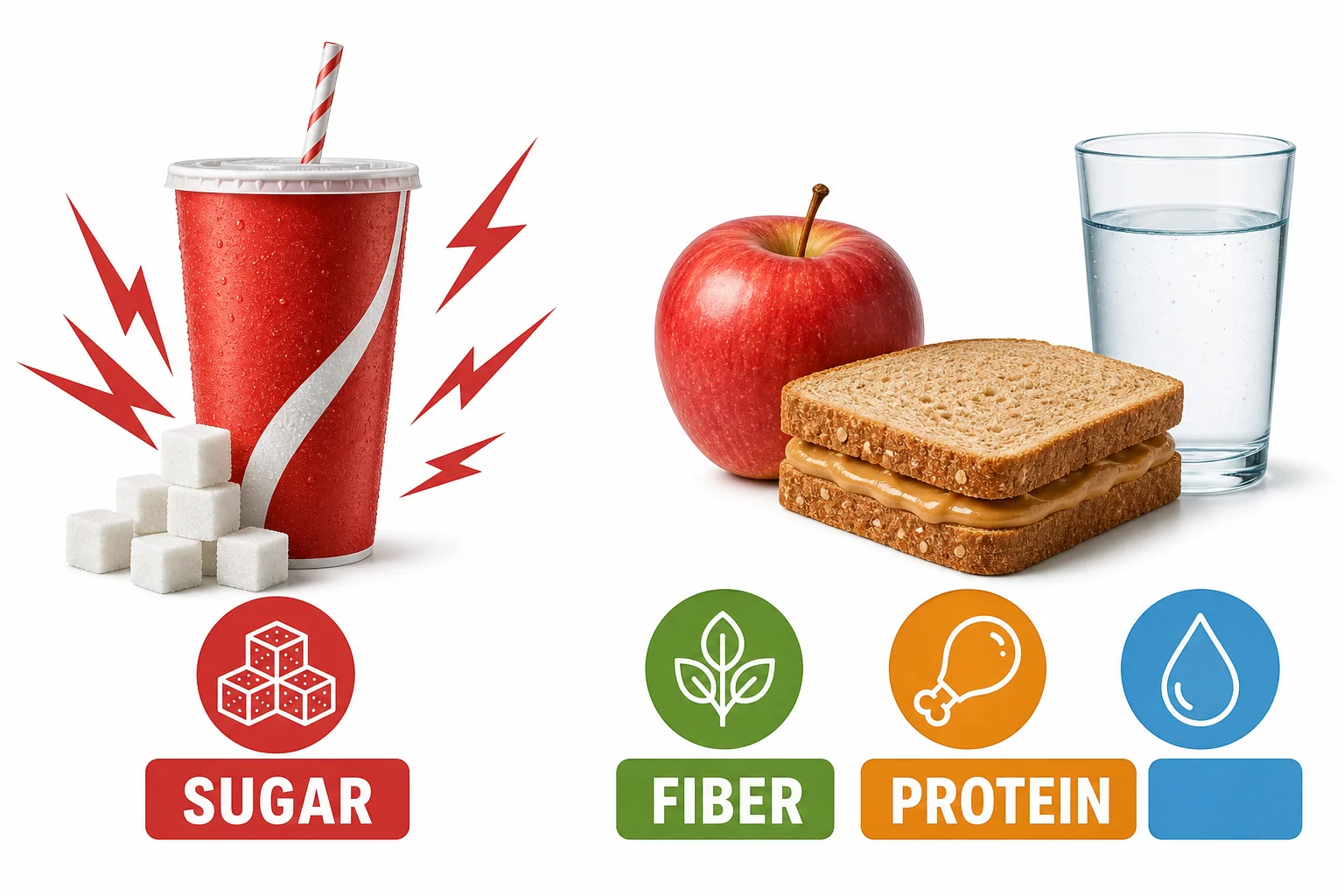
A soda cup showing energy from sugar but few nutrient icons, compared with an apple and sandwich showing fiber, protein, and water icons
Some foods give energy without much support
The phrase “empty calories” can sound strange. The calories are real because the body can use them for energy. The empty part means the food may be missing many nutrients that help with other jobs. Soda is a clear example. It can give sugar energy, but it does not give much fiber, protein, vitamins, or minerals. A sweet drink may also be easy to drink quickly. The body may not feel as full as it would after eating an apple, peanut butter sandwich, or bowl of soup. Foods with fiber, protein, and water often help people feel full longer. That does not mean one soda ruins a day. It means soda should not take the place of foods and drinks that help the body grow and stay well.

Empty calories are real energy with fewer helpful nutrients.

Treats are not poison
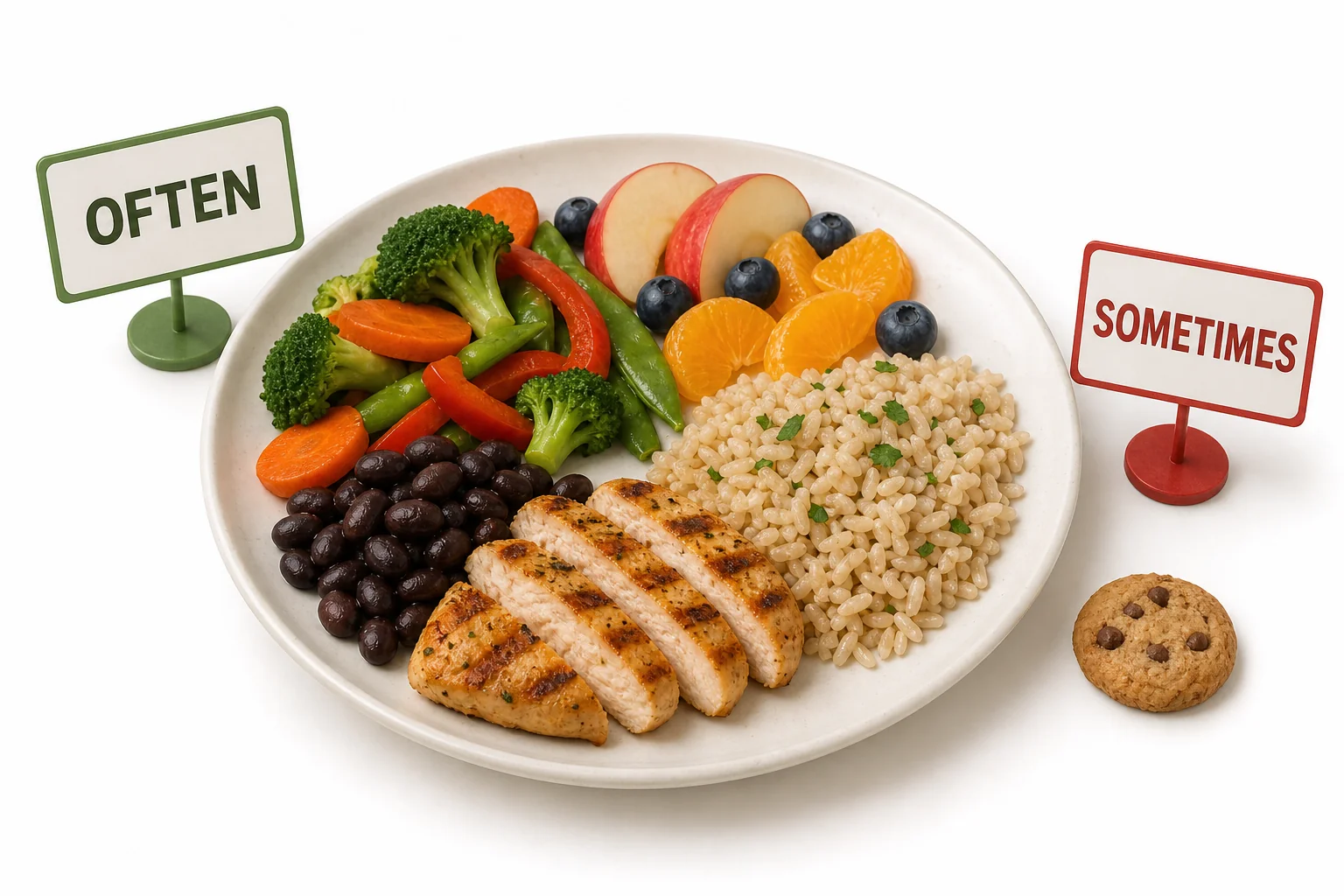
A plate with many everyday foods and one small cookie, showing that treats can be part of a pattern without taking over
A treat can fit when it does not replace the meal
Calling food “junk” can make it sound like one bite is dangerous. That is not true. A cookie at a party or chips at a picnic can fit into a healthy eating pattern. The problem starts when treat foods push out the foods the body needs most. If most snacks are candy and most drinks are soda, the body may miss fiber, water, protein, vitamins, and minerals. It can also get more sugar, salt, or fat than it needs. A helpful idea is “often foods” and “sometimes foods.” Often foods help the body in many ways. Sometimes foods are fine in smaller amounts and not all the time. This way of thinking keeps food choices practical. It also avoids shame, which does not help kids learn.

The pattern matters more than one snack.

Build a balanced plate
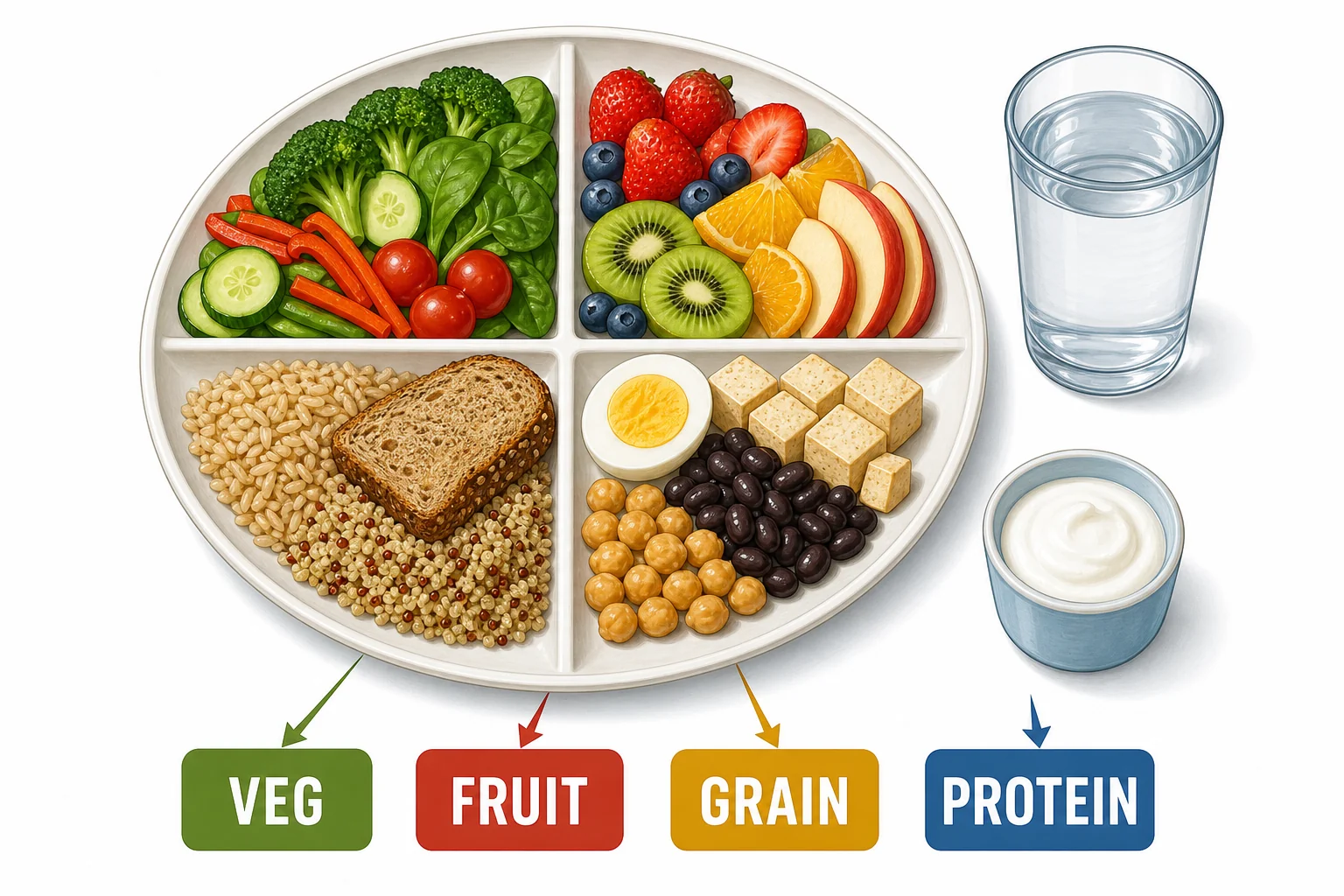
A divided plate showing vegetables, fruit, grains, and protein foods with a glass of water beside it
Use the plate as a simple guide
A balanced plate is an easy picture for everyday choices. About half the plate can be fruits and vegetables. A quarter can be grains, especially whole grains when possible. A quarter can be protein foods, such as beans, eggs, fish, chicken, tofu, nuts, or meat. Dairy or fortified soy foods can add calcium and vitamin D. Water is a strong drink choice for most meals. This plate does not need to look the same in every home. Rice and beans, soup and bread, tacos, pasta with vegetables, or lentils with rice can all fit the idea. The goal is variety across the day. A child does not need a perfect plate every time. It helps to notice whether most meals include color, protein, grains, and a drink that supports the body.

A balanced plate makes room for many foods that help the body.

Vocabulary

Calorie
A unit that measures how much energy food can give the body.
Energy density
How many calories are packed into a certain amount of food.
Nutrient density
How many helpful nutrients a food gives compared with its calories.
Empty calories
Calories from foods or drinks that give energy but few helpful nutrients.
Balanced plate
A meal pattern that includes several food groups so the body gets different nutrients.

In the Classroom

Sort often and sometimes foods

20 minutes | Grades 3-5

Give students food picture cards and ask them to sort them into often foods and sometimes foods. Then have them explain one choice using energy, nutrients, or balance.

Build a paper plate meal

25 minutes | Grades 2-5

Students draw or cut out foods to make a balanced plate. They label fruits, vegetables, grains, protein, and a drink.

Compare snack labels

30 minutes | Grades 4-5

Use two classroom-safe nutrition labels, such as a sweet drink and a yogurt or whole grain snack. Students compare calories, sugar, protein, fiber, and one vitamin or mineral.

Key Takeaways

  • Junk food is a nickname for foods that often give lots of energy but fewer helpful nutrients.
  • A food can taste good and still not be a strong everyday fuel.
  • Empty calories are not fake calories. They are energy with less nutritional support.
  • Treats can fit in a healthy pattern when they do not replace needed foods.
  • Balanced plates include variety, color, protein, grains, and water most of the time.