Why Bees Build Hexagons Not Squares
A shape that saves wax while filling space
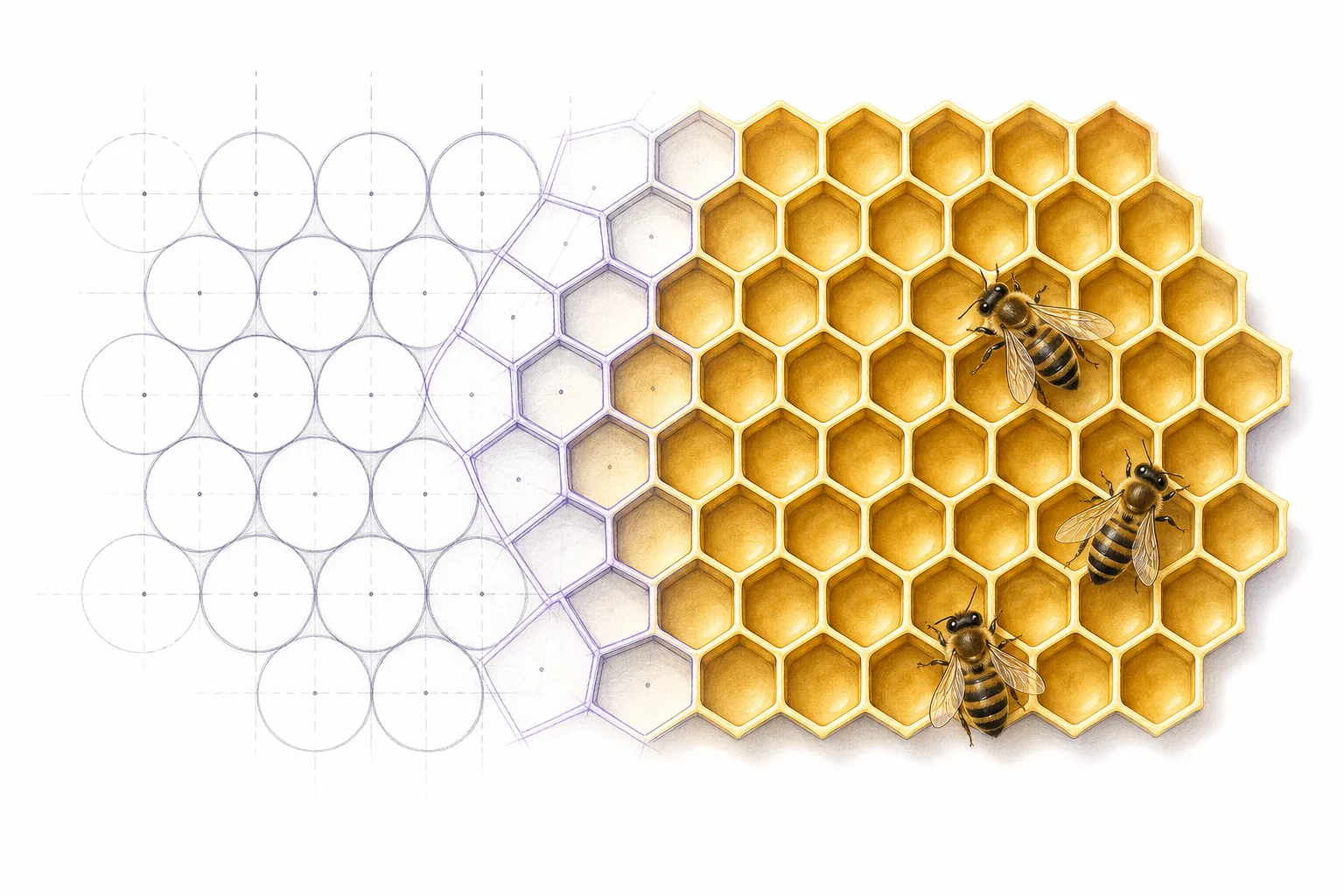
Bees build hexagons because hexagons fit together with no gaps. Compared with other gap-free shapes, hexagons use less wall length for the same amount of storage space. That means bees can store honey and raise young while using less wax.
A honeycomb looks like nature drew graph paper with six-sided cells. The pattern is not random. Each cell must hold honey, pollen, or a young bee, and the walls are made from wax. Wax is costly for bees to make, so saving wall material matters. In math terms, the cell needs area for storage, but its boundary uses perimeter. A good honeycomb shape gives lots of area with as little perimeter as possible. Squares, triangles, and hexagons can all tile a flat surface without gaps. Circles would save perimeter for one cell, but circles leave empty spaces when packed together. That is where geometry helps. Students can compare shapes with the same area, then measure or calculate their perimeters. A tool like an area calculator can help check the arithmetic, but the main idea is simple. Shape affects how much material a structure needs.
The tiling problem
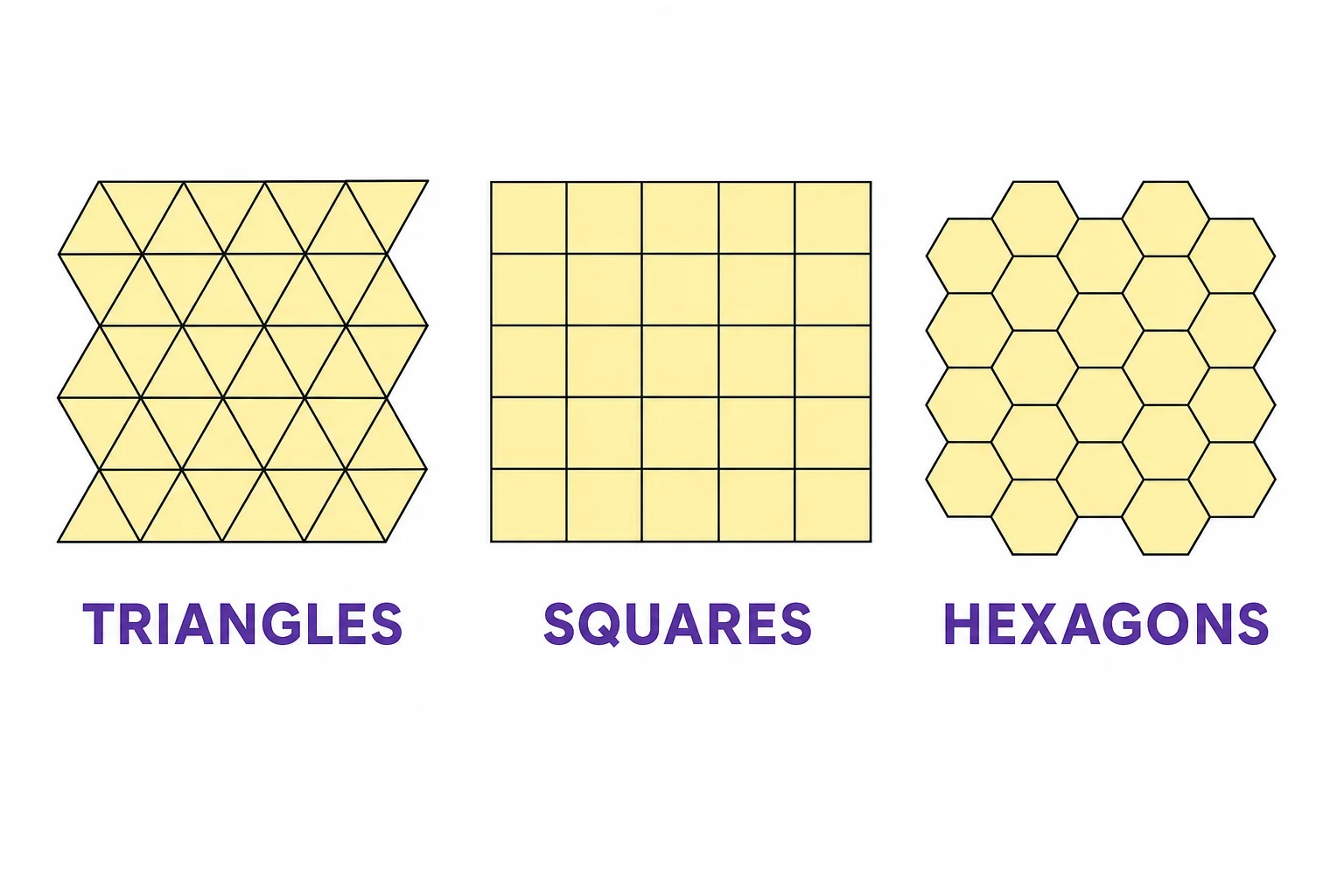
A honeycomb cell shape must repeat without leaving gaps.
Same area, different perimeter
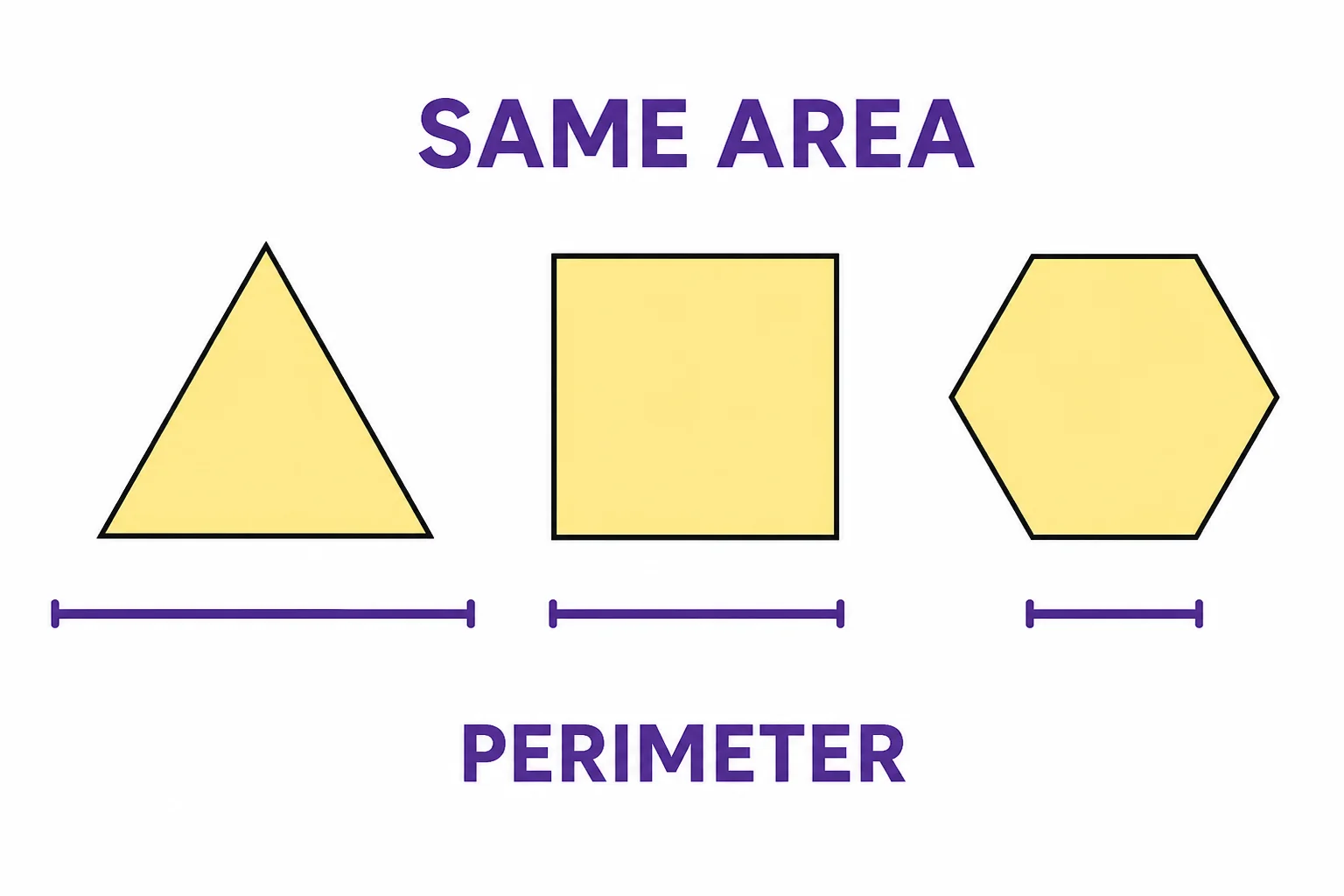
Less perimeter for the same area means less wax per cell.
Why not squares
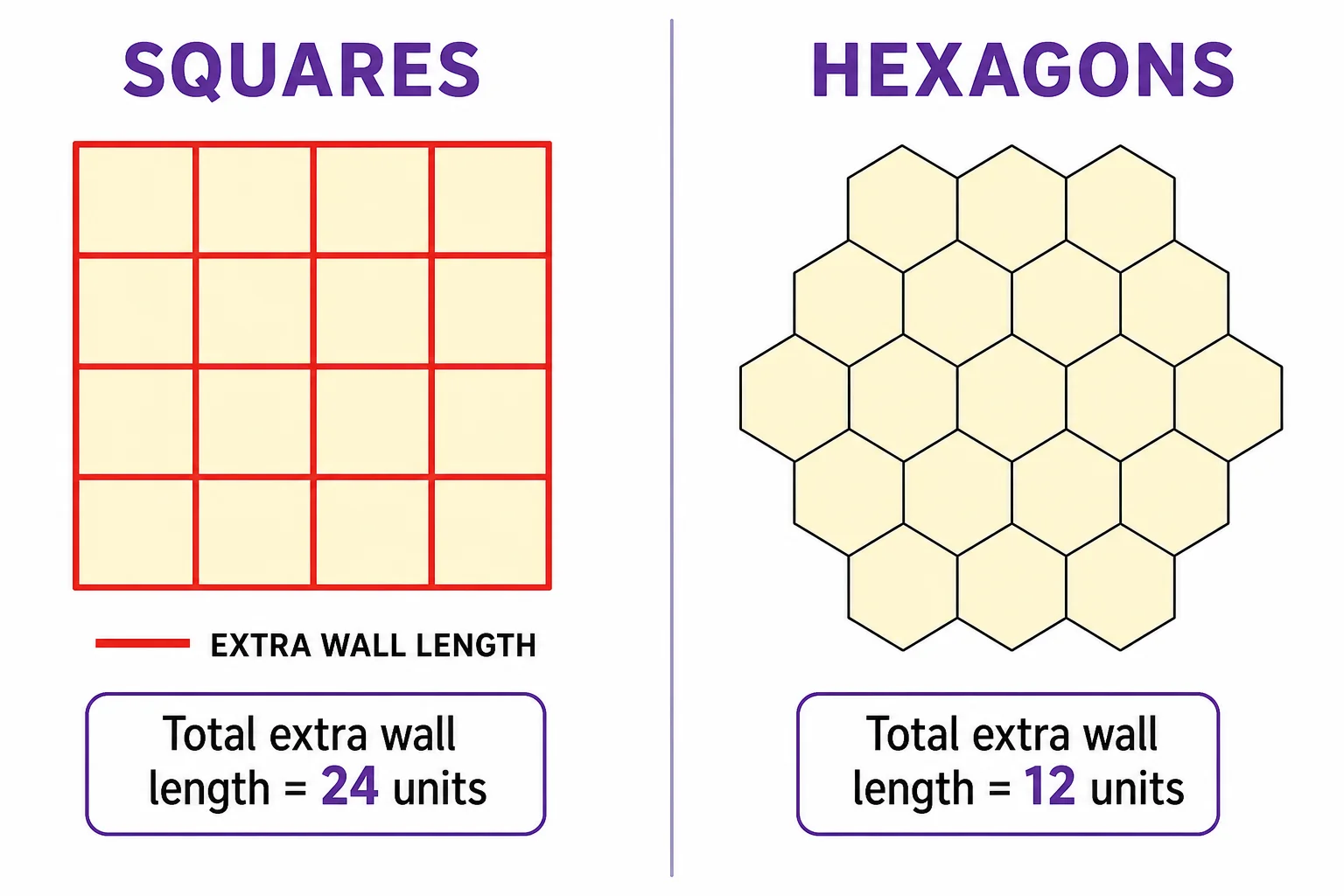
Squares fill space, but they do not minimize wall length as well as hexagons.
The honeycomb theorem
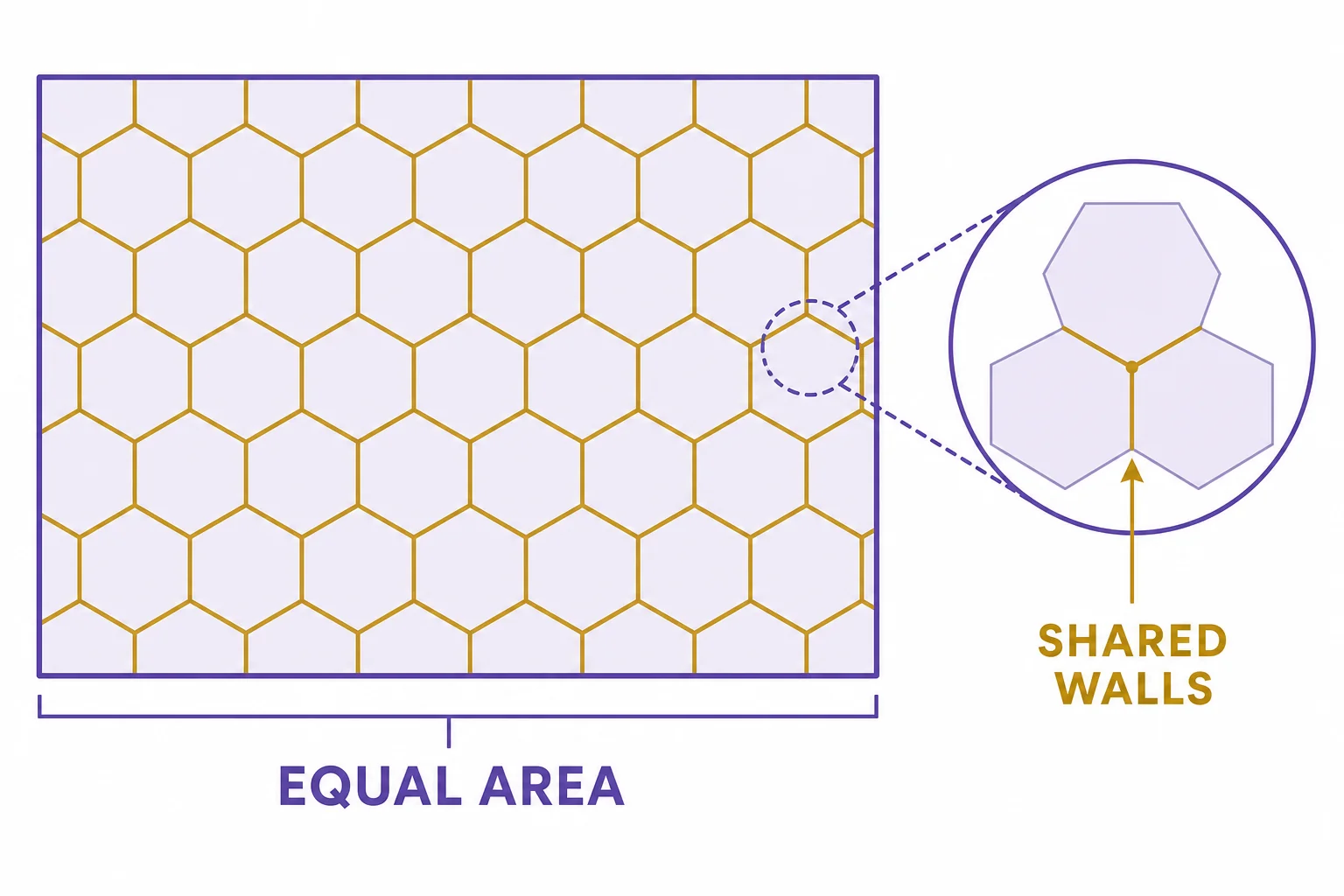
The honeycomb theorem turns a bee pattern into a perimeter problem.
Bees, wax, and real geometry
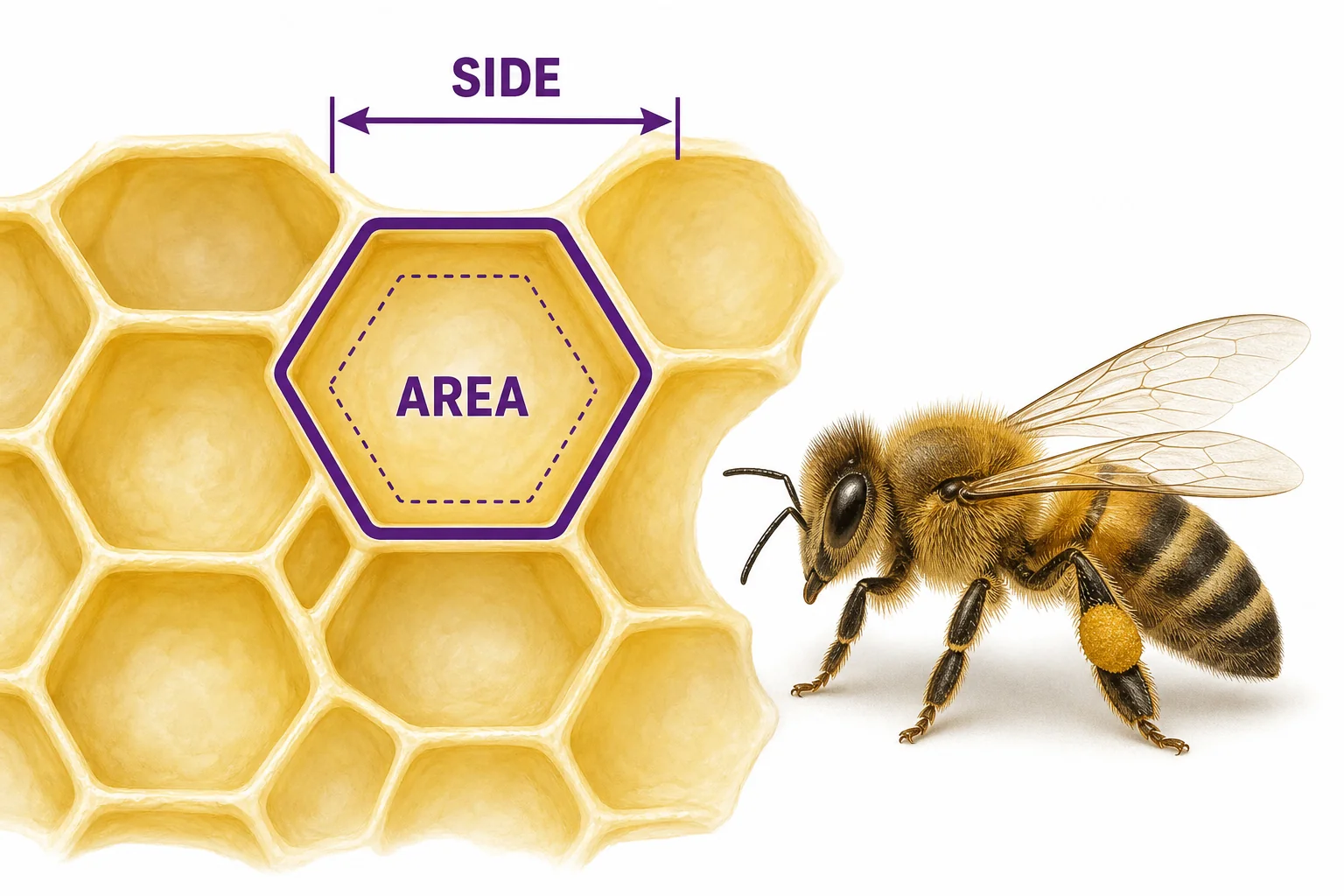
A living structure can still follow a measurable geometry rule.
Vocabulary
- Tiling
- A repeating pattern of shapes that covers a flat surface with no gaps or overlaps.
- Perimeter
- The total distance around the outside edge of a shape.
- Area
- The amount of flat space inside a shape.
- Regular hexagon
- A six-sided shape with all sides equal and all angles equal.
- Honeycomb theorem
- The math result that a regular hexagonal grid uses the least total perimeter to divide a flat region into equal areas.
In the Classroom
Equal Area Shape Test
25 minutes | Grades 6-8
Students draw or receive an equilateral triangle, square, and regular hexagon with the same area. They measure or calculate each perimeter, then rank the shapes from most to least boundary length.
Build a Paper Honeycomb
30 minutes | Grades 6-8
Students cut strips of paper and form square cells and hexagonal cells. They compare how much paper edge is needed to make a fixed number of similar storage spaces.
Design a Wax Budget
20 minutes | Grades 7-8
Students pretend each centimeter of wall costs one unit of wax. They calculate the total wax cost for different tiled cell designs and explain which design is most efficient.
Key Takeaways
- • Honeycomb cells must tile space without gaps or overlaps.
- • Triangles, squares, and regular hexagons can all make simple tilings.
- • For the same area, a hexagon uses less perimeter than a square or triangle.
- • Less perimeter means bees need less wax to make the same storage space.
- • The honeycomb theorem describes why hexagonal grids are efficient.