Sign in to save

Bookmark this page so you can find it later.

Sign in to save

Bookmark this page so you can find it later.

Physics middle-school May 21, 2026

Why Do Planes Fly Even Though They Are Heavy?

How air pushes a plane upward
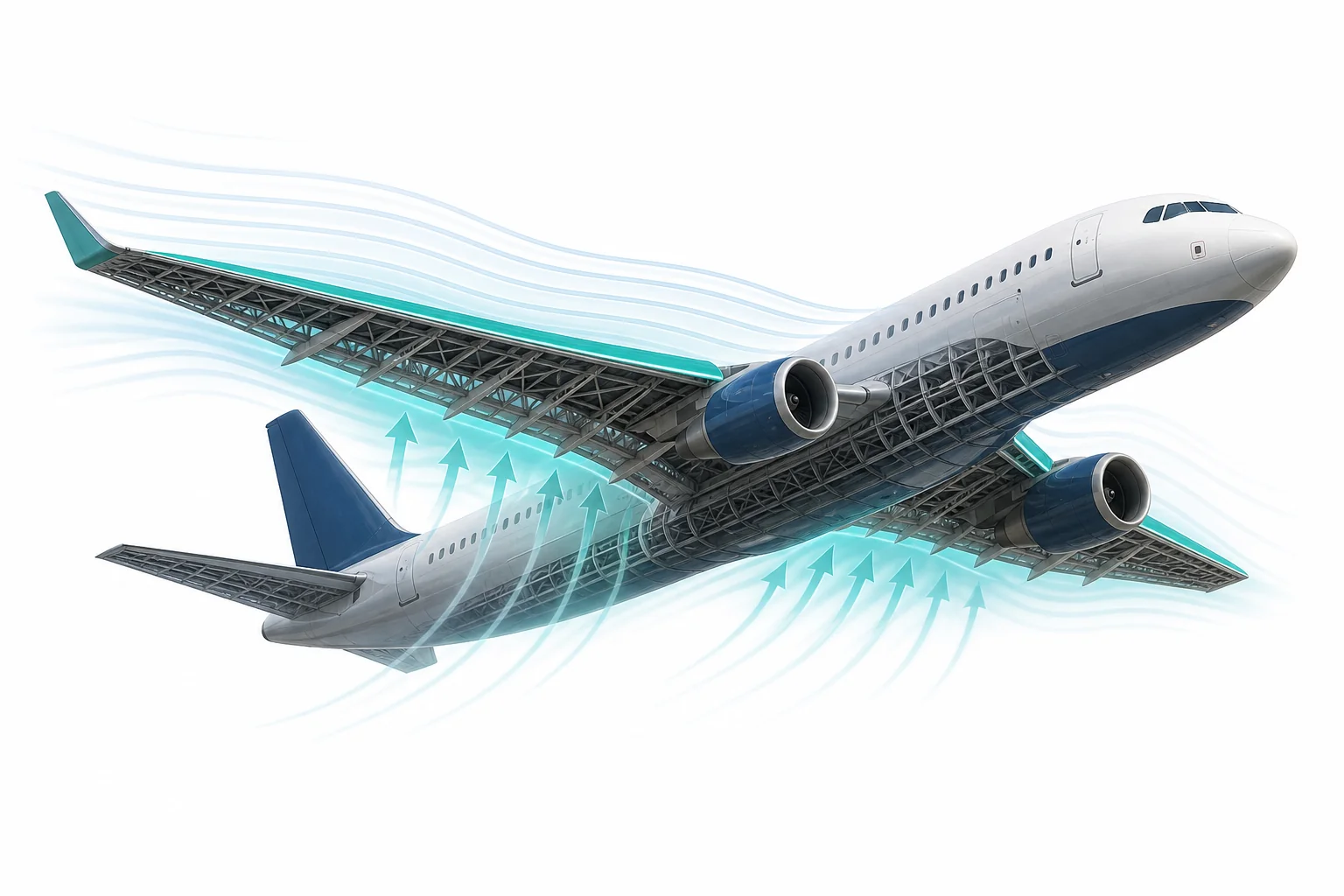
A passenger airplane in level flight with air flowing around its wings and the four flight forces shown conceptually.

Planes fly because their wings push air downward, and the air pushes the plane upward. Engines move the plane forward, so air keeps flowing over the wings. A plane can stay in the air when the upward push is as large as its weight.

Big Idea. NGSS MS-PS2-2 connects flight to forces, motion, and how balanced and unbalanced forces change an object's motion.

A large airplane is heavy, but weight alone does not decide whether it can fly. Flight is a force problem. Gravity pulls the plane down. The wings and moving air create an upward force called lift. Engines provide thrust, which moves the plane forward through the air. Air resistance, called drag, pushes backward. During steady flight, lift balances weight, and thrust balances drag. During takeoff, the plane speeds up until enough air moves over the wings to make lift larger than weight. The key idea is not that the plane becomes light. The key idea is that the plane interacts with a huge amount of air every second. The wing shape, wing angle, speed, and air pressure all matter. This makes airplane flight a clear middle-school example of forces adding together and changing motion.

The four forces
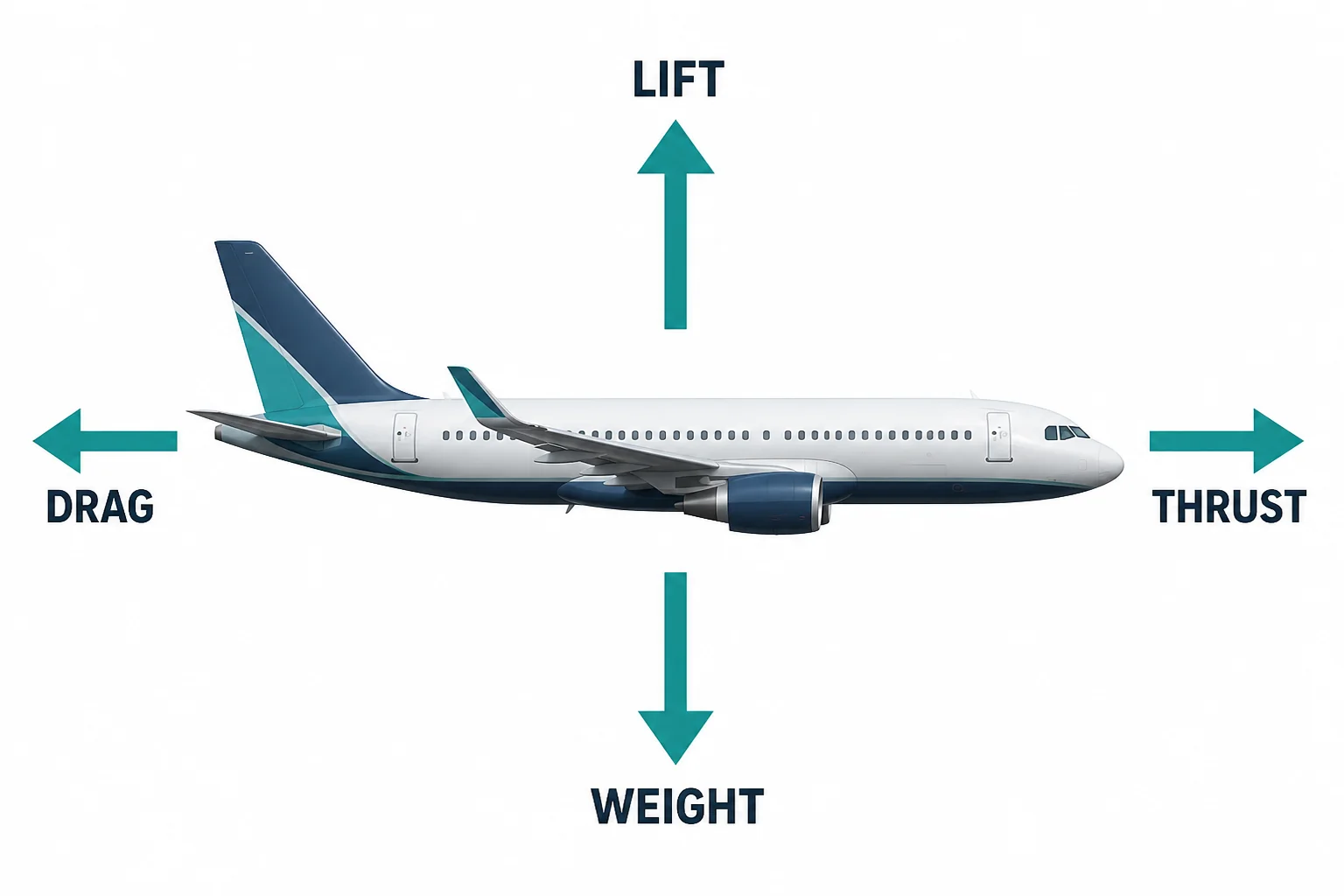
Side view of a plane with arrows showing lift upward, weight downward, thrust forward, and drag backward.
Four forces act on a plane in flight.
A plane in flight has four main forces acting on it. Weight pulls downward because of gravity. Lift pushes upward because the wings move air. Thrust pushes forward because engines accelerate air backward. Drag pushes backward because air resists the plane's motion. In straight and level flight, the upward lift equals the downward weight. The forward thrust equals the backward drag. The forces are balanced, so the plane keeps moving at a steady speed and height. During takeoff, the forces are not balanced. Thrust is larger than drag, so the plane speeds up. As speed increases, more air flows over the wings. That makes lift increase. When lift becomes larger than weight, the plane rises. This is why runways are long. A heavy plane needs time and distance to gain enough speed for its wings to work well.

Flight depends on the size and direction of several forces.

Wings push air down
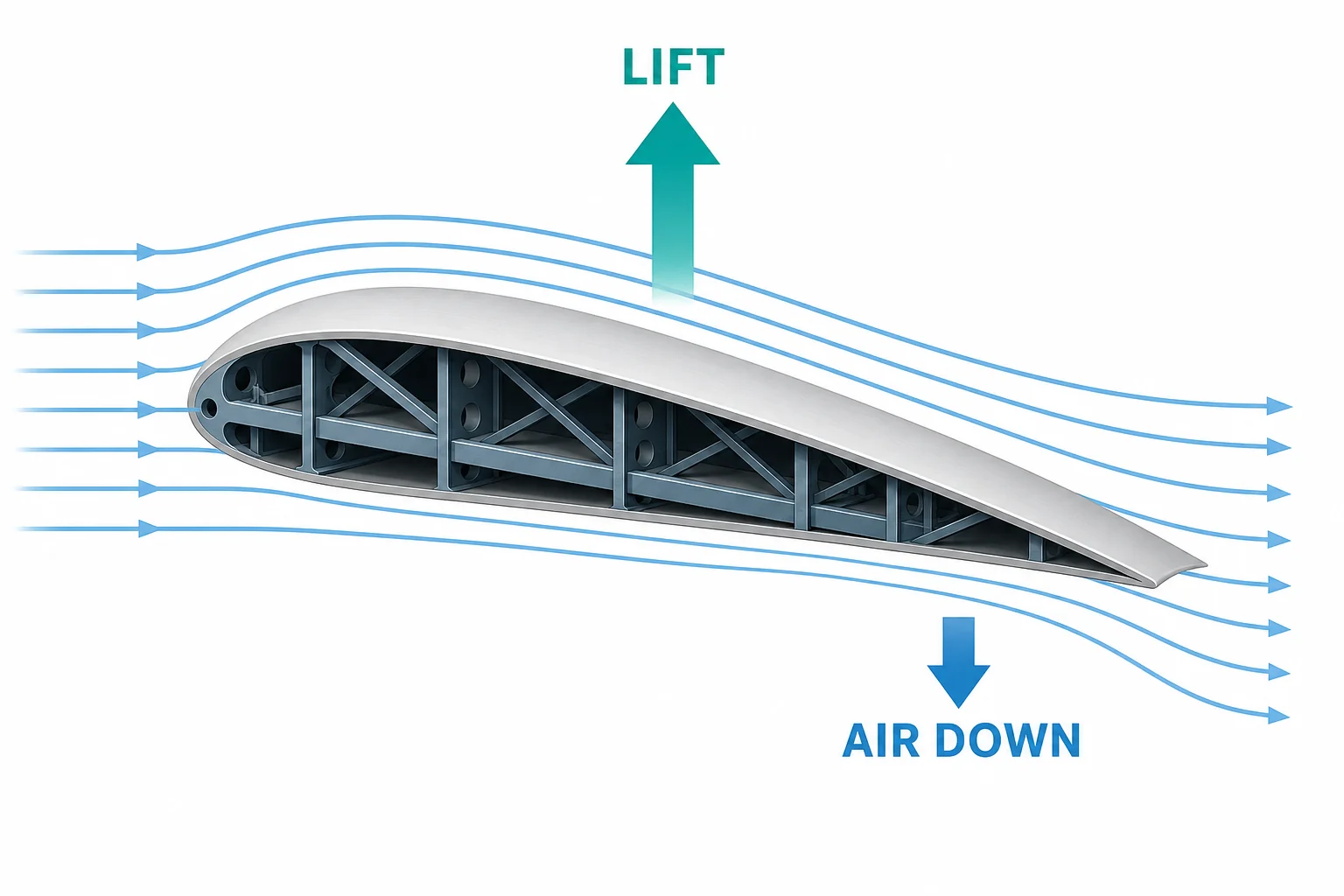
Cross section of a wing moving through air, with streamlines bending downward behind the wing and an upward lift arrow.
A wing changes the motion of air.
A wing is not just a flat board moving through air. Its shape and tilt help it guide air. As the plane moves forward, the wing deflects some air downward. The air changes motion, which means a force acted on it. By Newton's third law, the air pushes back on the wing in the opposite direction. That push has an upward part, and that upward part is lift. This explanation works even for simple wings and paper airplanes. The top and bottom surfaces of a wing also affect pressure. Air moving around the wing can create lower pressure above the wing and higher pressure below it. The pressure difference adds to the upward force. The full story of lift uses both ideas. Wings turn air downward, and air pressure around the wing produces a net upward force.

A wing gets lift by changing the motion and pressure of air.

Pressure matters
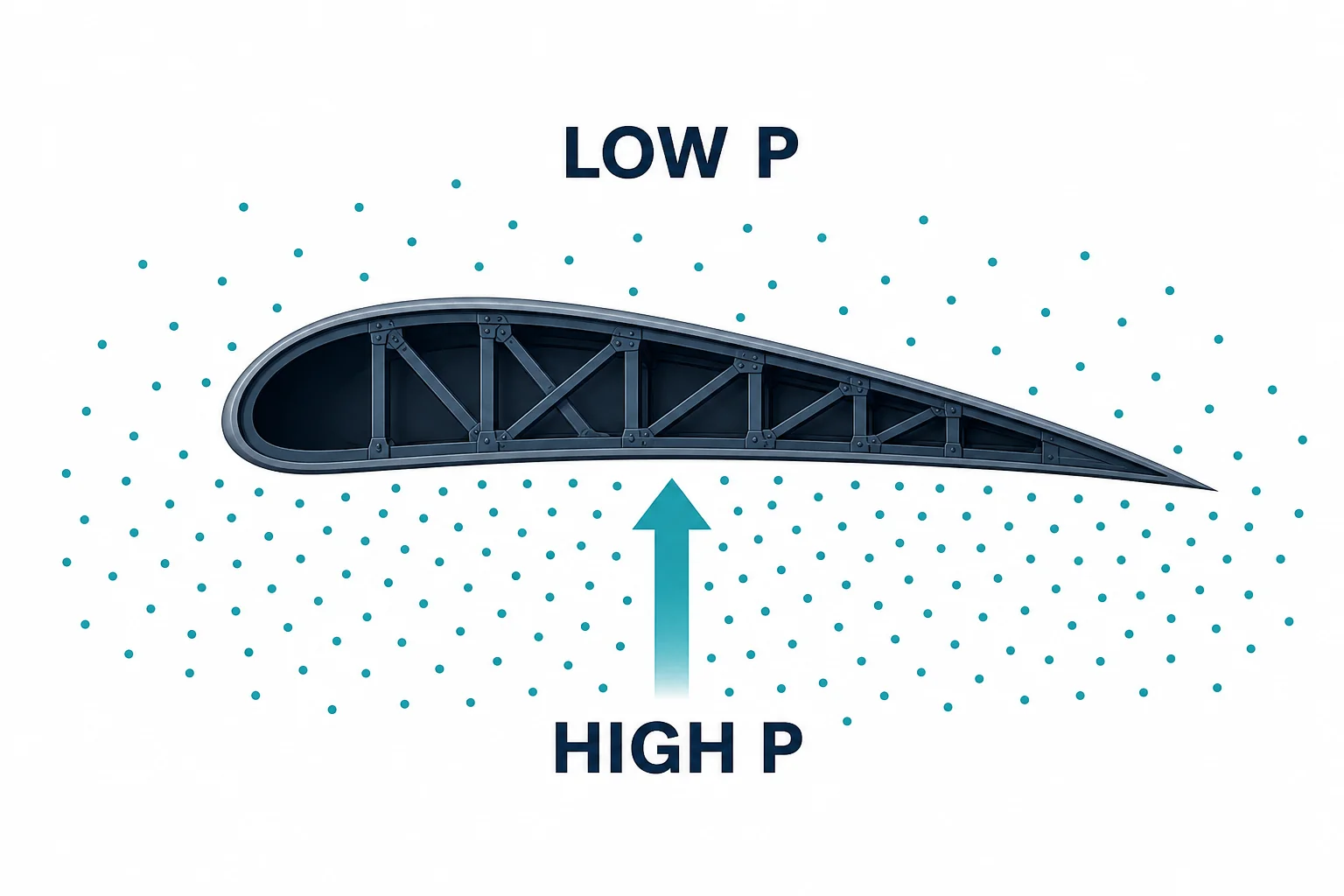
Wing cross section with lower pressure above and higher pressure below, shown with different dot spacing and pressure arrows.
Pressure differences help make lift.
Air is made of moving particles that bump into surfaces. Those bumps create pressure. Around a moving wing, pressure is not the same everywhere. In many flight conditions, the pressure above the wing is lower than the pressure below it. Higher pressure below the wing pushes upward more strongly than lower pressure above the wing pushes downward. The result is a net upward force. This pressure difference is often connected to Bernoulli's principle. Faster moving fluid can have lower pressure when other conditions stay controlled. That idea helps explain part of what happens over a wing. It is not the only part. Real wings also depend on angle, speed, and how the wing redirects air. A good flight explanation uses pressure and Newton's laws together, not one idea by itself.

Uneven air pressure can create a net upward push.

Speed and angle
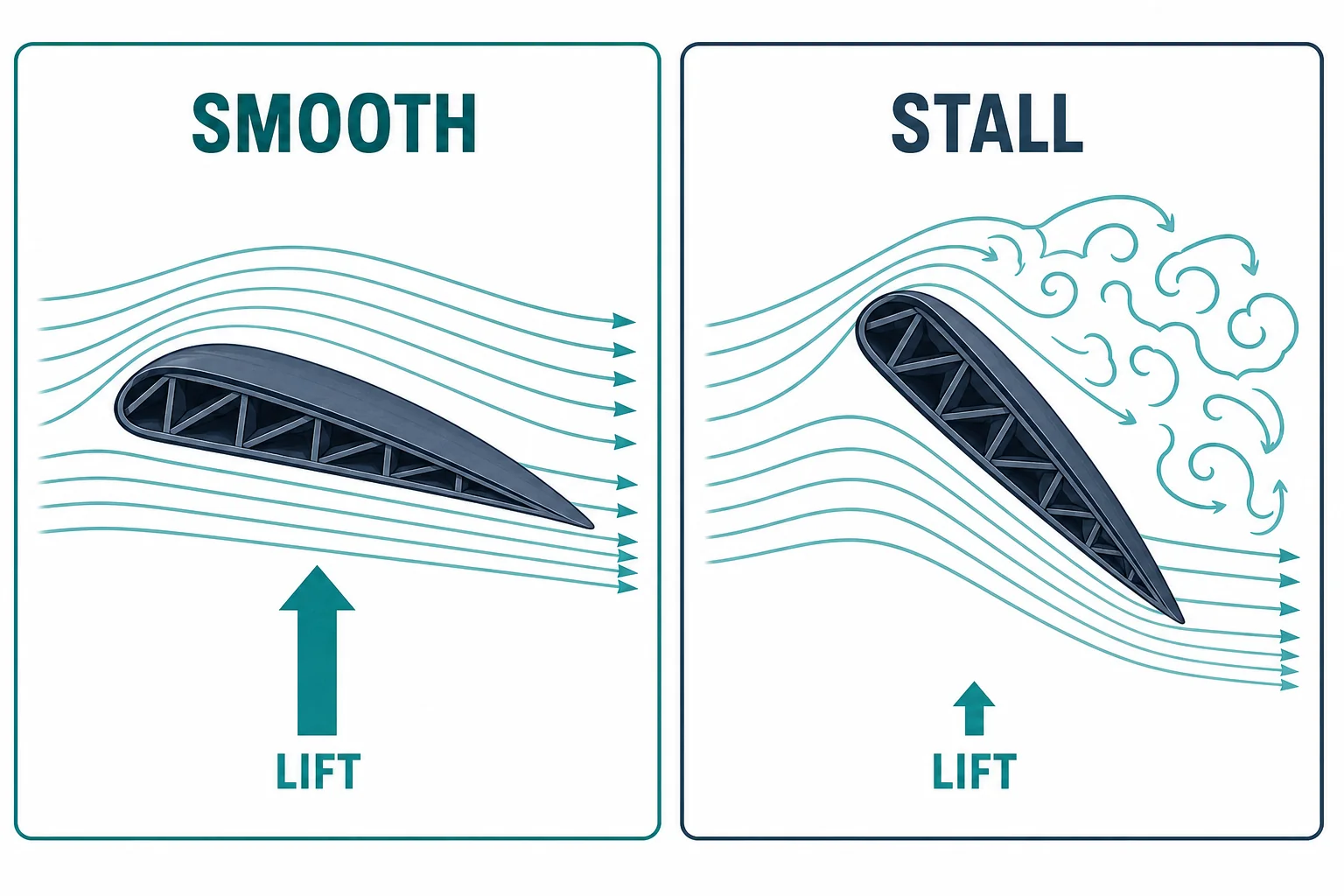
Two wing cross sections comparing a moderate angle with smooth airflow and a steep angle with separated airflow.
Angle changes how air flows over a wing.
A wing needs moving air to make lift. That air movement can come from the plane moving forward through still air, or from wind moving past a wing. More speed usually means more lift, because the wing interacts with more air each second. The wing's angle also matters. Pilots call this the angle of attack. A small increase in angle can make the wing push more air downward, which increases lift. But too much angle can cause a stall. In a stall, airflow separates from the top of the wing, and lift drops. This does not mean the engine stopped. It means the wing is no longer guiding air smoothly enough to keep strong lift. Takeoff and landing are times when pilots carefully manage speed and angle so lift stays under control.

More angle can help until airflow breaks away from the wing.

Heavy can still fly
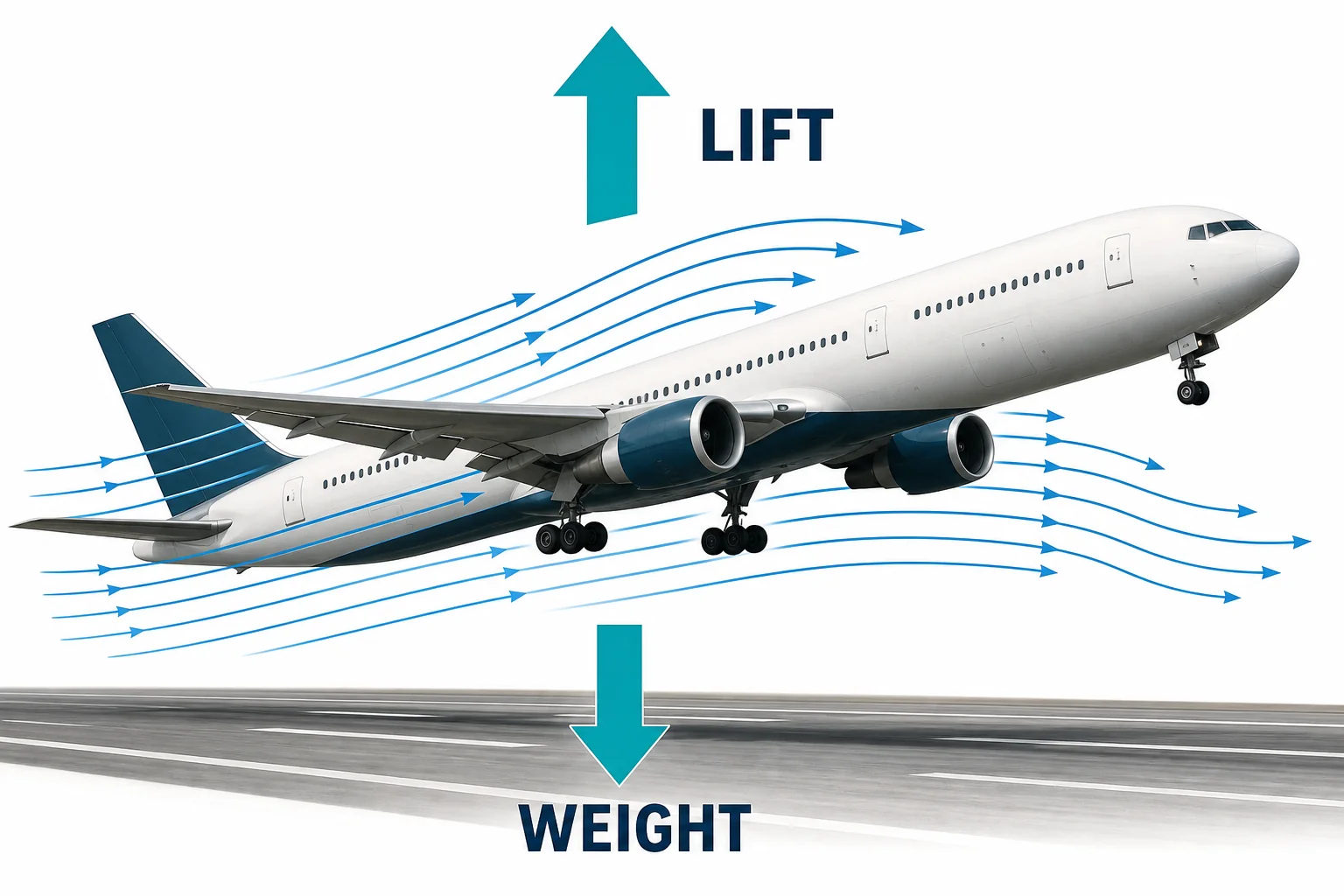
Large airplane taking off with many small air arrows under the wings and a lift arrow balancing a weight arrow.
Large wings and speed help create enough lift.
A heavy plane needs a large lift force, but it can get one by moving a lot of air. Passenger jets have large wings, powerful engines, and carefully chosen wing shapes. The wing area matters because a larger wing can affect more air at once. Speed matters because faster motion sends more air over the wing each second. Air density matters because dense air contains more particles for the wing to push on. This is why hot days and high-altitude airports can make takeoff harder. The air is less dense, so the plane may need more runway. Engineers design planes so their wings can create enough lift at safe takeoff and landing speeds. The plane is still heavy in the air. It flies because the upward force from the air can balance that heavy weight.

Heavy planes fly when the air supplies enough upward force.

Vocabulary

Lift
The upward force on a wing caused by moving air and pressure differences.
Weight
The downward force caused by gravity pulling on the plane's mass.
Thrust
The forward force made by engines or propellers.
Drag
The backward force from air resistance as a plane moves.
Air pressure
The push made by air particles bumping into a surface.
Angle of attack
The angle between a wing and the oncoming airflow.

In the Classroom

Paper airplane force map

25 minutes | Grades 6-8

Students fold a simple paper airplane and draw arrows for lift, weight, thrust, and drag on a diagram. They test one flight, then change one feature such as wing size or nose mass and explain how the forces changed.

Airflow strip test

15 minutes | Grades 6-8

Students hold a narrow paper strip under their lower lip and blow across the top. They observe the strip rise and connect the motion to moving air, pressure, and lift.

Balanced and unbalanced flight forces

20 minutes | Grades 6-8

Students use force arrows of different lengths to model takeoff, cruising, landing, and slowing down. They identify when forces are balanced and predict how the plane's motion changes.

Key Takeaways

  • A plane flies when lift is large enough to balance or exceed weight.
  • Wings create lift by redirecting air and producing pressure differences.
  • Engines do not lift the plane directly in normal flight. They provide thrust so air keeps moving over the wings.
  • Speed, wing area, air density, and angle of attack all affect lift.
  • The four main flight forces are lift, weight, thrust, and drag.
Content generated with AI assistance and reviewed by the LivePhysics editorial team. See sources below for original references.