How Your Eyes See Color
How light becomes a color you recognize
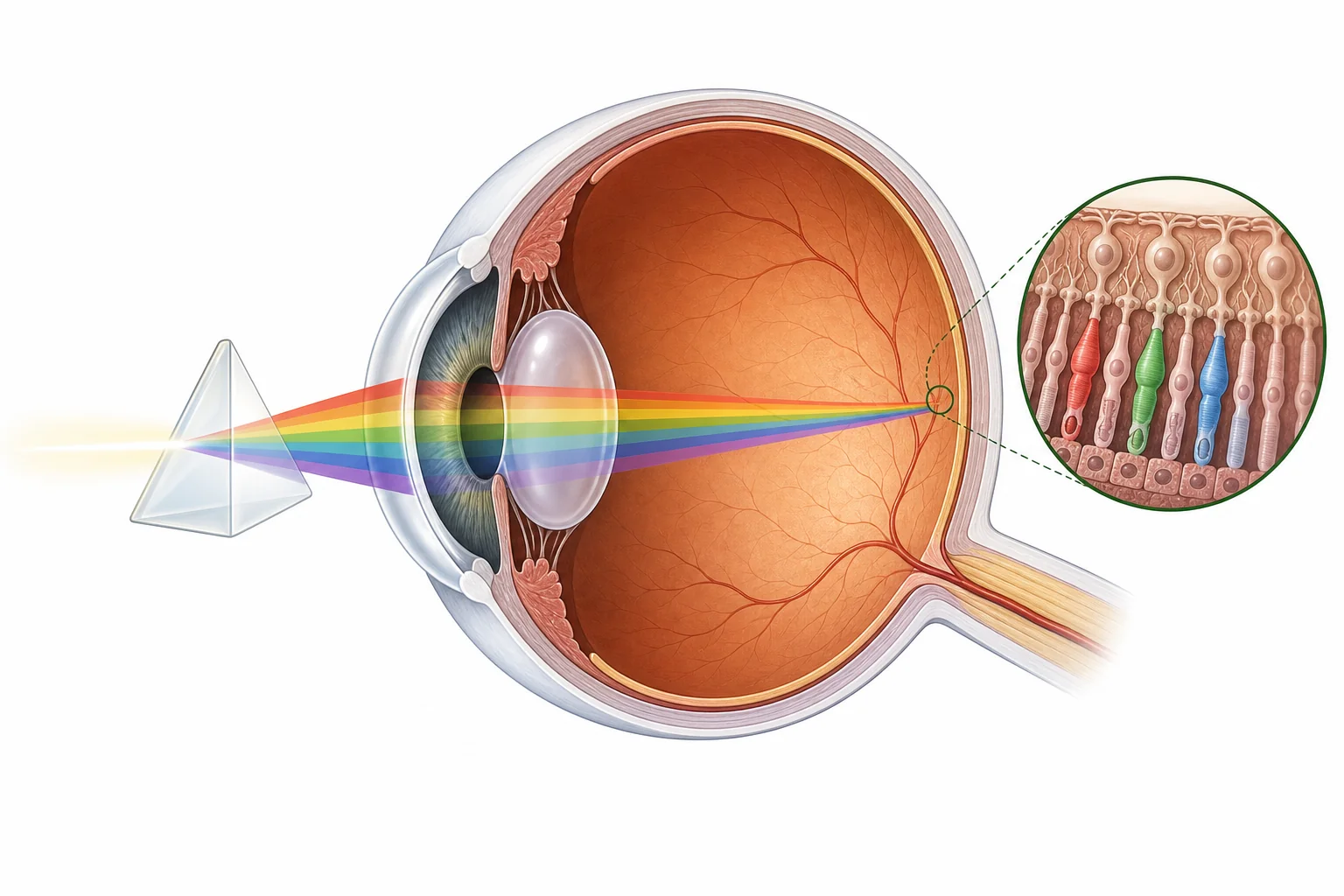
Color starts when light from an object enters your eyes. Special cells in the back of each eye respond to different kinds of light. Your brain compares these signals and turns them into the colors you see.
A red apple, a blue backpack, and a green leaf do not send color into your eyes like paint. They reflect light. That light travels into your eye and lands on a thin layer of tissue called the retina. The retina has cells that react to light. Some work best in dim light. Others help you see color in bright light. These color cells send signals through the optic nerve to the brain. The brain does the comparing. It uses the pattern of signals to decide whether you are seeing red, green, blue, yellow, or another color. This makes color a biology topic and a physics topic at the same time. Light has different wavelengths, and living cells respond to them. In middle school life science, this connects to how sensory receptors take in information from the environment and how the nervous system helps the body respond.
Light enters the eye
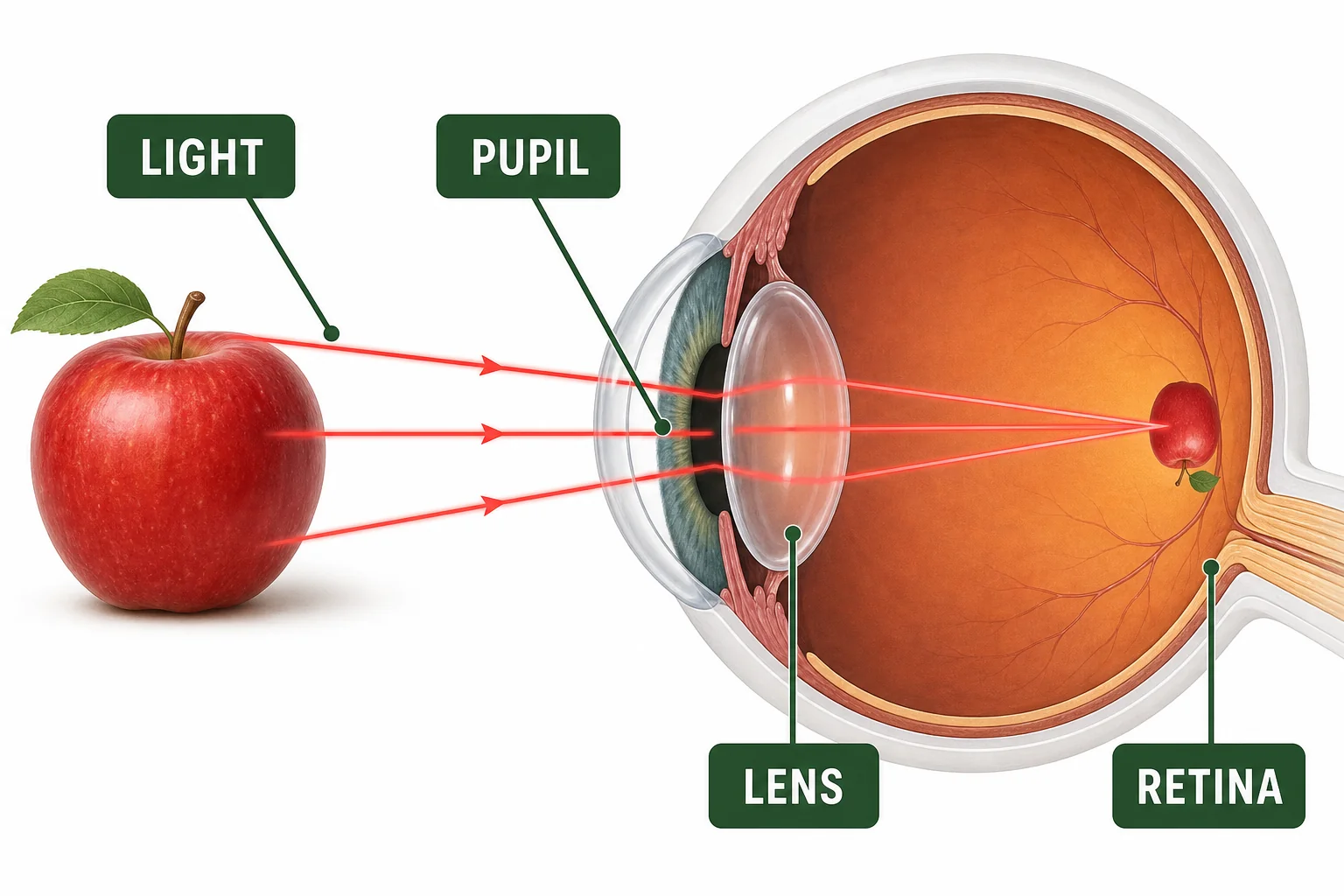
Objects reflect wavelengths of light that your eyes can detect.
The retina has color cells
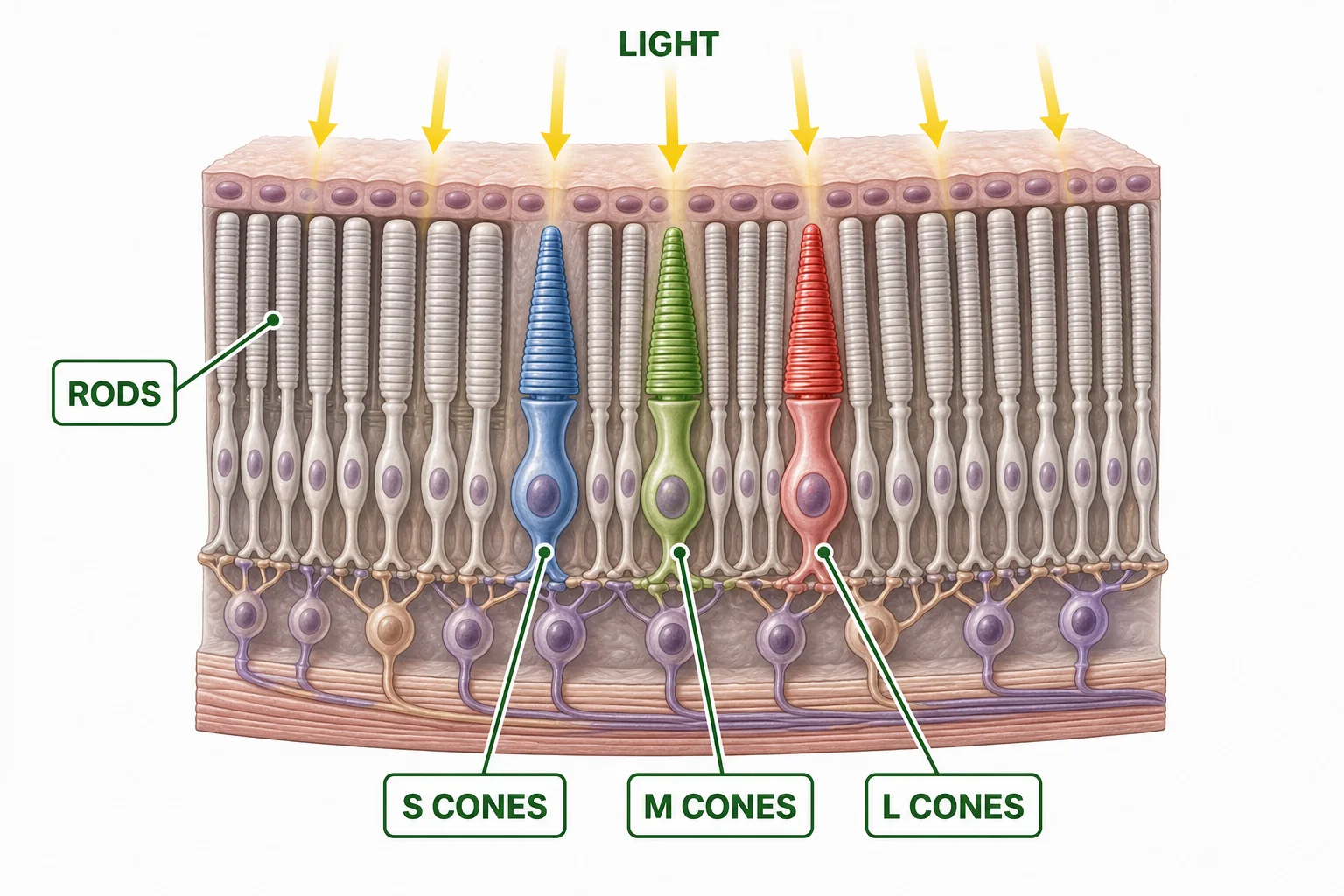
Color vision depends on patterns across several cone types.
Wavelength matters
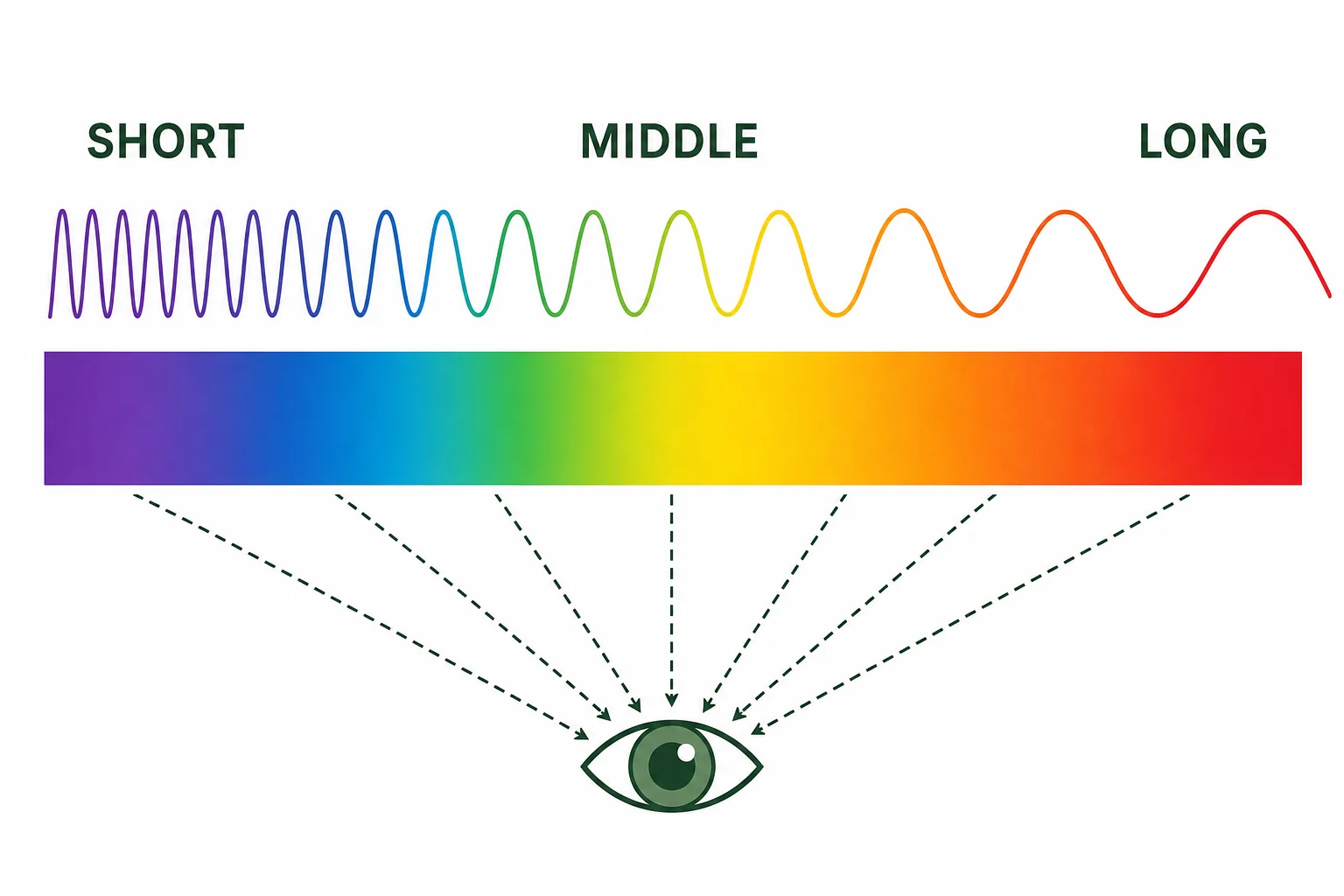
Your eyes detect wavelength patterns, not paint-like color.
The brain builds color
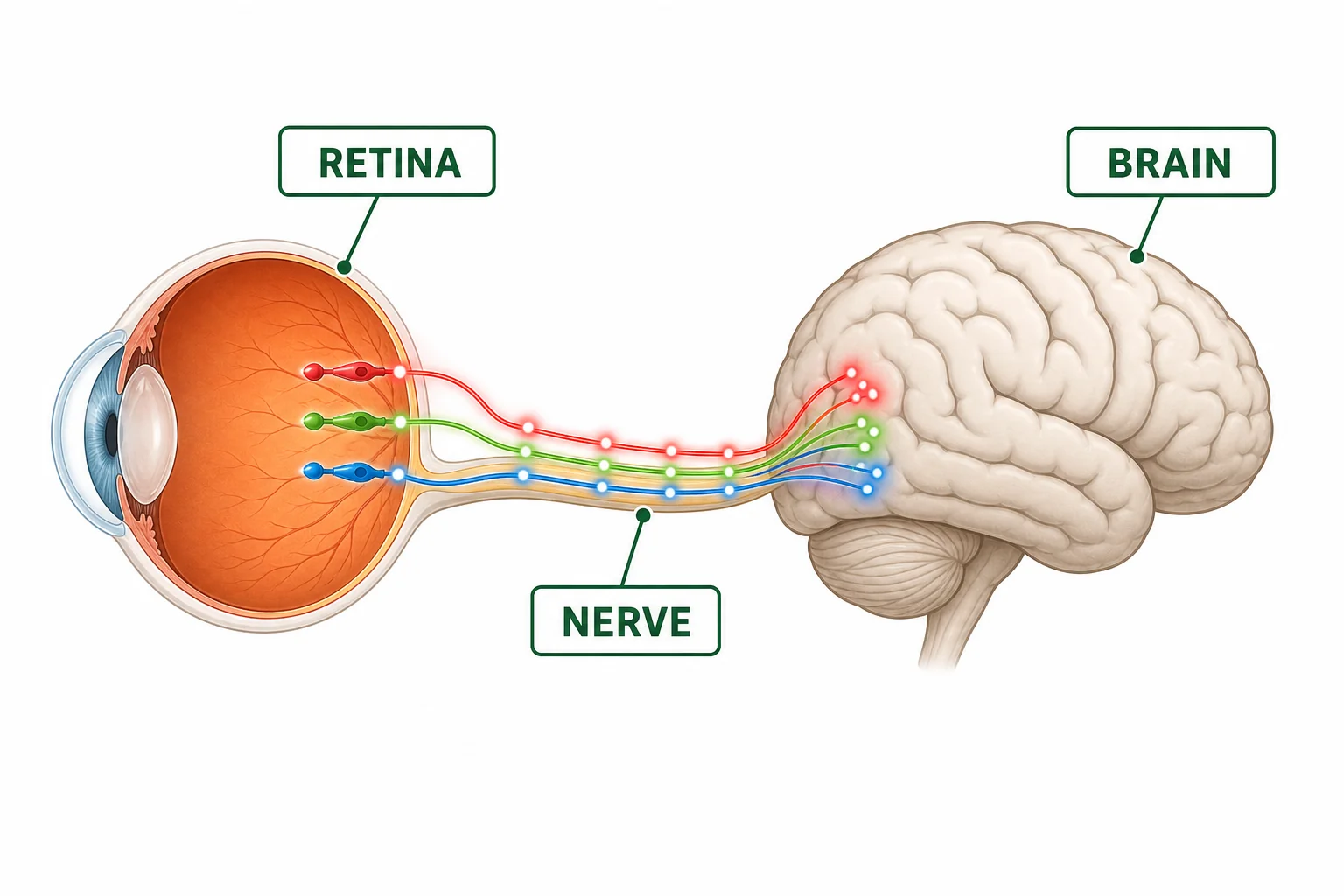
Color is a brain result made from eye signals.
Color vision can vary
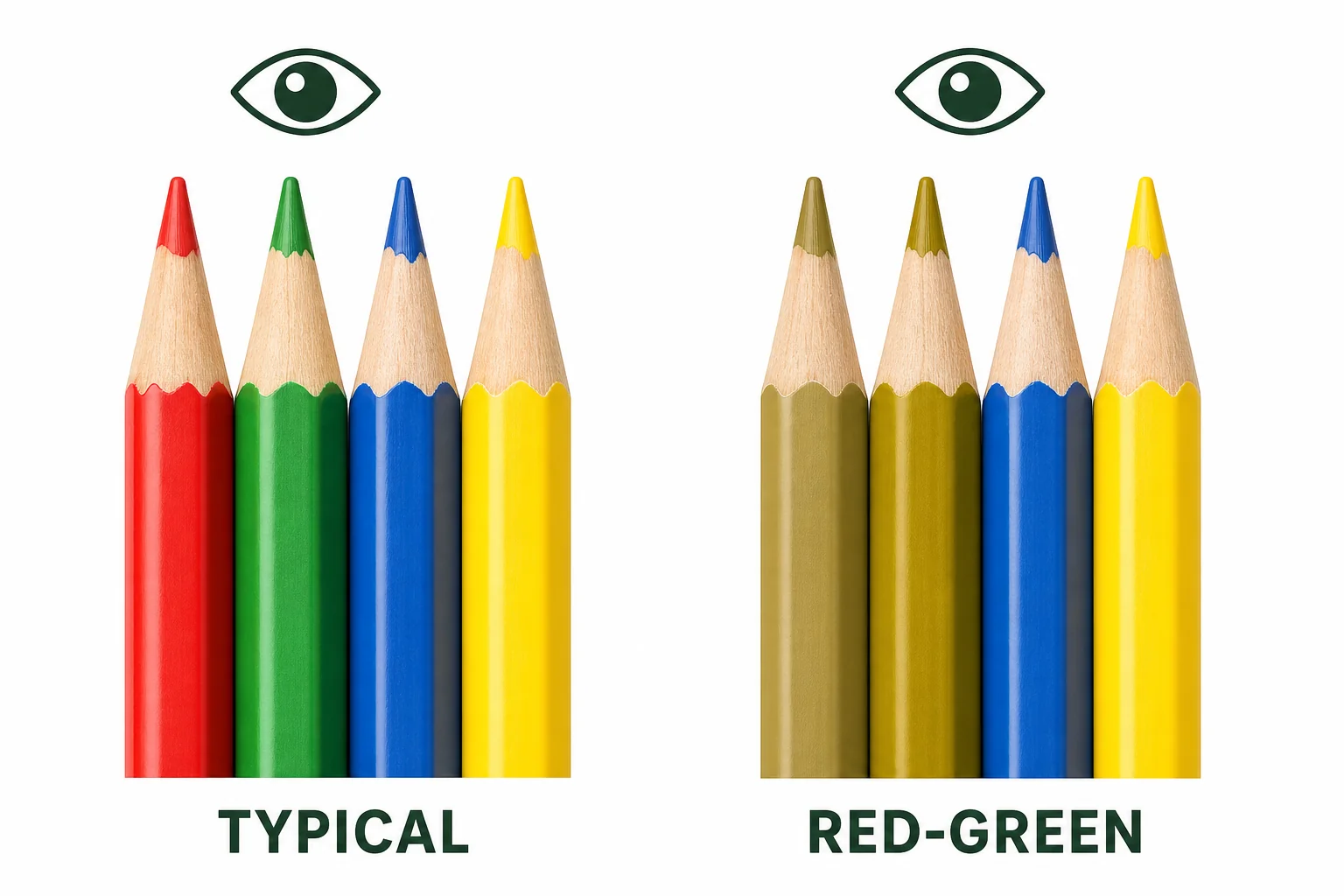
Different cone signals can lead to different color experiences.
Vocabulary
- Retina
- The light sensitive layer at the back of the eye that contains rods, cones, and nerve cells.
- Cone cell
- A retinal cell that helps detect color and works best in brighter light.
- Wavelength
- The distance from one wave peak to the next. Different visible wavelengths lead to different cone signals.
- Optic nerve
- The bundle of nerve fibers that carries visual signals from the eye to the brain.
- Color constancy
- The brain’s ability to keep an object’s color looking fairly stable under different lighting.
In the Classroom
Cone signal color mixing
25 minutes | Grades 6-8
Students use red, green, and blue flashlights or a screen color mixer to make new colors. They record which mixtures look yellow, cyan, magenta, and white, then connect the results to cone signal patterns.
Wavelength and object color sort
20 minutes | Grades 6-8
Students sort colored cards by the wavelengths they mostly reflect. They explain why a red card looks red under white light and why it may look different under colored light.
Accessible color design check
30 minutes | Grades 6-8
Students examine classroom graphs or maps and identify color pairs that may be hard to tell apart. They revise one example using labels, patterns, and stronger contrast.
Key Takeaways
- • Objects look colored because they reflect some wavelengths of light and absorb others.
- • Cones in the retina help detect color, while rods help more in dim light.
- • Most people have three cone types that respond to overlapping wavelength ranges.
- • The brain compares cone signals and builds the color experience.
- • Color vision can vary between people and can change with lighting.