What Happens When You Get a Cut
How your body seals and repairs skin
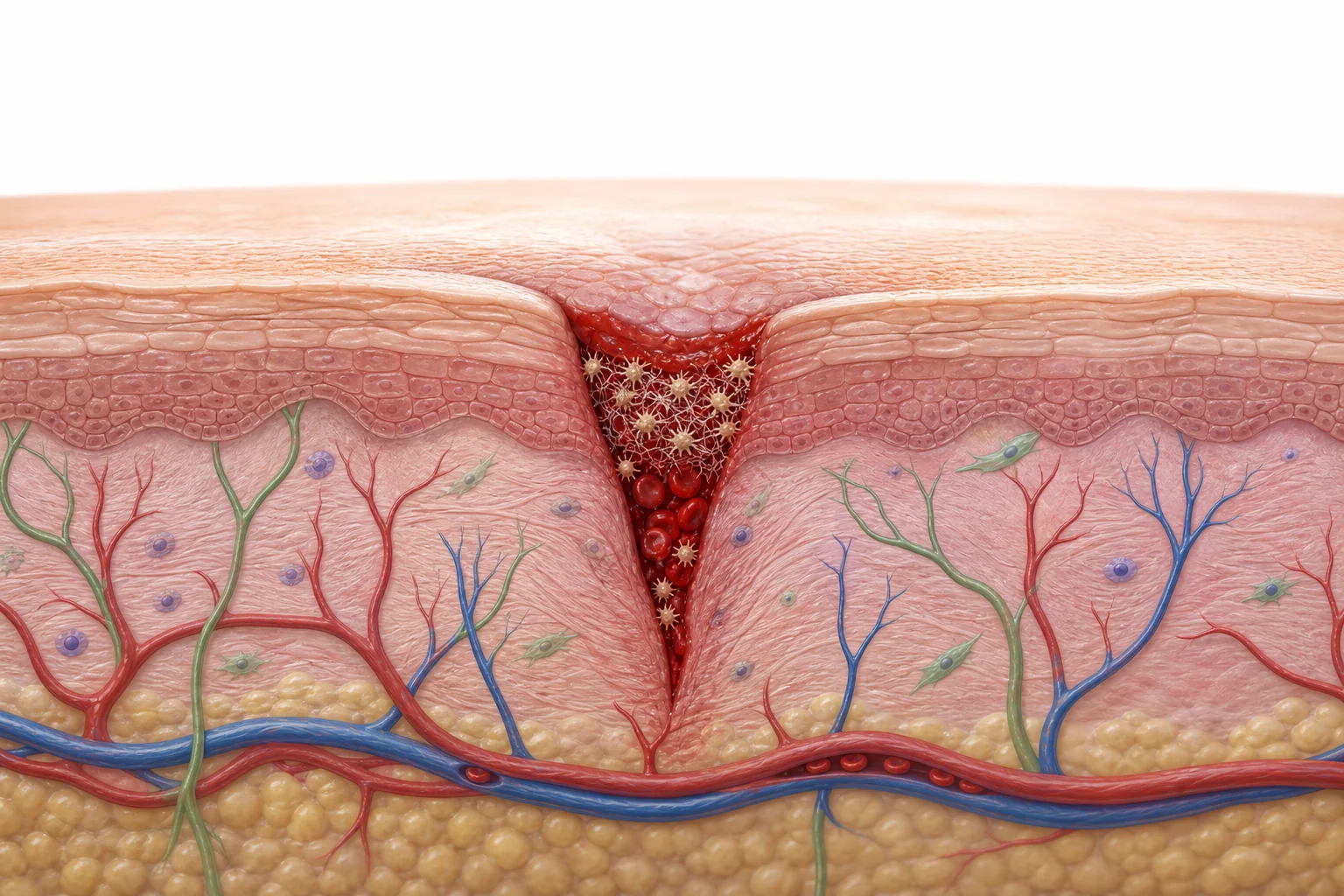
Your body first slows the bleeding by squeezing tiny blood vessels and making a soft plug. Then a stronger seal forms so blood stays inside while the skin begins to rebuild. Germ-fighting cells clean the area and help protect the cut from infection.
A small cut can look simple from the outside. Under the skin, many parts of the body start working within seconds. Blood vessels tighten to slow blood loss. Tiny cell pieces called platelets stick to the broken edges. Proteins in the blood build a net that strengthens the plug. At the same time, immune cells move toward the injured area. They trap germs, remove damaged cells, and send chemical signals that guide repair. Later, skin cells divide and crawl across the wound to close the gap. New tissue fills in below. A scab may protect the surface while healing continues. This process shows that your body is made of interacting systems. The circulatory system, immune system, and skin all respond together. A cut is a small event, but it reveals how living things maintain stable internal conditions.
The skin barrier breaks
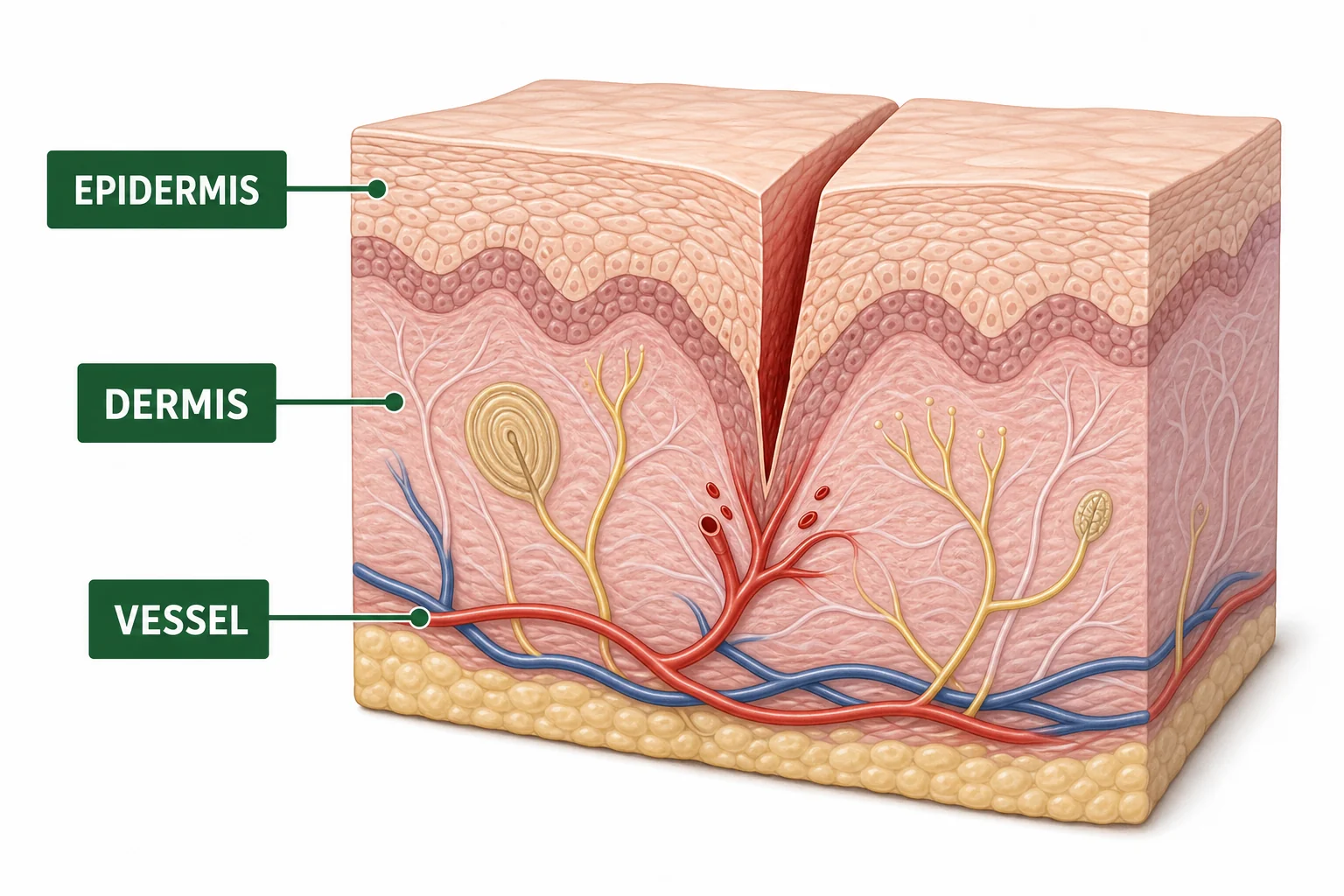
A cut turns a closed barrier into an open repair site.
Blood flow slows down
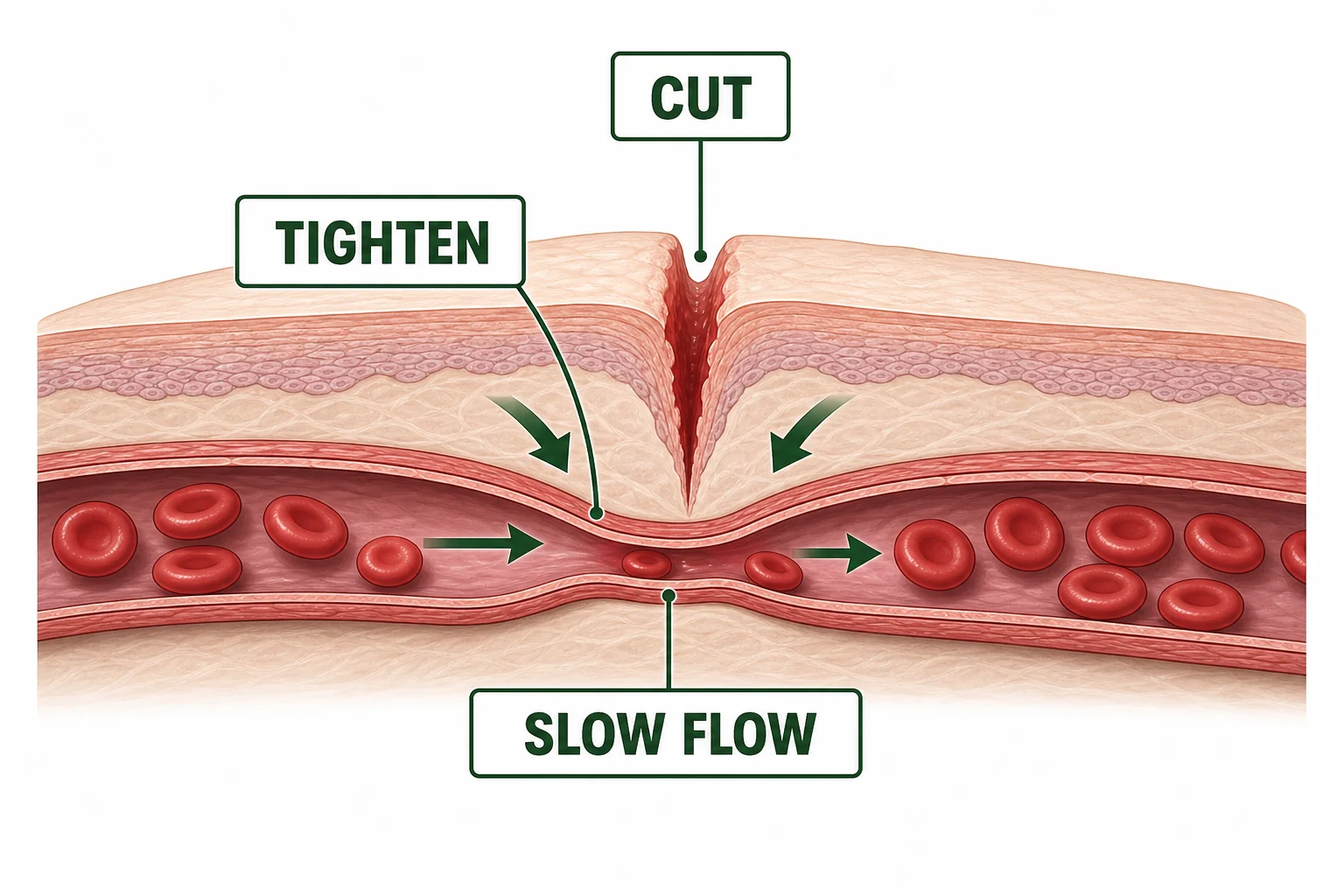
Narrower blood vessels help reduce blood loss.
Platelets make a plug
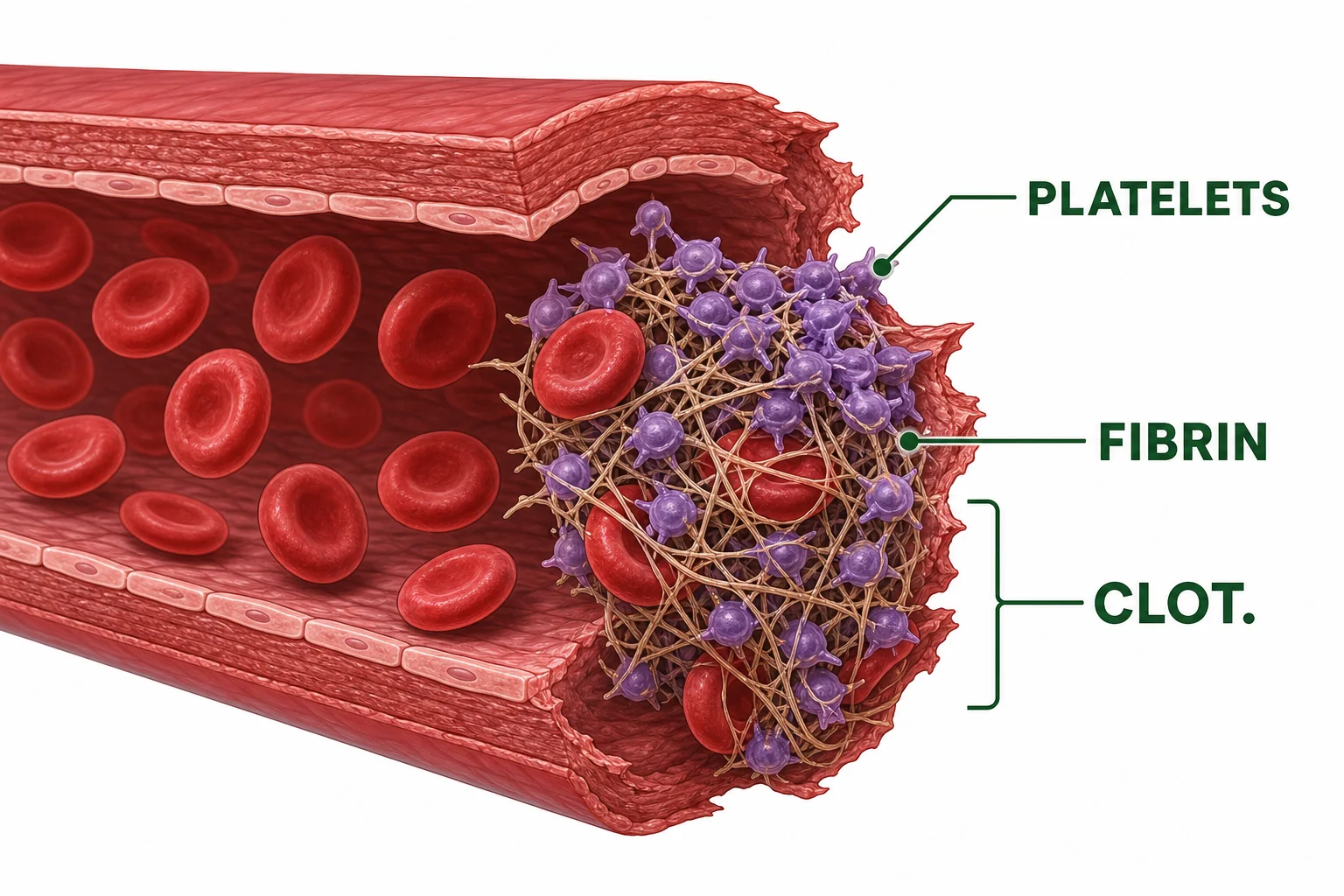
A clot is a temporary seal made from platelets and protein threads.
Immune cells clean up
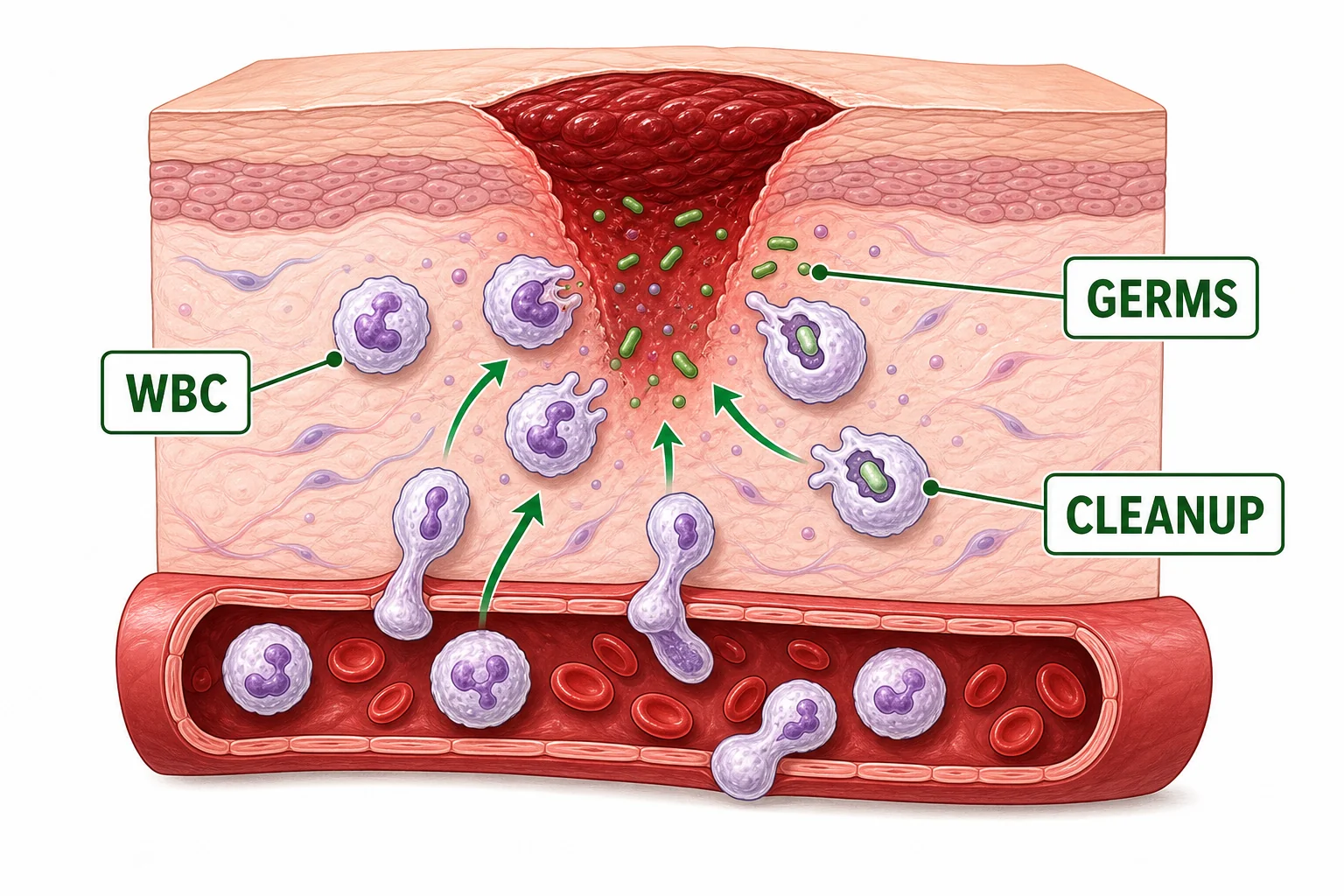
Immune cells remove germs and damaged material.
New tissue closes the gap
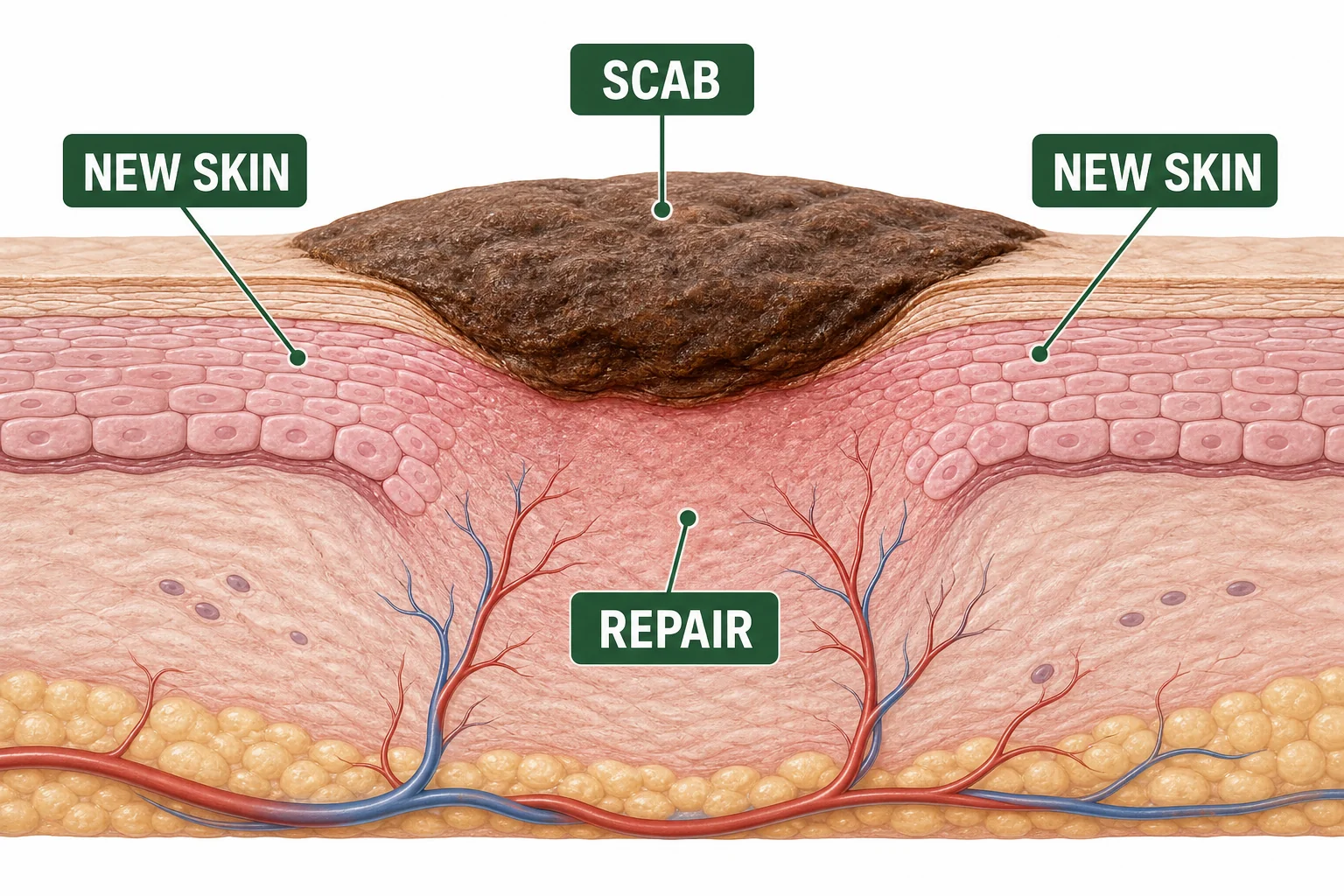
Healing replaces the temporary seal with new living tissue.
Vocabulary
- Hemostasis
- The process that slows and stops bleeding after a blood vessel is damaged.
- Platelet
- A tiny piece of a blood cell that helps form a plug at a wound.
- Clot
- A temporary seal made from platelets, blood cells, and protein threads.
- Fibrin
- A protein that forms threadlike strands to strengthen a clot.
- White blood cell
- An immune cell that helps fight germs and clean up damaged tissue.
- Inflammation
- A body response to injury that can cause redness, warmth, swelling, and pain.
In the Classroom
Build a clot model
20 minutes | Grades 6-8
Students use beads as platelets, string as fibrin, and paper circles as blood cells. They model how a loose platelet plug becomes stronger when fibrin threads trap more material.
Sequence the healing steps
15 minutes | Grades 6-8
Students sort cards showing vessel tightening, platelet plugging, clotting, immune cleanup, and skin repair. They explain how each step supports the next step in the system.
Compare barriers
25 minutes | Grades 6-8
Students compare intact plastic wrap, torn plastic wrap, and patched plastic wrap as models for skin. They discuss what the model shows well and what it leaves out.
Key Takeaways
- • A cut breaks the skin barrier and may damage tiny blood vessels.
- • Blood vessels tighten first to slow blood loss.
- • Platelets and fibrin form a clot that seals the opening.
- • White blood cells help remove germs and damaged tissue.
- • Skin cells divide and move to rebuild the surface.