Why Does Your Heart Beat Faster When You Run?
Your body delivers oxygen where it is needed
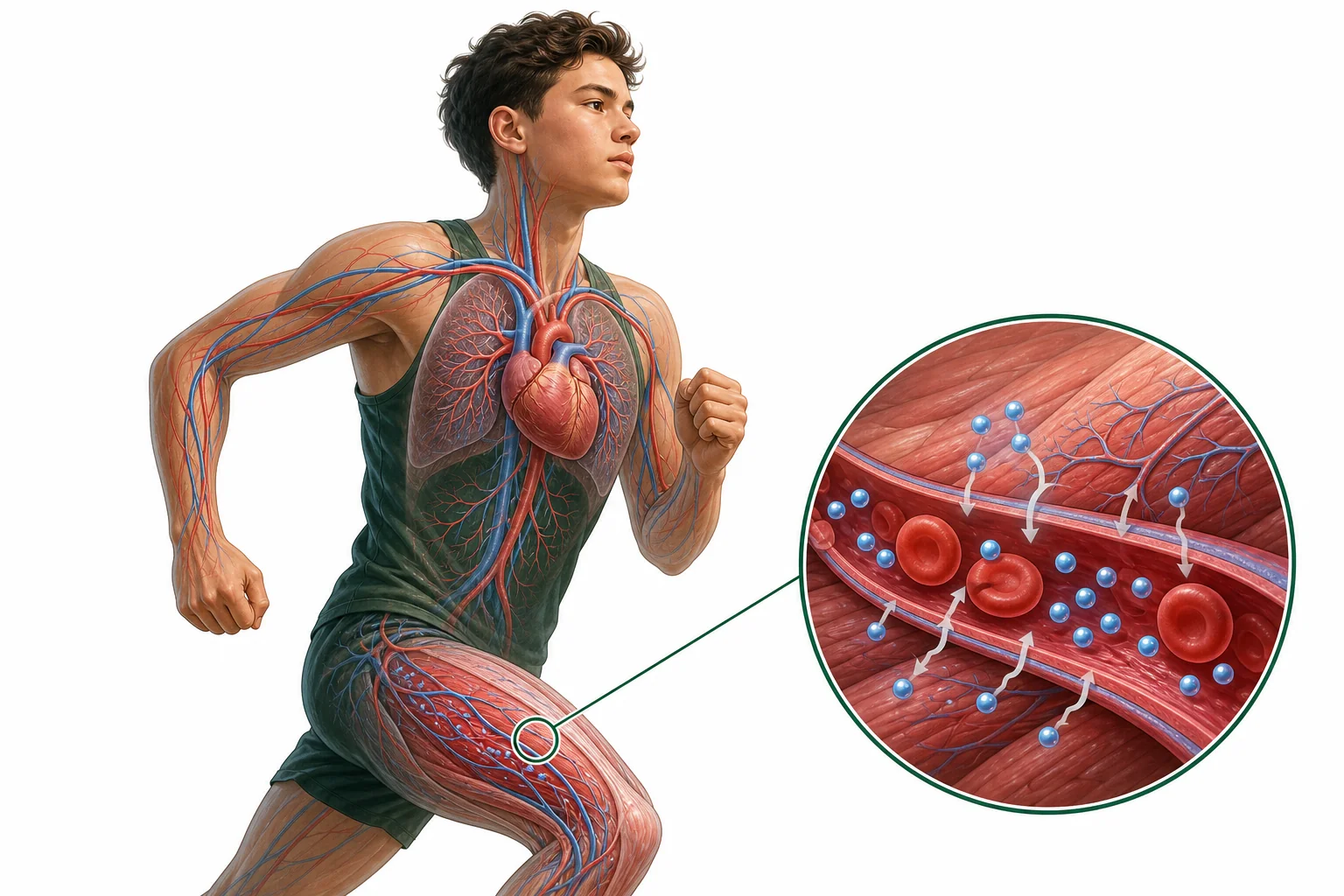
When you run, your leg muscles work harder and need more oxygen. Your heart beats faster to move more blood through your body. This helps bring oxygen to your muscles and carry away carbon dioxide.
A resting heart may beat about 60 to 100 times each minute. During a run, that number can rise quickly. This change is not random. It is part of how your body keeps cells supplied while conditions change. Running makes muscle cells use energy faster. To release that energy, the cells need oxygen and fuel from the blood. They also make carbon dioxide and other wastes that must be carried away. Your circulatory system answers this changing need by moving blood faster. Your breathing rate often rises at the same time because your lungs are taking in more oxygen and letting out more carbon dioxide. Together, the heart, lungs, blood, blood vessels, and muscles help your body stay balanced. That balance is called homeostasis. A faster heartbeat is one sign that several body systems are working together.
Muscles ask for more
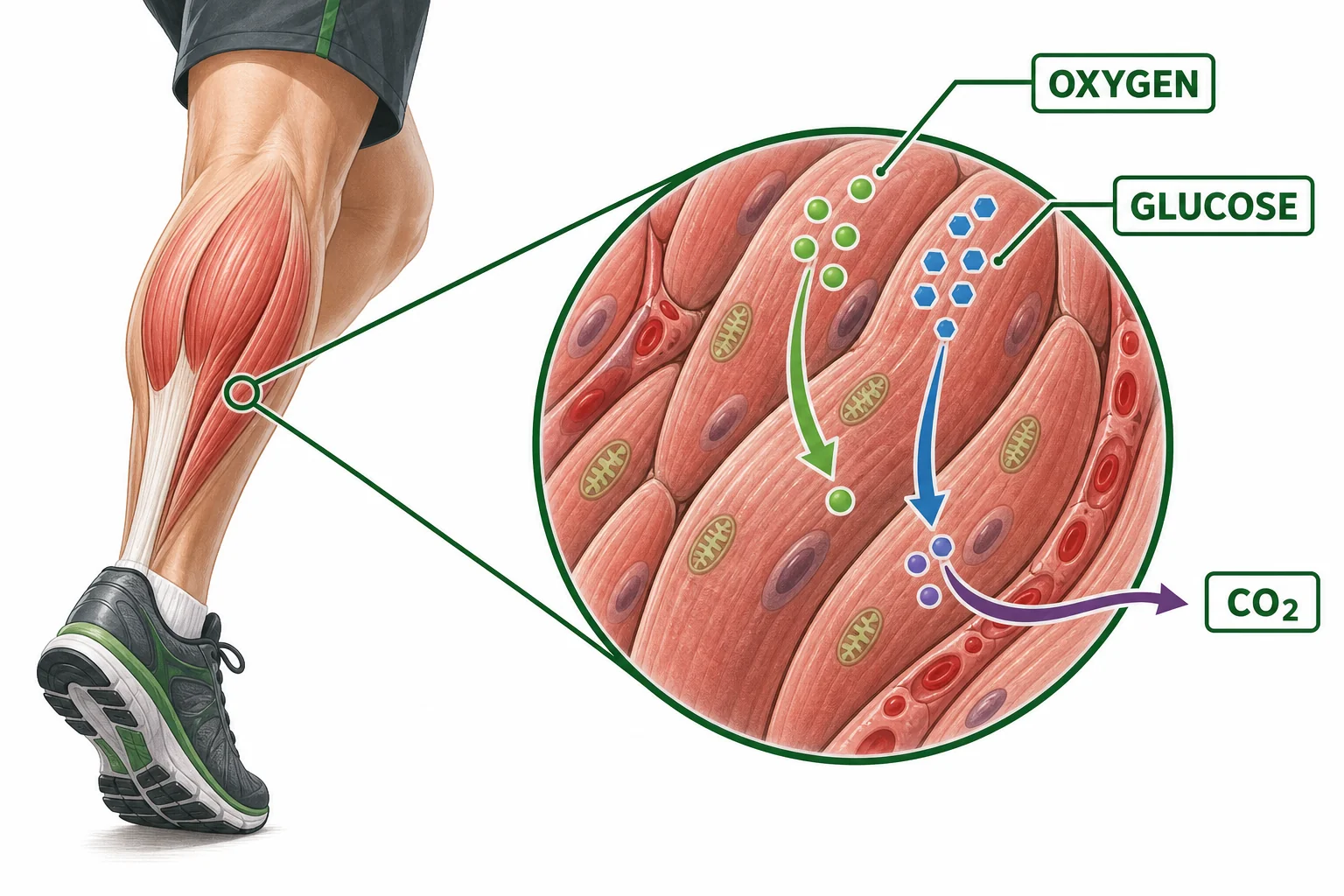
More muscle work means a bigger demand for oxygen and fuel.
Blood is the delivery system
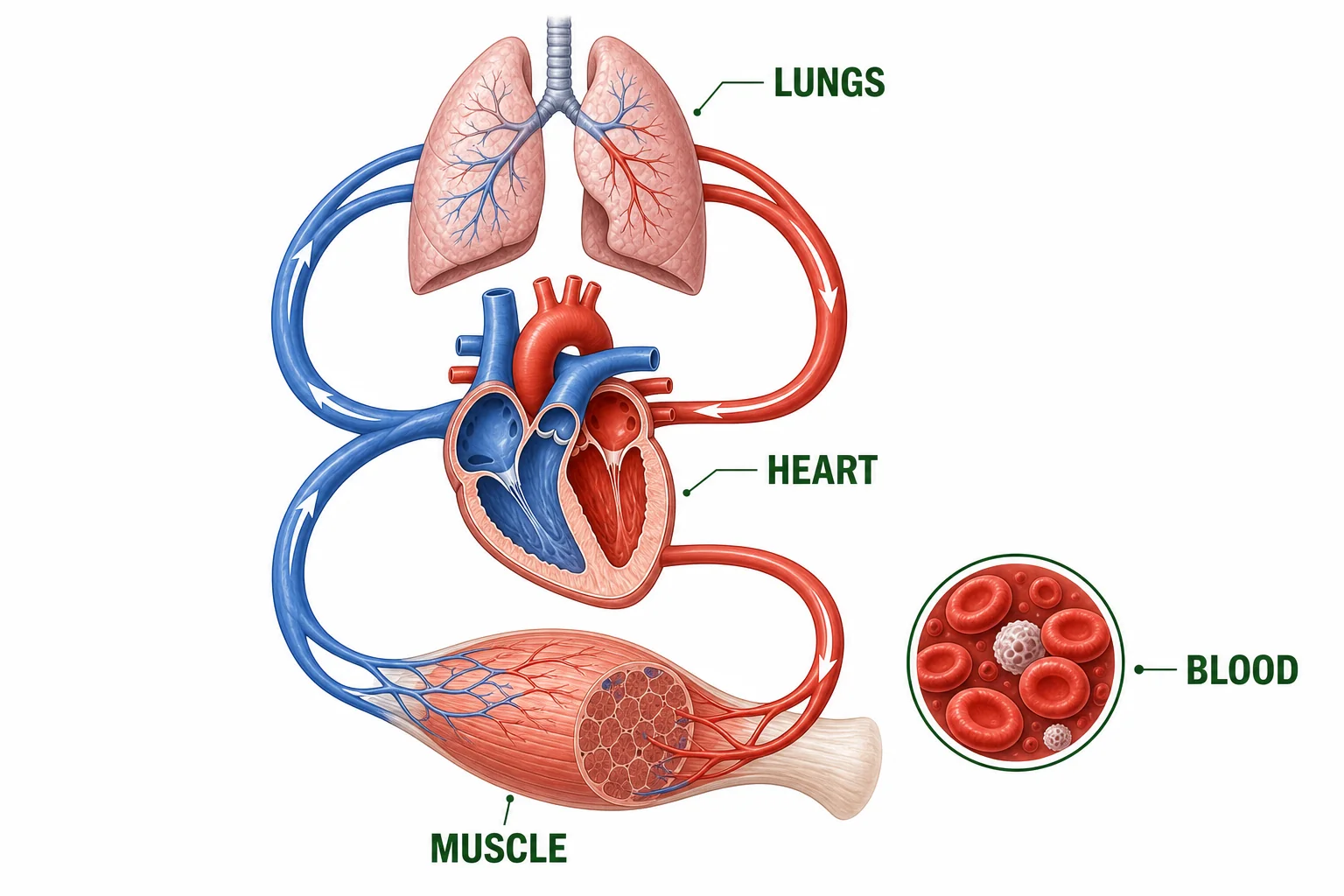
The heart pumps blood, and blood carries the supplies.
The heart changes its output
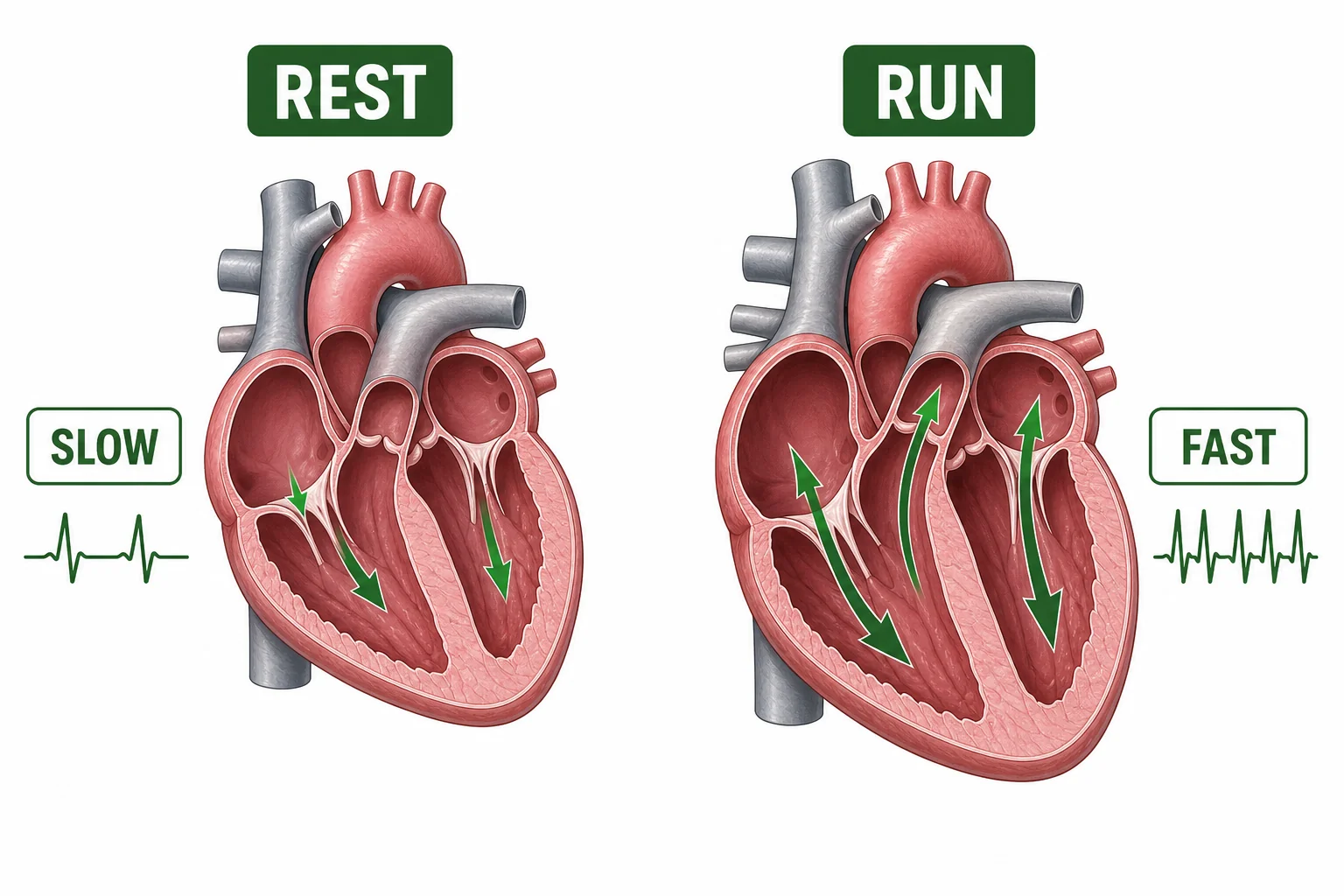
Heart rate rises so blood flow can rise.
Breathing and heartbeat work together
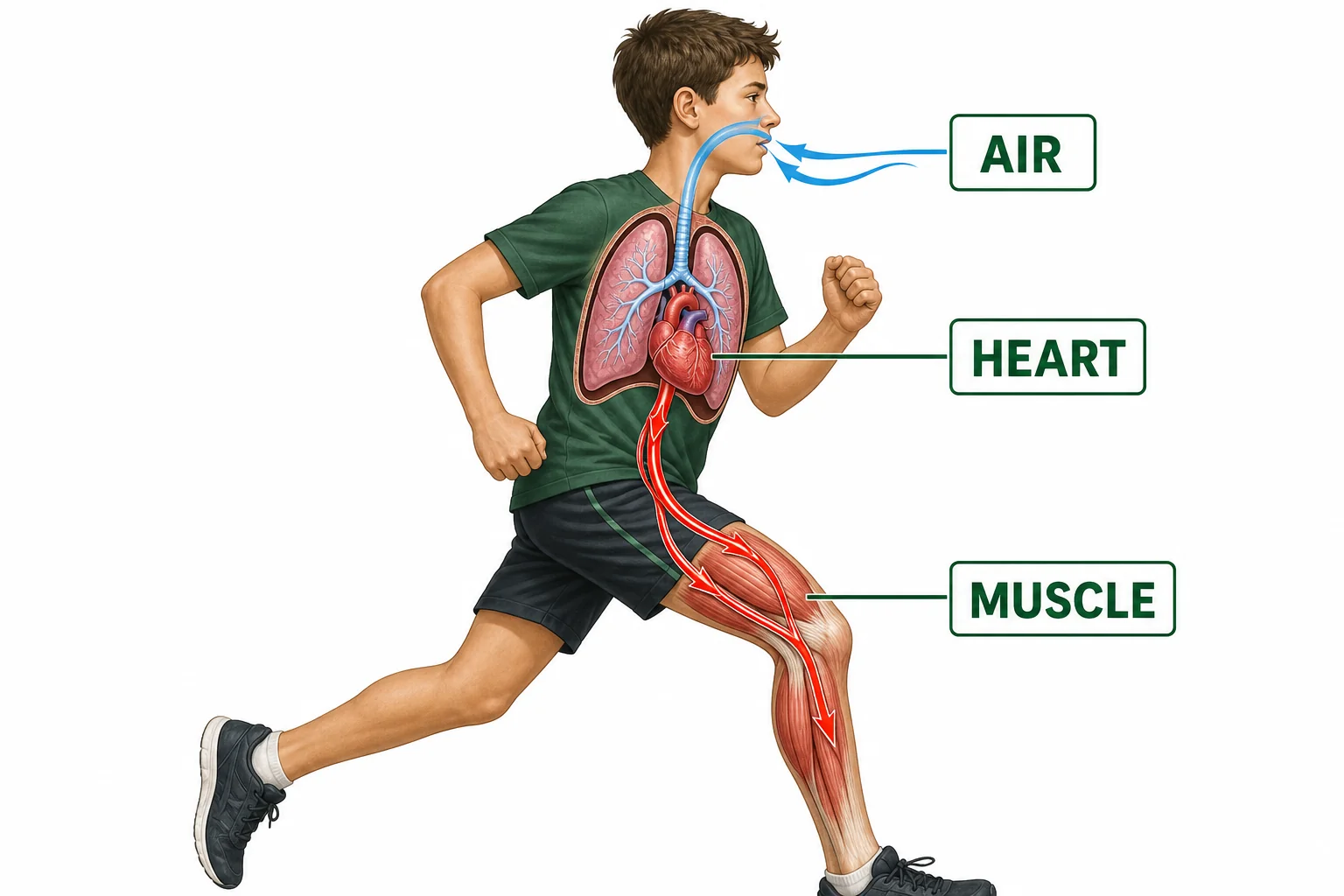
The lungs load the blood with oxygen, and the heart sends it out.
Homeostasis after the run
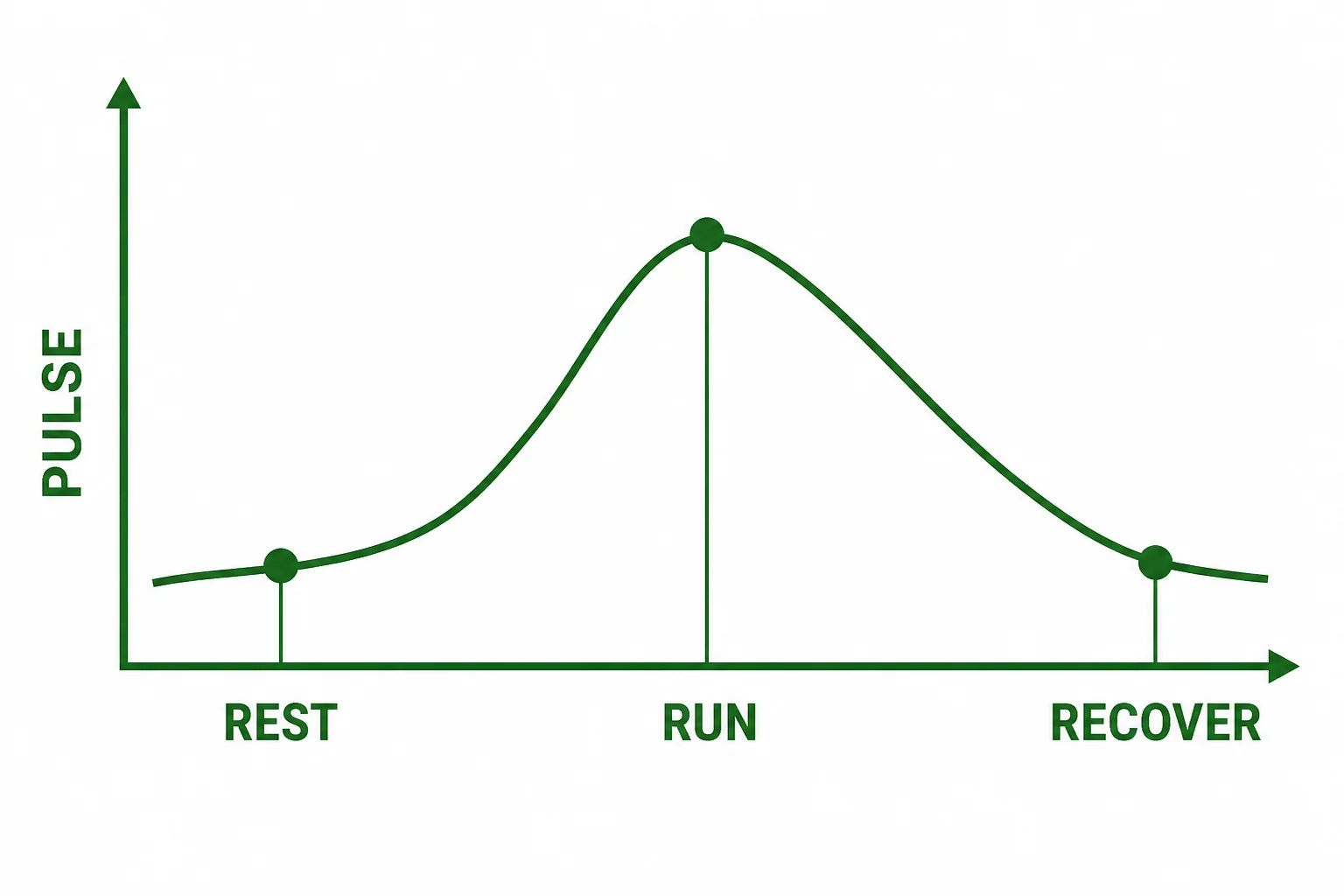
Recovery is the body moving back toward balance.
Vocabulary
- Heart rate
- The number of times the heart beats in one minute.
- Circulatory system
- The heart, blood, and blood vessels that move materials around the body.
- Cellular respiration
- The process cells use to release usable energy from food, often using oxygen.
- Capillary
- A tiny blood vessel where oxygen, carbon dioxide, nutrients, and wastes move between blood and cells.
- Homeostasis
- The process of keeping internal body conditions within a healthy range.
In the Classroom
Pulse before and after movement
25 minutes | Grades 6-8
Students measure their pulse at rest, after one minute of jogging in place, and after three minutes of recovery. They graph the data and explain how the pattern shows body systems responding to exercise.
Oxygen delivery model
30 minutes | Grades 6-8
Students use colored beads or cards to model oxygen and carbon dioxide moving between lungs, blood, and muscles. They repeat the model at rest and during running to compare the flow rate.
Systems explanation paragraph
20 minutes | Grades 6-8
Students write a short explanation that includes the heart, lungs, blood, muscles, and cells. They must connect the faster heartbeat to oxygen demand, carbon dioxide removal, and homeostasis.
Key Takeaways
- • Running makes muscle cells use energy faster.
- • Working muscles need more oxygen and fuel from the blood.
- • The heart beats faster to move more blood each minute.
- • The lungs and heart work together to bring in oxygen and remove carbon dioxide.
- • After exercise, heart rate falls as the body returns toward homeostasis.