Why Leaves Change Color in Fall
A light story written in leaf pigments
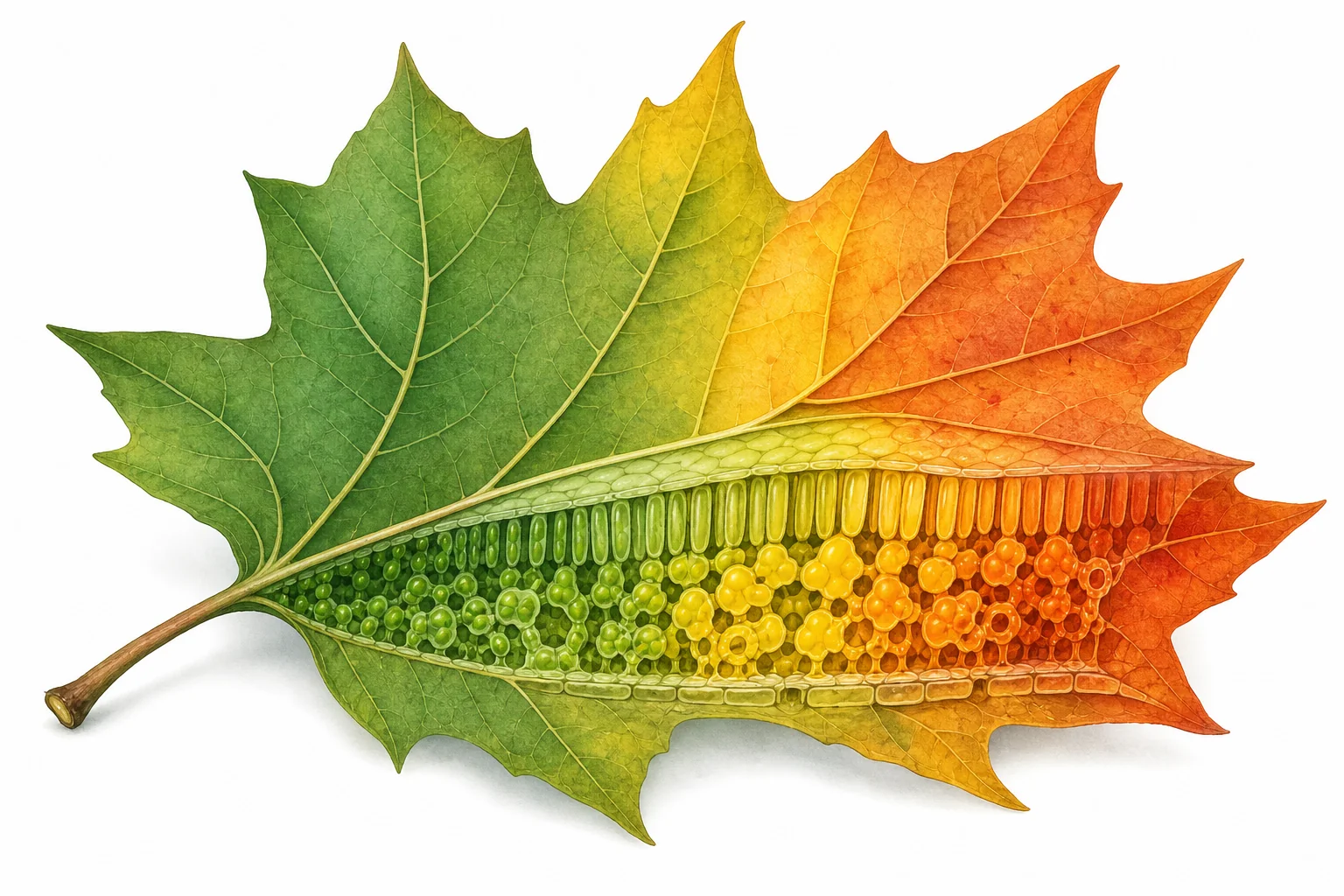
Leaves look green in spring and summer because a green chemical called chlorophyll helps them use sunlight. In fall, shorter days and cooler weather slow the leaf’s work, so the green color fades. Yellow, orange, red, and brown colors appear as other leaf colors stay behind or form.
A tree leaf is a small living system. During spring and summer, it takes in sunlight, air, and water. It uses these materials to make sugars that help the plant grow. The green color comes from chlorophyll, a molecule that absorbs light for photosynthesis. Other colors are in many leaves too, but they are usually hidden by the strong green signal. Fall changes the leaf’s job. Shorter days and cooler nights tell many trees to prepare for winter. The tree slows sugar making, seals off the leaf stem, and stops replacing chlorophyll as quickly. As chlorophyll breaks down, yellow and orange pigments become easier to see. In some leaves, red pigments form when sugars are trapped. The colors are not decoration. They are evidence of chemistry, light absorption, and a plant changing with its environment.
Green is the summer signal
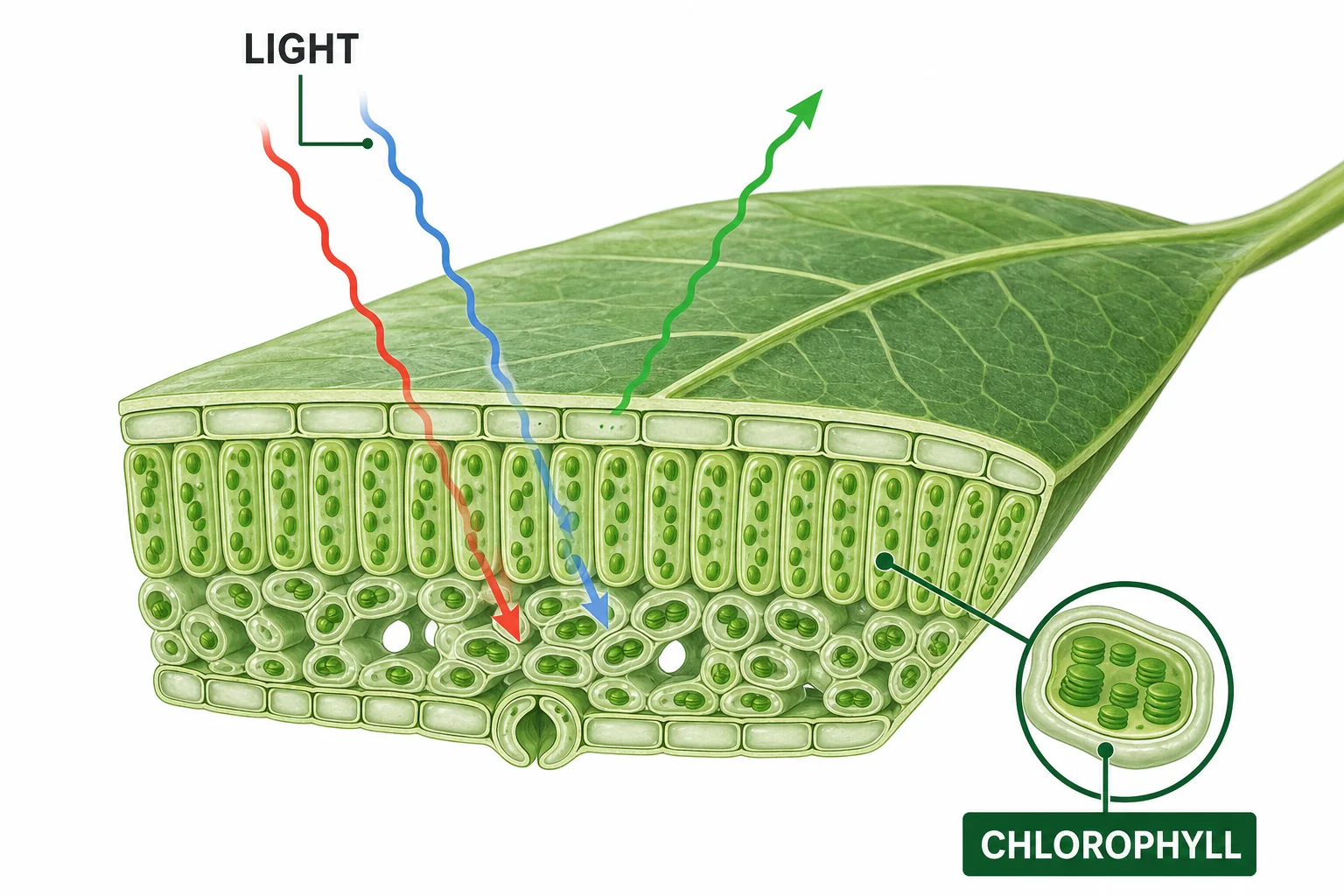
A green leaf is actively using light energy.
Other colors were there
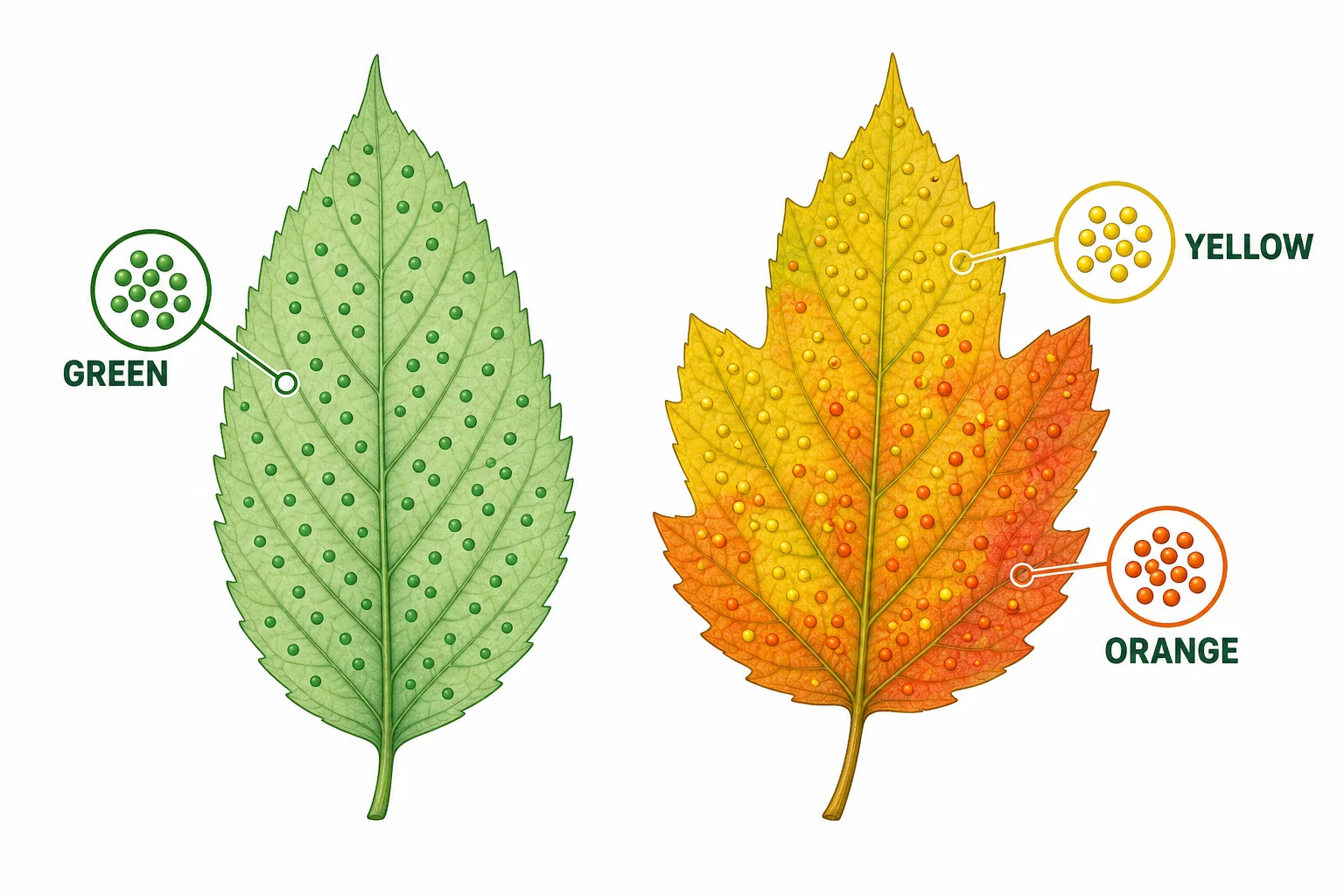
Yellow and orange colors often appear when green fades.
Short days change the leaf
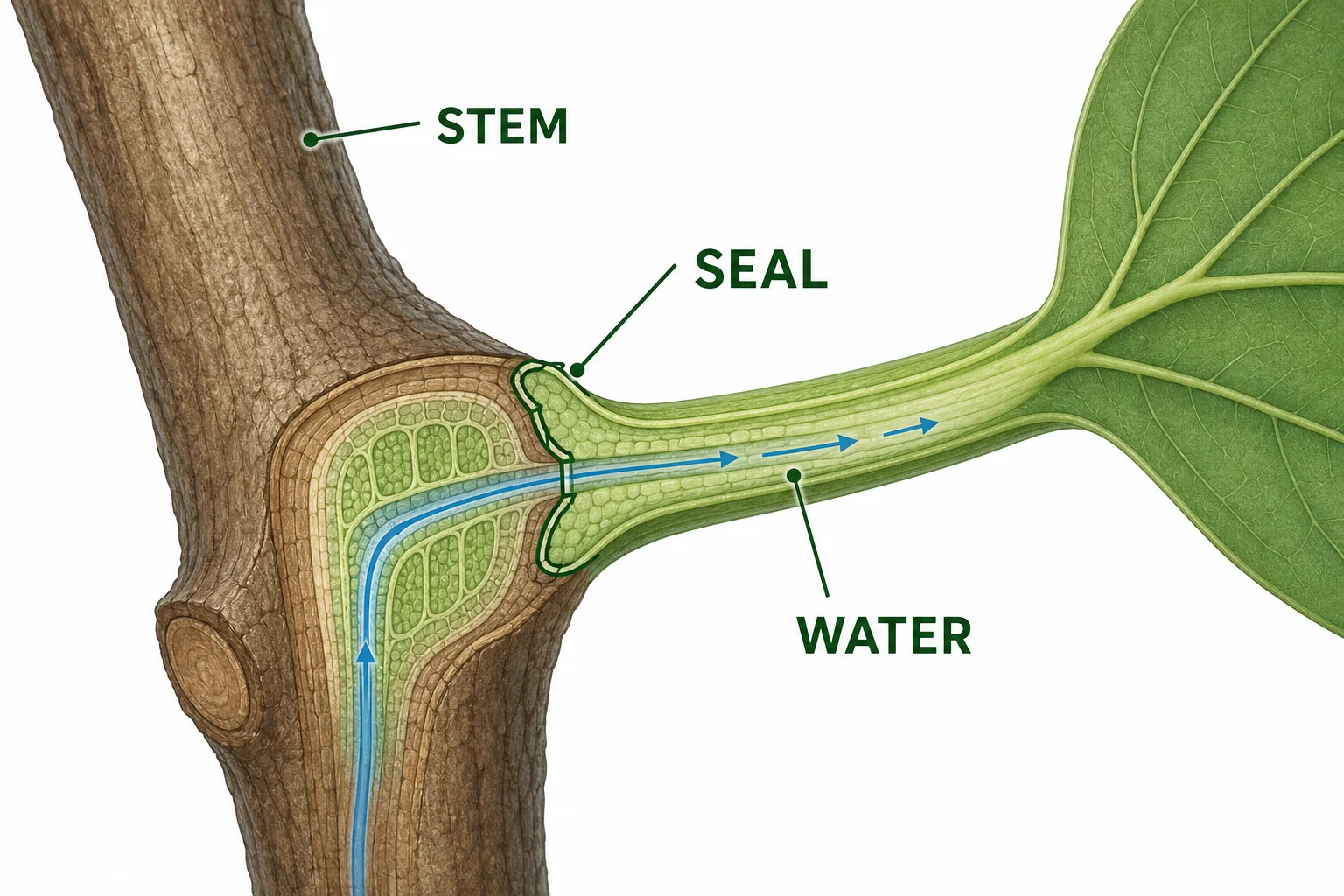
Shorter days help trigger the tree’s winter plan.
Red can form in fall
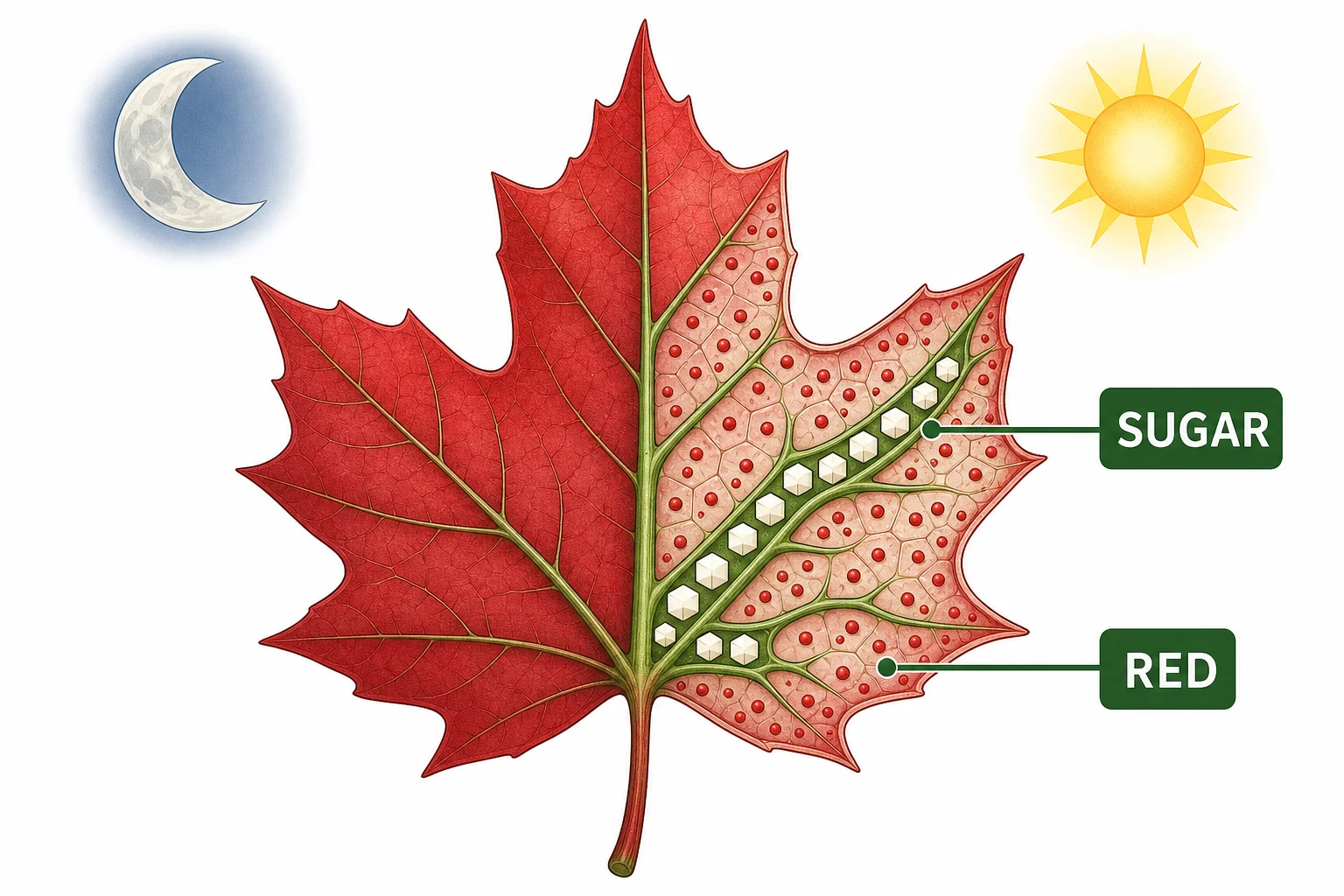
Red leaves often show new pigments made during fall.
Brown is the last stage
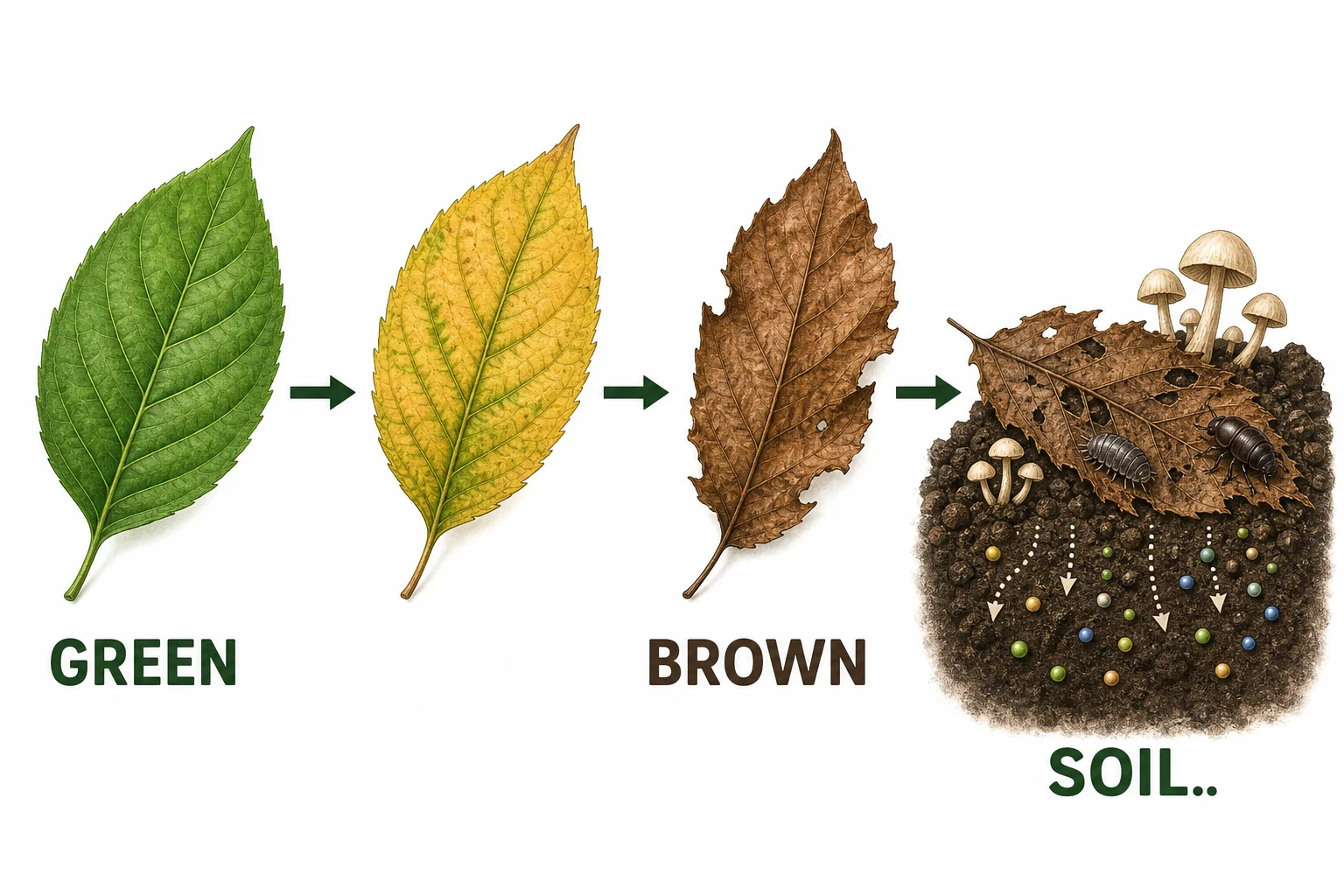
Leaf color change ends with recycling.
Vocabulary
- Chlorophyll
- A green molecule in leaves that absorbs light energy for photosynthesis.
- Photosynthesis
- The process plants use to make sugars from carbon dioxide and water using light energy.
- Accessory pigment
- A light absorbing molecule that helps a leaf capture light or shows colors other than green.
- Carotenoid
- A yellow or orange pigment found in many leaves, flowers, fruits, and vegetables.
- Anthocyanin
- A red, purple, or blue pigment that some leaves make during fall.
- Abscission layer
- A thin layer of cells that forms where a leaf stem meets a branch and helps the leaf detach.
In the Classroom
Separate leaf pigments
45 minutes | Grades 6-8
Students crush green or fall leaves in rubbing alcohol and use paper chromatography to separate pigments. They compare bands of green, yellow, and orange to see that leaves can contain more than one pigment.
Model light absorption
25 minutes | Grades 6-8
Students shine colored light or use color filters on paper leaf models. They connect the color a pigment reflects to the color that reaches the eye.
Track fall color data
10 minutes per observation | Grades 6-8
Students observe one tree for several weeks and record leaf color, day length, and weather. They graph the changes and look for patterns between environment and leaf color.
Key Takeaways
- • Chlorophyll makes most active leaves look green because it absorbs light for photosynthesis.
- • Yellow and orange pigments can be present in leaves before fall begins.
- • Shorter days and cooler weather help trees slow chlorophyll replacement.
- • Red pigments may form in some leaves when sugars are trapped during fall.
- • Brown leaves are part of matter cycling because decomposers return nutrients to soil.