Materials Engineering Challenge
Pick a material and a challenge. See if your choice has what it takes. Try wood for a shelter, metal for a bridge, or fabric for a parachute and find out which materials are the best fit.
Choose a mode
See all material properties to help you decide.
Pick a Challenge
Pick a Material
Materials Engineering Reference
What Is a Material?
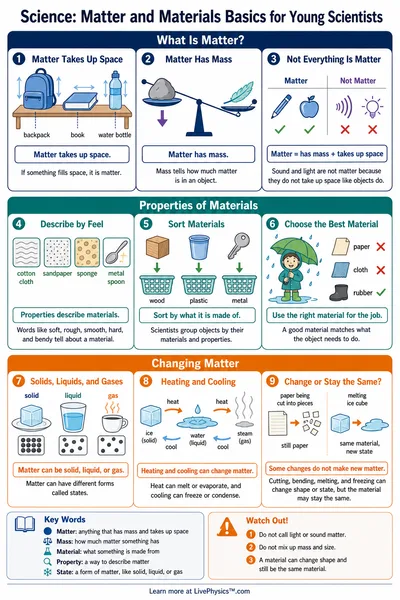
A material is any solid substance that we use to build or make things. Every object around you is made from one or more materials.
- Natural materials. Found in nature. Wood, clay, and stone come from the Earth.
- Manufactured materials. Made by people. Plastic and glass are examples.
- Metals. Usually strong and shiny. Iron, steel, and aluminum are common metals.
Engineers choose materials based on what the finished object needs to do.
Engineering Properties
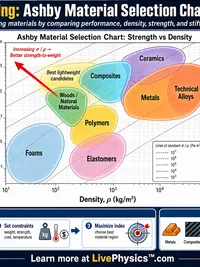
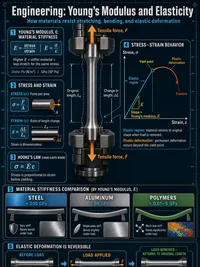
Engineers measure materials using properties. A property tells you something important about how a material behaves.
- Strength. How much weight or force a material can hold without breaking.
- Waterproof. Whether water passes through the material or is stopped by it.
- Flexible. Whether the material bends easily without snapping.
- Weight. How heavy the material is. Light materials are easier to carry.
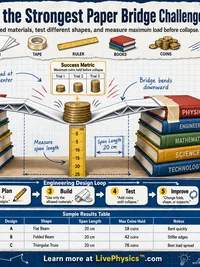
The Engineering Design Process
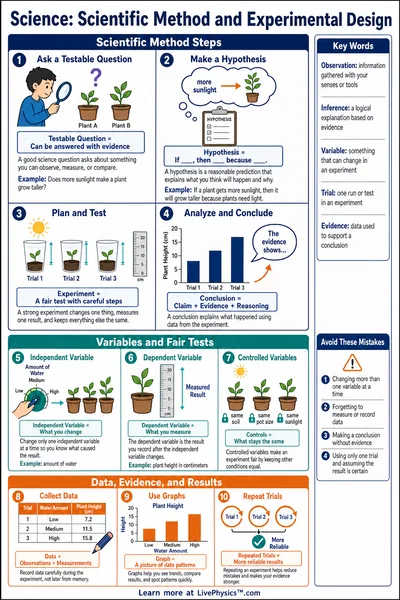
Engineers do not guess. They follow a process to solve problems with materials.
- Ask. What does the structure need to do? What are the rules?
- Imagine. Think of materials that could work. List your ideas.
- Plan. Choose the best material based on its properties.
- Create. Build a test version using the chosen material.
- Improve. Test it. If something fails, try a different material.
Materials in the Real World
Look around and you can see material choices everywhere.
- Wood frames. House frames are often built from wood because it is strong and easy to cut and join.
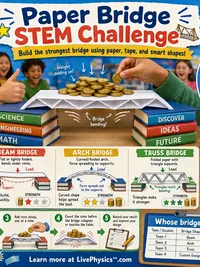
- Metal bridges. Steel bridges carry heavy loads because metal has very high strength.
- Plastic pipes. Plastic carries water in homes because it is waterproof and lightweight.
- Clay tiles. Roof tiles made from clay block rain and last for many years.
- Fabric parachutes. Silk or nylon is used for parachutes because it is flexible and catches air.
Related Content
Related Tools
Compound Interest Calculator
Compute A = P(1+r/n)^(nt) with various compounding frequencies, monthly contributions, growth chart, year-by-year table, and Rule of 72.
Unit Converter
Convert across 10 categories, length, mass, volume, temperature, speed, area, energy, pressure, time, and data. See all conversions at once.
Loan & Mortgage Amortization Calculator
Calculate monthly payments, total interest, and generate a full amortization schedule. See the impact of extra payments with principal vs interest charts.
Experimental Data & Uncertainty Analyzer
Enter experimental data (x, y pairs) or paste CSV, perform linear regression with R-squared, standard errors, and residual analysis. Propagate uncertainties through addition, multiplication, division, and power operations. Calculate percent error with significant figures. SVG scatter plot with best-fit line and error bars.
Related Labs
Materials Engineering Challenge Lab
Test real engineering materials across four challenges - shelter, bridge, insulation, and packaging. Score each material on strength, weight, longevity, and flexibility to find the best match
Shade & Shelter Design Lab
Spend a 10-token budget on roof and wall materials to design a shade structure. Score your shelter on rain protection, sun blocking, and wind resistance
Build-It-from-Pieces Lab
Choose a base, add structural pieces, and test your construction for stability. Discover how shape, balance, and triangles affect how well structures stand up under load
Playground Design Challenge
Define a playground problem, set your design criteria, score three solutions, and recommend the best one. Grades 3–5.