Weather Hazards & Safe Design Lab
Identify weather hazards, design protective buildings, and apply the engineering design cycle to improve your damage score. Discover which protection features work best for each type of storm.
Guided ExperimentWeather Hazard Engineering Challenge
Choose one weather hazard. Which design features do you predict will reduce damage the most? Why?
Write your hypothesis in the Lab Report panel, then click Next.
Controls
Scene 1 of 5
You look outside and see the sky turn green. A funnel-shaped cloud is touching the ground. Trees are bending and breaking.
What weather hazard is this?
Data Table
(0 rows)| # | Hazard | Design Features | Test 1 Score | Change Made | Test 2 Score | Improvement? |
|---|
Reference Guide
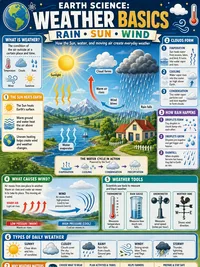
Common Weather Hazards
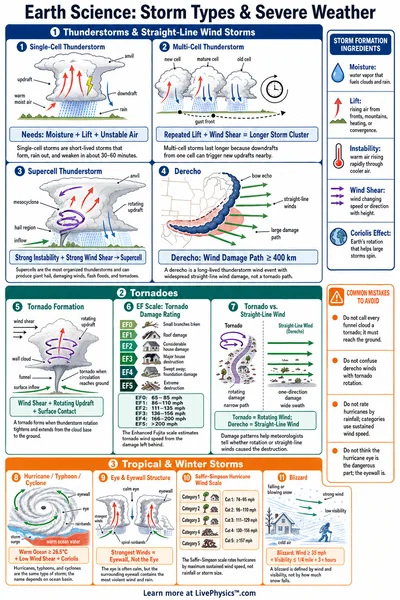
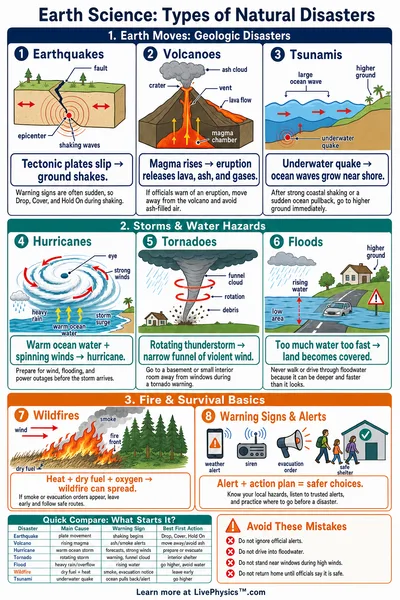
- Tornado 🌪️ - fast spinning funnel of air; can destroy buildings
- Flood 🌊 - water overflows its banks and covers land
- Blizzard ❄️ - heavy snow plus strong wind and freezing temps
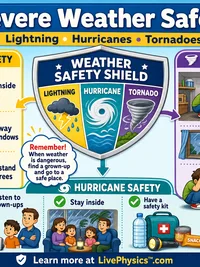
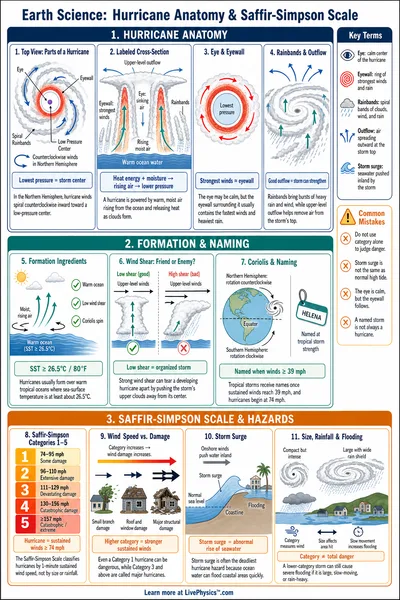
- Hurricane 🌀 - large ocean storm with high winds and storm surge
- Lightning ⚡ - electric discharge that can start fires or damage structures
Engineering Design Cycle
Engineers follow a repeating process to solve problems
- Define - identify the problem and constraints
- Design - brainstorm and choose a solution
- Test - build and evaluate the solution
- Improve - change one variable and test again
Changing one variable at a time is called a fair test. It lets you know which change caused any difference in results.
Protection Strategies
Not all features protect against all hazards. Each is designed for a specific threat
- Raised foundation + sandbags - reduce flood damage
- Reinforced walls + storm shutters - resist tornado winds
- Insulation + reinforced walls - protect against blizzards
- Storm shutters + walls + sandbags - best for hurricanes
- Lightning rod - the only effective lightning protection
Trade-offs in Design
Every engineering solution involves trade-offs. Adding more protection features increases safety but also increases cost and construction time.
Engineers must balance
- Safety vs. cost
- Strength vs. weight
- Protection for one hazard vs. another