Materials Engineering Challenge Lab
Test six materials against four real engineering challenges. Score each material for strength, waterproof rating, and flexibility, then decide which one is the best choice for each job.
Guided ExperimentMaterials Engineering Challenge
Before testing, predict, which material do you think will work best for building a shelter? Why?
Write your hypothesis in the Lab Report panel, then click Next.
Controls
Choose a Material
Choose an Engineering Challenge
🪵 Wood - Properties
Data Table
(0 rows)| # | Material | Challenge | Strength | Waterproof | Score (%) | Rating |
|---|
Reference Guide
Material Properties
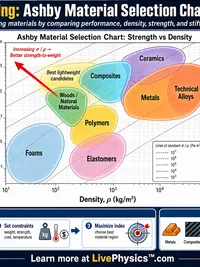
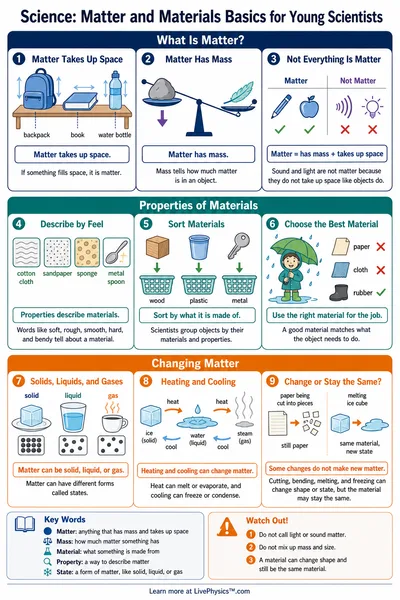
Strength, waterproof ability, lightness, and flexibility are key properties engineers test when choosing a material.
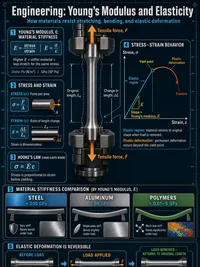
- Strength. How much weight or force the material can hold without breaking.
- Waterproof. How well the material keeps water out.
- Lightness. How little the material weighs for its size.
- Flexibility. How easily the material bends without snapping.
Engineering Challenges
Each challenge needs different properties from its material.
- Shelter. Needs strength and waterproofing to keep people safe and dry.
- Bridge. Needs the highest strength to hold the weight of people and cars.
- Boat. Needs to be waterproof and light enough to float.
- Parachute. Needs lightness and flexibility to catch and hold air.
Reading the Score
Each material gets a score from 0 to 100 for the chosen challenge. Higher score means a better fit for that job.
- 80 and above. Excellent fit for the challenge.
- 60 to 79. Good fit with some limitations.
- 40 to 59. Fair fit. May work but not ideal.
- Below 40. Poor fit. Another material would be much better.
Design Tradeoffs
No material is for everything. Engineers pick the best fit for each job, not the overall best material.
For example, metal is excellent for a bridge because it is very strong. But metal is very heavy and scores poorly for a parachute, which needs to be as light as possible.