Practice identifying and comparing major features of Baroque and Rococo art, including dramatic lighting, movement, emotional intensity, decorative design, and social context.
Read each problem carefully. Use complete sentences when explaining your answer. Refer to specific visual evidence when a problem describes or shows an artwork.
Comparing dramatic movement, emotion, ornament, and elegance in European art
Art History - Grade 9-12
- 1
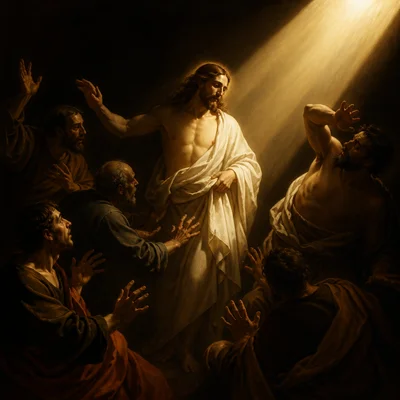
Define Baroque art in 2 to 3 sentences. Include at least two common visual characteristics.
- 2
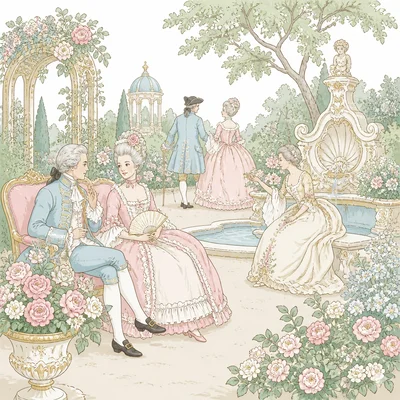
Define Rococo art in 2 to 3 sentences. Include at least two common visual characteristics.
- 3
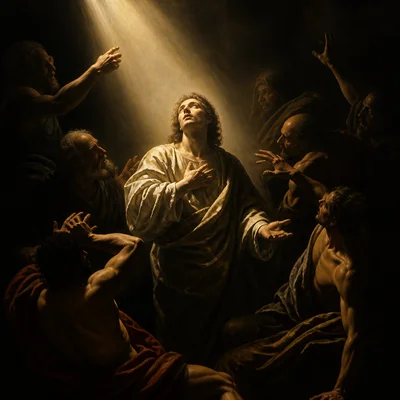
A painting shows a saint dramatically lit by a bright beam of light, surrounded by deep shadows. The figures twist and gesture intensely. Is this more likely Baroque or Rococo? Explain your answer.
- 4
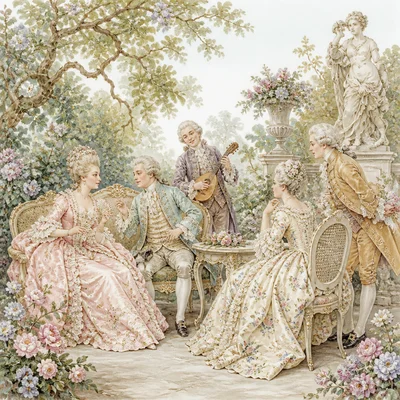
A painting shows elegantly dressed people in a garden, surrounded by soft colors, flowers, curving trees, and a playful mood. Is this more likely Baroque or Rococo? Explain your answer.
- 5
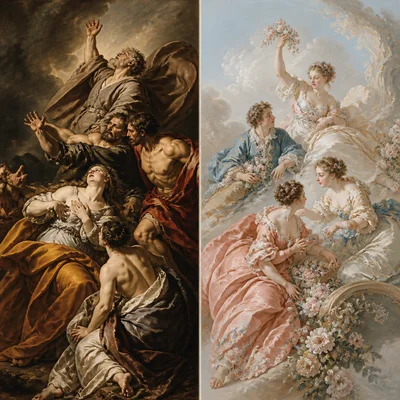
Compare Baroque and Rococo use of movement. How does movement usually feel different in each style?
- 6
Explain how the Counter-Reformation influenced Baroque art.
- 7
Why did Rococo art become closely associated with aristocratic culture in 18th century France?
- 8
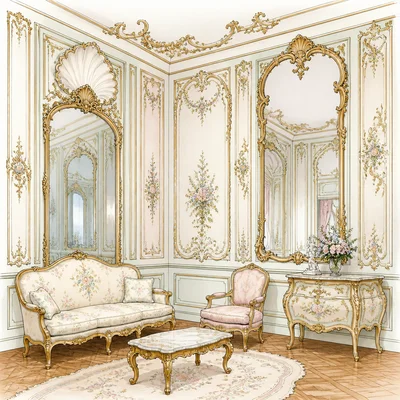
Study this imagined room: the walls are covered with pale colors, gold ornament, mirrors, shell shapes, and curving floral designs. Identify the style and explain which details support your answer.
- 9
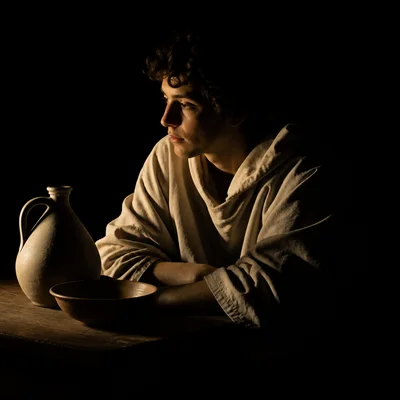
The Baroque artist Caravaggio is famous for tenebrism. Explain what tenebrism is and how it affects the mood of a painting.
- 10
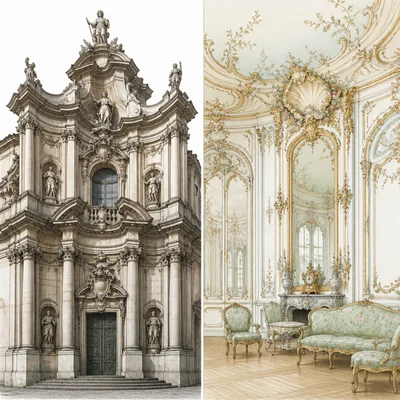
Compare a Baroque church facade with a Rococo salon interior. Name one major difference in purpose and one major difference in visual effect.
- 11
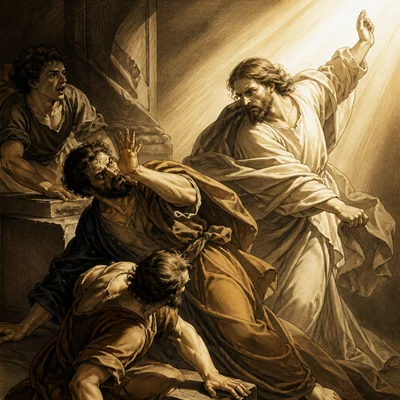
An artwork includes diagonal lines, strong emotion, dramatic gestures, and a moment of action. Explain why diagonal composition is important in many Baroque works.
- 12
Write a short comparison paragraph explaining how Baroque and Rococo art reflect different values or social settings.