Practice reading simple DNA sequence alignments, identifying mutations, calculating percent identity, and interpreting what sequence similarity can suggest about relatedness and function.
Read each DNA alignment carefully. Treat each letter as one nucleotide position. Show your work for calculations and explain your reasoning in complete sentences.
Interpreting matches, mismatches, gaps, and conserved DNA regions
Biology - Grade 9-12
- 1
In the alignment below, identify the positions where the two DNA sequences are different. Sequence A: ATGCCGTAA Sequence B: ATGTCGTGA
- 2
Calculate the percent identity for these aligned sequences. Sequence A: ATGCCGTAA Sequence B: ATGTCGTGA
- 3
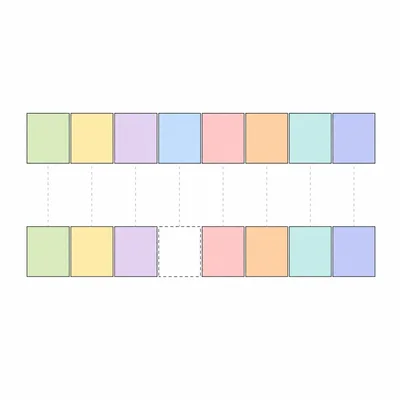
In the alignment below, a dash represents a gap. What type of mutation does the gap most likely represent in Sequence B compared with Sequence A? Sequence A: ATGCAAGT Sequence B: ATG-AAGT
- 4
Use the alignment to count the number of matches, mismatches, and gaps. Sequence A: A T G C A T G C Sequence B: A T - C G T G A
- 5
The symbol line below uses a vertical bar to mark identical bases. Explain what the alignment shows. Sequence A: ATGCCATT Symbol line: ||| ||| Sequence B: ATGACATG
- 6
Which part of this alignment appears most conserved across all three species? Human: ATGCTACCGT Chimpanzee: ATGCTACCGT Mouse: ATGCTATCGT
- 7
Based on this alignment, which two species have the most similar DNA sequence? Explain your answer. Species 1: AATGCCGA Species 2: AATGCTGA Species 3: TATACCAA
- 8
A student says, 'Two sequences with 100% identity must come from the same species.' Explain why this statement is not always correct.
- 9
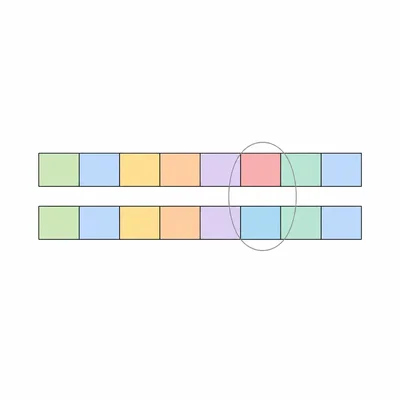
Look at the alignment below. Does the mutation at position 6 appear to be a substitution, insertion, or deletion? Reference: ATGCCAAT Sample: ATGCCGAT
- 10
A DNA alignment has 48 identical positions out of 60 total aligned positions. Calculate the percent identity.
- 11
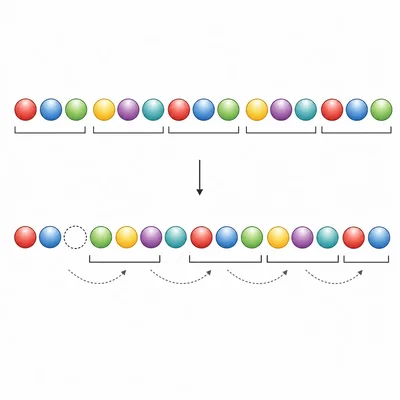
In a coding DNA sequence, an insertion or deletion of 1 nucleotide can cause a frameshift. Explain why a single nucleotide gap in an alignment may be important.
- 12
Use the alignment to identify the consensus base at each position. The consensus base is the base that appears most often in that column. Seq 1: A T G C A Seq 2: A T G T A Seq 3: A C G C A Seq 4: A T G C G
- 13
A researcher aligns the same gene from four bacteria and finds that one region is nearly identical in all four bacteria. What might this suggest about that region?
- 14
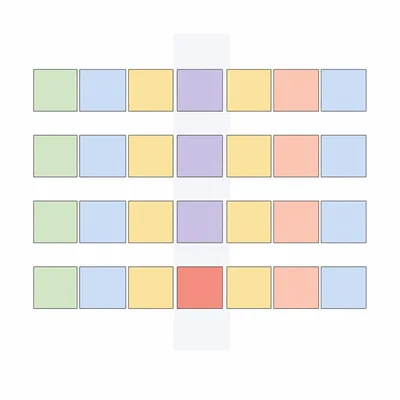
Read the alignment and identify the single nucleotide polymorphism, or SNP, position. Reference: G C T A A C T Sample 1: G C T A A C T Sample 2: G C T G A C T Sample 3: G C T A A C T
- 15
Two students compare DNA alignments. Alignment A is 20 bases long with 18 matches. Alignment B is 200 bases long with 160 matches. Which alignment has the higher percent identity, and why?