Explore how population bottlenecks and founder effects change allele frequencies, reduce genetic diversity, and affect conservation decisions.
Read each problem carefully. Use complete sentences when explaining your reasoning. Show calculations where needed.
How small populations lose genetic variation
Biology - Grade 9-12
- 1
Define a population bottleneck in your own words, and explain why it can reduce genetic diversity even if the population later grows larger.
- 2
Define the founder effect and give one realistic conservation example.
- 3
A population of 1,000 prairie chickens has 120 copies of allele A and 1,880 copies of allele a at a gene with two alleles. What is the frequency of allele A? Assume each bird has two copies of the gene.
- 4
After a severe storm, only 20 of the 1,000 prairie chickens survive. In the survivors, there are 10 copies of allele A and 30 copies of allele a. What is the new frequency of allele A, and what does this show about genetic drift?
- 5
Explain how a population bottleneck differs from natural selection.
- 6
A wildlife biologist samples two populations of the same fish species. Population X has 18 different alleles across several genetic markers. Population Y has 6 different alleles at the same markers. Which population likely has more genetic diversity, and why is that important for conservation?
- 7
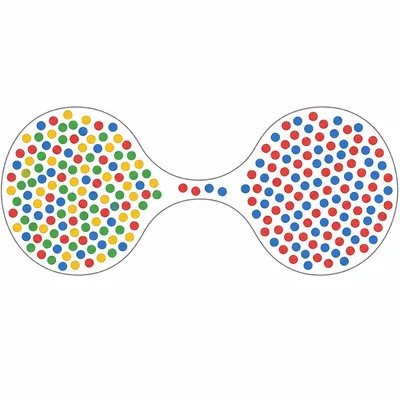
Look at a diagram showing allele frequencies before and after a bottleneck. The original population has red, blue, green, and yellow allele types. After the bottleneck, only red and blue remain. Explain what happened to the green and yellow alleles and why this matters.
- 8
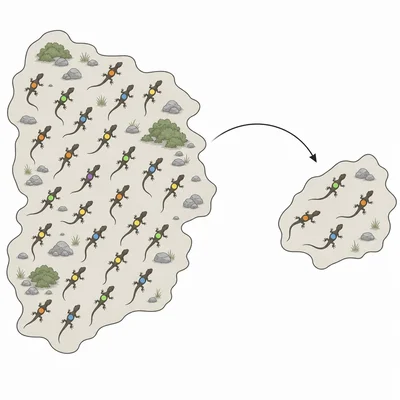
A small group of 8 lizards is moved to a predator-free island to start a new population. By chance, none of the founders carry an allele that was present in 15% of the mainland population. Identify the evolutionary process and explain the result.
- 9
Why can inbreeding become a serious problem after a bottleneck or founder event?
- 10
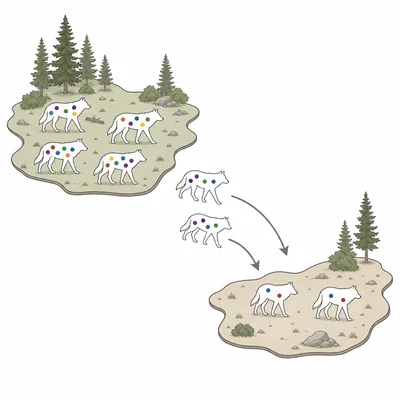
A conservation team wants to increase genetic diversity in an isolated wolf population. They are considering moving a few wolves from a nearby population into the isolated group. What is this strategy called, and what is one possible benefit and one possible risk?
- 11
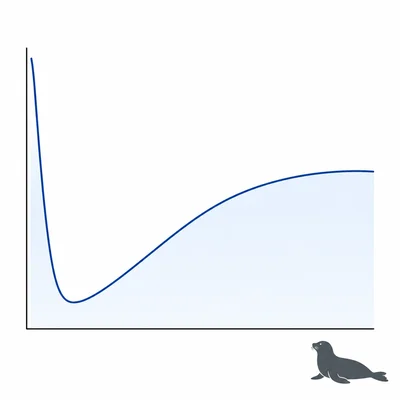
A graph shows population size over time for an endangered seal species. The population drops from 50,000 to 200 individuals in the 1890s and then rises to 30,000 by the present. Predict whether the present population is likely to have high or low genetic diversity compared with the original population, and explain why.
- 12
In a captive breeding program, why should managers avoid choosing breeding pairs only from animals that look healthy?
- 13
A plant population has three alleles at a flower-color gene: R, W, and P. Before a fire, allele frequencies are R = 0.50, W = 0.30, and P = 0.20. After the fire, the surviving plants have allele frequencies R = 0.80, W = 0.20, and P = 0.00. Which allele was lost, and what type of event likely caused this pattern?
- 14
Explain why small populations are more affected by genetic drift than large populations.
- 15
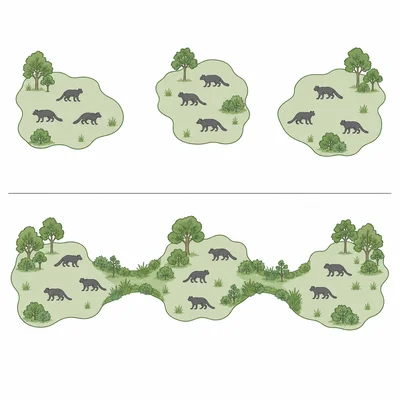
A conservation plan proposes creating three separate reserves for an endangered mammal, each started with 10 individuals. Another plan proposes one connected reserve where all 30 individuals can interbreed. Based on conservation genetics, which plan may better preserve genetic diversity over time, and why?