Practice explaining how plant hormones regulate growth, development, and tropic responses to light, gravity, touch, and water.
Read each problem carefully. Use complete sentences and include evidence or reasoning when asked.
How chemical signals guide plant growth and responses
Biology - Grade 9-12
- 1
Define a plant hormone and explain why plant hormones can affect cells far from where they are produced.
- 2
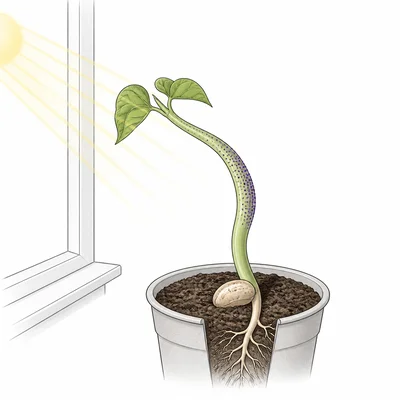
A bean seedling is placed near a window, and after several days its shoot bends toward the light. Identify the tropism and explain the role of auxin in this response.
- 3
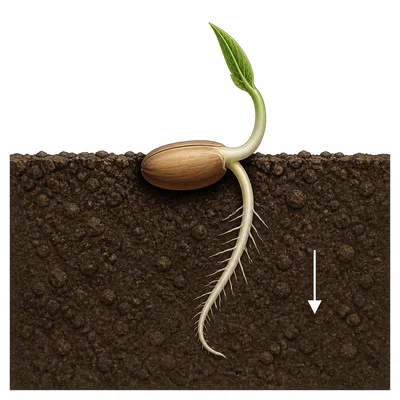
Roots usually grow downward even when a seed germinates on its side. Identify the tropism involved and explain how this response helps the plant survive.
- 4
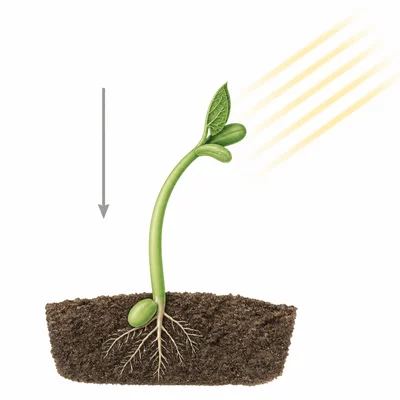
Compare positive phototropism and negative gravitropism in shoots.
- 5
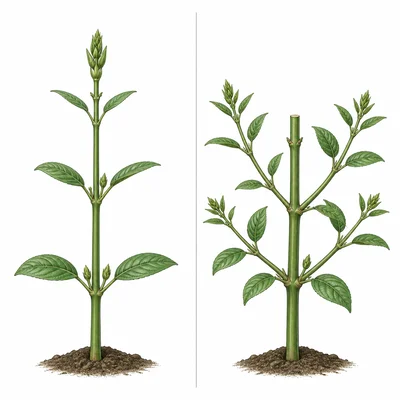
A gardener cuts the top bud off a young plant, and later the side branches grow more actively. Which hormone is most responsible for the original inhibition of side branch growth, and what is this effect called?
- 6
Explain how cytokinins and auxins can have different effects on plant growth even though both are plant hormones.
- 7
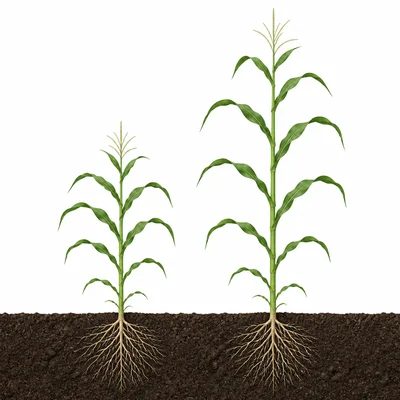
A farmer applies gibberellins to a crop and notices that the stems become taller. Explain why gibberellins can cause this effect.
- 8
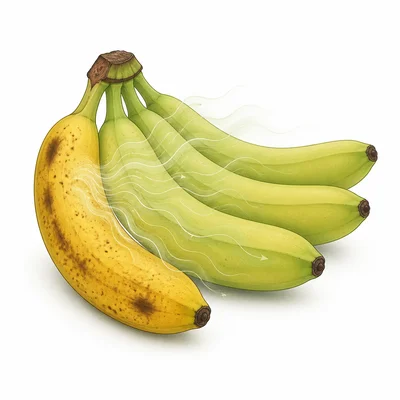
Some fruits release ethylene as they ripen. Explain how one ripe banana can cause nearby unripe bananas to ripen faster.
- 9
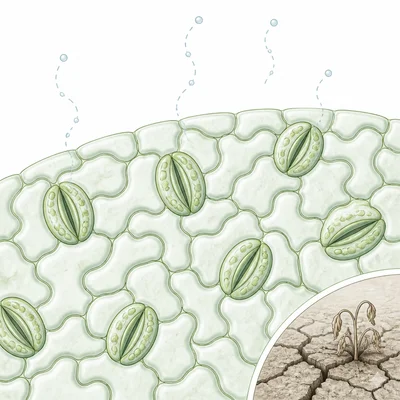
During a drought, a plant closes many of its stomata. Which hormone is most directly involved, and how does this response help the plant?
- 10
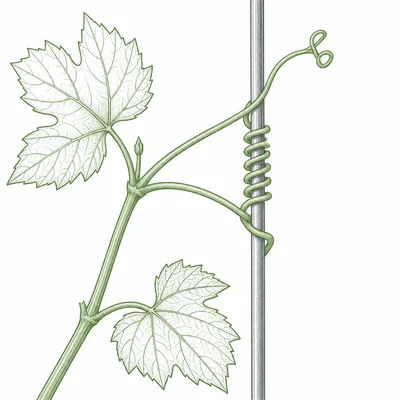
A vine wraps around a fence after touching it. Identify the tropism and explain what stimulus causes the response.
- 11
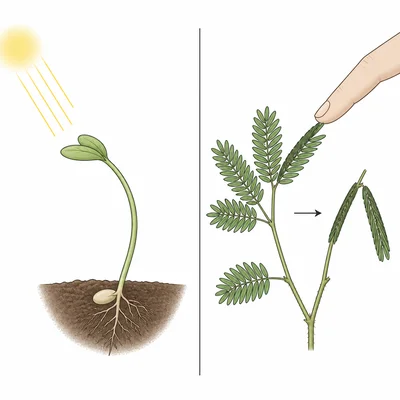
Distinguish between a tropism and a nastic movement using one example of each.
- 12
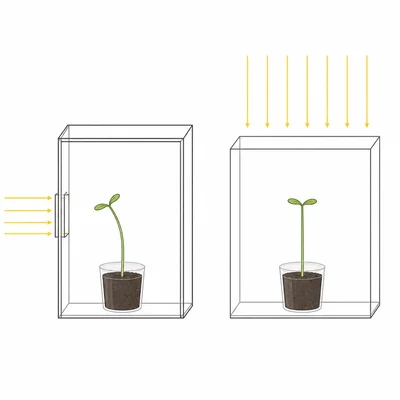
A student places two identical seedlings in boxes. One box has a hole on the left side that lets in light, and the other box is fully open under even light. What is the independent variable in this experiment?
- 13
In the same seedling experiment, list two variables that should be kept constant to make the test fair.
- 14
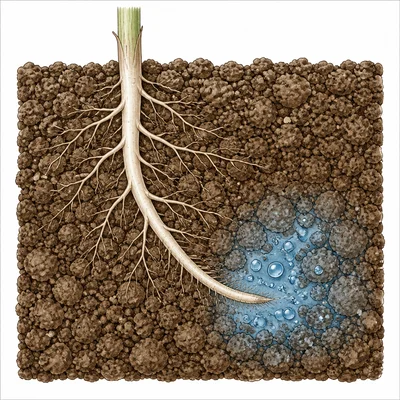
A plant root grows toward a moist area of soil. Identify the tropism and explain why this response is adaptive.
- 15
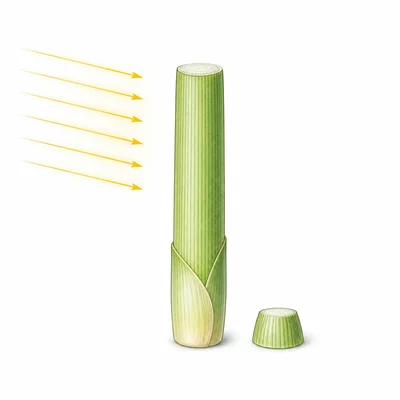
A researcher removes the tip from a grass coleoptile and then shines light from one side. The coleoptile does not bend toward the light. Explain what this result suggests about the shoot tip.