Practice explaining plant tropisms and the hormones that help plants grow, bend, ripen, and respond to their environment.
Read each problem carefully. Use complete sentences when explaining your thinking. Show your work in the space provided.
How plants respond to light, gravity, touch, and chemical signals
Biology - Grade 6-8
- 1
Define tropism in your own words. Give one example of a tropism in a plant.
- 2
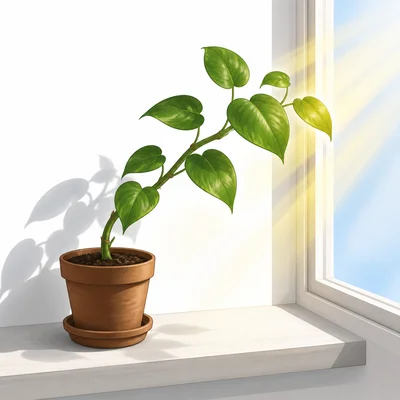
A houseplant on a windowsill begins bending toward the window. Identify the type of tropism and explain why this helps the plant.
- 3
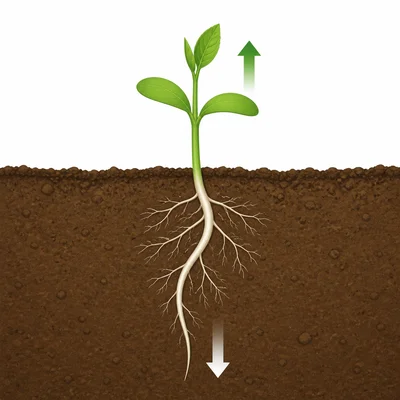
Plant roots usually grow downward into the soil. Identify the type of tropism shown and explain the advantage of this response.
- 4
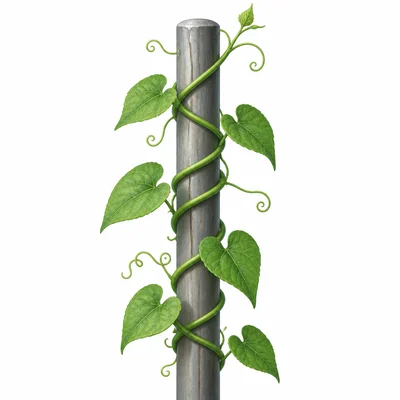
A vine wraps around a fence as it grows. What type of tropism is this, and what stimulus causes it?
- 5
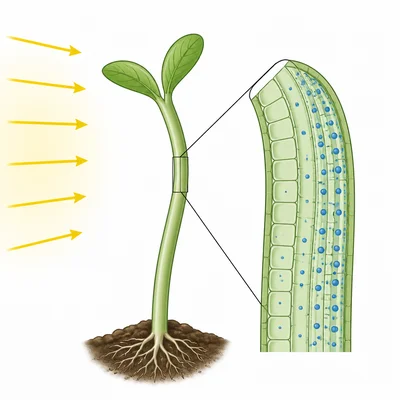
Auxin is a plant hormone that often causes cells in stems to lengthen. In a stem exposed to light from one side, auxin collects more on the shaded side. Explain how this causes the stem to bend toward the light.
- 6
Match each plant hormone to its main role: auxin, gibberellin, cytokinin, ethylene, abscisic acid. Roles: helps fruit ripen, helps seeds germinate and stems grow, helps cells divide, helps plants close stomata during drought, helps stems bend toward light.
- 7
A farmer wants green bananas to ripen faster before selling them. Which plant hormone is most connected with fruit ripening, and how could it affect the bananas?
- 8
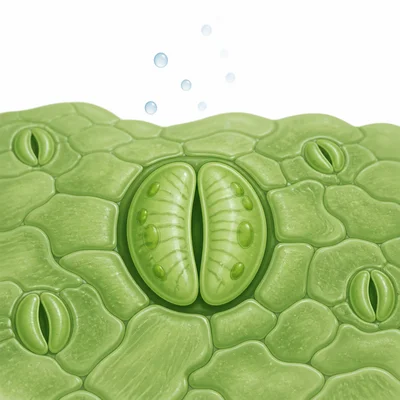
During a dry week, a plant begins closing tiny openings on its leaves to reduce water loss. Name the openings and identify the hormone that helps control this drought response.
- 9
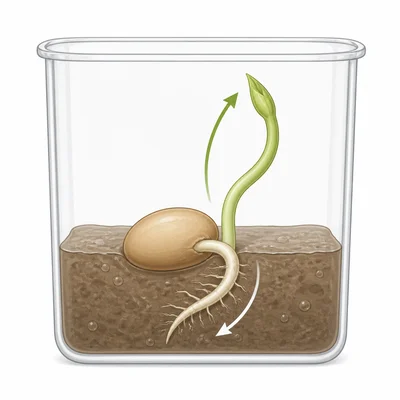
A student places a germinating seed on its side in a clear container. After two days, the root curves downward and the shoot curves upward. Explain how this shows gravitropism.
- 10
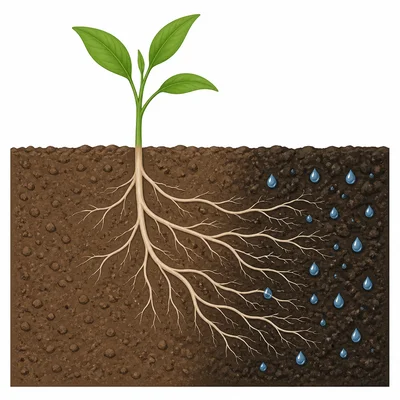
Some plants grow roots toward areas with more water in the soil. What is this response called, and why is it useful?
- 11
A student claims, "Plants do not respond to their environment because they cannot move from place to place." Explain why this claim is incorrect using two examples from plant tropisms or hormones.
- 12
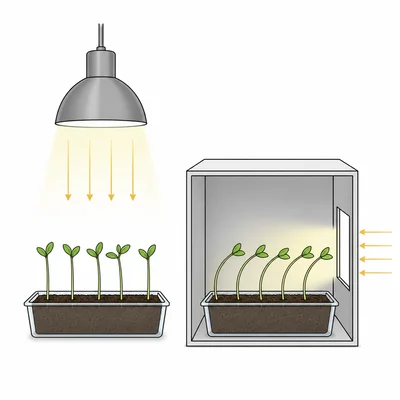
Design a simple experiment to test phototropism in seedlings. Include the independent variable, one controlled variable, and what you would measure.