Practice identifying sensors, inputs, outputs, and feedback loops used in robotics engineering.
Read each problem carefully. Show your thinking and explain your answers in complete sentences when asked.
Using sensor data to help robots make better decisions
Engineering - Grade 6-8
- 1
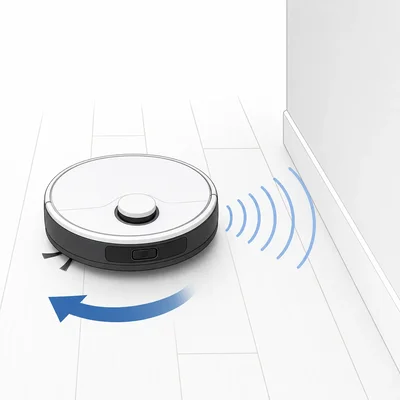
A robot vacuum uses a distance sensor to detect a wall. When the wall is closer than 10 centimeters, the robot turns left. Identify the sensor input, the robot output, and the goal of the system.
- 2
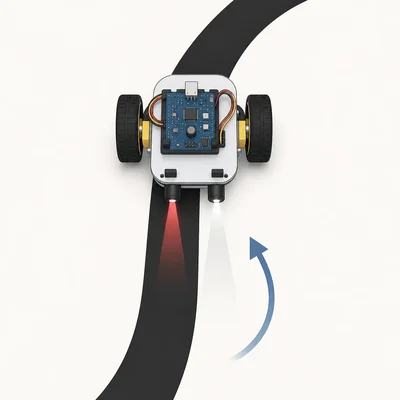
A line-following robot has two light sensors facing the floor. The left sensor reads dark and the right sensor reads light. The robot is supposed to stay centered on a black line. What should the robot do next, and why?
- 3
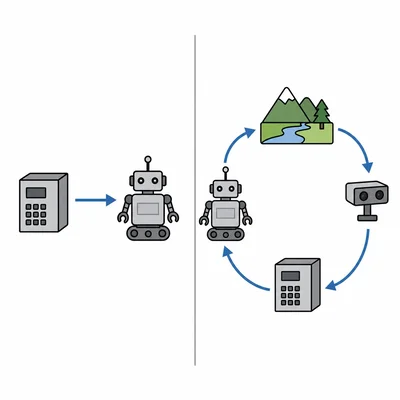
Explain the difference between open-loop control and closed-loop control in a robot.
- 4
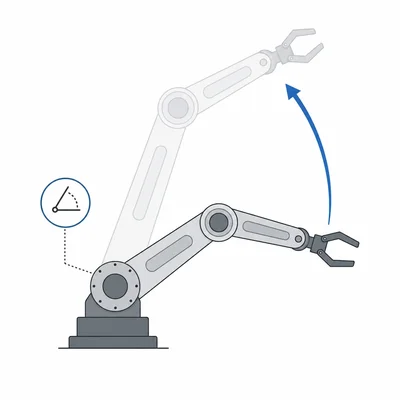
A robot arm is programmed to move to 90 degrees. An angle sensor reports that the arm is at 75 degrees. What is the error, and what should the control system do?
- 5
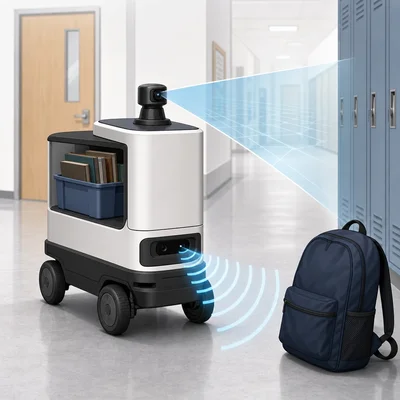
Name two sensors that could help a classroom delivery robot navigate safely through a hallway. Explain what each sensor would detect.
- 6
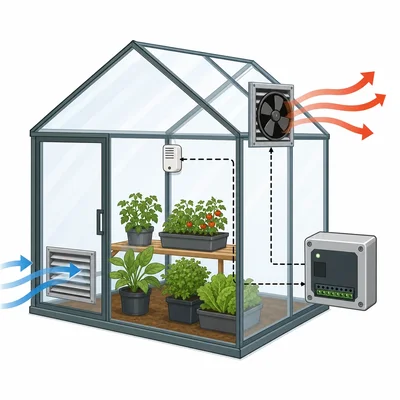
A robot uses a temperature sensor to keep a plant greenhouse at 24 degrees Celsius. If the temperature is 28 degrees Celsius, what should the robot-controlled system do? Explain how this is feedback.
- 7
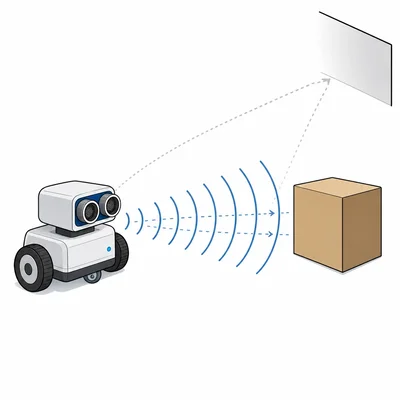
A robot's ultrasonic sensor gives noisy readings: 42 cm, 41 cm, 80 cm, 43 cm, and 42 cm. The robot is near a box. Which reading is most likely an outlier, and what could the robot do to make a better decision?
- 8
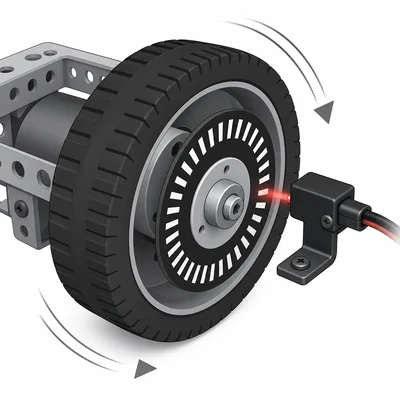
A wheeled robot uses wheel encoders to measure how far each wheel turns. Why might wheel encoders be useful in a feedback loop?
- 9
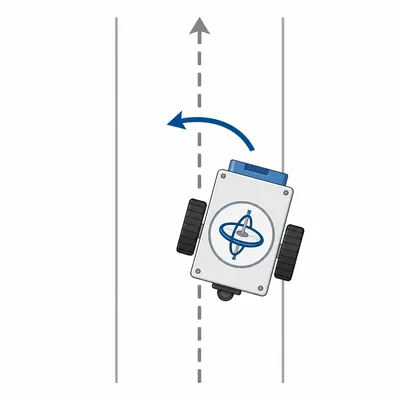
A robot is trying to drive straight. Its gyroscope reports that the robot has rotated 5 degrees to the right. What correction should the robot make?
- 10
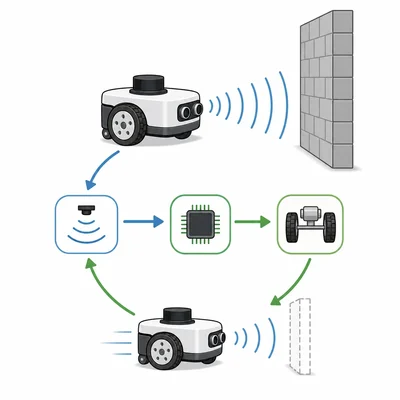
Read this control rule: If distance is less than 20 cm, stop. If distance is 20 cm or more, move forward. Is this a feedback loop? Explain your answer.
- 11
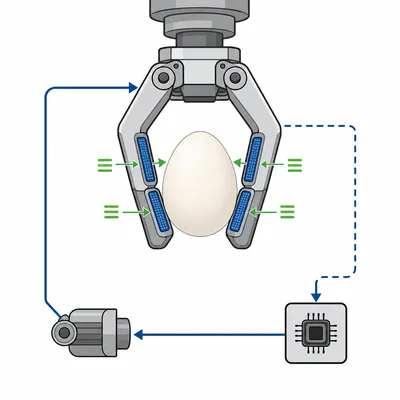
A robot claw uses a pressure sensor. If the pressure is too low, the object slips. If the pressure is too high, the object may break. Describe a feedback strategy the robot could use to hold the object safely.
- 12
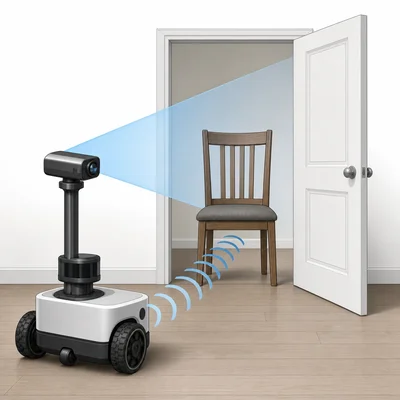
A mobile robot has a camera and a distance sensor. The camera identifies a doorway, but the distance sensor shows that a chair is blocking the path. Why is it useful to combine data from more than one sensor?
- 13
A robot's target speed is 1.5 meters per second. Its speed sensor reads 1.2 meters per second. What is the speed error, and should the robot increase or decrease motor power?
- 14
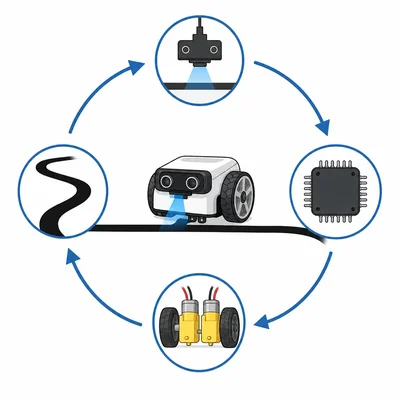
The diagram shows a feedback loop with four missing labels: sensor, controller, actuator, and environment. Put the parts in the correct order for a robot that follows a line on the floor.
- 15
Design a simple robot system that uses at least one sensor and one feedback loop. Describe the robot's goal, the sensor input, the controller decision, and the robot output.