Practice identifying common scam warning signs, protecting personal information, and choosing safe consumer actions.
Read each situation carefully. Decide what is safe, what is risky, and what action a careful consumer should take. Explain your thinking.
Recognizing scams, protecting personal information, and knowing your rights
Financial Literacy - Grade 6-8
- 1
You get a text message that says, "Your bank account is locked. Click this link now and enter your password to fix it." Name two warning signs that this could be a scam.
- 2
A website selling sneakers says they are 90 percent off for the next 5 minutes only. It has spelling mistakes and no return policy listed. What should you do before buying?
- 3
Explain the difference between personal information and public information. Give one example of each.
- 4
You receive an email that looks like it is from a gaming company. It says you won free coins and asks for your account login. What is the safest response?
- 5
A caller says they are from the government and that your family must pay a fine immediately using gift cards. Explain why this is suspicious.
- 6
List three types of information you should never share with someone who contacts you unexpectedly online or by phone.
- 7
A social media message says, "Send me $20 today and I will send you $200 tomorrow. Guaranteed." Identify the type of scam warning sign shown here and explain it.
- 8
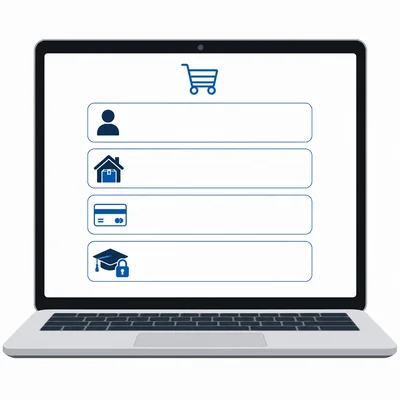
Look at this simple checkout page. It asks for your name, shipping address, card number, and school login password. Which requested item does not belong, and why?
- 9
What does it mean to verify a message before responding? Describe one way to verify a message from a bank, store, or other company.
- 10
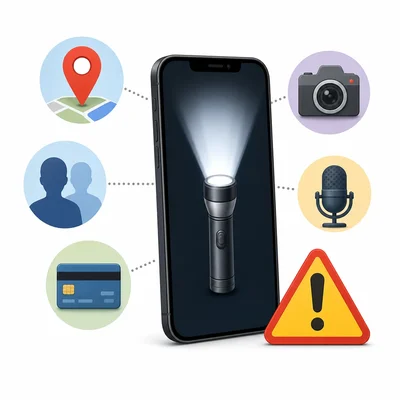
A free app asks for permission to access your location, contacts, camera, microphone, and payment information, even though it is only a flashlight app. What consumer protection choice should you make?
- 11
Your friend shares a link to a contest that says everyone who enters will win a new tablet. It asks for your full name, birthday, address, and a small shipping fee. What risks are present?
- 12
Define identity theft in your own words and give one example of how a scammer might try to collect information for identity theft.
- 13
Read the return policy: "All sales are final. No refunds, no exchanges, no exceptions. Company address not provided." What should a careful shopper think about before buying?
- 14
Create a safe action plan for this situation: You clicked a suspicious link but did not enter any information. Write two steps you should take next.
- 15
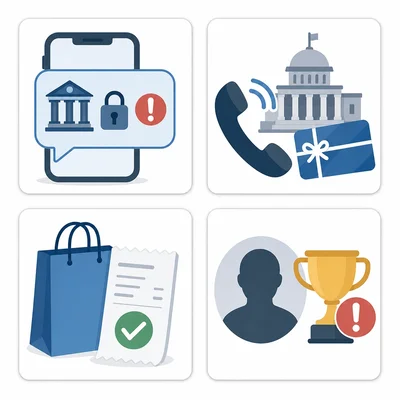
The chart shows four messages: an urgent bank text, a gift card payment call, a normal receipt from a store where you just shopped, and a prize message from an unknown account. Choose the two messages most likely to be scams and explain why.