Practice explaining how taxes work, calculating common taxes, and identifying how tax money supports public services.
Read each problem carefully. Show your work in the space provided and explain your reasoning when asked.
Understanding tax types, calculations, and public services
Financial Literacy - Grade 9-12
- 1
Define a tax in your own words. Then give two examples of taxes a person might pay in everyday life.
- 2
A student earns $320 from a part-time job. If 10% is withheld for federal income tax, how much is withheld and how much pay remains before any other deductions?
- 3
A city uses tax money to fund public schools, road repairs, police, firefighters, libraries, and parks. Choose three services from this list and explain why they are considered public services.
- 4
A jacket costs $75. The local sales tax rate is 8%. What is the sales tax, and what is the total price of the jacket?
- 5
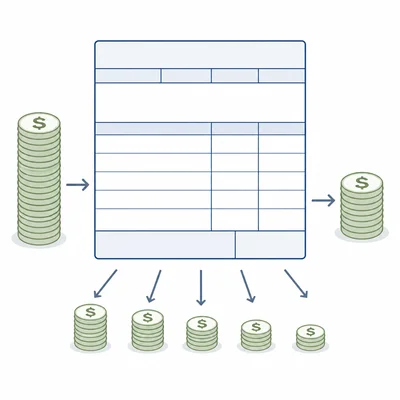
Look at a simple paycheck where gross pay is $1,000, federal income tax withheld is $120, state income tax withheld is $40, Social Security tax is $62, and Medicare tax is $14.50. What is the net pay?
- 6
Explain the difference between a tax deduction and a tax credit.
- 7
A worker has taxable income of $42,000. The first $11,000 is taxed at 10%, and the income from $11,001 to $42,000 is taxed at 12%. Estimate the total federal income tax owed using these brackets.
- 8
Why is a marginal tax rate different from an effective tax rate?
- 9
A homeowner's house is assessed at $240,000. The property tax rate is 1.25% per year. How much property tax does the homeowner owe for the year?
- 10
A state charges an excise tax of $0.50 per gallon of gasoline. A driver buys 14 gallons. How much excise tax is included in the purchase?
- 11

A pie chart shows a local government's budget: 35% education, 25% public safety, 15% transportation, 10% parks and libraries, and 15% other services. If the total budget is $20 million, how much money goes to education and public safety combined?
- 12
Explain why governments collect taxes instead of relying only on voluntary donations.
- 13
A city is deciding whether to raise sales tax by 0.5 percentage points to pay for bus improvements. Give one possible benefit and one possible drawback of this plan.
- 14
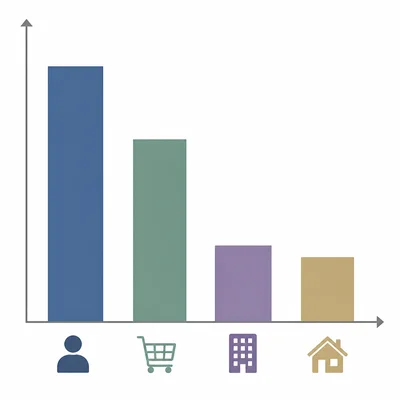
Study a bar graph comparing tax sources for a state: individual income tax $50 billion, sales tax $35 billion, corporate tax $12 billion, and property tax $8 billion. Which source brings in the most revenue, and how much more does it bring in than sales tax?
- 15
A person says, "I do not use the public library, so none of my tax money should support it." Write a short response explaining how taxes often fund shared community resources, even when individuals use them differently.