Practice identifying parts of simple circuits, predicting whether bulbs will light, and classifying materials as conductors or insulators.
Read each problem carefully. Use complete sentences when explaining your thinking. Show your work in the space provided.
Exploring simple circuits, conductors, and insulators
Physics - Grade 4-5
- 1
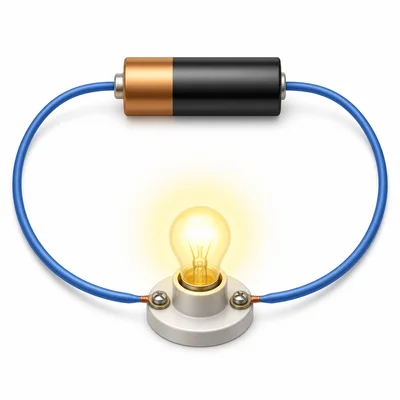
A simple circuit has a battery, two wires, and a light bulb. Explain what must happen for the bulb to light.
- 2
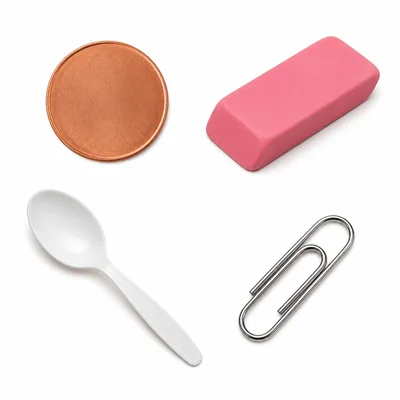
Classify each object as a conductor or an insulator: copper penny, rubber eraser, plastic spoon, steel paper clip.
- 3
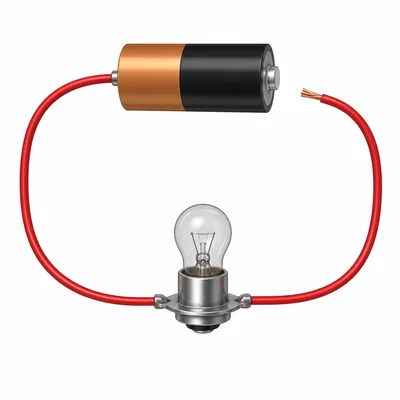
A student builds a circuit with a battery, wires, and a bulb, but one wire is not connected to the battery. Will the bulb light? Explain.
- 4
Fill in the blank: A material that allows electric current to flow through it easily is called a ____.
- 5
Fill in the blank: A material that does not allow electric current to flow through it easily is called an ____.
- 6
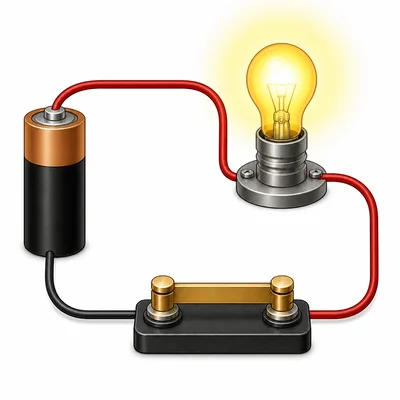
A flashlight uses batteries, wires, a switch, and a bulb. What does the switch do in the circuit?
- 7
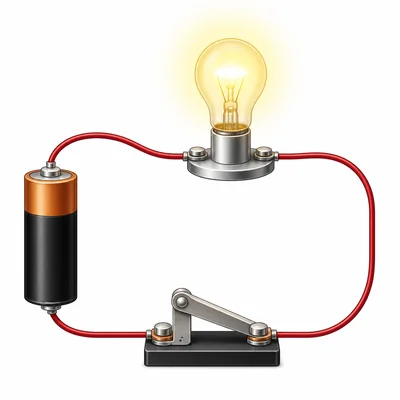
Look at a circuit with one battery, one bulb, and a closed switch. The wires connect all parts in one complete loop. Predict what happens to the bulb and explain why.
- 8
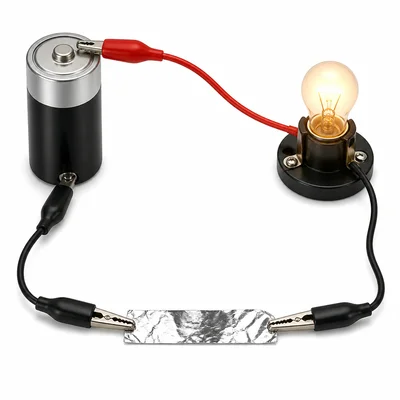
A student wants to test whether aluminum foil conducts electricity. Describe a fair test using a battery, wires, and a bulb.
- 9
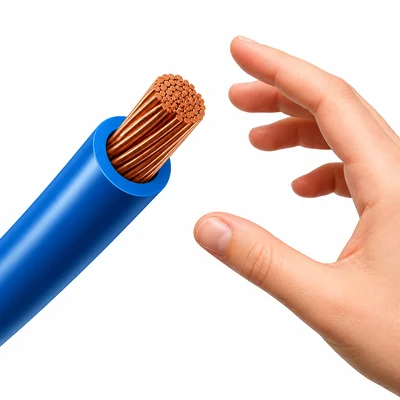
Explain why electrical cords are often covered with plastic or rubber.
- 10
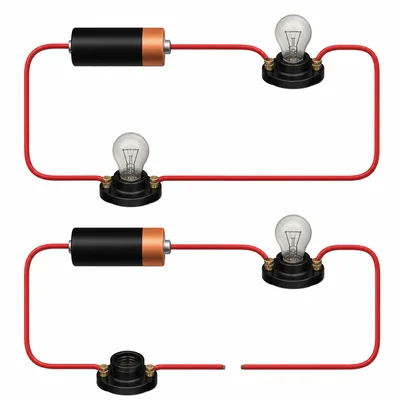
A circuit has a battery, wires, and two bulbs connected one after the other in a single loop. If one bulb is removed, what happens to the other bulb? Explain.
- 11
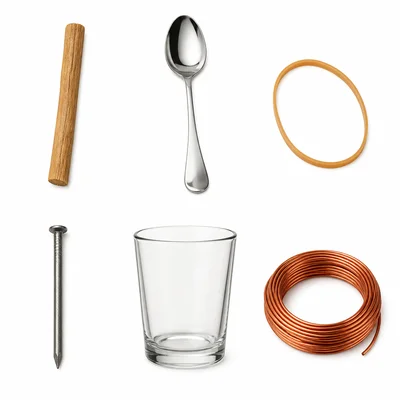
Circle the materials that are usually good conductors: wood, silver, rubber, iron, glass, copper.
- 12
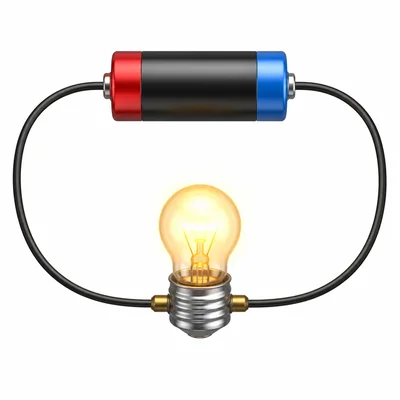
A battery has a positive end and a negative end. Why must a simple circuit connect to both ends of the battery?
- 13
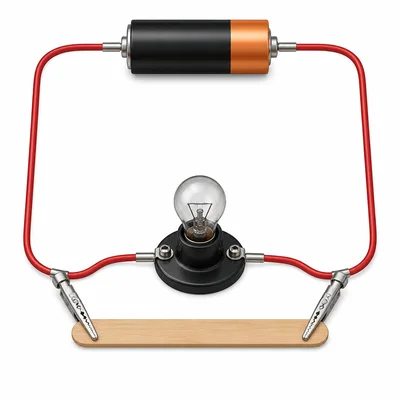
A student puts a wooden craft stick into a gap in a circuit. The bulb does not light. What can the student conclude about the wooden craft stick?
- 14
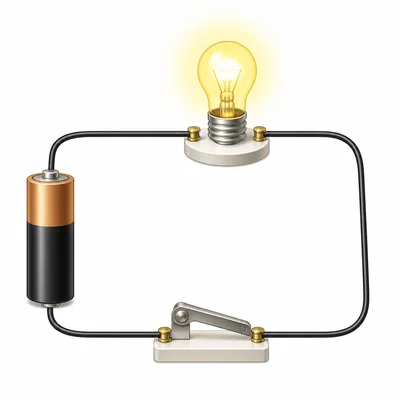
Draw and label a complete simple circuit using one battery, one bulb, one switch, and wires. Include labels for battery, bulb, switch, and wires.
- 15
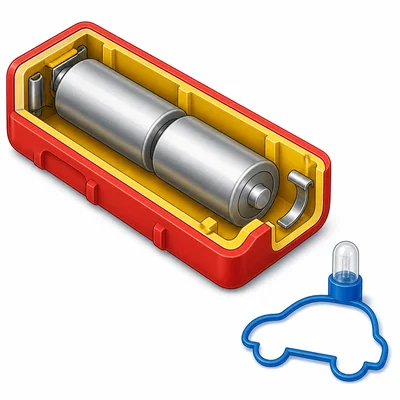
A toy stops working. The batteries are fresh, but one metal contact inside the battery holder is bent away from the battery. Explain why the toy does not work.