Practice applying ideas about thermal energy, temperature, heat transfer, and the laws of thermodynamics in real-world and quantitative situations.
Read each problem carefully. Show your work, include units when needed, and explain your reasoning in complete sentences.
Thermal energy, the laws of thermodynamics, and mechanisms of heat transfer
Physics - Grade 9-12
- 1
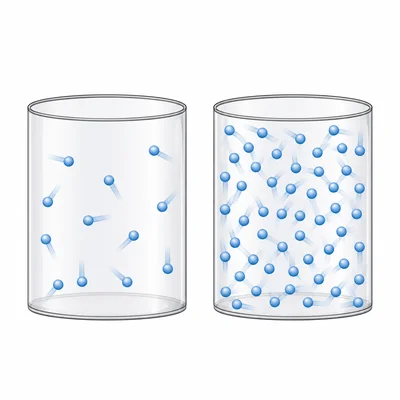
Define temperature and thermal energy. Then explain how they are related but not the same.
- 2
State the first law of thermodynamics in your own words and give one everyday example that shows this law.
- 3
A 2.0 kg block of metal is heated and absorbs 9000 J of energy. If the block's temperature increases by 15 degrees C, what is its specific heat capacity?
- 4
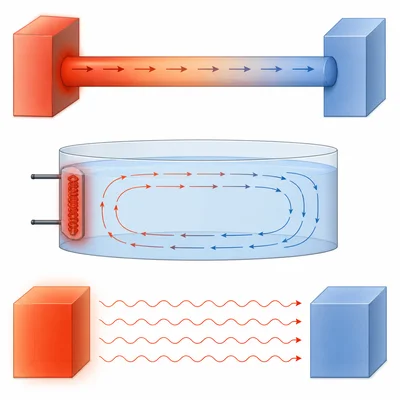
Explain the difference between conduction, convection, and radiation. Give one example of each.
- 5
A 0.50 kg sample of water cools from 80 degrees C to 30 degrees C. How much thermal energy does it lose? Use c = 4186 J/kg degrees C.
- 6
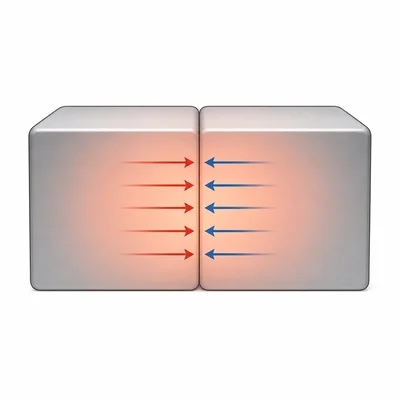
Describe thermal equilibrium. What happens to net heat flow when two objects reach thermal equilibrium?
- 7
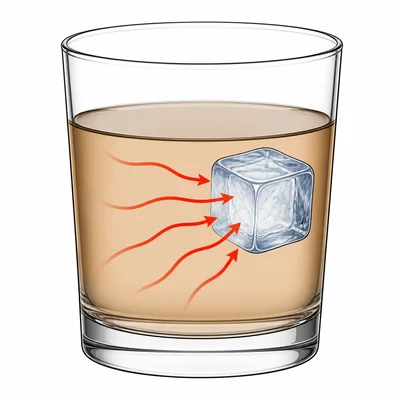
A student says, "Cold flows from the ice cube into the drink." Explain what is wrong with this statement.
- 8
What does the second law of thermodynamics say about the direction of natural processes and energy transfers?
- 9
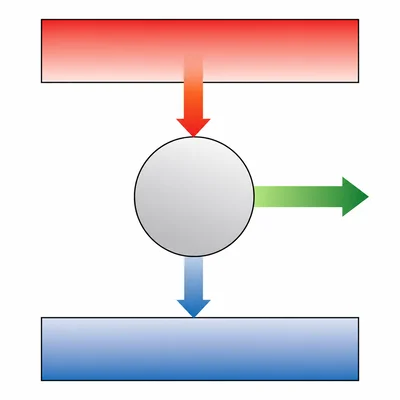
A heat engine takes in 1200 J of energy from a hot source and releases 750 J to a cold sink. How much work does the engine do?
- 10
Calculate the efficiency of the heat engine in the previous problem.
- 11
Why can no heat engine be 100 percent efficient according to the second law of thermodynamics?
- 12
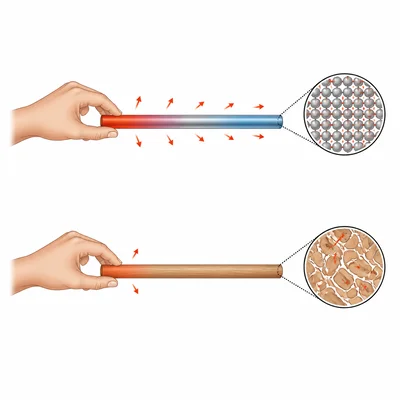
A copper rod and a wooden rod are left in the same room overnight. In the morning they have the same temperature, but the copper rod feels colder. Explain why.
- 13
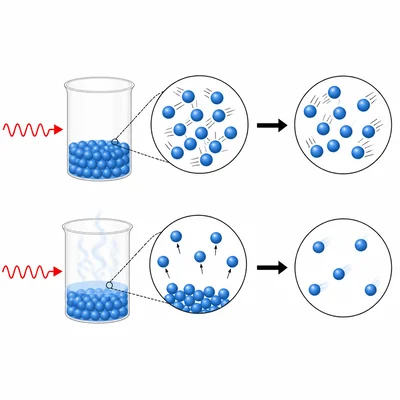
During a phase change such as melting or boiling, why can a substance absorb energy without increasing in temperature?
- 14
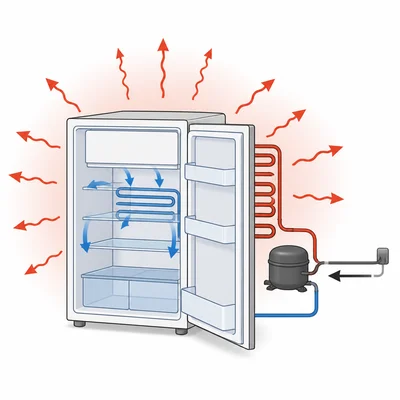
A refrigerator removes 500 J of thermal energy from its inside and releases 650 J to the room. How much work does the refrigerator require?
- 15
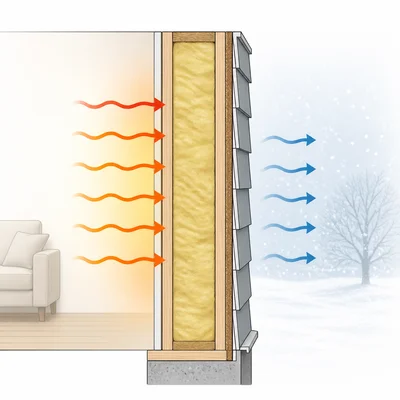
Name one way insulation reduces heat transfer in a house, and identify which method or methods of heat transfer it mainly reduces.