Understanding Electric Circuits for Kids
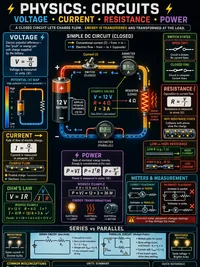
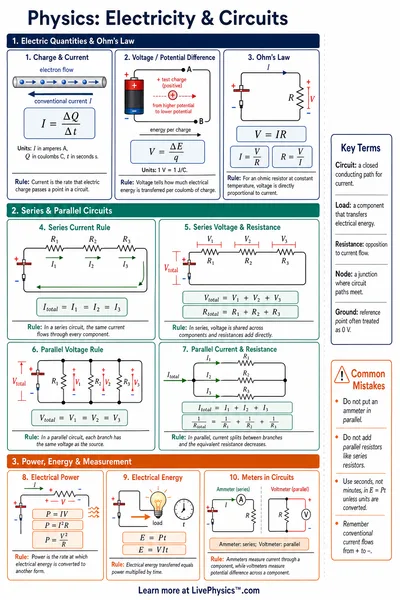
Electric current is the movement of tiny charged particles through a material. In metal wires, these particles are electrons that can move from atom to atom. A battery provides the push that keeps this movement going around the circuit.
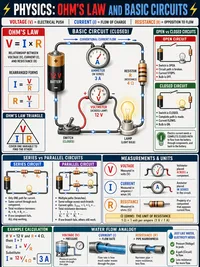
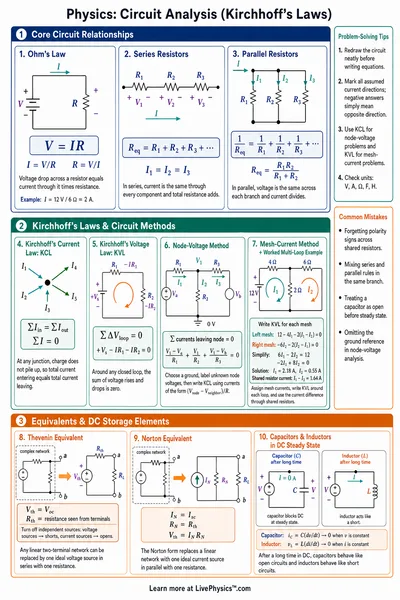
Voltage describes the electrical push supplied by a battery. Current describes how much charge moves through a point each second. A stronger battery can provide more push, but the rest of the circuit still controls the current.
A bulb lights because current passes through a very thin part inside it. This part gets hot and gives off light. The energy for the light and heat comes from the battery, which slowly uses up stored chemical energy.
Wires have low resistance, so electrons can move through them easily. Bulb filaments have higher resistance, which makes them heat up. Resistance is useful because it controls current and can turn electrical energy into light, heat, or motion.
A switch does not create electricity or use it up. It simply changes whether there is an unbroken path for current. When the switch is open, charges cannot travel all the way around the circuit, so the bulb stays off.
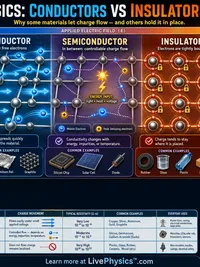
Conductors allow charge to move easily. Metals such as copper, aluminium, and iron are usually good conductors because some of their electrons are free to move. This is why electrical cables usually contain metal cores.
Insulators hold their electrons tightly, so charge cannot move through them easily. Plastic, rubber, glass, and dry wood are common insulators. They are used as coverings and handles to reduce the chance of electric shock.
A material is not simply safe or dangerous in every situation. Water with dissolved salts can conduct electricity far better than pure water. Wet skin lowers resistance, which is one reason electricity near baths, sinks, or rain needs extra care.
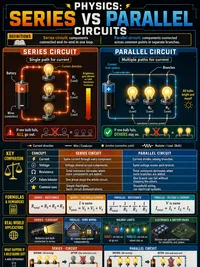
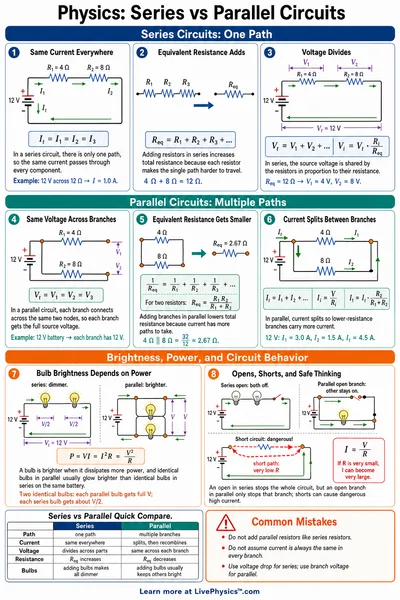
In a series circuit, every component shares one route for current. Adding more bulbs increases the total resistance, so each bulb may become dimmer. If one bulb is removed or breaks, the route is broken for every bulb.
In a parallel circuit, each branch gives current a separate route. A working branch can still receive current when another branch is broken. Homes use parallel wiring so one failed lamp does not turn off every other appliance.
Brightness tests give clues about how current is shared. Two identical bulbs in series are often dimmer than one bulb connected to the same battery. Two identical parallel bulbs can stay close to the brightness of one bulb, though the battery runs down faster.
A short circuit happens when current finds a very low resistance path that bypasses a useful device. This can make wires hot because a large current flows. Fuses and circuit breakers protect homes by stopping current when it becomes unsafe.