Practice tracing rays, applying the mirror and lens equations, and describing real and virtual images formed by lenses and mirrors.
Read each problem carefully. Use clear ray diagram rules and show your work for calculations. Unless stated otherwise, use the standard sign convention for thin lenses and spherical mirrors.
Using ray diagrams and equations to predict image properties
Physics - Grade 9-12
- 1
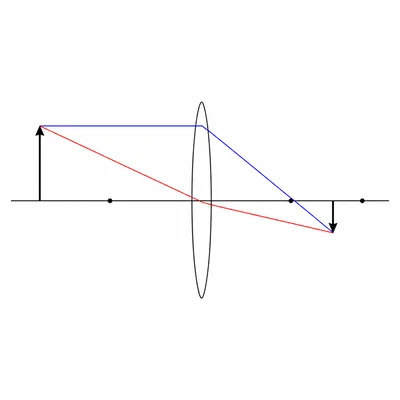
A 3 cm tall object is placed beyond 2F in front of a converging lens. Describe the image location, orientation, size, and type.
- 2
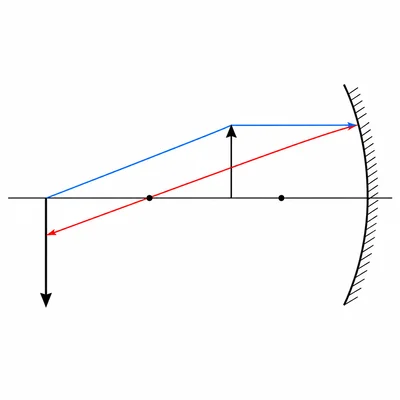
A candle is placed between the focal point F and the center of curvature C of a concave mirror. Describe the image location, orientation, size, and type.
- 3
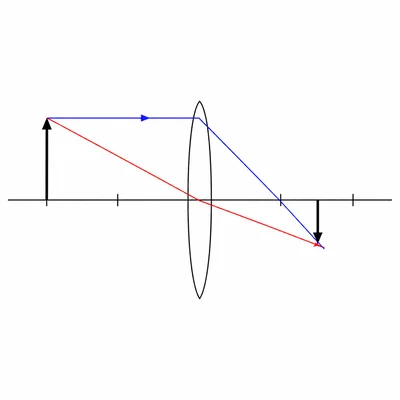
A converging lens has a focal length of 10 cm. An object is placed 30 cm from the lens. Calculate the image distance and magnification.
- 4
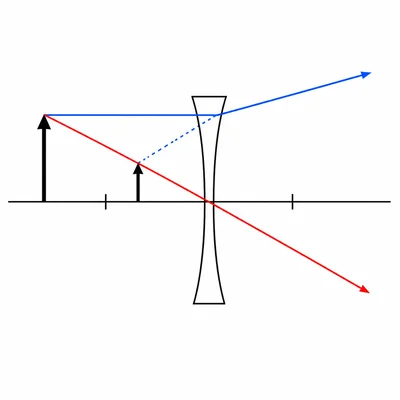
A diverging lens has a focal length of -12 cm. An object is placed 24 cm from the lens. Calculate the image distance and describe the image.
- 5
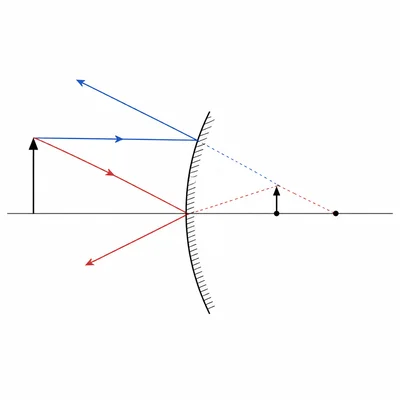
Draw or describe the ray diagram for an object in front of a convex mirror. What type of image does a convex mirror always form?
- 6
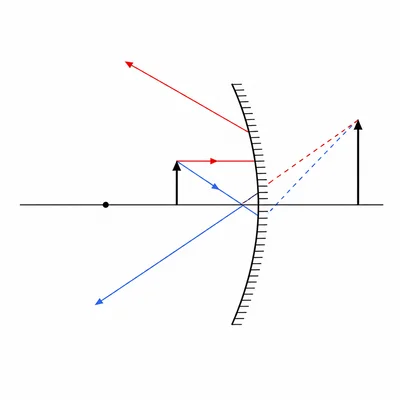
A concave mirror has a focal length of 15 cm. An object is placed 10 cm in front of the mirror. Find the image distance and state whether the image is real or virtual.
- 7
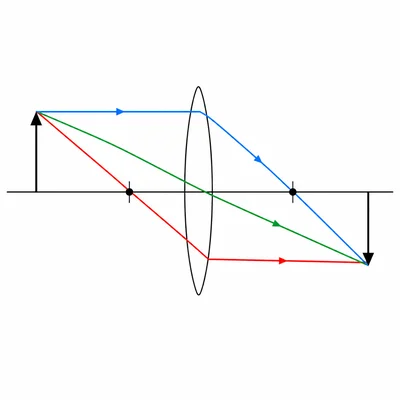
List the three principal rays commonly used to draw a ray diagram for a converging lens.
- 8
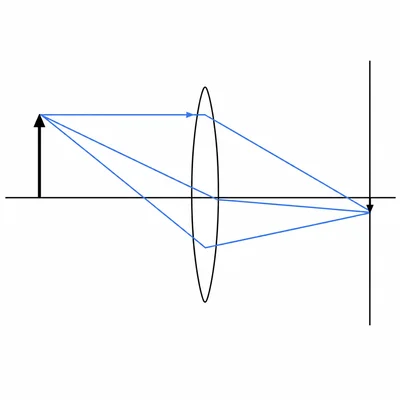
A lens forms an image that can be projected onto a screen. Is the image real or virtual? Explain how you know.
- 9
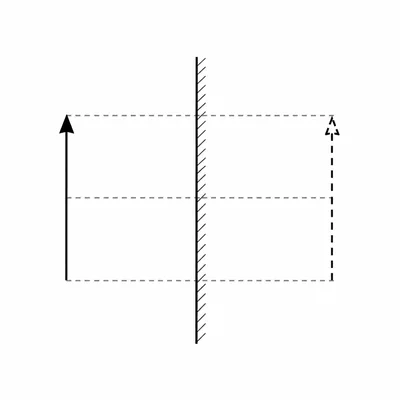
An object is placed 2 m in front of a plane mirror. Where is the image located, and what are its size and orientation compared with the object?
- 10
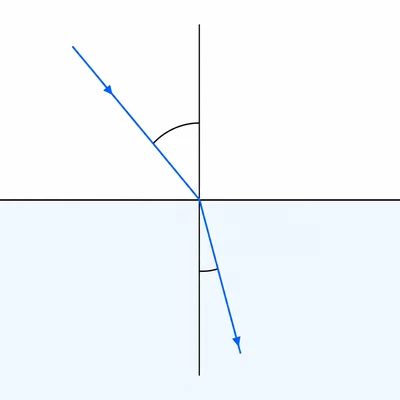
A light ray enters glass from air at an angle of 30 degrees to the normal. If the index of refraction of air is 1.00 and the index of refraction of glass is 1.50, find the angle of refraction.
- 11
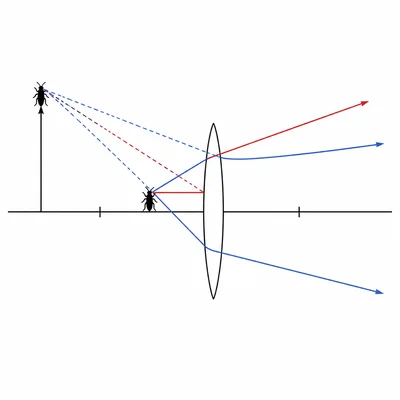
A small insect is 5 cm from a converging lens with a focal length of 10 cm. Find the image distance and magnification. Describe why this lens can act as a magnifying glass.
- 12
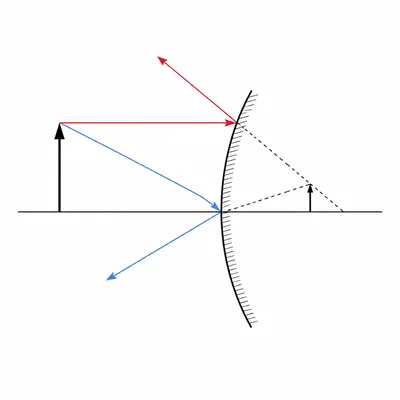
A student calculates an image distance of -18 cm for a convex mirror. Interpret the negative sign and describe the image type.
- 13
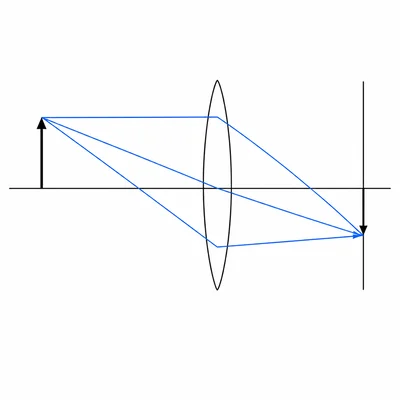
A converging lens projects a sharp image on a screen 30 cm from the lens. The object is 60 cm from the lens on the other side. Find the focal length and magnification.
- 14
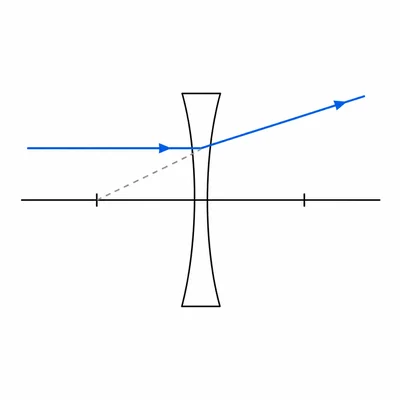
In a ray diagram for a diverging lens, a student draws a ray parallel to the principal axis and then refracts it through the far focal point. Identify the error and correct it.
- 15
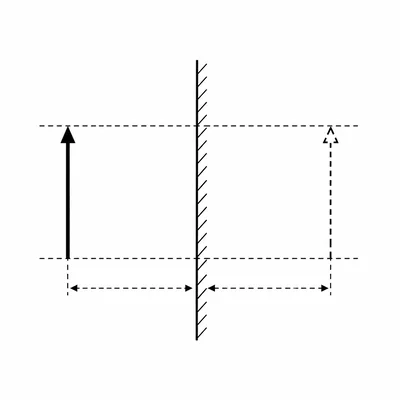
A 4 cm tall object is placed 25 cm in front of a plane mirror. State the image distance, image height, orientation, and image type.