Practice identifying standing wave patterns and calculating wavelengths, frequencies, harmonics, and resonance conditions in strings and air columns.
Read each problem carefully. Show your work, include units when needed, and explain your reasoning in complete sentences.
Nodes, antinodes, harmonics, and resonant frequencies
Physics - Grade 9-12
- 1
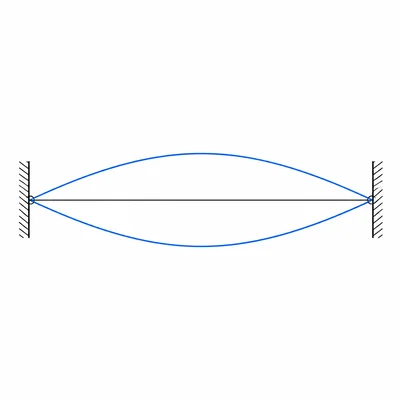
A string is fixed at both ends and vibrates in its fundamental mode. The length of the string is 1.20 m. What is the wavelength of the standing wave?
- 2
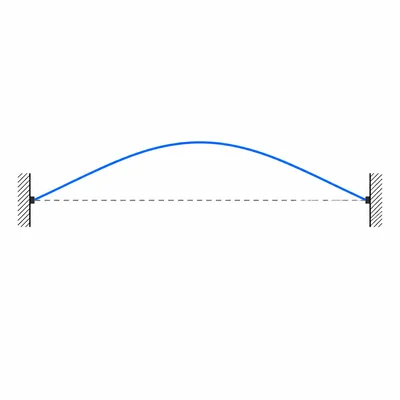
A wave travels on a string at 96 m/s. The string is 0.80 m long and fixed at both ends. What is the fundamental frequency?
- 3
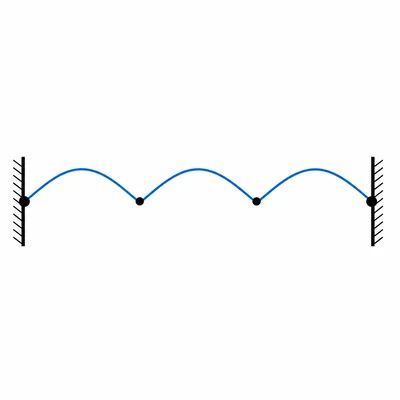
A 2.0 m string fixed at both ends has a wave speed of 120 m/s. Find the frequency of the third harmonic.
- 4
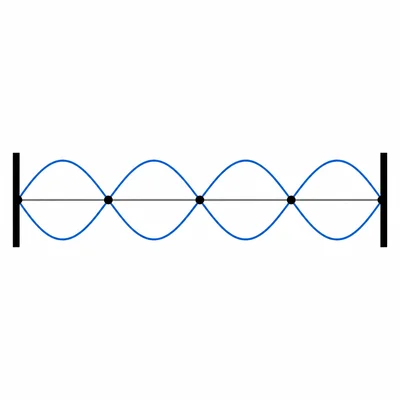
A standing wave on a string fixed at both ends has 4 loops. What harmonic number is this, and how many nodes are present including the endpoints?
- 5
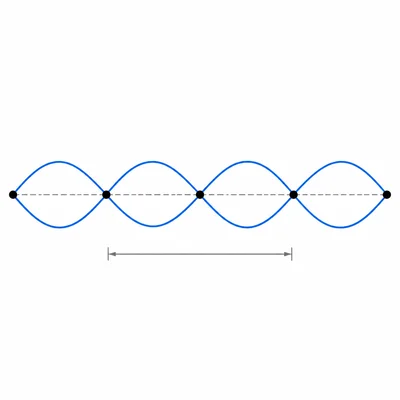
A student observes a standing wave with nodes spaced 0.25 m apart along a rope. What is the wavelength of the wave?
- 6
A string produces a fundamental frequency of 110 Hz. What are the frequencies of the second, third, and fourth harmonics?
- 7
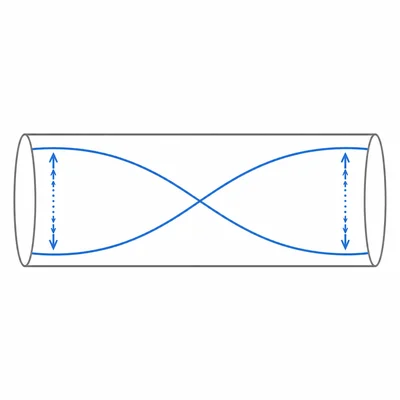
An open-open pipe is 0.50 m long. The speed of sound in air is 343 m/s. What is the fundamental frequency of the pipe?
- 8
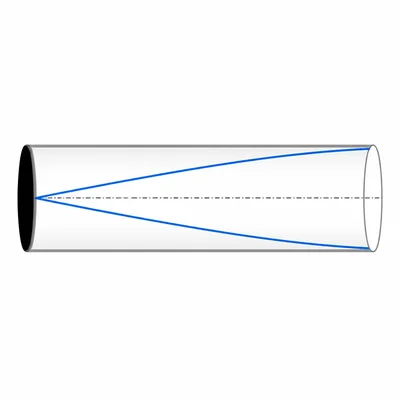
A closed-open pipe has a length of 0.85 m. The speed of sound is 340 m/s. What is its fundamental frequency?
- 9
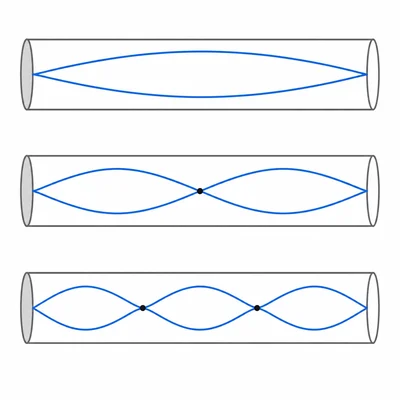
A closed-open pipe has a fundamental frequency of 85 Hz. Which of these frequencies are resonant frequencies for the pipe: 170 Hz, 255 Hz, 340 Hz, and 425 Hz?
- 10
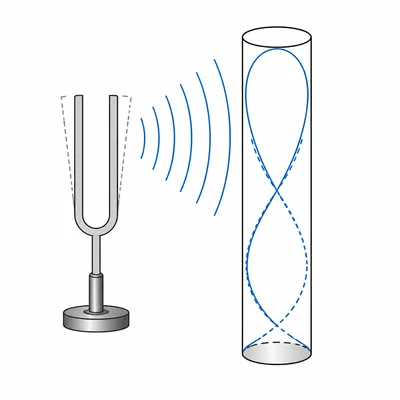
A tuning fork vibrates at 256 Hz and causes a nearby air column to vibrate strongly. What is this strong response called, and why does it happen?
- 11
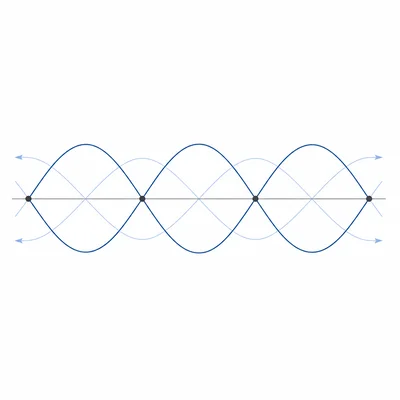
A standing wave is formed by two identical waves traveling in opposite directions. Each wave has a frequency of 20 Hz and a wavelength of 0.60 m. What is the wave speed?
- 12
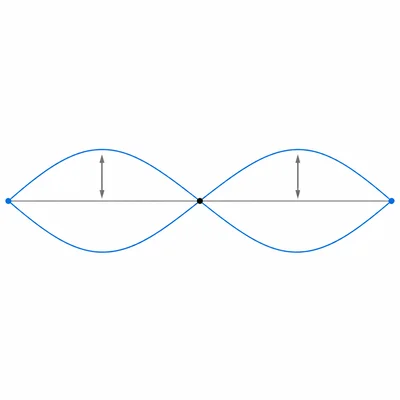
On a standing wave diagram, a point stays at rest while nearby parts of the medium move up and down. What is this point called? Explain what causes it.
- 13
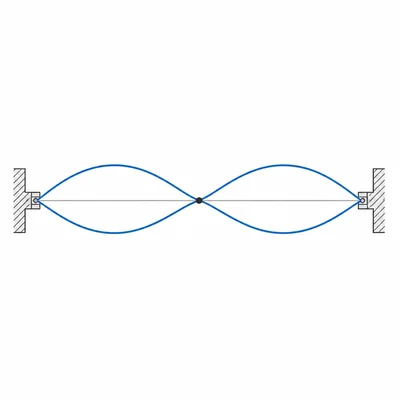
A 1.5 m string fixed at both ends is vibrating in the second harmonic. What is the wavelength of this standing wave?
- 14
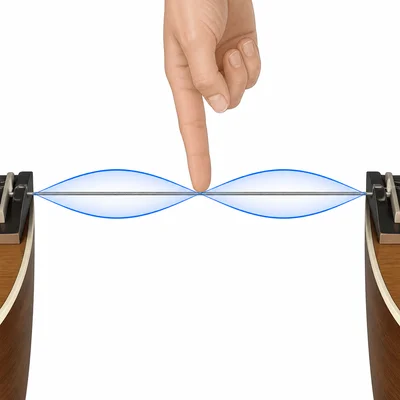
A guitar string has a fundamental frequency of 196 Hz. If a guitarist lightly touches the midpoint of the string and plucks it, the string vibrates mainly in the second harmonic. What frequency is produced?
- 15
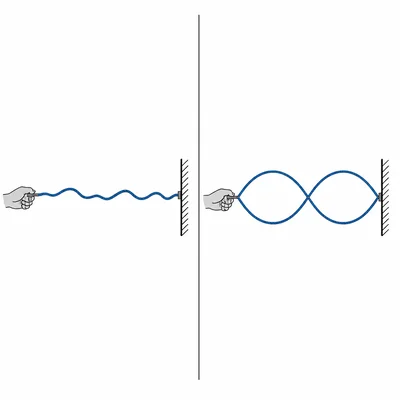
Two students are testing a rope. Student A shakes the rope at a random frequency and sees only small motion. Student B shakes the rope at a frequency that produces a clear standing wave with large antinodes. Which student is driving the rope closer to resonance, and how do you know?