Practice identifying how energy moves through ecosystems using food chains, food webs, trophic levels, and decomposers.
Read each problem carefully. Use what you know about ecosystems to explain how energy moves from one organism to another. Show your thinking in the space provided.
Tracing energy through producers, consumers, and decomposers
Biology - Grade 6-8
- 1
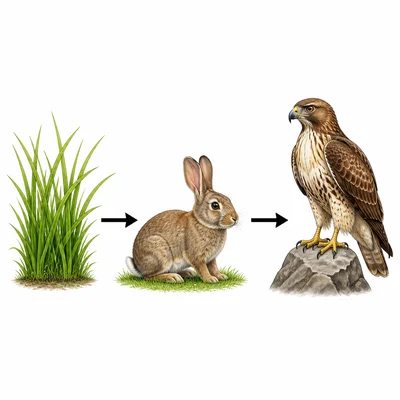
In a grassland ecosystem, grass is eaten by a rabbit, and the rabbit is eaten by a hawk. Identify the producer, the primary consumer, and the secondary consumer.
- 2
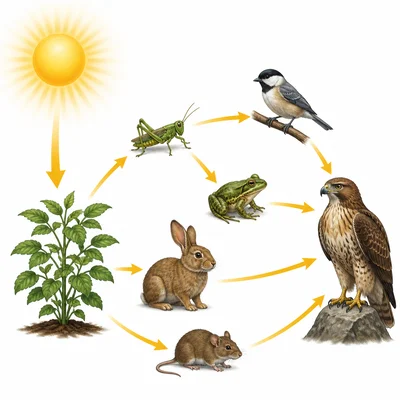
Explain why the Sun is the original source of energy for most food webs.
- 3
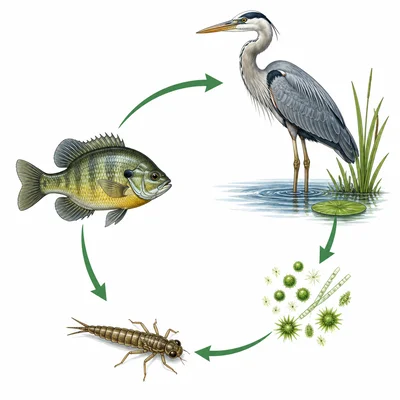
A pond food chain is algae -> insect larva -> fish -> heron. Describe how energy flows through this food chain.
- 4
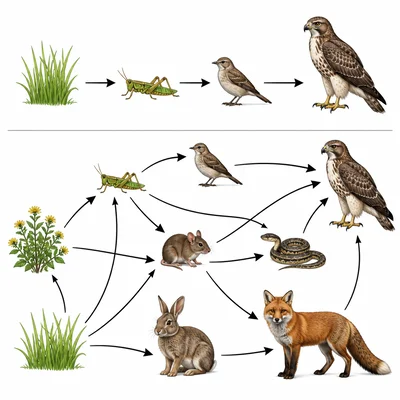
What is the main difference between a food chain and a food web?
- 5
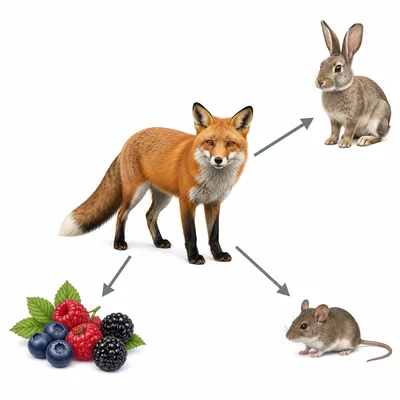
A fox eats rabbits, mice, and berries. What does this tell you about the fox's role in the food web?
- 6
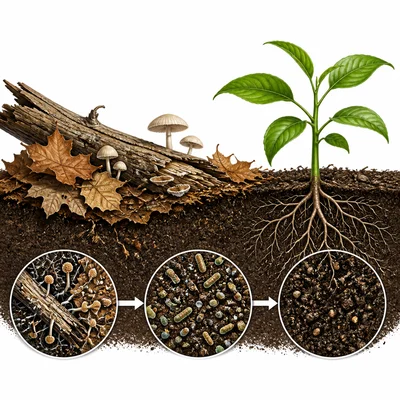
Decomposers such as fungi and bacteria break down dead organisms. Explain why decomposers are important in an ecosystem.
- 7
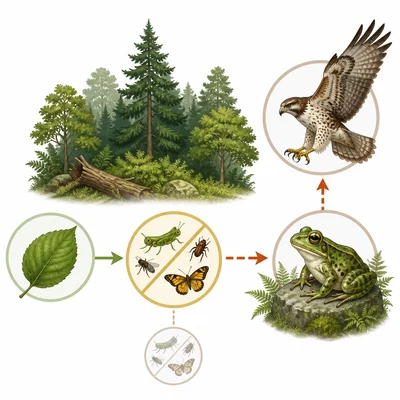
If a large number of insects in a forest die from disease, how might this affect frogs and hawks in the same food web?
- 8
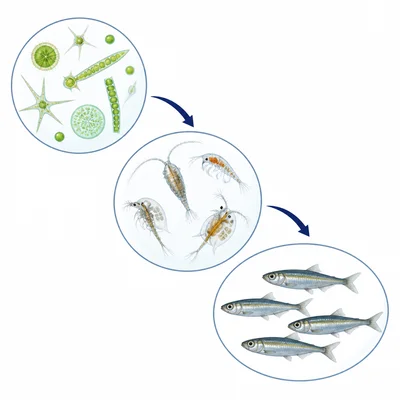
In an ocean ecosystem, phytoplankton are eaten by zooplankton, which are eaten by small fish. Which organism is the primary consumer, and why?
- 9
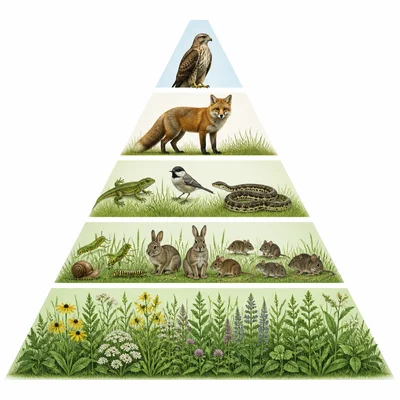
Why is less energy available at the top of a food pyramid than at the bottom?
- 10
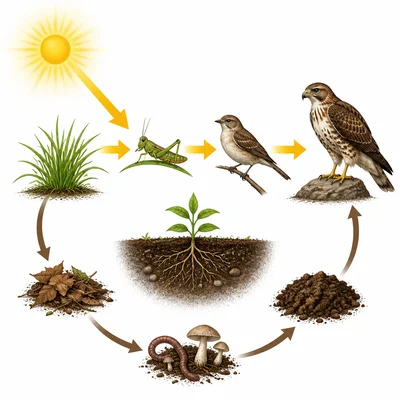
A student says that energy cycles through an ecosystem in the same way that matter does. Is the student correct? Explain your answer.
- 11
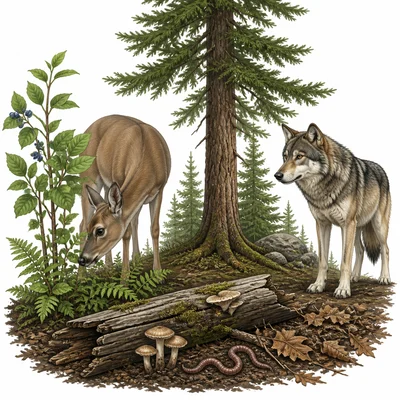
List one example of a producer, one herbivore, one carnivore, and one decomposer in a forest ecosystem.
- 12
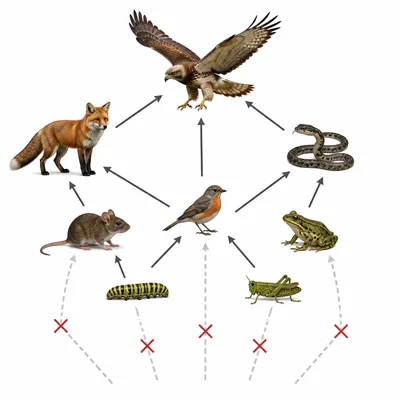
How would removing all producers from an ecosystem affect the rest of the food web?