Practice AP Macroeconomics concepts related to the Federal Reserve, monetary policy tools, money creation, interest rates, aggregate demand, and inflation.
Read each problem carefully. Show your work, label graphs when needed, and explain your reasoning in complete sentences.
Using money markets, policy tools, and macroeconomic effects
Social Studies - Grade 9-12
- 1
The economy is in a recessionary gap with high unemployment and output below potential GDP. Identify one monetary policy action the Federal Reserve could take and explain how it would help close the gap.
- 2
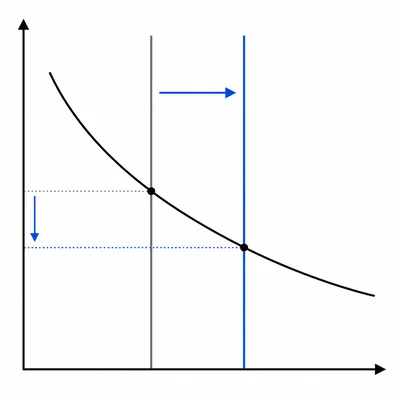
Draw a money market graph showing an increase in the money supply. Label the money demand curve, the original money supply curve, the new money supply curve, the original nominal interest rate, and the new nominal interest rate. Explain the change.
- 3
Suppose the required reserve ratio is 10 percent and a bank receives a new cash deposit of $2,000. If the bank holds no excess reserves, calculate the maximum amount the bank can lend from this deposit.
- 4
Suppose the required reserve ratio is 20 percent and the banking system receives a new $500 deposit. Calculate the maximum possible increase in the money supply if banks lend all excess reserves and there are no cash leakages.
- 5
Explain the difference between the federal funds rate and the discount rate.
- 6
The Federal Reserve raises the interest rate paid on reserve balances. Explain how this policy can reduce the money supply or slow money creation.
- 7
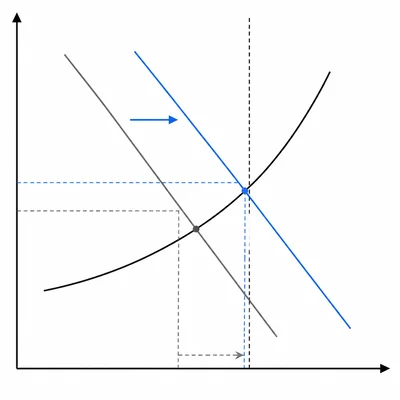
Draw an aggregate demand and aggregate supply graph for an economy in a recessionary gap. Then show the effect of expansionary monetary policy. Label the initial equilibrium, the new equilibrium, potential output, and the direction of the AD shift.
- 8
An economy is experiencing demand-pull inflation. Identify one contractionary monetary policy action the Federal Reserve could take and explain how it would affect inflation.
- 9
If the Federal Reserve sells $100 million of government securities to commercial banks, what happens to bank reserves and the money supply? Explain.
- 10
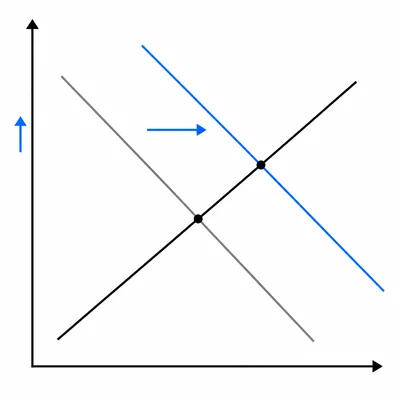
Use the loanable funds market to show the effect of an increase in government borrowing, holding monetary policy constant. Label the real interest rate and quantity of loanable funds. Explain how this may affect private investment.
- 11
A bank has $10,000 in deposits, $1,000 in required reserves, and $500 in excess reserves. What is the required reserve ratio, and what is the maximum amount this bank can lend right now?
- 12
Explain why expansionary monetary policy may be less effective if banks choose to hold excess reserves instead of making loans.
- 13
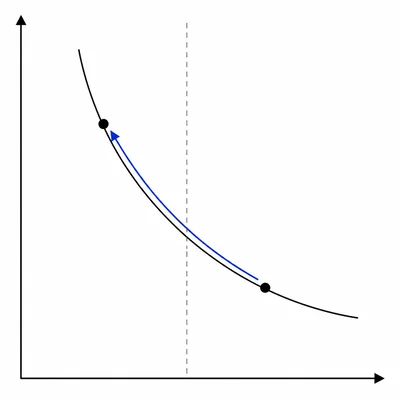
Draw a correctly labeled Phillips curve graph and show the likely short-run effect of expansionary monetary policy. Explain the movement on the short-run Phillips curve.
- 14
Suppose the Federal Reserve announces that it will keep interest rates lower for longer than expected. Explain how expectations can affect current aggregate demand.
- 15
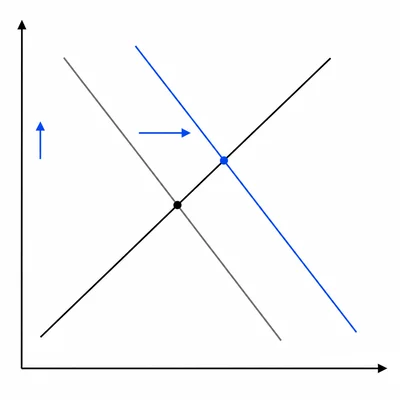
A country has a floating exchange rate. The central bank raises interest rates. Explain the likely effect on the value of the country’s currency and on net exports.