Practice key economic ideas about banks, loans, credit cards, interest, and financial decision-making.
Read each problem carefully. Show your work when calculations are needed. Write complete sentences for explanation questions.
Understanding saving, borrowing, interest, and responsible credit use
Social Studies - Grade 6-8
- 1
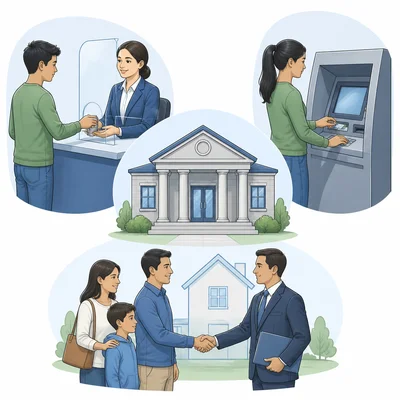
List three services that banks commonly provide for individuals or families. Explain why one of those services is useful.
- 2
Maya has $145 in her checking account. She deposits $60 from babysitting, then spends $28 using her debit card. What is her new account balance?
- 3
A savings account pays 3% simple interest per year. If Carlos deposits $200 and leaves it in the account for one year, how much interest will he earn?
- 4
A bank lends Jordan $500 for one year at 8% simple interest. How much interest will Jordan owe, and what total amount will he repay?
- 5
Two loan offers are shown: Offer A is $1,000 at 6% simple interest for 2 years. Offer B is $1,000 at 8% simple interest for 1 year. Which loan has the lower total interest cost?
- 6
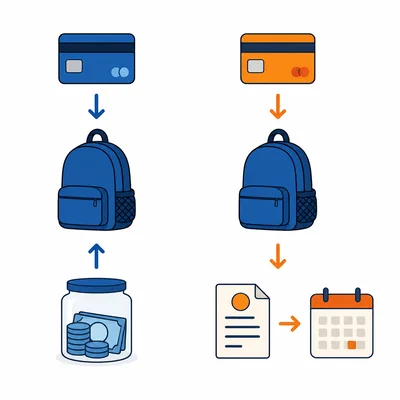
Explain the difference between using a debit card and using a credit card to buy a $35 backpack.
- 7
Read the situation: Nia pays her credit card bill on time every month, keeps her balance low, and does not apply for many new cards. How would these habits likely affect her credit history?
- 8
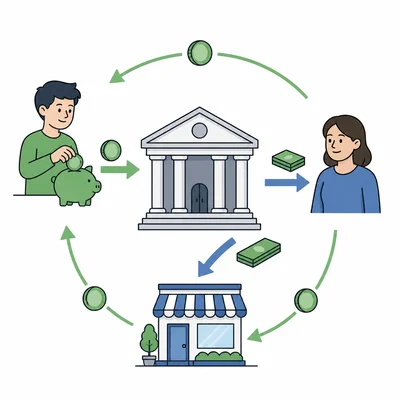
Banks often connect savers and borrowers. Describe how money can move from a person with savings to a person or business that needs a loan.
- 9
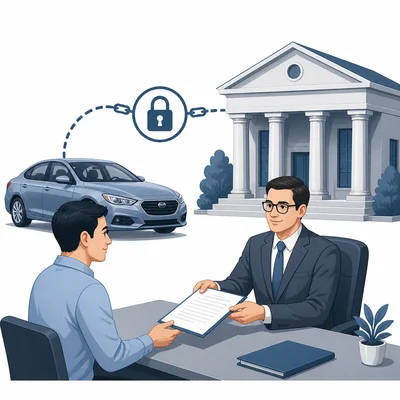
A car loan requires collateral. What is collateral, and why might a lender require it?
- 10
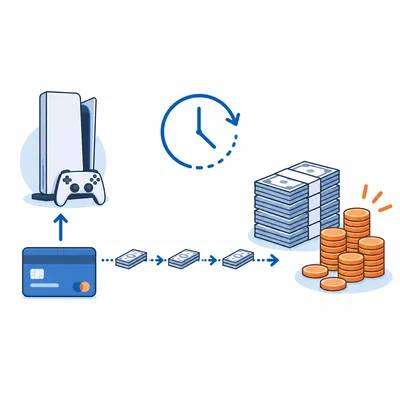
Sam buys a $300 game system with a credit card. He pays only the minimum payment each month and interest is added to the unpaid balance. Explain one possible disadvantage of this choice.
- 11
A bank advertises a checking account with no monthly fee, but it charges $3 each time a customer uses another bank's ATM. If Alex uses another bank's ATM 4 times in one month, how much will he pay in ATM fees?
- 12
Use the bank statement information: Starting balance $220, paycheck deposit $150, grocery debit $46, phone bill payment $30, and gift deposit $25. What is the ending balance?
- 13
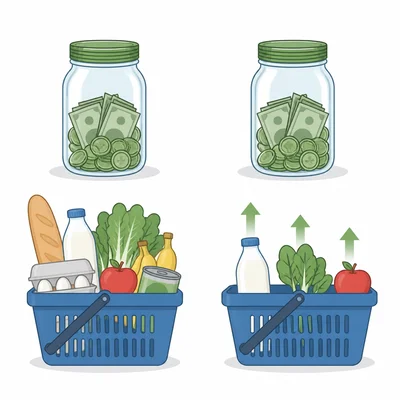
A savings account earns 2% interest in one year, but prices in the economy rise by 4% during the same year. What happens to the purchasing power of the money in the account?
- 14
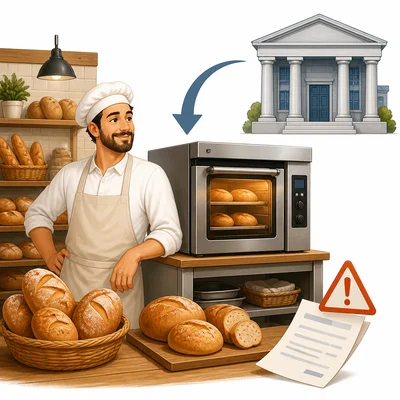
A local bakery gets a loan to buy a new oven. Explain one way the loan could help the bakery and one risk the bakery takes by borrowing.
- 15
Match each term to its meaning in a sentence: principal, interest, lender, borrower, and credit.