Practice making a budget, comparing needs and wants, and understanding how saving helps people reach financial goals.
Read each problem carefully. Use math and complete sentences when needed. Show your work in the space provided.
Planning spending, setting goals, and building smart money habits
Social Studies - Grade 6-8
- 1

A student earns $20 each week for doing chores. They want to save $8 and spend the rest. How much money can they spend each week?
- 2
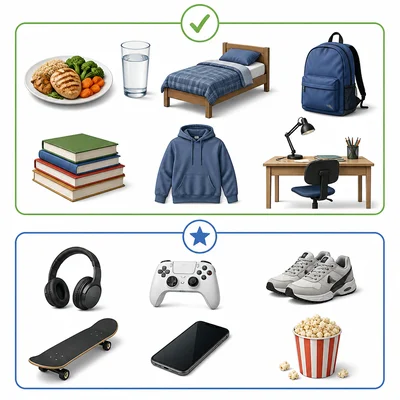
List two examples of needs and two examples of wants for a middle school student.
- 3
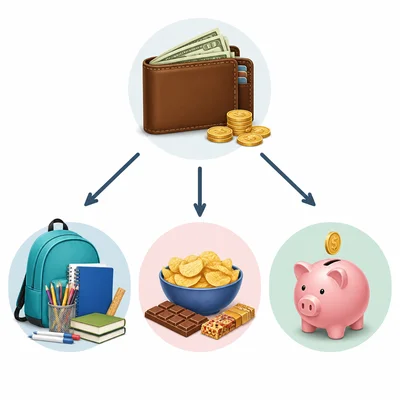
Maria gets $50 each month. She plans to spend $18 on school supplies, $12 on snacks, and save the rest. How much will she save?
- 4
Why is saving money over time usually better than spending all your money right away? Give one clear reason.
- 5

Jordan wants to buy headphones that cost $45. Jordan saves $9 each week. How many weeks will it take to save enough money?
- 6
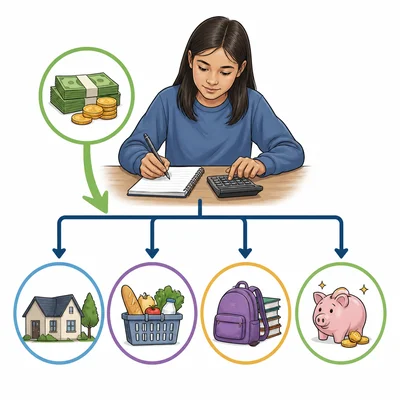
A budget includes income of $60. The planned expenses are $15 for a gift, $20 for a phone card, and $10 for entertainment. Is this budget balanced, or is there money left over? Explain.
- 7
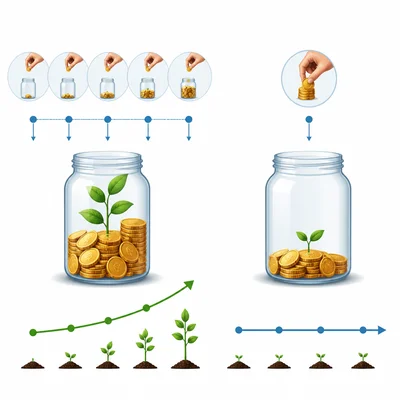
Which choice is the better savings habit: saving $2 every week for 10 weeks or saving $5 one time? Explain your answer.
- 8

Sam has a monthly budget of $80. Sam wants to save 25% of that money. How much should Sam save?
- 9
Write a simple savings goal for something that costs $30. Then explain how you could reach that goal in 5 weeks.
- 10

Taylor earns $15 from babysitting and $10 from helping a neighbor. Taylor spends $12 and saves the rest. How much does Taylor save?
- 11
Explain why making a budget before shopping can help a person make better choices.
- 12
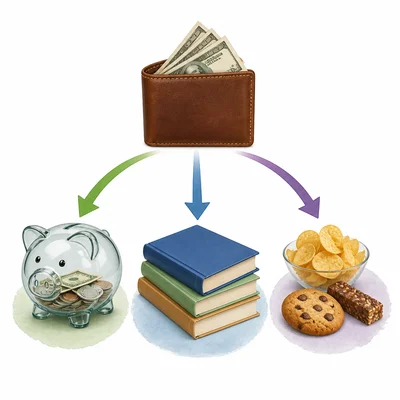
A student has $40. They want to save half, spend $10 on a book, and use the rest for snacks. How much money is left for snacks?