Practice advanced probability distribution concepts, including moment calculations, transformations, joint distributions, conditional distributions, and approximations.
Read each problem carefully. Show your setup, formulas, and reasoning in the space provided. Give exact answers when possible, and round numerical answers only when requested.
Working with expected value, variance, transformations, and distribution models
Statistics - Grade advanced
- 1
A discrete random variable X has probability mass function P(X = x) = c x for x = 1, 2, 3, 4. Find c, E(X), and Var(X).
- 2
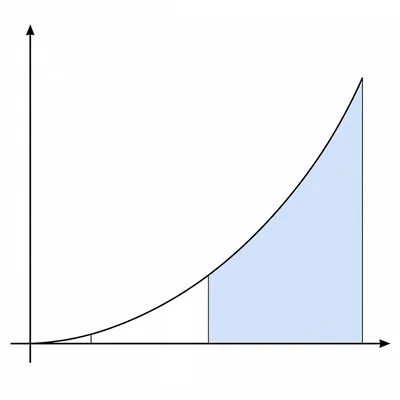
Let X be a continuous random variable with density f(x) = kx^2 for 0 < x < 2 and f(x) = 0 otherwise. Find k and P(1 < X < 2).
- 3
Suppose X has moment generating function M_X(t) = exp(4t + 9t^2 / 2). Identify the distribution of X and state its mean and variance.
- 4
Let X follow a binomial distribution with n = 20 and p = 0.3. Compute E(X), Var(X), and the standard deviation of X.
- 5
Let X follow a Poisson distribution with lambda = 5. Find P(X = 3) and P(X <= 1). Give decimal approximations to four decimal places.
- 6
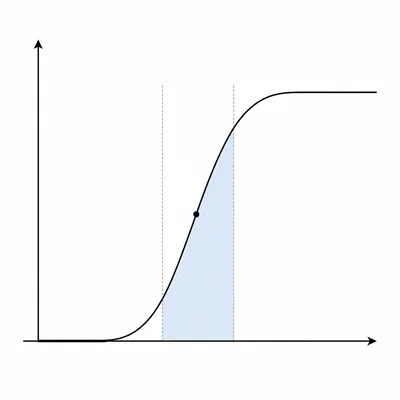
A random variable X has cumulative distribution function F(x) = 0 for x < 0, F(x) = x^2/16 for 0 <= x <= 4, and F(x) = 1 for x > 4. Find the density f(x), the median, and P(2 < X <= 3).
- 7
Let X have density f(x) = e^(-x) for x >= 0. Define Y = 3X + 2. Find the density of Y.
- 8
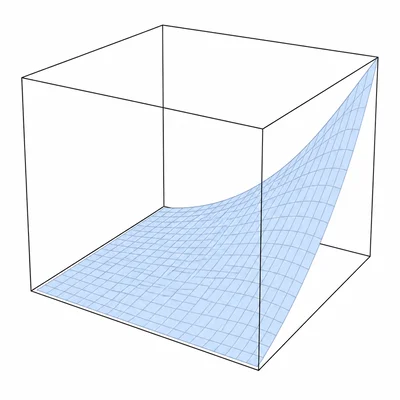
Let X and Y have joint density f(x, y) = 6xy for 0 < x < 1 and 0 < y < 1, and f(x, y) = 0 otherwise. Determine whether X and Y are independent.
- 9
Let X and Y be independent normal random variables with X ~ N(10, 4) and Y ~ N(3, 9), where the second parameter is the variance. Find the distribution of Z = X - 2Y.
- 10
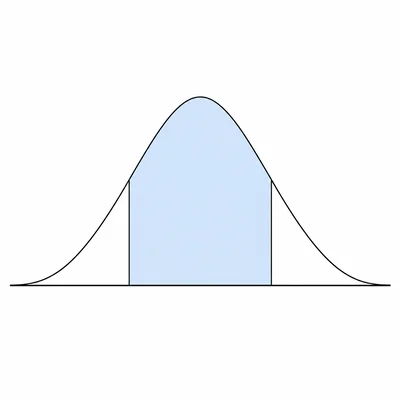
A population has mean 50 and variance 100. A random sample of size n = 64 is taken. Use the central limit theorem to approximate P(48 < sample mean < 52).
- 11
Let X follow a gamma distribution with shape alpha = 3 and rate beta = 2. Find E(X), Var(X), and the moment generating function M_X(t).
- 12
Let X follow a uniform distribution on the interval [a, b]. Given E(X) = 7 and Var(X) = 3, find a and b.
- 13
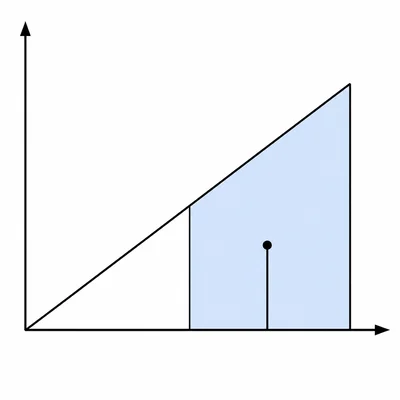
Let X have density f(x) = 2x for 0 < x < 1. Find E(X | X > 0.5).
- 14
Let X follow a geometric distribution with success probability p = 0.2, where X counts the trial number of the first success. Find P(X > 5), E(X), and Var(X).
- 15
A sequence of random variables X_n has mean mu_n = 0 and variance Var(X_n) = 1/n^2. Show that X_n converges in probability to 0.