How Do Bees Help Plants Make Fruit?
Tiny trips that move pollen
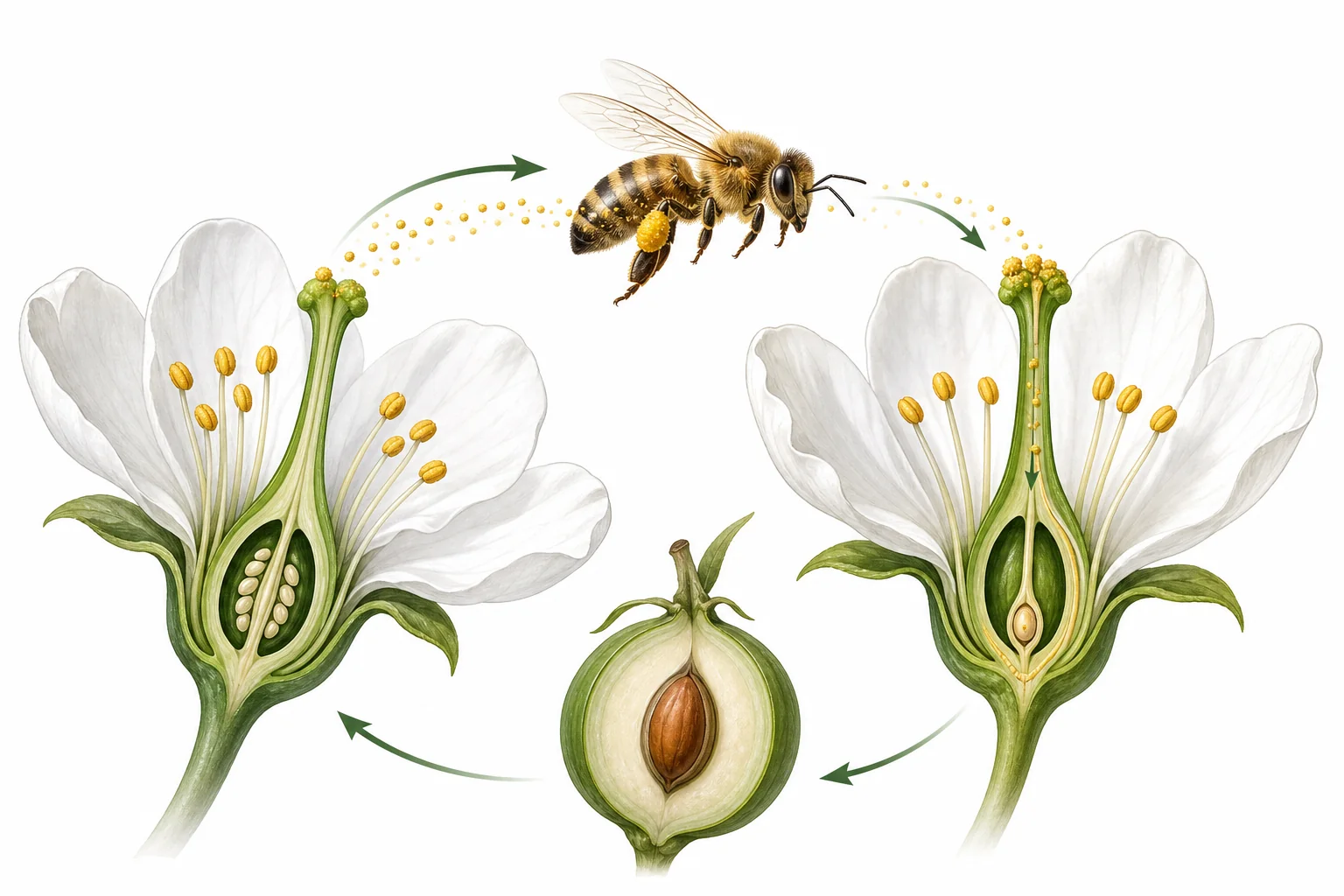
Bees visit flowers to drink nectar and collect pollen. As they move from flower to flower, some pollen rubs onto the sticky part of another flower. That helps the plant start making seeds, and many fruits grow around those seeds.
Many fruits begin with a flower. Apples, peaches, cucumbers, pumpkins, and berries all grow from flowering plants. Before many of those fruits can form, pollen has to move to the right part of a flower. Bees are important helpers in that step. A bee visits a flower to find nectar, which is a sweet liquid food. The bee also collects pollen, a yellow powder made by flowers. Pollen sticks to the bee’s fuzzy body. When the bee visits another flower of the same kind, some pollen may brush off. If it lands in the right place, the flower can begin making seeds. The fruit grows around those seeds and helps protect them. This is one reason bees matter in gardens, farms, and wild places. They help plants complete a key part of their life cycle.
A bee visits a flower
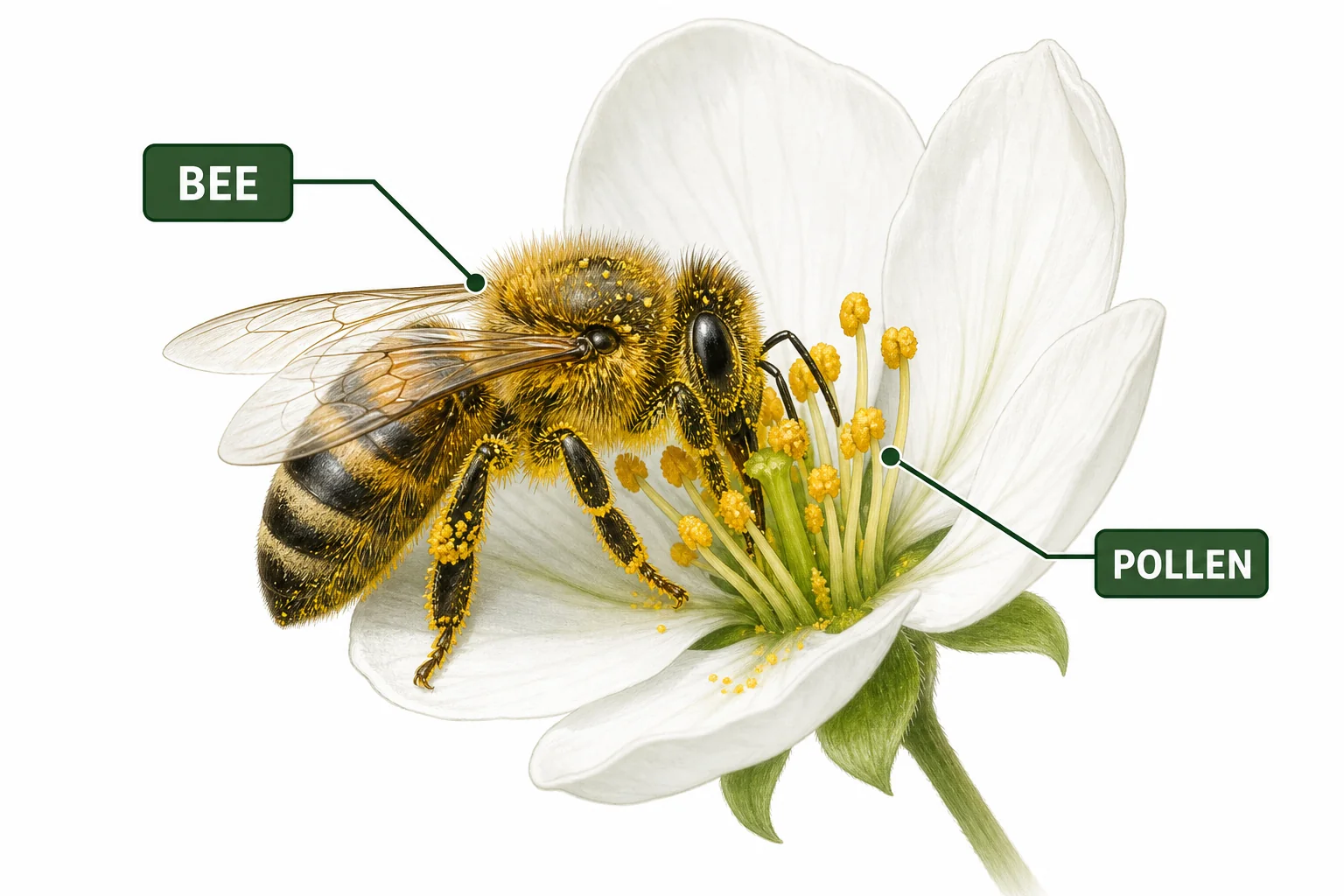
Bees pick up pollen while feeding.
Pollen moves between flowers
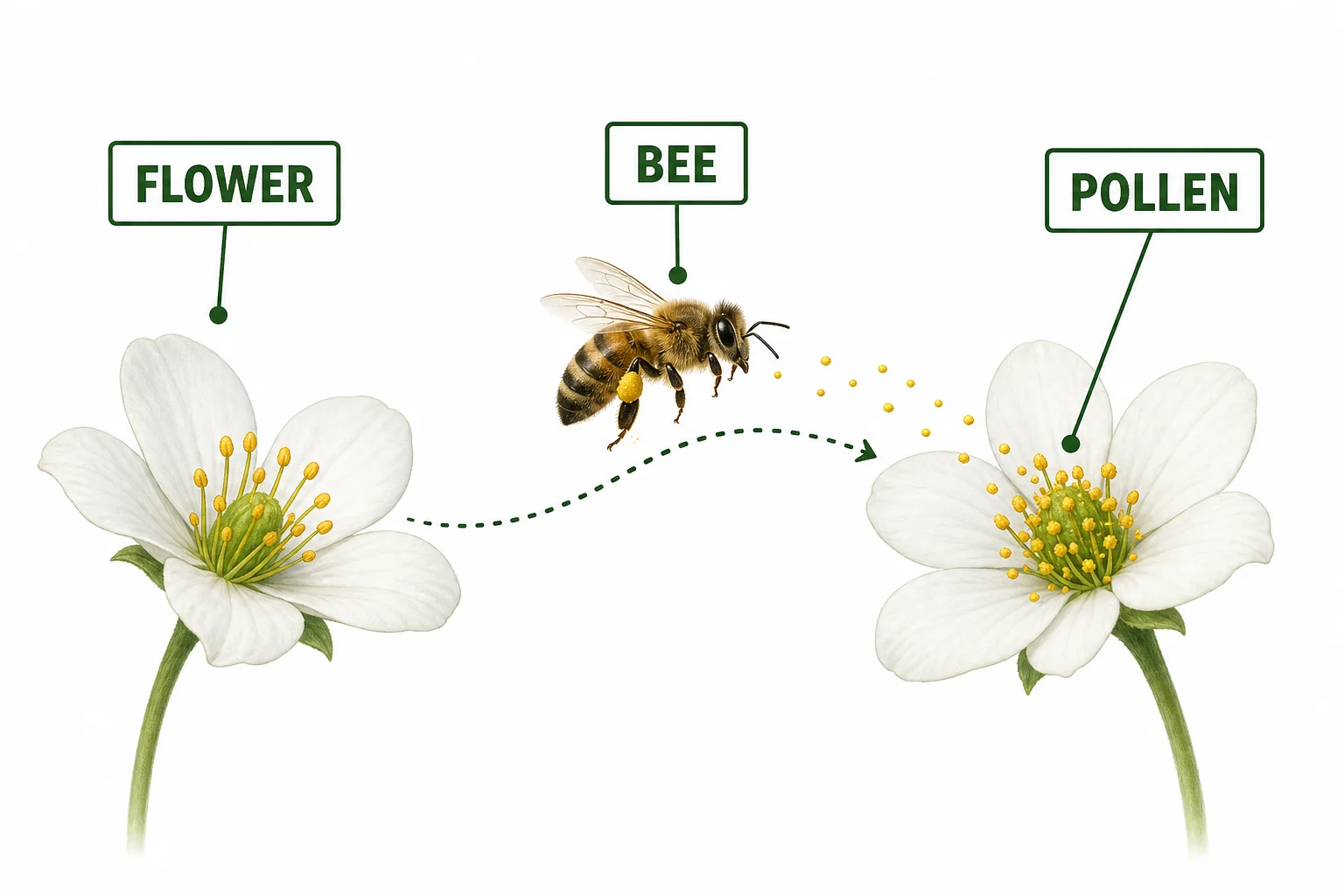
Pollination is pollen moving to the right flower part.
Seeds begin inside
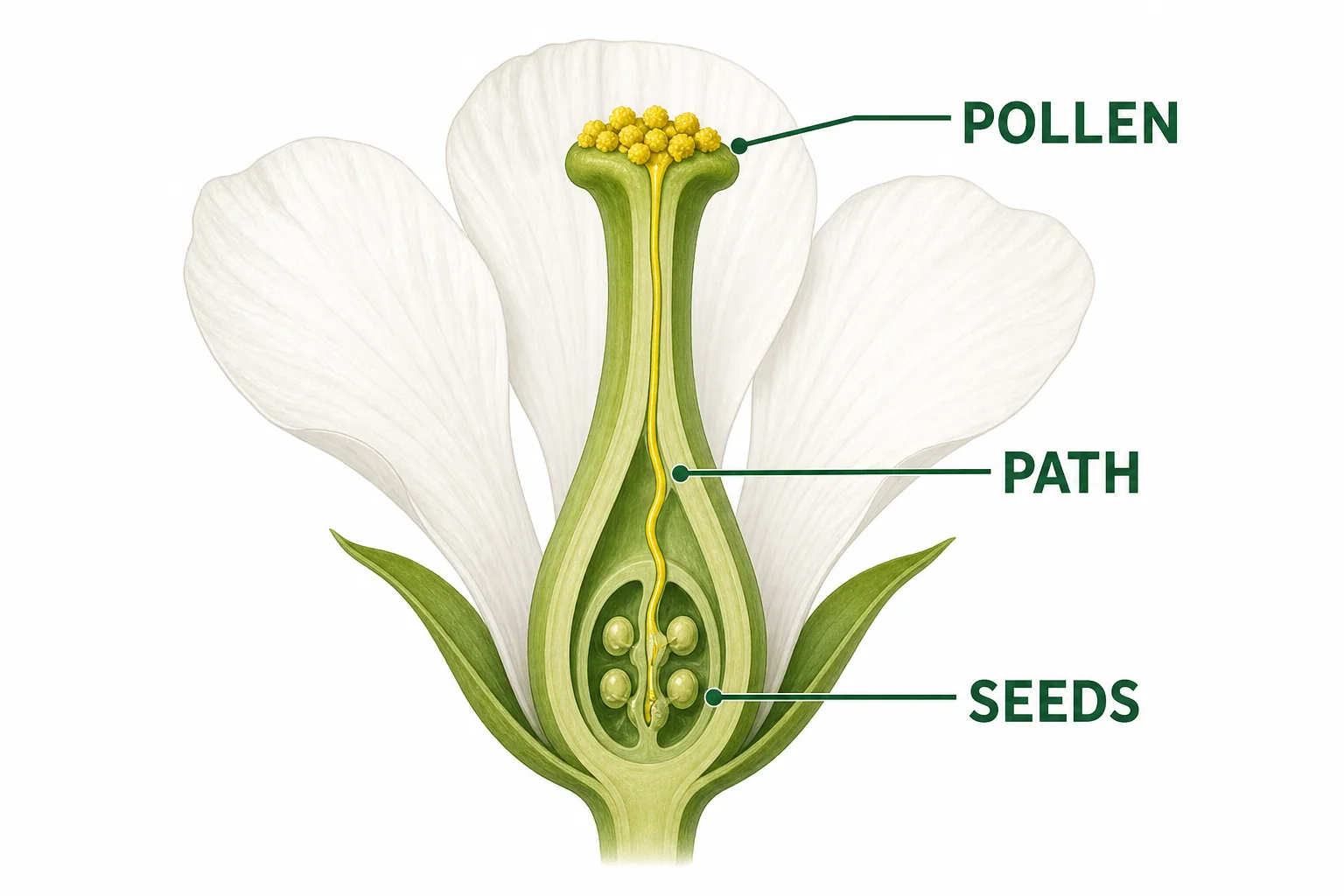
Fruit starts with seeds forming inside a flower.
Fruit grows around seeds
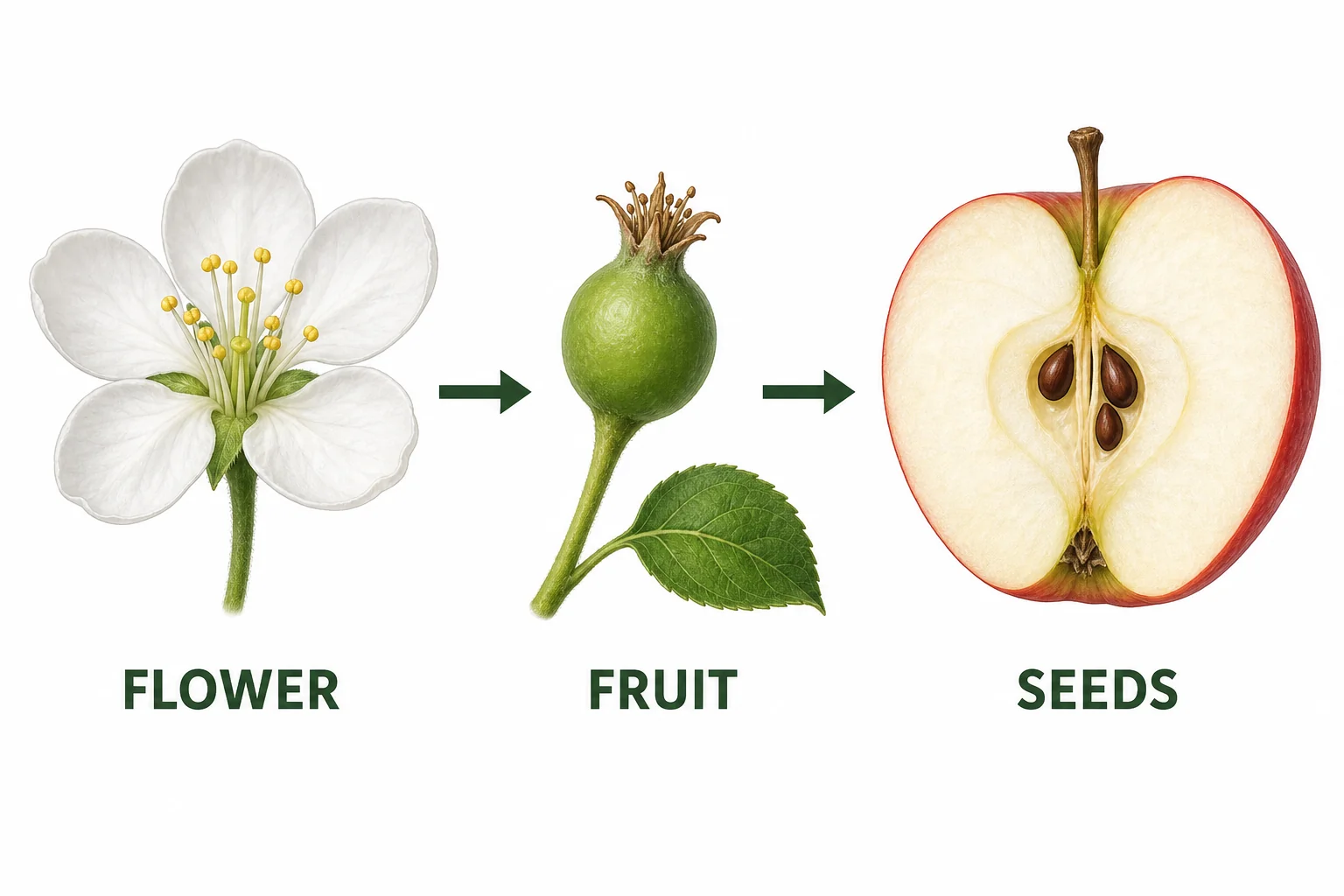
Many fruits are seed holders.
Bees support ecosystems
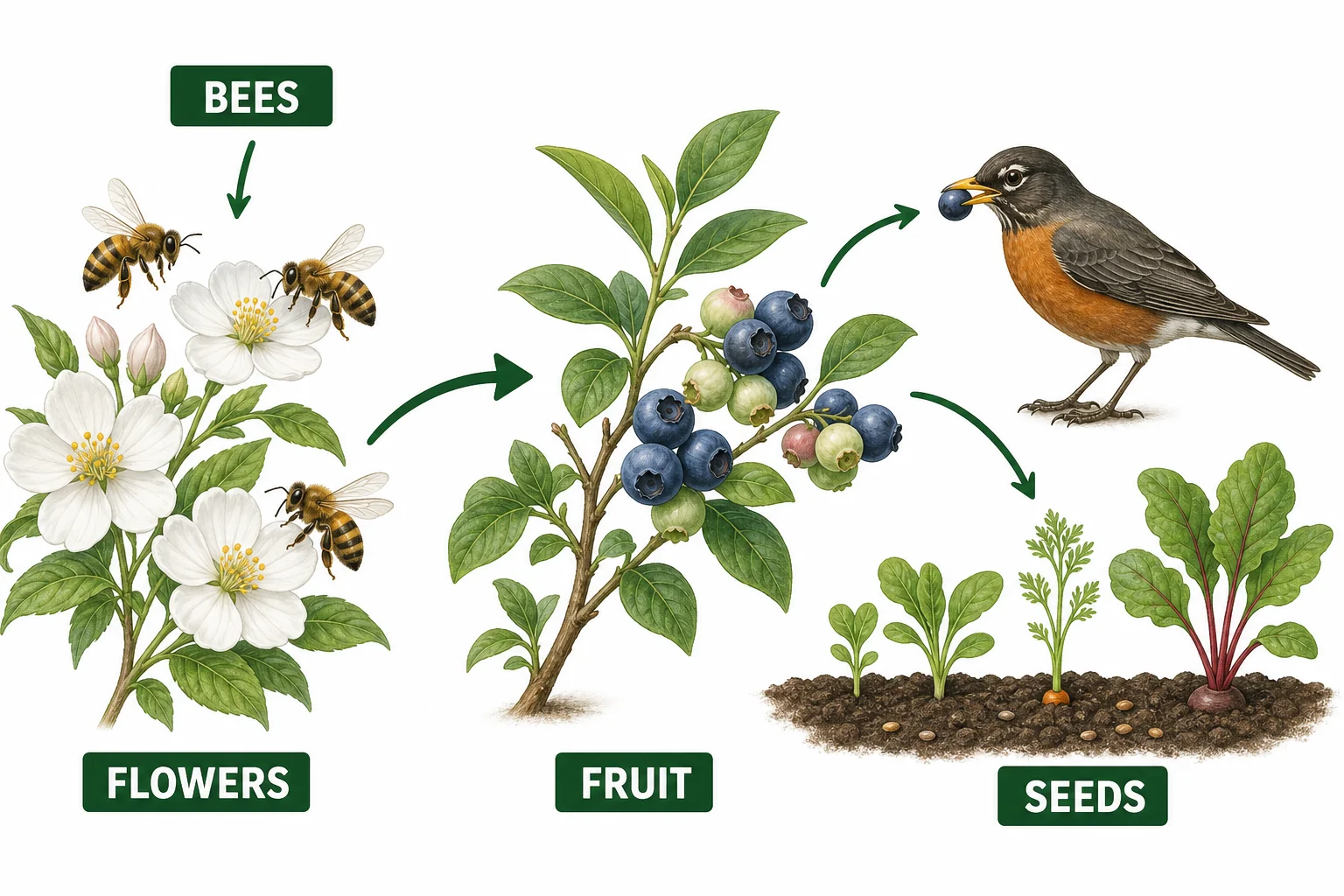
Pollination helps many living things get food.
Vocabulary
- Pollen
- A powder made by flowers that can help a plant make seeds.
- Pollination
- The movement of pollen to the part of a flower that can receive it.
- Nectar
- A sweet liquid made by flowers that many bees use as food.
- Fertilization
- The step after pollination when a plant begins making seeds.
- Fruit
- A plant part that grows around seeds and helps protect or spread them.
- Ecosystem service
- A helpful job done by nature, such as pollination, that supports living things.
In the Classroom
Powder Pollination Model
20 minutes | Grades 3-5
Give students paper flowers and cotton swabs or pom-poms. Use a small amount of colored chalk dust or powdered drink mix to model pollen moving from one flower to another.
Flower to Fruit Sort
15 minutes | Grades 2-4
Students sort picture cards into a sequence that starts with a flower and ends with fruit and seeds. Ask them to explain where the bee helps in the sequence.
Schoolyard Pollinator Watch
30 minutes | Grades 3-5
Students observe flowering plants for short timed intervals and tally pollinator visits. They compare which flowers had the most visits and discuss how visits could help plants make seeds.
Key Takeaways
- • Many fruits begin as flowers.
- • Bees pick up pollen while they collect nectar and pollen for food.
- • Pollination happens when pollen reaches the right part of another flower.
- • After pollination and fertilization, seeds can begin to form.
- • Fruit often grows around seeds and helps plants complete their life cycle.