How Does Your Body Know What Time It Is?
How light resets a living clock
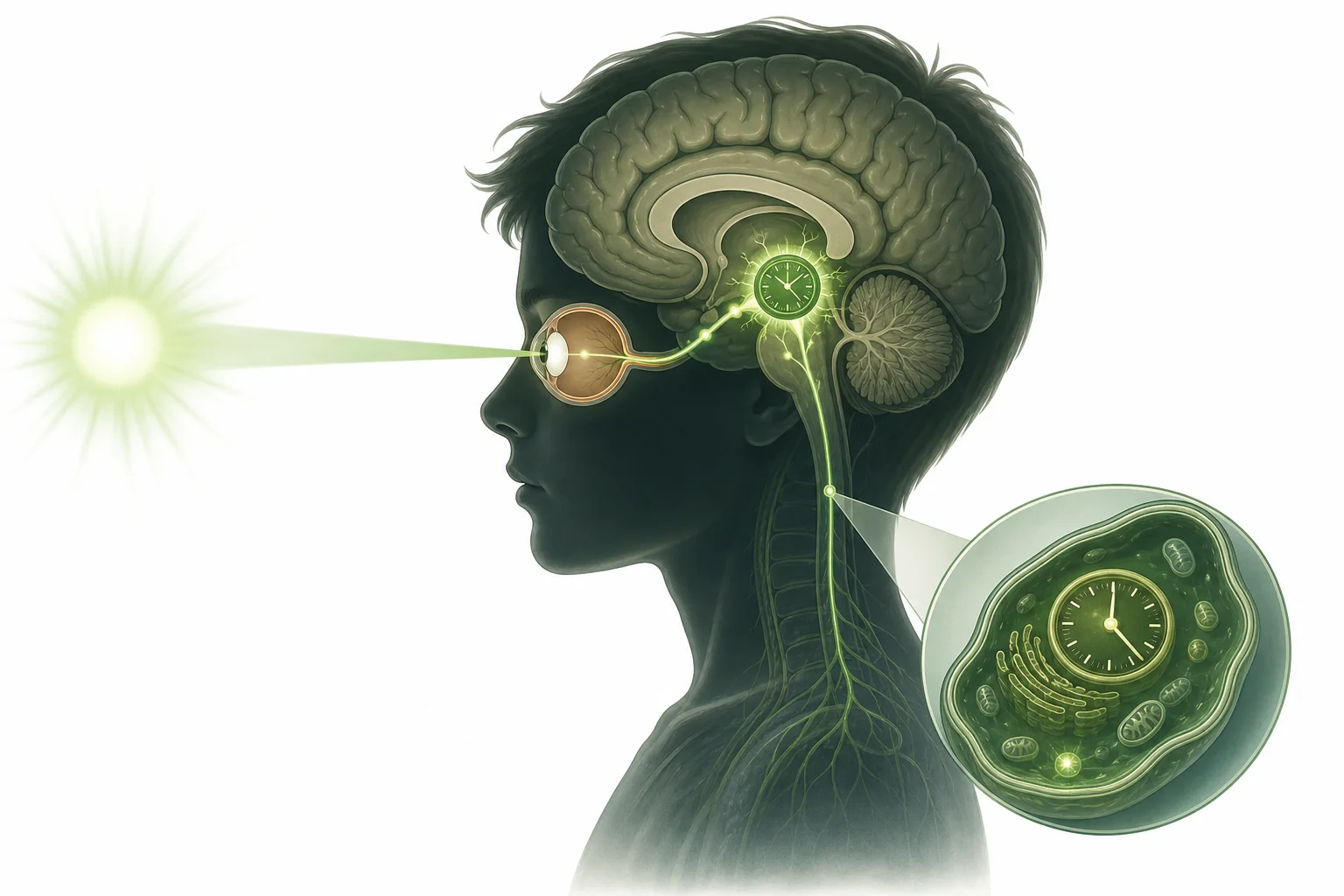
Your body keeps time with a small group of brain cells that runs on a near 24 hour cycle. Light from your eyes resets this clock each day so it stays matched to sunrise and sunset. The clock helps time sleep, body temperature, hunger, and hormone release.
Your body does not need a wall clock to change its behavior across the day. You get sleepy at night, feel more alert after morning light, and often wake near the same time even before an alarm. These patterns come from a biological timing system called the circadian rhythm. It is not one single switch. It is a set of interacting signals in cells, tissues, and organs. The main coordinator sits deep in the brain, just above where the optic nerves cross. It reads light information from the eyes and uses that information to keep the body lined up with Earth’s day and night cycle. This matters for more than sleep. The timing system affects body temperature, digestion, attention, immune activity, and the hormone melatonin. When the clock is shifted by late screens, night work, or travel across time zones, the whole body can feel out of sync.
A clock made of cells
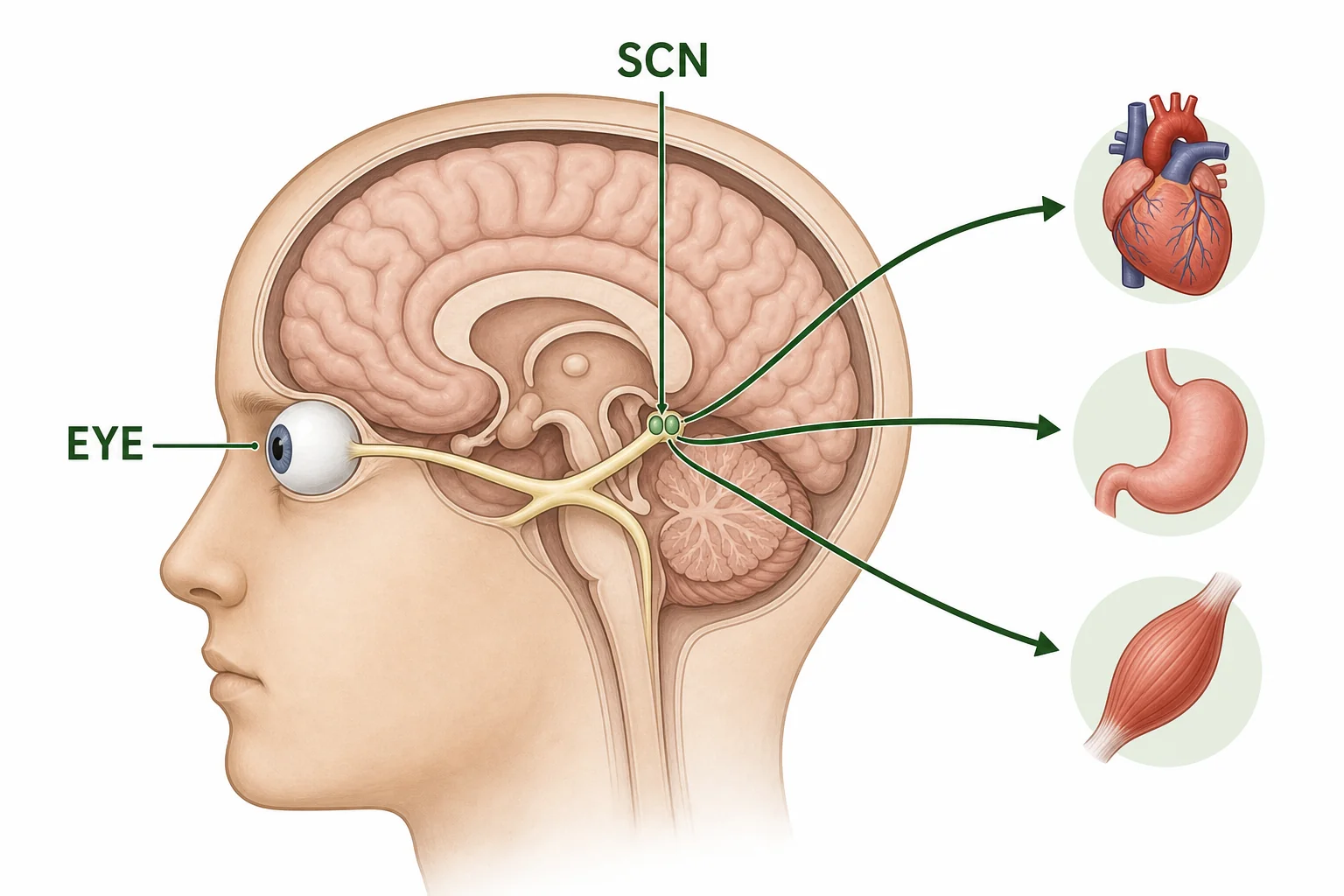
The SCN is the body’s main time coordinator.
Light sets the clock
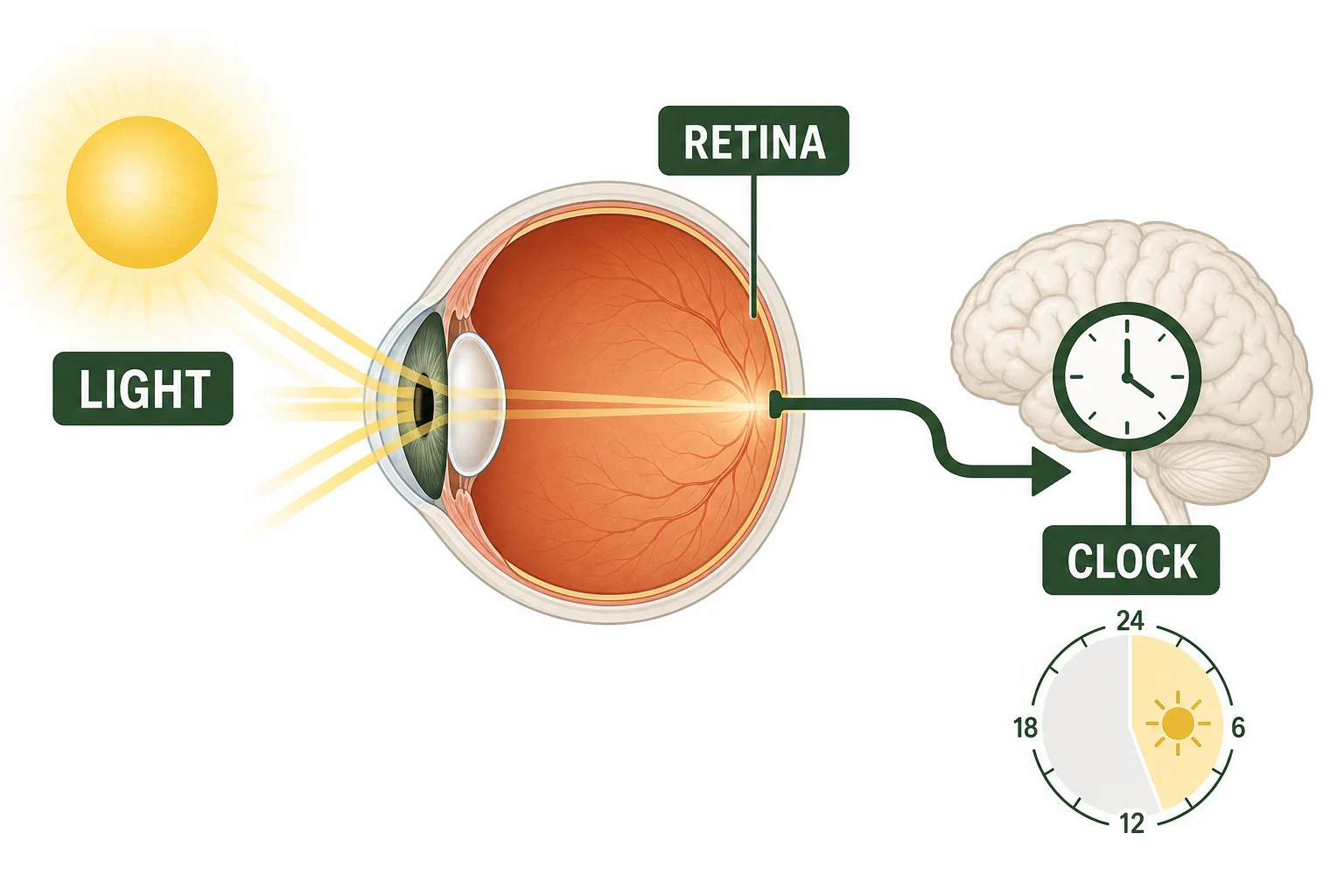
Light is the main reset signal for the body clock.
Melatonin marks night
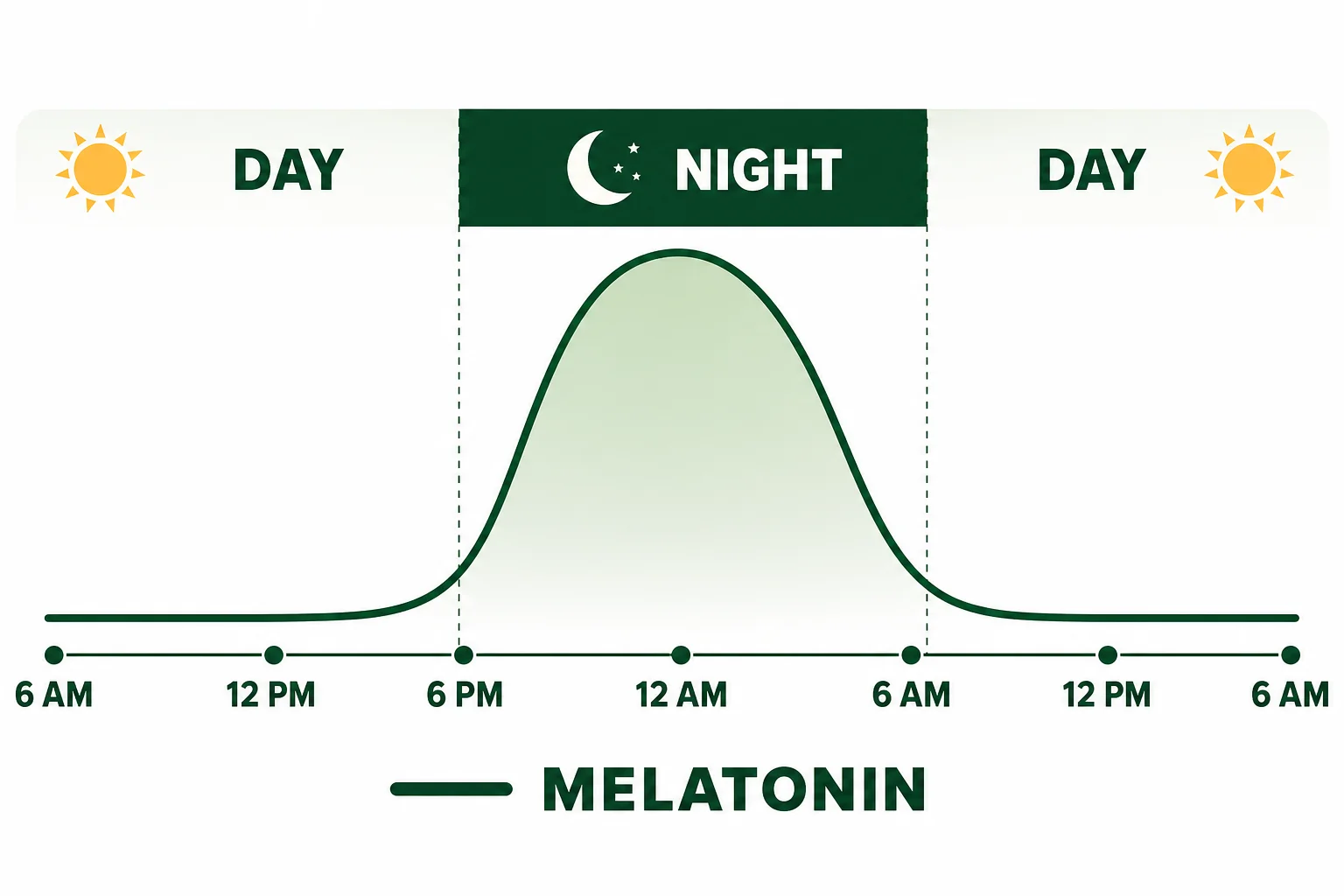
Melatonin is a night signal, not a full sleep switch.
Why jet lag happens
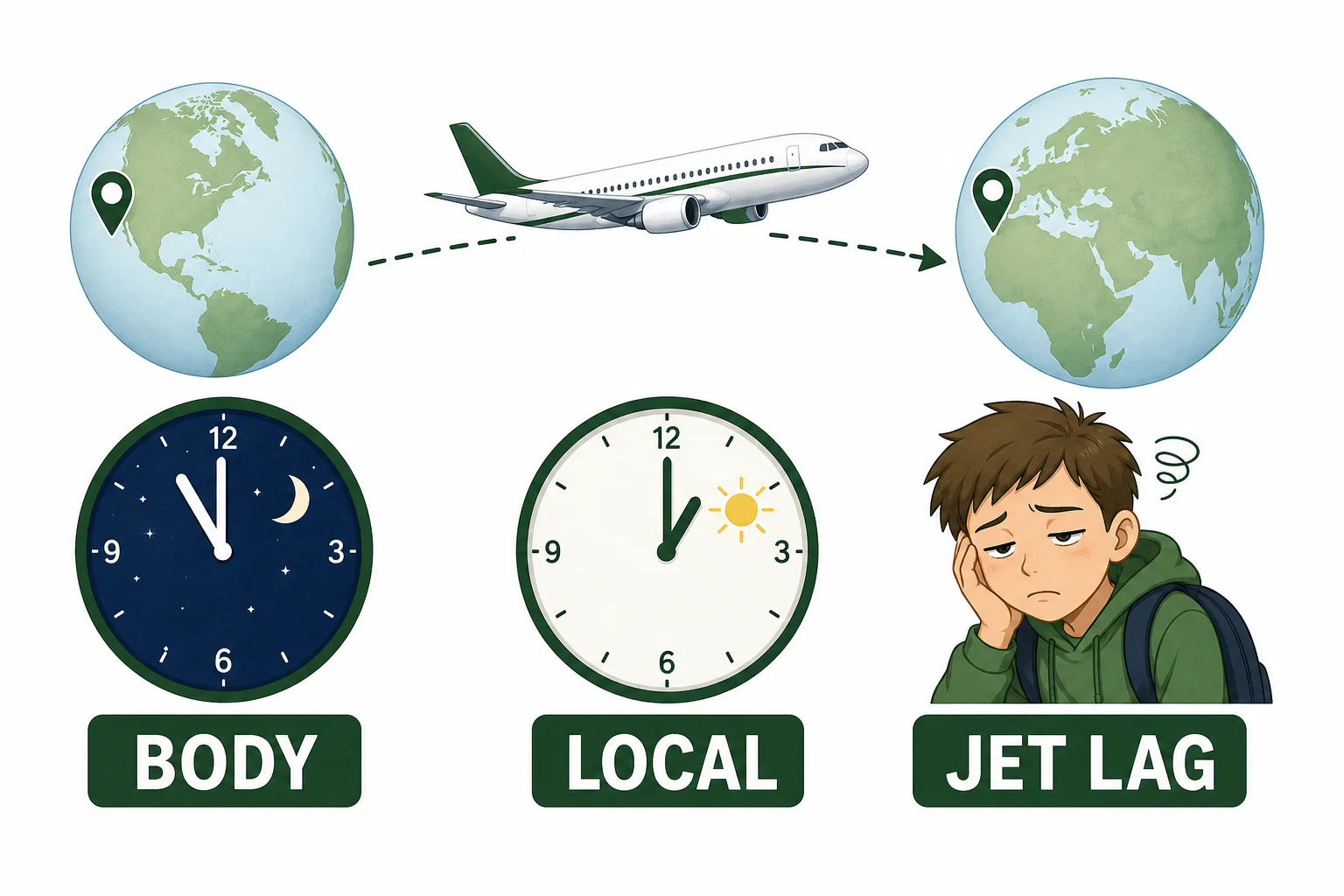
Jet lag is internal time stuck on an old schedule.
Clocks support homeostasis
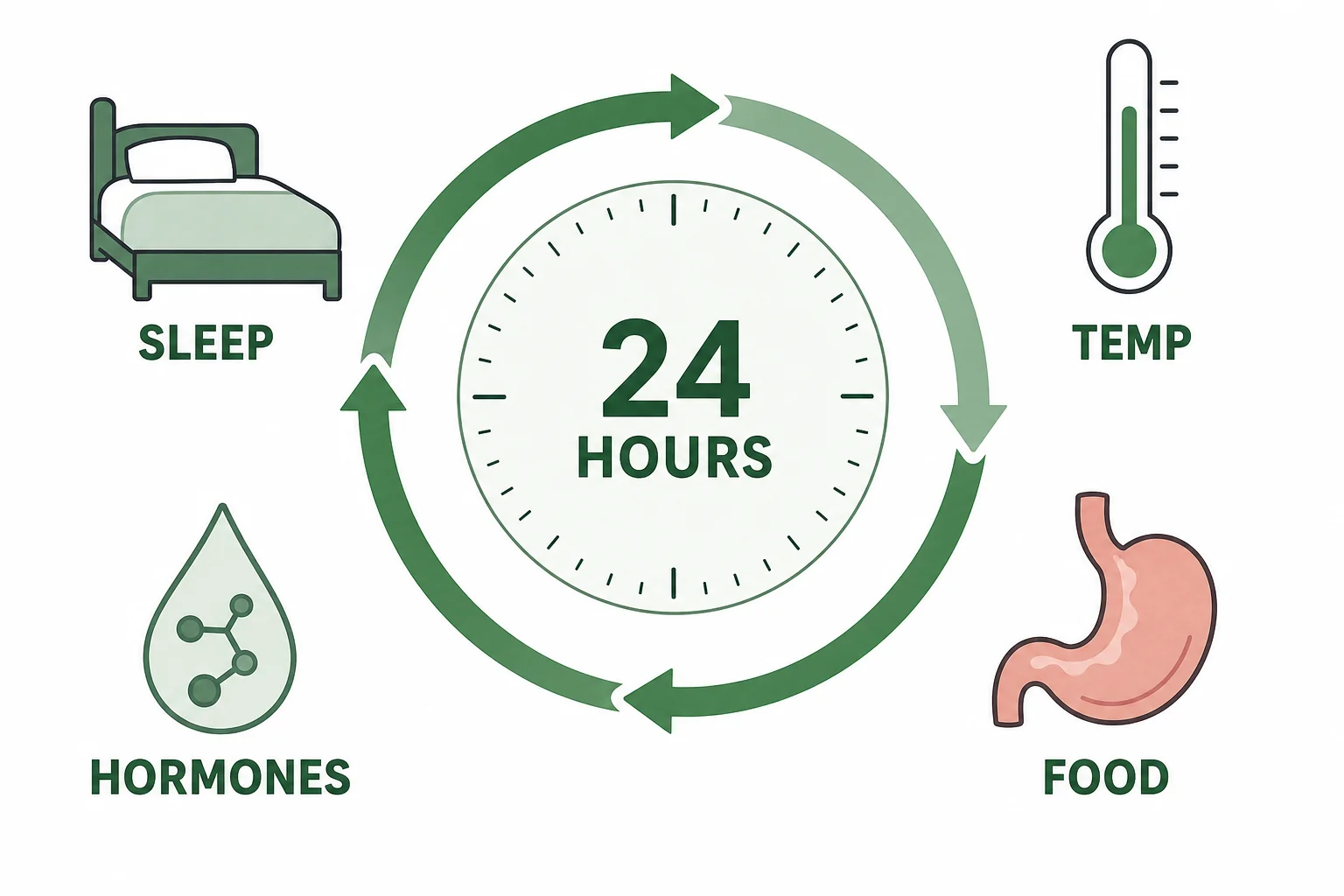
A timed body is better prepared for daily changes.
Vocabulary
- Circadian rhythm
- A biological cycle that repeats about every 24 hours and helps time body functions.
- Suprachiasmatic nucleus
- A small group of neurons in the brain that acts as the body’s main circadian clock.
- Entrainment
- The process by which an internal rhythm is reset by an outside cue, especially light.
- Melatonin
- A hormone that rises during the biological night and helps signal nighttime to the body.
- Homeostasis
- The maintenance of stable internal conditions through regulation and feedback.
- Jet lag
- A temporary mismatch between the body clock and local time after rapid travel across time zones.
In the Classroom
Build a 24 hour body clock map
25 minutes | Grades 9-12
Students make a circular timeline of sleep, meals, alertness, body temperature, and light exposure across one day. They compare patterns and identify which cues might shift the clock earlier or later.
Model entrainment with shifted light
35 minutes | Grades 9-12
Students use paper strips or a simple spreadsheet to represent an internal clock that drifts unless it receives a daily light cue. They test how morning light and evening light change the predicted sleep time.
Jet lag case study
30 minutes | Grades 9-12
Students analyze a travel schedule across time zones and predict when a traveler may feel sleepy, hungry, or alert. They propose a light exposure plan and explain it using the SCN and melatonin.
Key Takeaways
- • The body has an internal timing system that runs on a near 24 hour cycle.
- • The SCN in the brain helps coordinate clocks in many tissues.
- • Light from the eyes is the strongest cue that resets the clock each day.
- • Melatonin usually rises at night and helps signal biological night.
- • Jet lag happens when the body clock and local time are not aligned.