Why Are Summer Days Longer Than Winter Days?
Earth’s tilt changes the Sun’s daily path
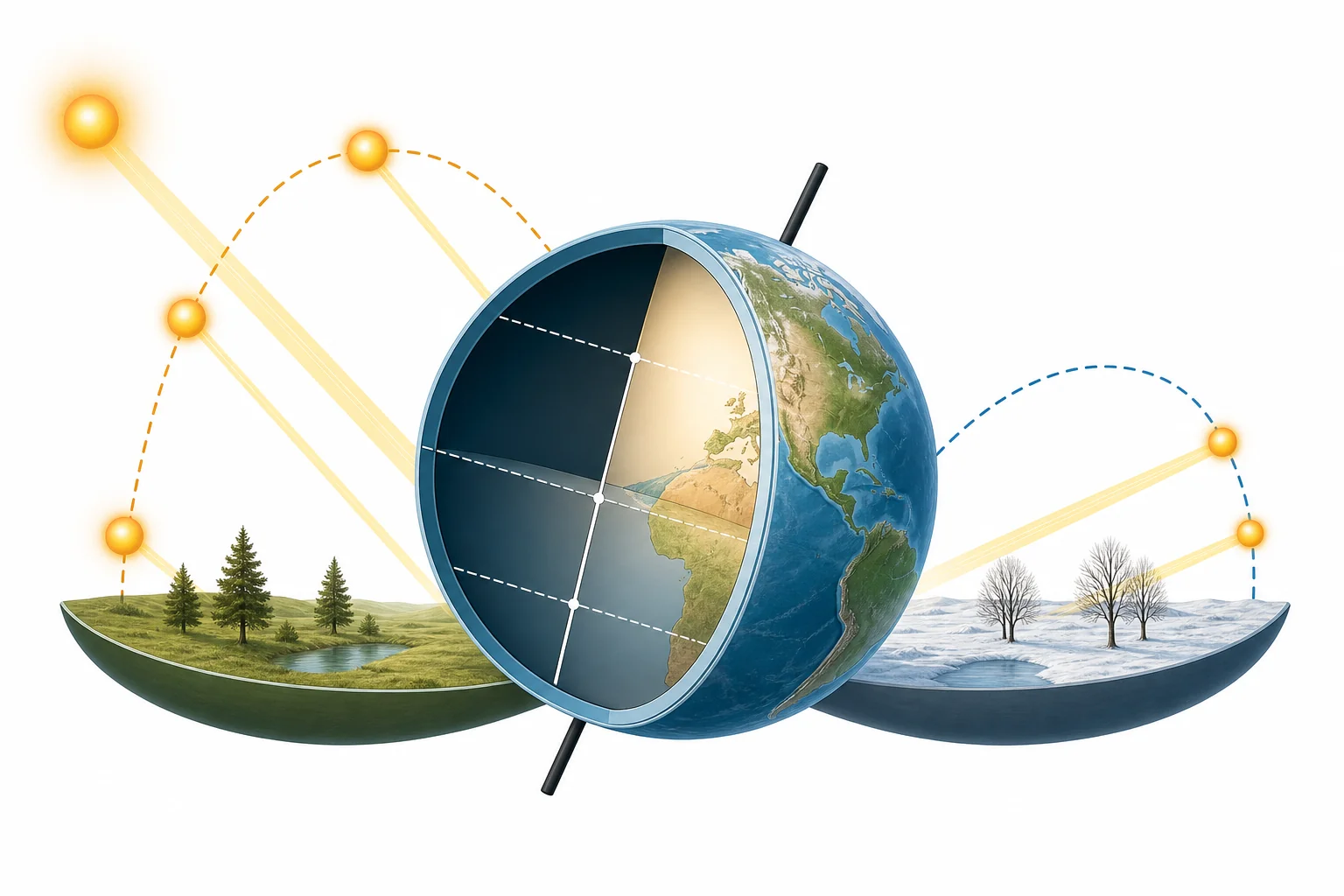
Summer days are longer because Earth’s axis is tilted. When your half of Earth leans toward the Sun, the Sun rises higher and stays above the horizon for more hours. When your half leans away, the Sun takes a lower, shorter path across the sky.
The length of a day can change a lot during the year. In many places, summer evenings stay bright long after dinner. In winter, the Sun may set before many people get home from school. This pattern is not caused by Earth being much closer to the Sun in summer. It is caused by Earth’s tilt. Earth spins once each day, but its spin axis is not straight up and down compared with its path around the Sun. It leans by about 23.5 degrees. That lean changes how long the Sun appears above the horizon. It also changes how high the Sun climbs at noon. Middle-school Earth science uses models to connect these sky patterns with Earth’s motion in space. The same idea explains why Alaska has very long summer days, while places near the equator change much less.
Tilt is the main cause
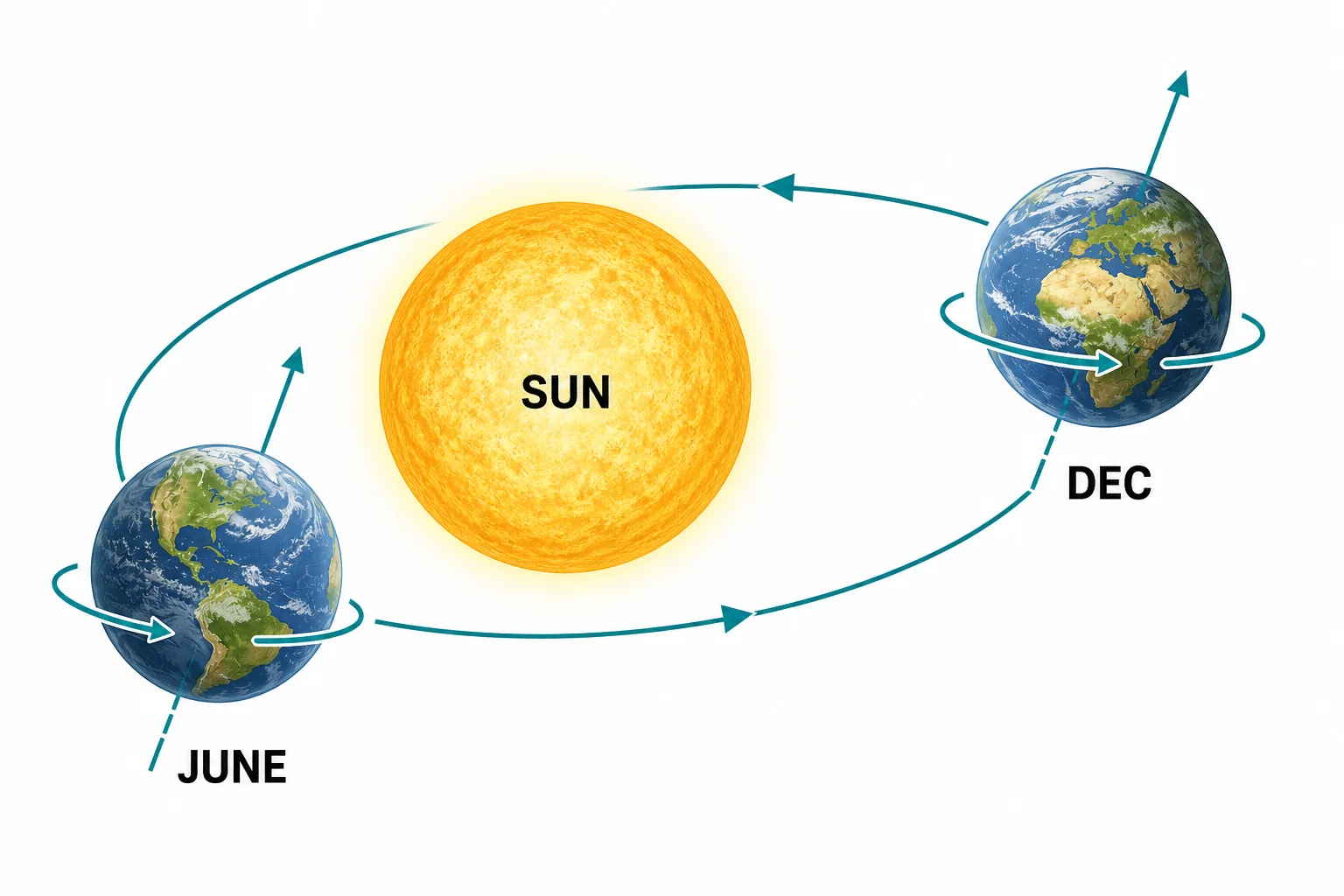
Seasons come from tilt, not from a big change in distance.
The Sun takes a longer path
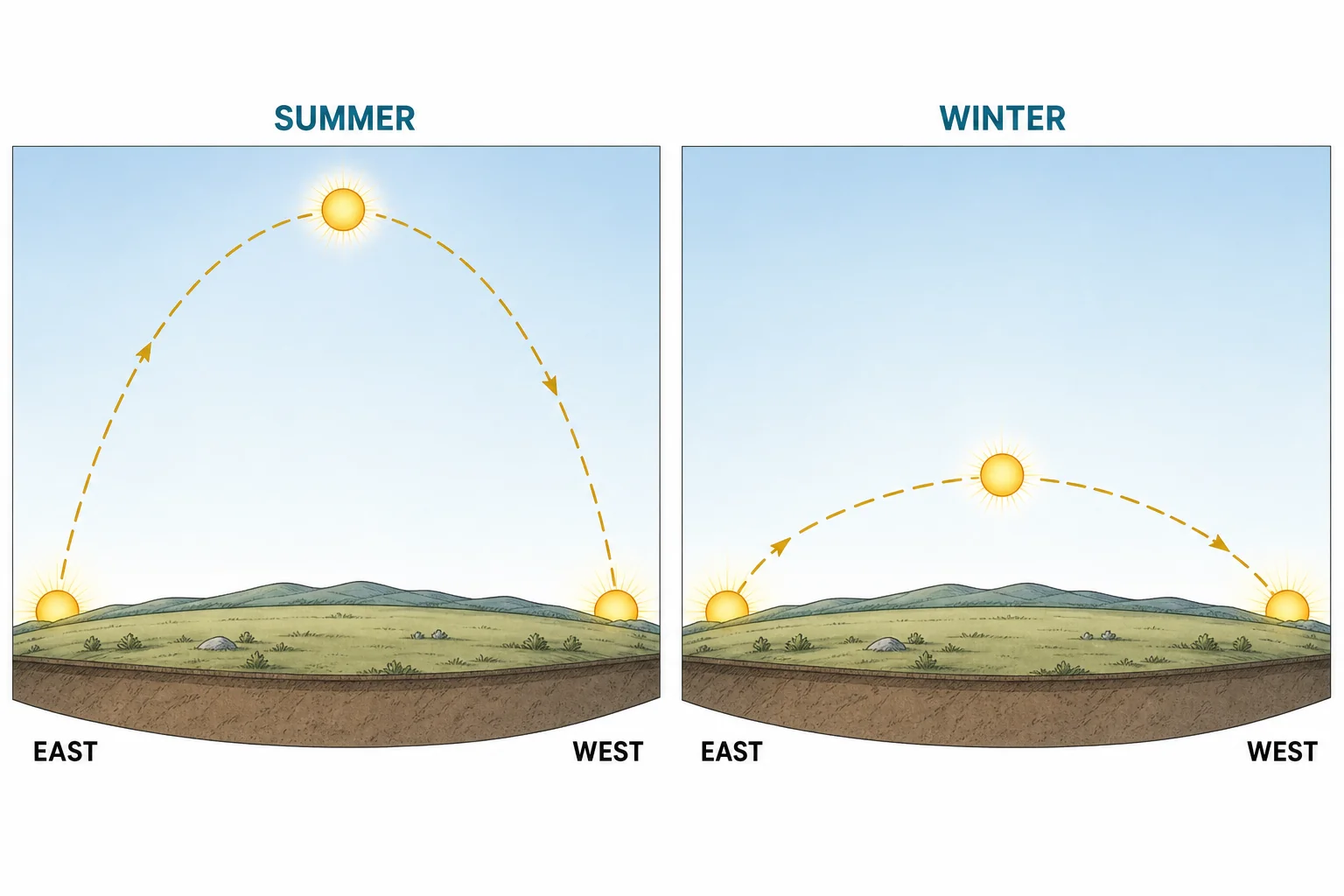
A higher daily arc keeps the Sun above the horizon longer.
Latitude changes the effect
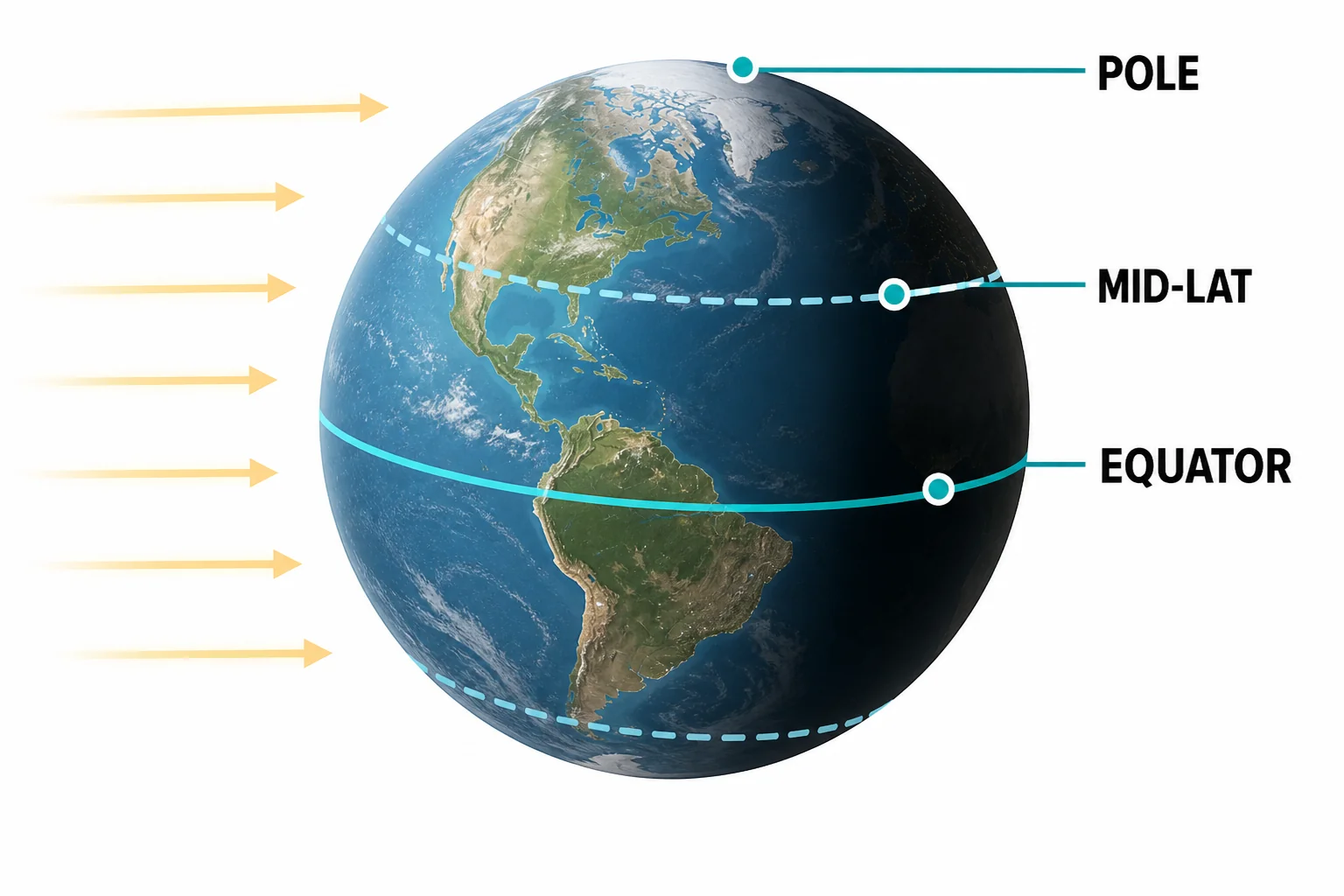
The farther from the equator, the bigger the seasonal daylight change.
Solstices mark the extremes
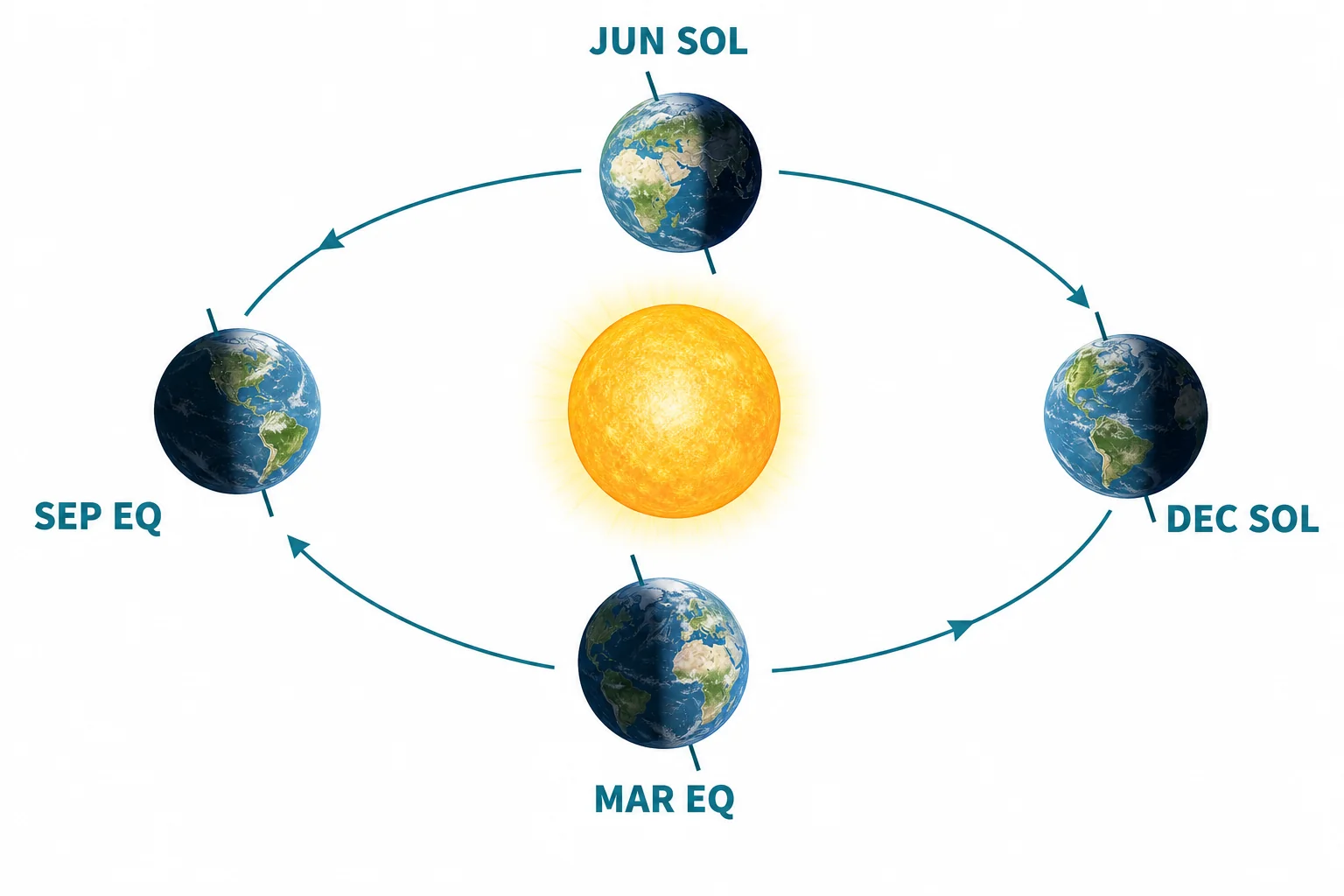
Solstices are the longest and shortest daylight days of the year.
A model makes it visible
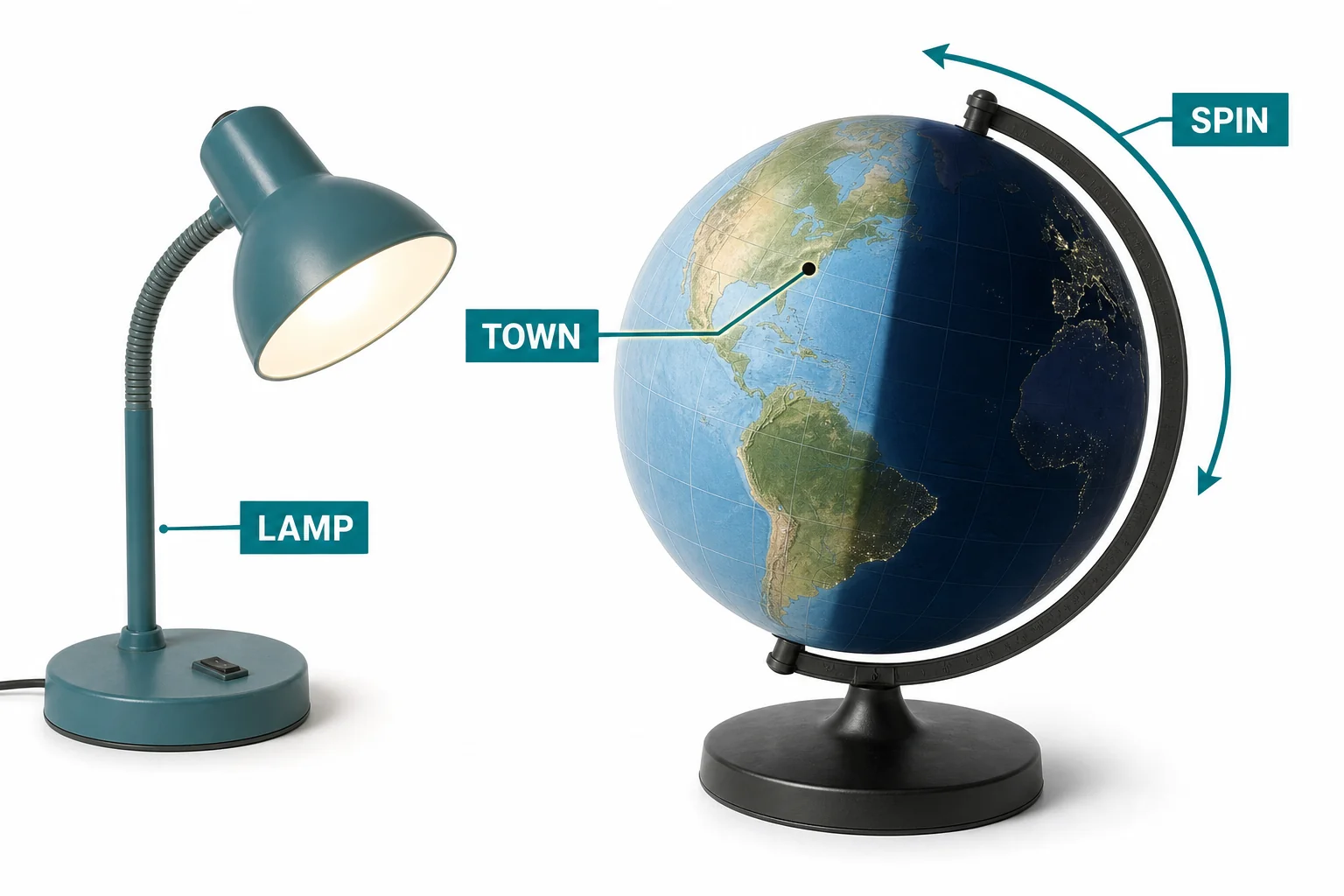
A spinning tilted globe shows why one place can have different daylight hours.
Vocabulary
- Axis
- An imaginary line through Earth from the North Pole to the South Pole that Earth spins around.
- Axial tilt
- The lean of Earth’s spin axis compared with its path around the Sun.
- Hemisphere
- One half of Earth, such as the Northern Hemisphere or Southern Hemisphere.
- Latitude
- A measure of how far north or south a place is from the equator.
- Solstice
- One of the two times each year when daylight is most extreme, with the longest or shortest day for a hemisphere.
- Equinox
- One of the two times each year when day and night are closer to equal in many places.
In the Classroom
Lamp and globe daylight model
25 minutes | Grades 6-8
Students use a lamp and a tilted globe to track how long a marked town stays in light during one rotation. They compare a tilt toward the lamp with a tilt away from the lamp.
Graph daylight by month
30 minutes | Grades 6-8
Students collect sunrise and sunset times for one city and calculate daylight hours for each month. They graph the data and identify the longest and shortest days.
Compare latitudes
20 minutes | Grades 6-8
Students compare daylight hours for three cities at different latitudes on the same dates. They explain why the city farthest from the equator changes the most.
Key Takeaways
- • Summer days are longer because your hemisphere tilts toward the Sun.
- • The Sun appears to take a higher and longer path across the sky in summer.
- • Winter days are shorter because the Sun follows a lower and shorter path.
- • Daylight changes more at higher latitudes than near the equator.
- • Solstices mark the longest and shortest daylight days of the year.