Sign in to save

Bookmark this page so you can find it later.

Sign in to save

Bookmark this page so you can find it later.

Earth Science middle-school May 24, 2026

Why Do We Have Tides?

How the Moon moves the ocean
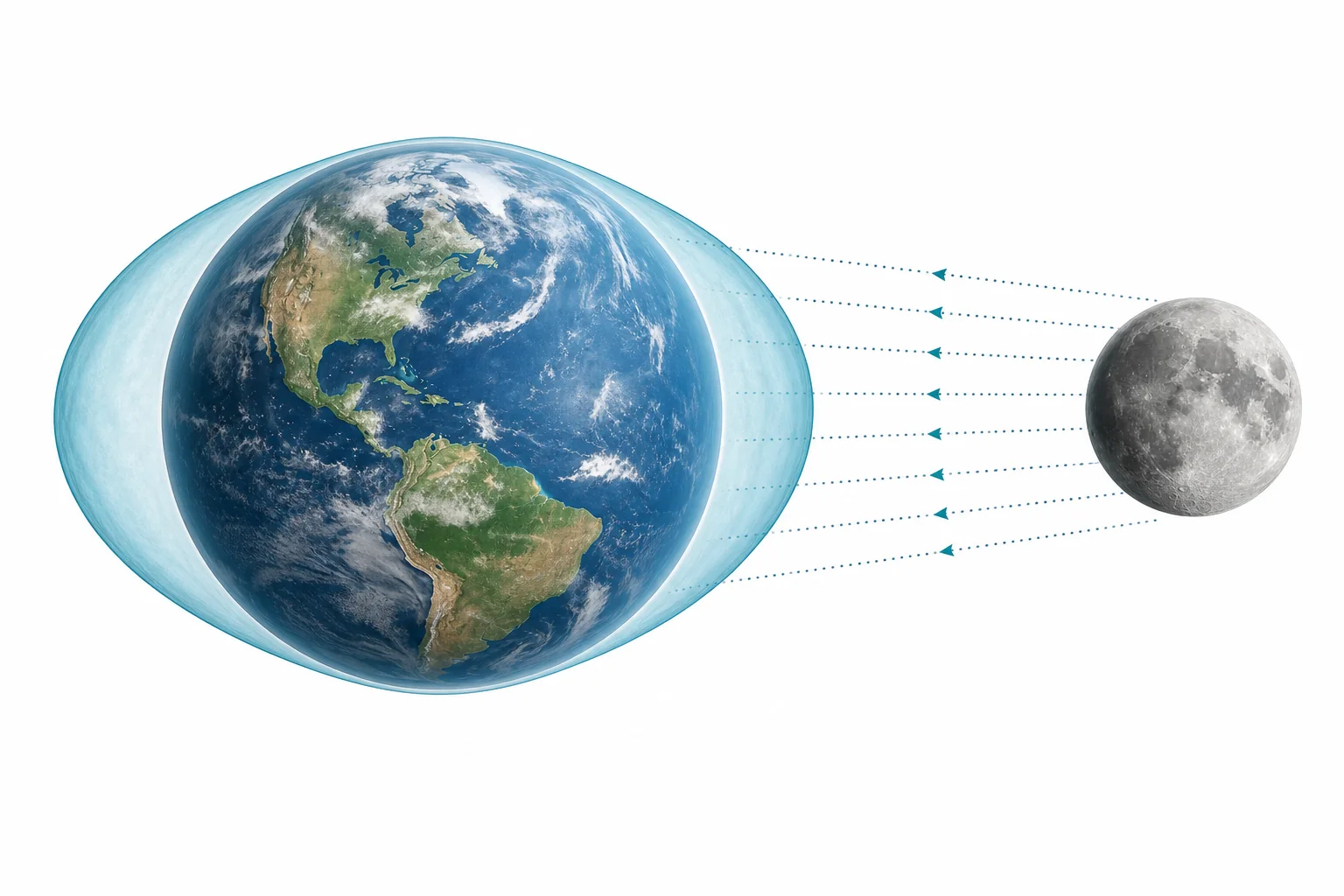
Earth, the Moon, and ocean tide bulges shown as a simple science diagram

Tides happen mostly because the Moon pulls on Earth and its oceans. That pull makes the ocean form two broad bulges, one on the side facing the Moon and one on the far side. As Earth spins through those bulges, many coasts get about two high tides and two low tides each day.

Big Idea. NGSS MS-ESS1-1 connects tides to patterns caused by the positions and motion of Earth, the Moon, and the Sun.

Tides are the daily rise and fall of ocean water along coasts. They can lift boats, uncover tide pools, and change where waves break. The main cause is gravity from the Moon. The Moon pulls on every part of Earth, but it pulls a little more strongly on the side of Earth closest to it. That uneven pull stretches the ocean into a bulge. A second bulge forms on the far side because Earth and the ocean are also moving around a shared center with the Moon. Earth keeps spinning while these bulges stay lined up mostly with the Moon. A coast moves into a bulge during high tide and away from a bulge during low tide. The Sun also affects tides, so some tides are stronger than others. This makes tides a clear example of how motion in space can create patterns on Earth.

The Moon pulls unevenly
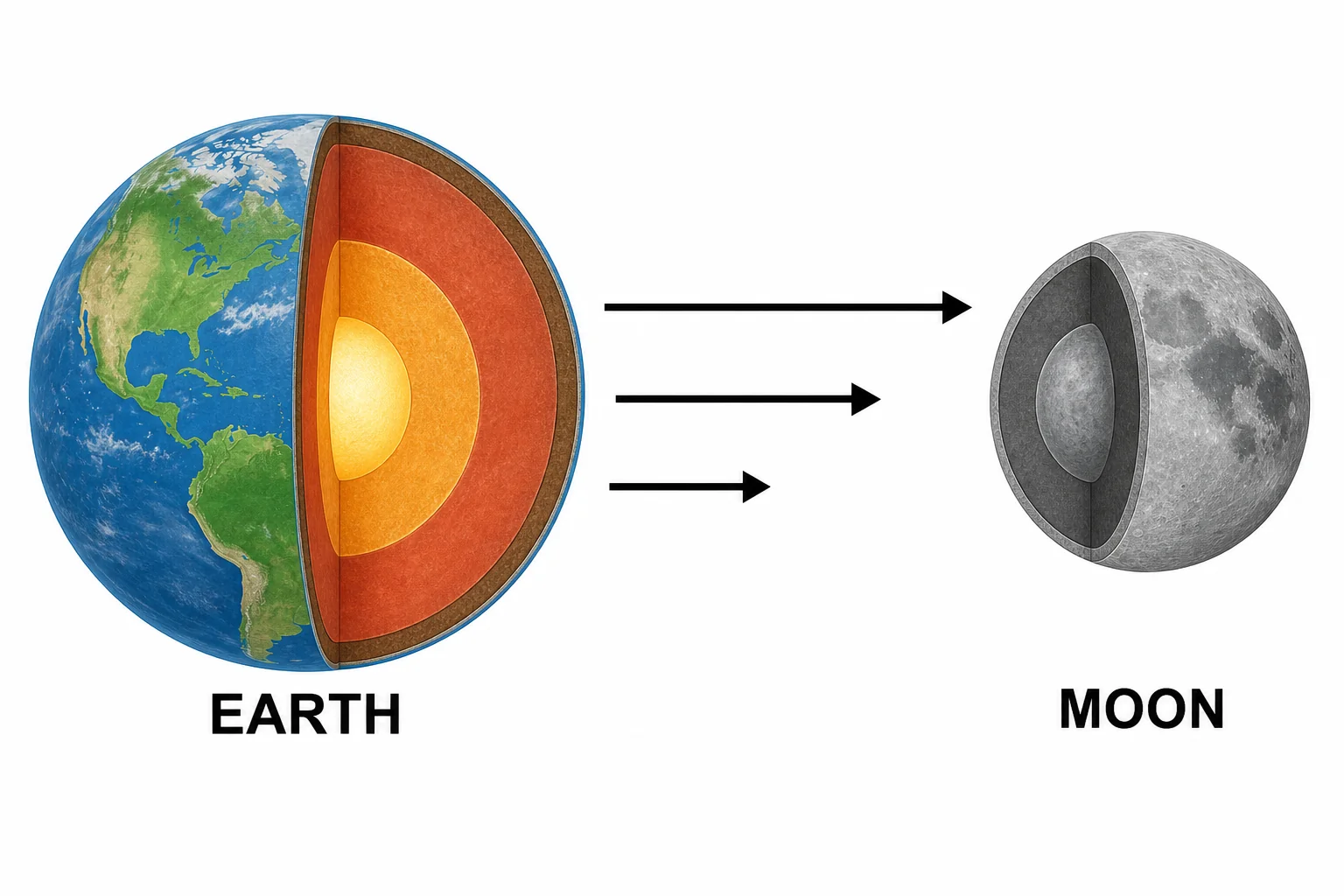
Diagram showing the Moon pulling more strongly on the near side of Earth than the far side
The Moon’s pull is stronger on the near side of Earth.
Gravity pulls objects toward each other. The Moon pulls on Earth, and Earth pulls on the Moon. The pull is not exactly the same everywhere on Earth. The side of Earth closest to the Moon feels a slightly stronger pull than the center of Earth. The far side feels a slightly weaker pull. That difference is called a tidal force. It is small compared with Earth’s own gravity, so people do not float away. But oceans can move and spread over huge distances. Even a small uneven pull can shift a lot of water. The result is not one giant wave. It is a broad raising of sea level over large areas. The Moon is the main driver because it is much closer to Earth than the Sun. Distance matters a lot for tidal forces.

Tides come from differences in the Moon’s pull across Earth.

Two bulges form
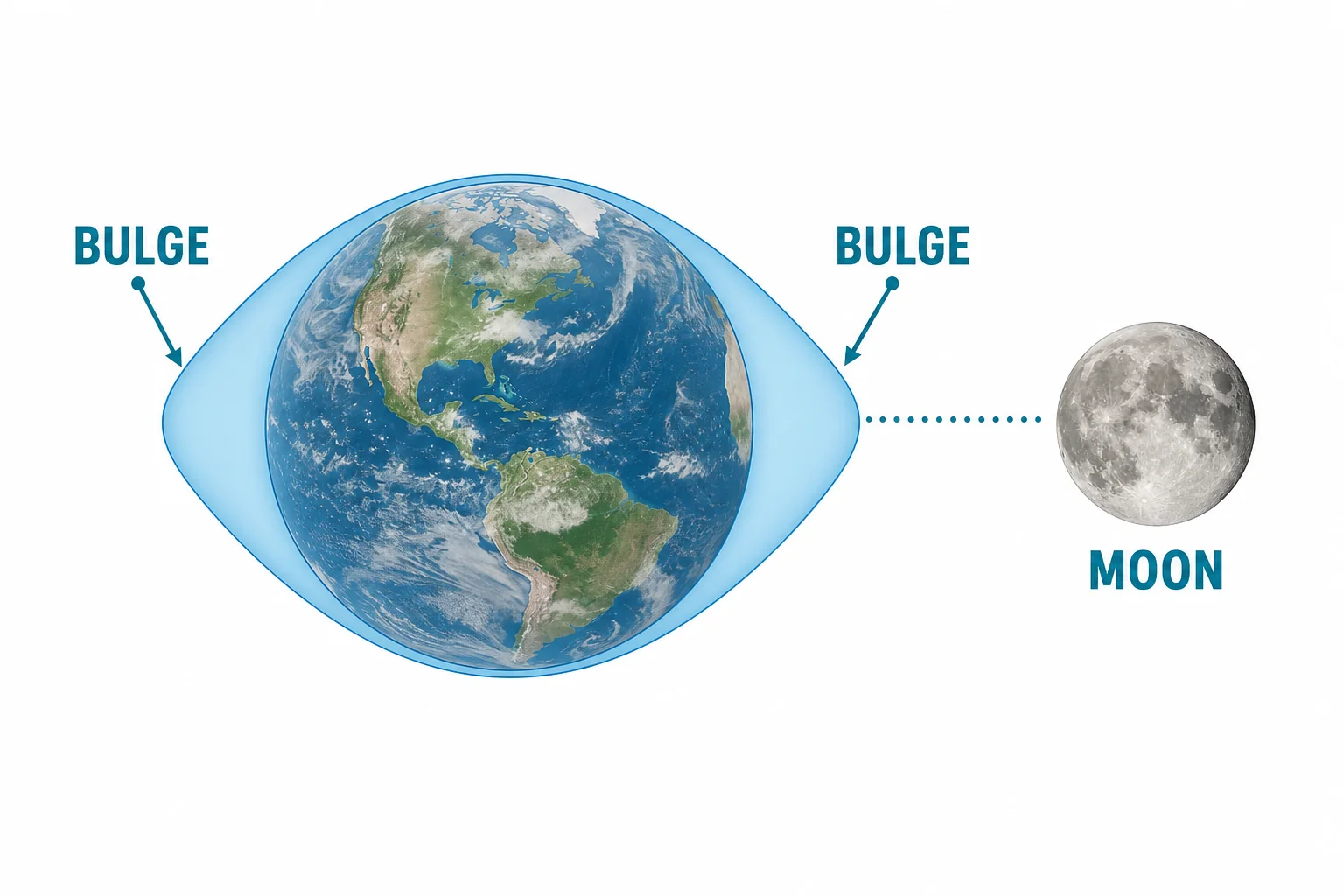
Earth with two ocean bulges, one facing the Moon and one on the opposite side
Two tide bulges line up roughly with the Moon.
A common mistake is to picture only one high tide, on the side of Earth facing the Moon. Real tides involve two broad bulges. One bulge forms on the side facing the Moon because that ocean water is pulled a bit more strongly. The other bulge forms on the side away from the Moon because that water is pulled a bit less strongly than Earth’s center. Earth and the Moon also move together around a shared balance point. That motion helps explain why the far-side water is left in a bulge relative to Earth. The ocean does not become a perfect oval, because continents block water and ocean basins have their own shapes. Still, the two-bulge model explains the main pattern. Most places pass through two high-water regions during each rotation of Earth.

High tide can happen on the side facing the Moon and on the far side.

Earth spins through the bulges
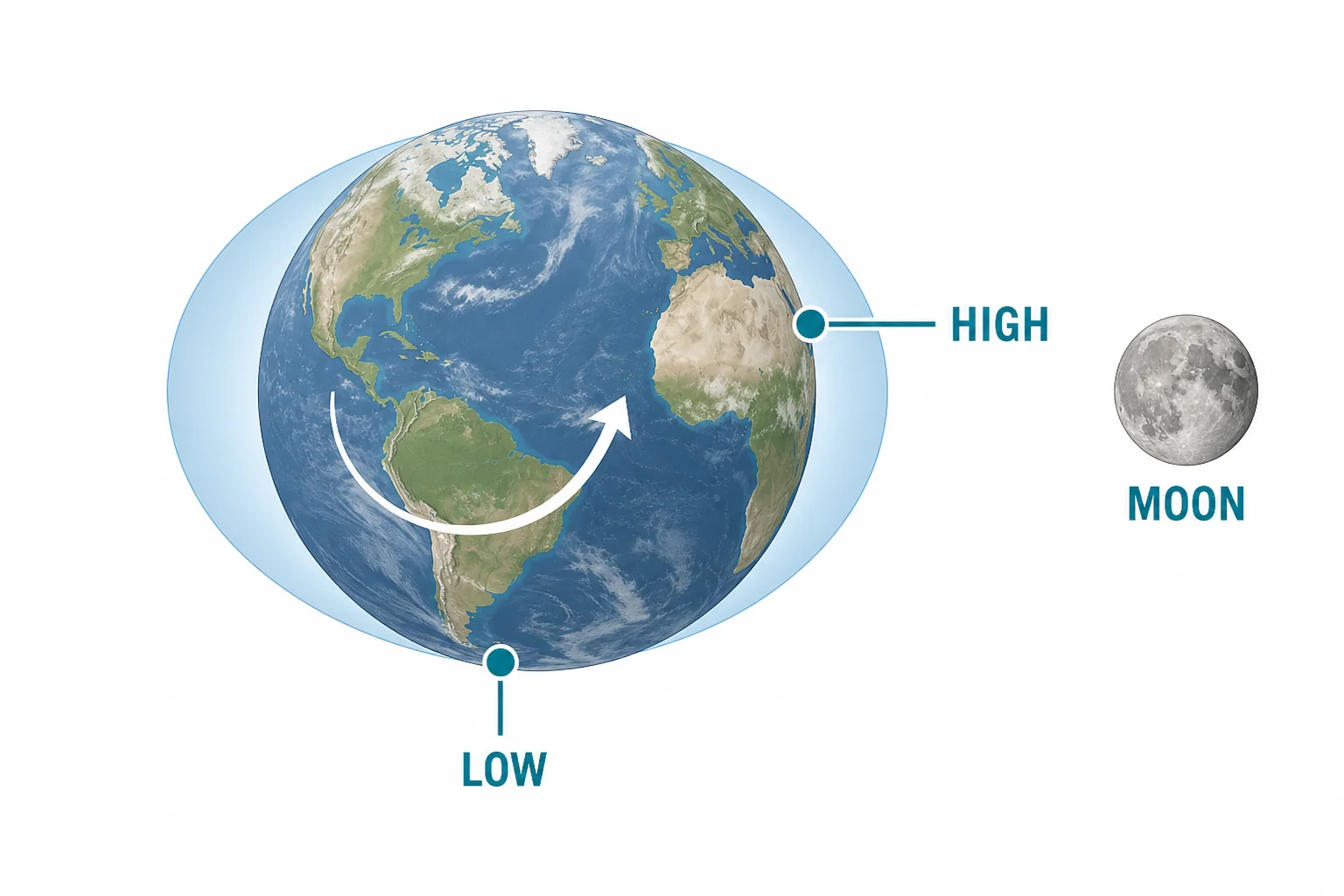
Earth rotating through two tide bulges, showing a coast passing high and low tide positions
Rotation carries coasts through high and low tide zones.
The tide bulges stay lined up mostly with the Moon, while Earth rotates once about every 24 hours. A coast on Earth moves into one bulge, then out of it, then into the other bulge. That is why many places have two high tides and two low tides in a day. The timing is not exactly 24 hours. The Moon moves along its orbit while Earth spins, so Earth has to turn a little extra for the same coast to face the Moon again. A full tidal day is about 24 hours and 50 minutes. That makes high tide happen about 50 minutes later each day in many locations. Local coastlines can change the exact pattern. Some places have one high tide each day, and some have uneven high tides.

Two high tides per day happen because Earth rotates through two bulges.

The Sun changes the strength
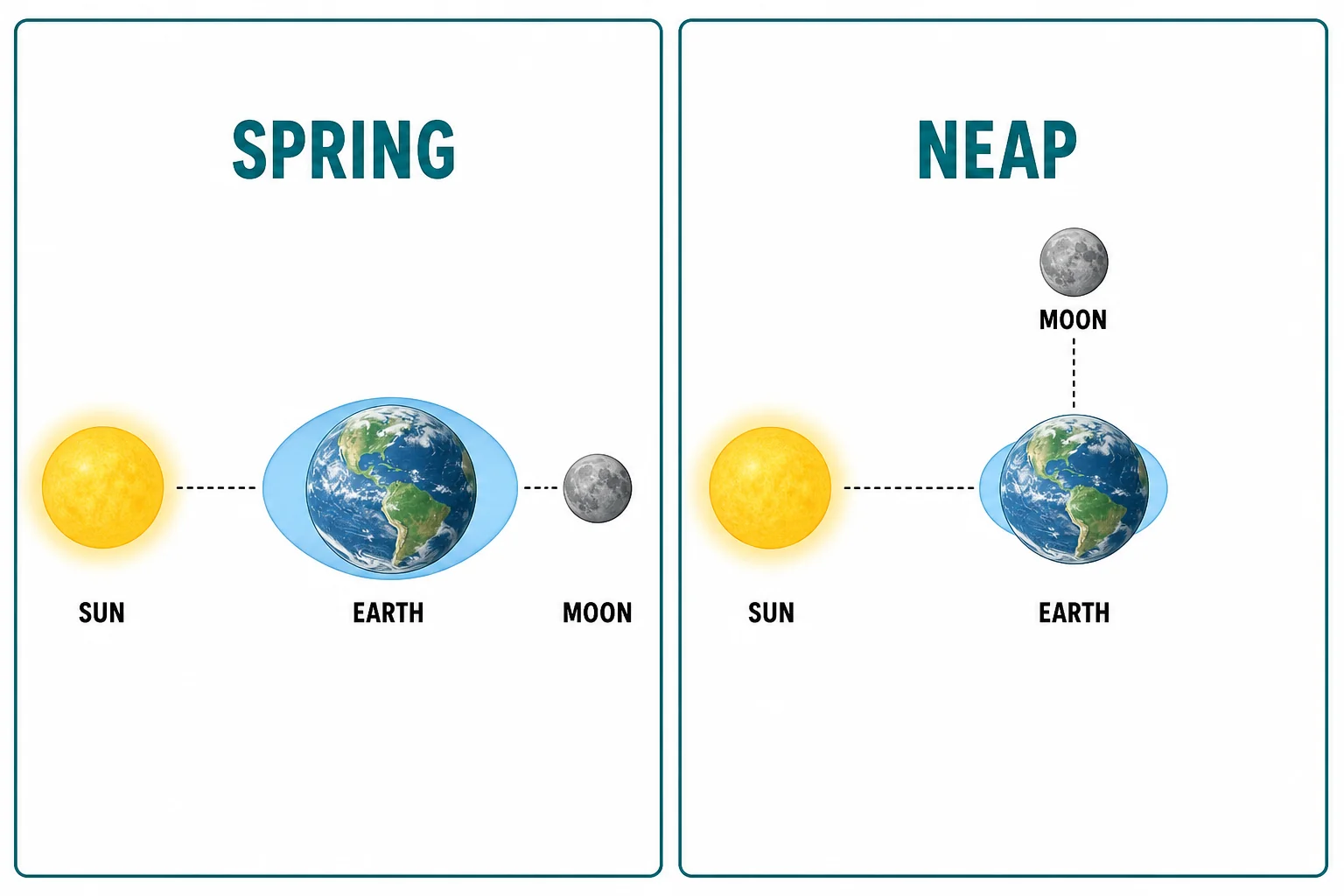
Comparison of spring tide alignment and neap tide right-angle positions of the Sun, Earth, and Moon
Alignment makes spring tides. Right angles make neap tides.
The Sun also pulls on Earth’s oceans. Its tidal effect is weaker than the Moon’s because the Sun is much farther away, even though the Sun has much more mass. When the Sun, Moon, and Earth line up, their tidal effects add together. These are spring tides. The name does not mean the season of spring. It means the water springs higher and lower than usual. Spring tides happen near new moon and full moon. When the Sun and Moon pull at right angles, their tidal effects partly cancel. These are neap tides. Neap tides have a smaller difference between high tide and low tide. They happen near first quarter and third quarter moon phases. The repeating moon phases help predict the repeating tide strengths.

Spring tides are stronger. Neap tides are weaker.

Coasts shape the local tide
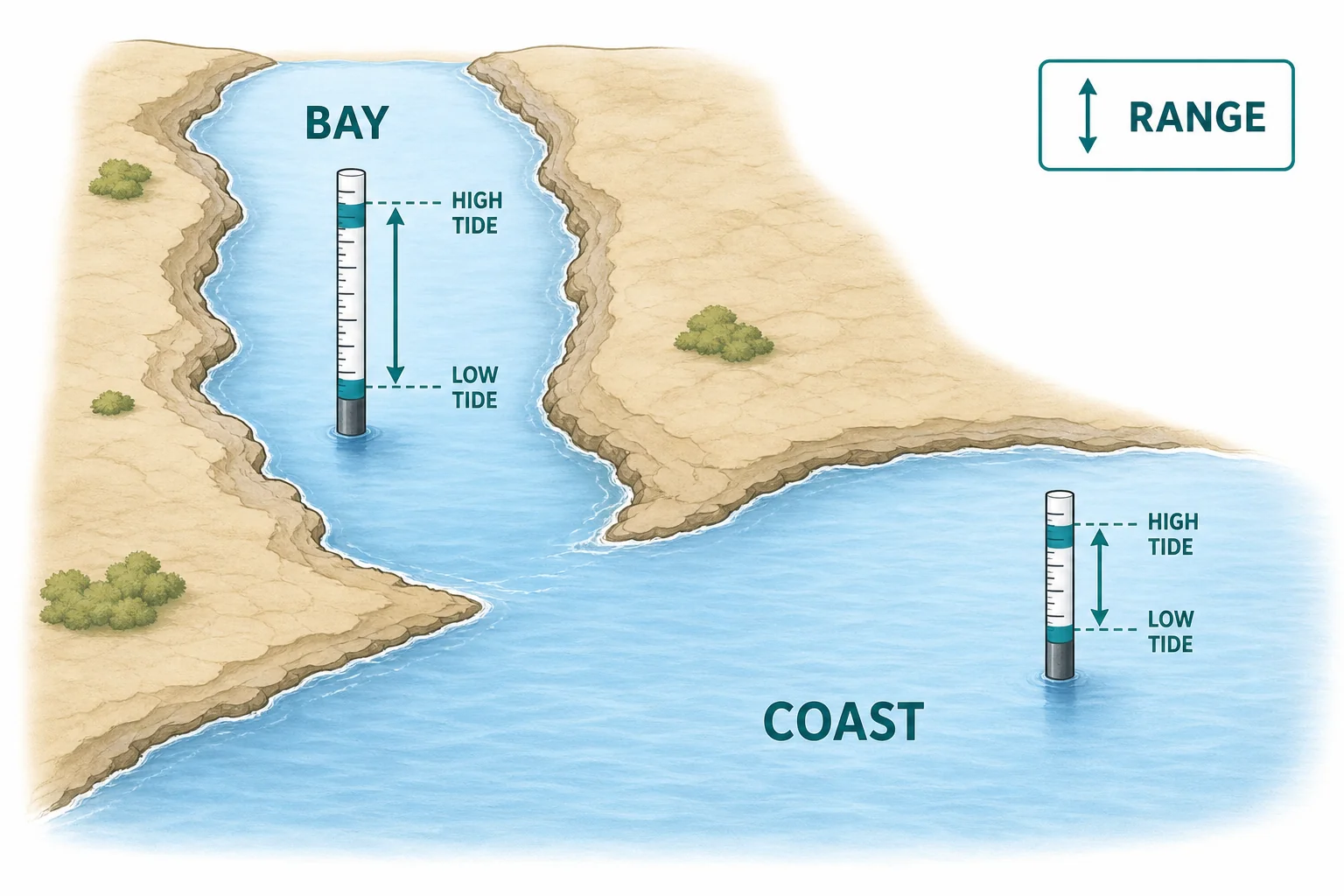
Coastal map showing how a narrow bay can have a larger tidal range than an open coast
Local coastline shape changes the size and timing of tides.
The simple Earth and Moon model explains the main cause of tides, but it does not predict every beach perfectly. Real oceans have continents, islands, shallow shelves, deep basins, bays, and narrow channels. These shapes can slow water, steer it, or pile it up. A funnel-shaped bay can have a very large tidal range because water is squeezed into a smaller space. An open coast may have a smaller range. Weather can also change water level. Strong winds can push water toward shore, and low air pressure can let sea level rise a little. Tide tables use measurements and models to account for these details. The Moon sets the main rhythm, but local geography controls the final pattern seen at a dock or beach.

The Moon starts the tide pattern, but local coast shape modifies it.

Vocabulary

Tide
The regular rise and fall of ocean water along a coast.
Gravity
The force of attraction between objects with mass.
Tidal force
The uneven pull of gravity across Earth that stretches the ocean into bulges.
Spring tide
A stronger tide that happens when the Sun, Moon, and Earth are lined up.
Neap tide
A weaker tide that happens when the Sun and Moon pull from directions that are about 90 degrees apart.
Tidal range
The difference in water level between high tide and low tide.

In the Classroom

Model two tide bulges

20 minutes | Grades 6-8

Students draw Earth, the Moon, and two ocean bulges on paper. They rotate a marked coastline around Earth and record when it passes through high and low tide regions.

Compare spring and neap tides

25 minutes | Grades 6-8

Students use balls or paper circles to arrange the Sun, Earth, and Moon for new moon, full moon, and quarter moon positions. They identify when pulls add and when they partly cancel.

Read a tide table

30 minutes | Grades 6-8

Students examine a real tide table for a nearby or assigned coast. They find the time between high tides and look for the daily shift in tide times.

Key Takeaways

  • Tides are caused mostly by the Moon’s gravity pulling unevenly across Earth.
  • Two broad ocean bulges form, one toward the Moon and one away from it.
  • Earth’s rotation carries coasts through the bulges, creating about two high tides per day in many places.
  • The Sun changes tide strength, making spring tides and neap tides during different moon phases.
  • Local coastline shape, ocean depth, and weather affect the exact tide at a beach or harbor.