Practice explaining ocean currents, tides, and the steps of the water cycle with clear scientific reasoning.
Read each problem carefully. Answer in complete sentences and use science vocabulary when it helps explain your thinking.
How water moves through oceans and the atmosphere
Earth Science - Grade 6-8
- 1
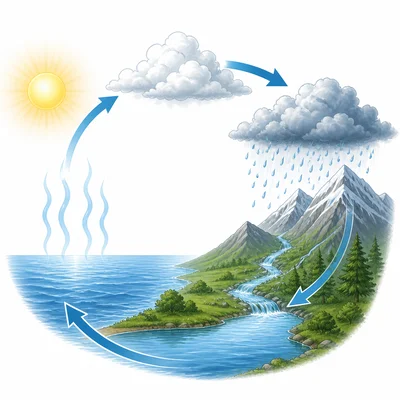
Name the four main stages of the water cycle and briefly describe what happens in each stage.
- 2
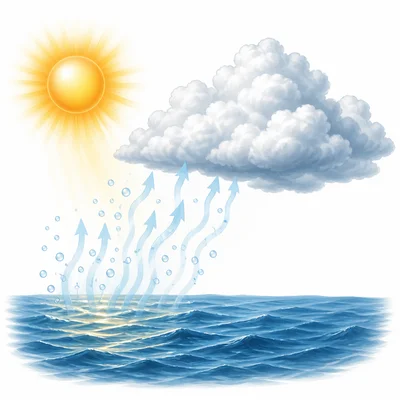
Explain how the Sun helps drive the water cycle.
- 3
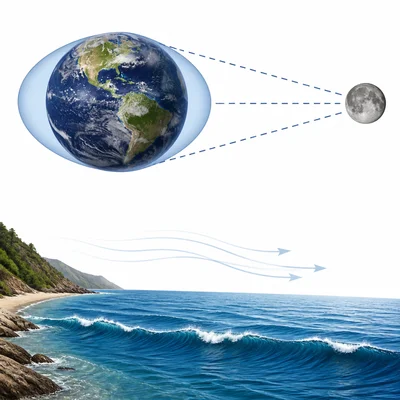
A student says that tides are caused by ocean winds. Explain why this statement is incorrect.
- 4
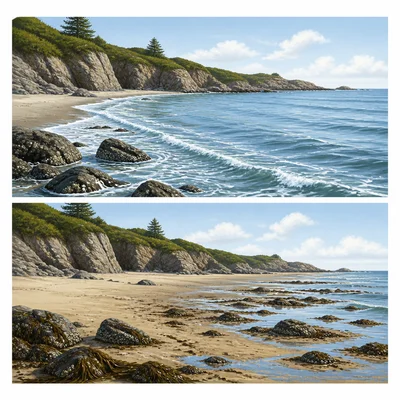
Describe the difference between high tide and low tide.
- 5
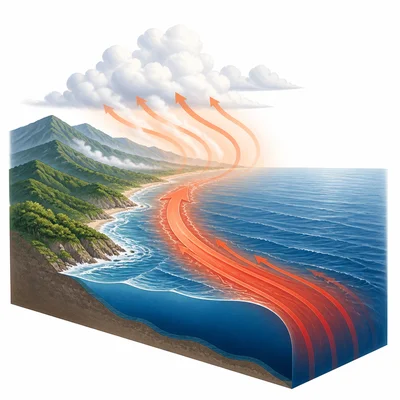
What is an ocean current, and how does it affect climate in coastal areas?
- 6
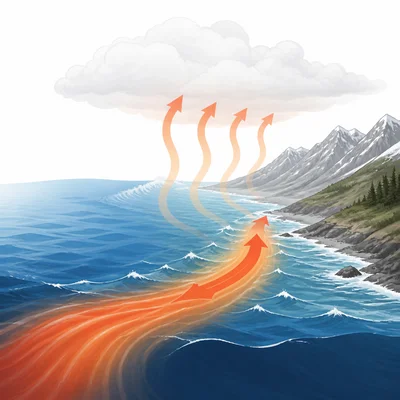
Warm water from the tropics moves toward a cooler coastline. Predict one effect this current could have on the local climate and explain your reasoning.
- 7
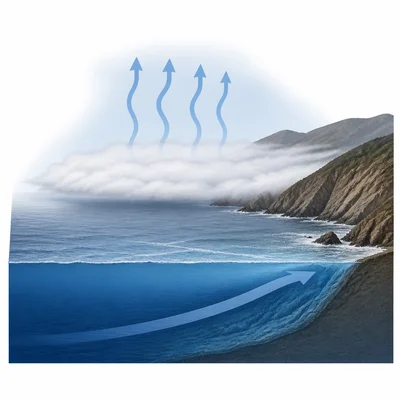
Cold ocean currents often move toward the equator. Explain how a cold current can affect the air above it.
- 8
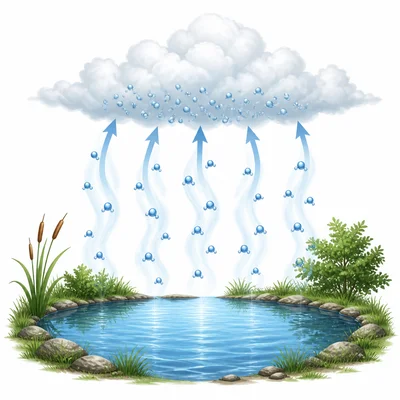
Describe how evaporation and condensation are opposite processes.
- 9
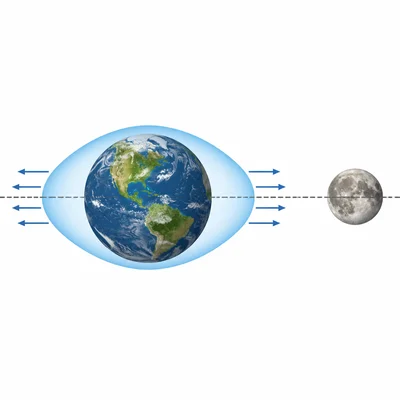
Why are there usually two high tides and two low tides each day in many coastal areas?
- 10
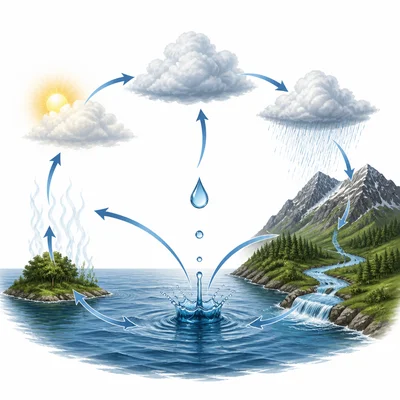
A drop of water falls as rain into a river and later reaches the ocean. Describe two different paths it could take next in the water cycle.
- 11
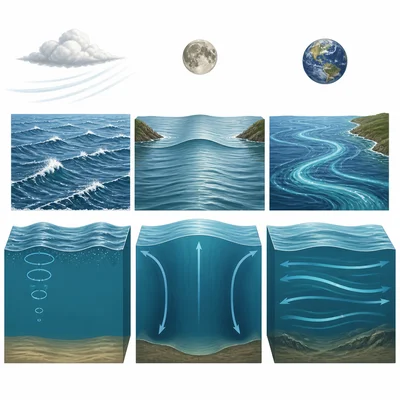
Compare waves, tides, and ocean currents by explaining one main cause of each.
- 12
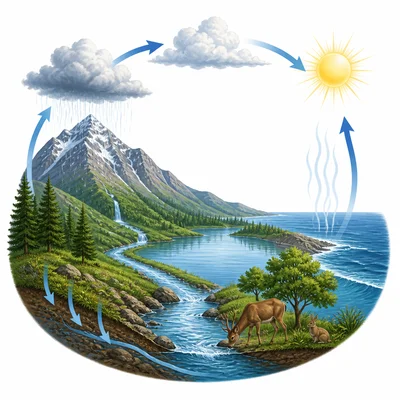
Explain why the water cycle is important for life on Earth.