Sign in to save

Bookmark this page so you can find it later.

Sign in to save

Bookmark this page so you can find it later.

Health high-school May 24, 2026

Why Does Stress Make Your Heart Race?

How the body turns alarm into action
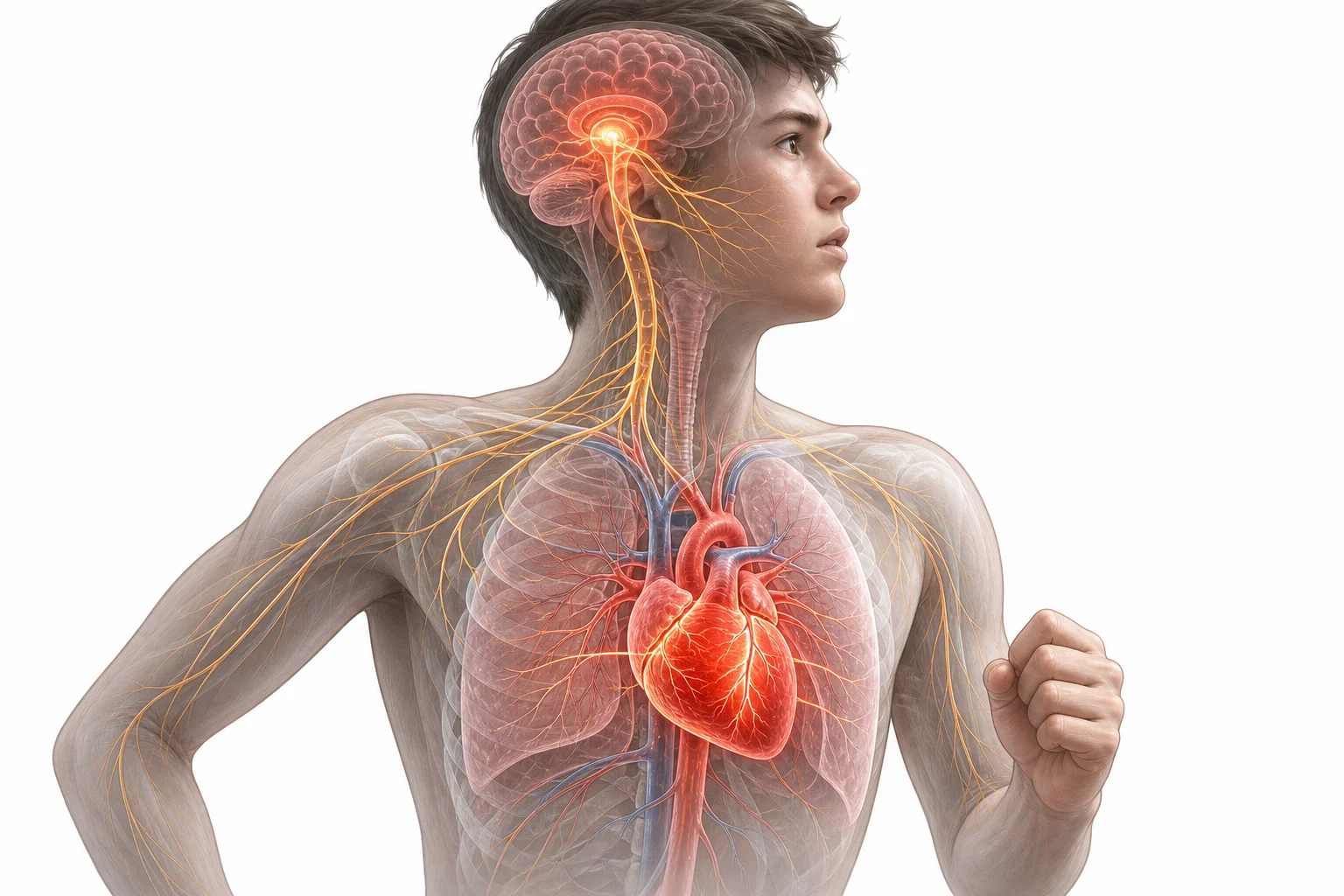
Diagram of a teenager experiencing stress, with the brain, adrenal glands, heart, and blood vessels highlighted to show the body response.

Stress makes your heart race because your brain thinks your body may need quick action. It sends signals that release chemicals, which make the heart beat faster and push more blood to muscles. This can help in short bursts, but staying in that state too often can strain the body.

Big Idea. NGSS HS-LS1-3 connects this question to how body systems interact to maintain internal balance.

A racing heart before a test, game, speech, or hard conversation is not random. It is part of a body system that evolved to help humans react fast. When the brain senses a threat, it starts a chain reaction involving nerves, hormones, the heart, lungs, and blood vessels. This response can sharpen attention and send more oxygen-rich blood to muscles. That can be useful during a real emergency. It can feel uncomfortable when the threat is a deadline or social pressure instead of danger. Stress also changes breathing, sweating, digestion, and sleep. The same short-term response that helps you act can become harmful when it stays turned on for days or weeks. Learning what is happening inside the body can make stress feel less mysterious. It also helps explain why tools such as the Stress Management Techniques cheat sheet focus on breathing, movement, sleep, and planning.

The alarm starts in the brain
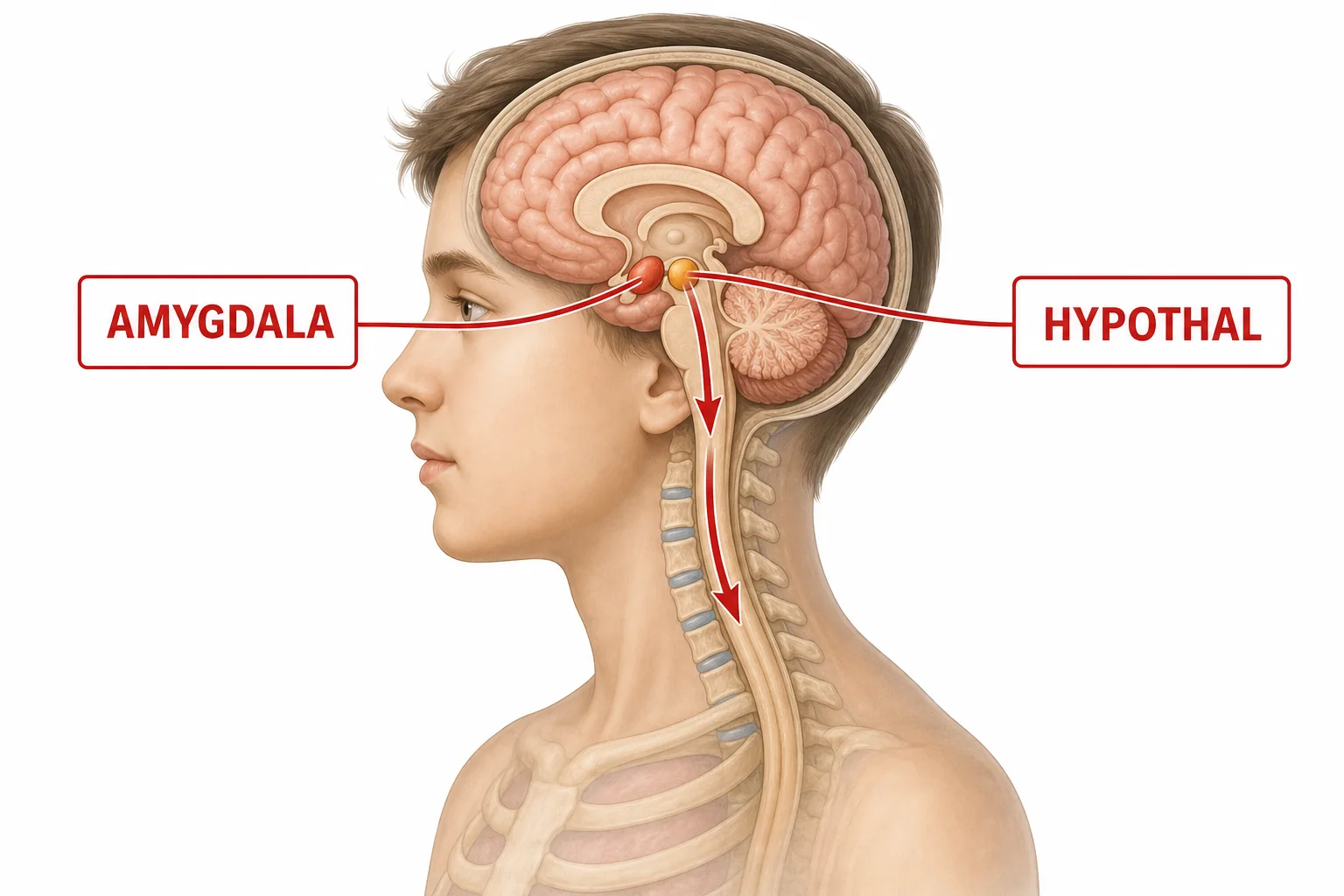
Brain diagram showing the amygdala and hypothalamus sending stress signals toward the body.
Stress signals begin in brain control centers
The stress response begins when the brain decides that something matters or might be unsafe. The amygdala helps detect threat and strong emotion. It sends signals to the hypothalamus, a small control area that links the nervous system with hormone signals. The hypothalamus can turn on the sympathetic nervous system within seconds. This fast pathway travels through nerves to organs such as the heart, lungs, and adrenal glands. The result is a body-wide preparation for action. Heart rate rises. Breathing can become faster. Blood vessels adjust so more blood can reach large muscles. Digestion slows because it is not the top priority during a possible emergency. This system does not always tell the difference between physical danger and mental pressure. A math test, argument, or scary thought can activate many of the same pathways.

Stress starts as a brain signal, then becomes a whole-body response.

Nerves speed up the heart
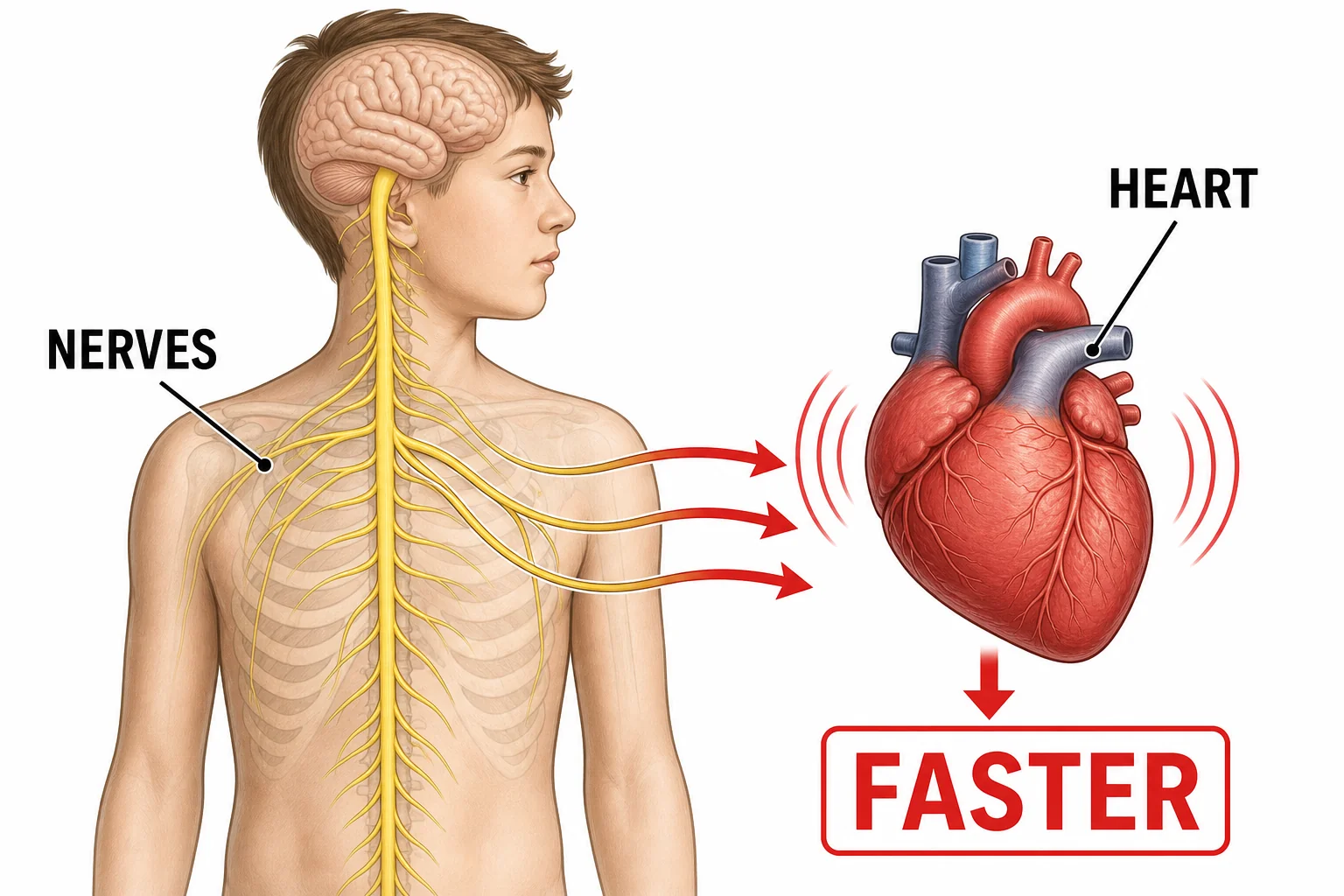
Diagram of sympathetic nerve signals traveling from the spinal cord to the heart and increasing heartbeat.
Nerve signals can raise heart rate within seconds
The sympathetic nervous system is the fast branch of the body’s automatic control system. It works without conscious effort. When it turns on, nerve signals reach the heart and tell it to beat faster and harder. This increases cardiac output, which means more blood leaves the heart each minute. The blood carries oxygen and glucose to tissues that may need quick energy. At the same time, some blood vessels narrow and others widen. This helps redirect blood toward skeletal muscles and away from areas that can wait, such as parts of the digestive system. The feeling of a pounding heart comes from these rapid changes. The body is not trying to scare you. It is trying to prepare you. The problem is that modern stress often asks for calm focus, not sprinting or fighting.

The heartbeat changes fast because nerves can signal organs in seconds.

Adrenaline adds power
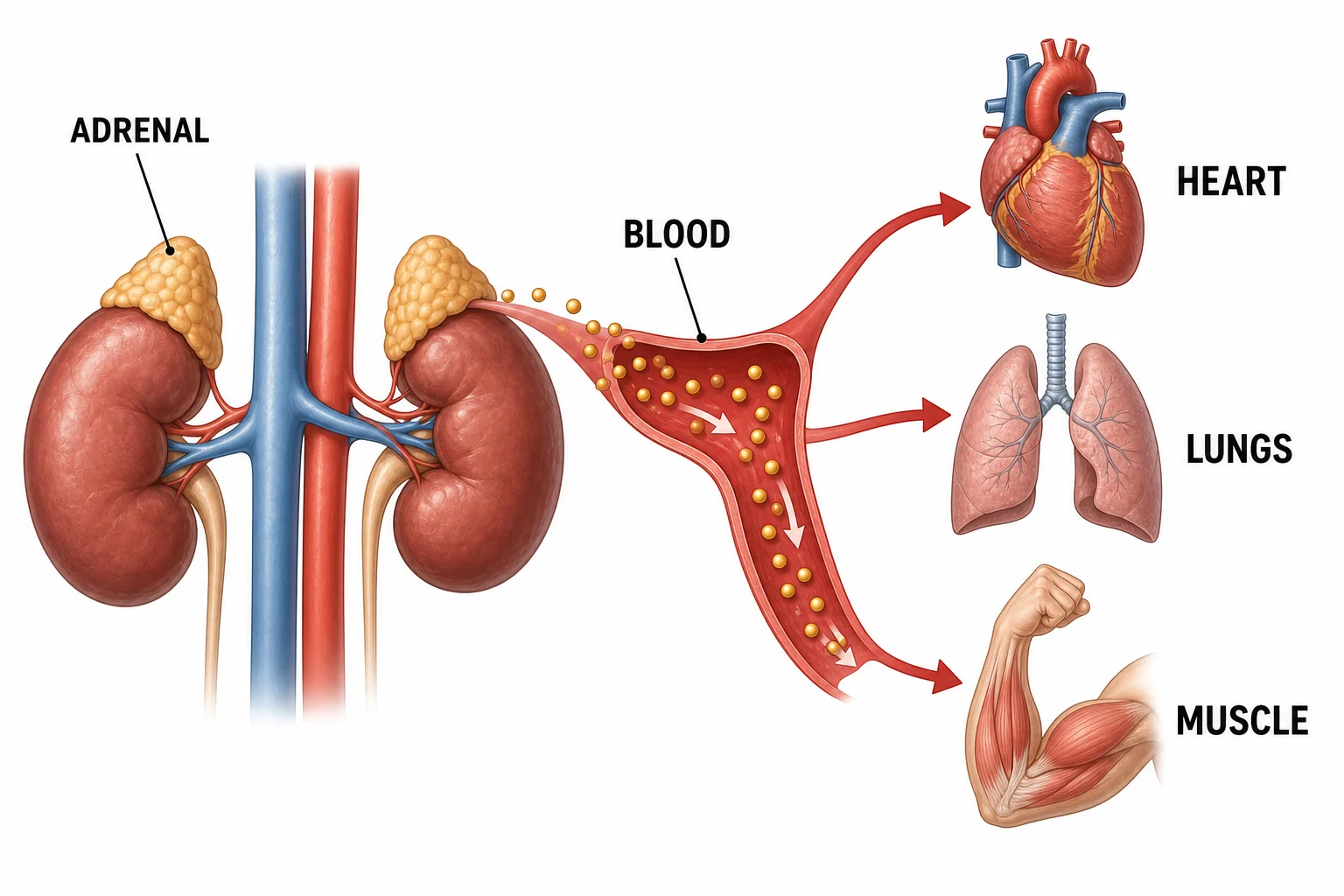
Adrenal glands releasing adrenaline into blood, with arrows showing effects on the heart, lungs, and muscles.
Adrenaline spreads the stress message through blood
The adrenal glands sit on top of the kidneys. During acute stress, sympathetic nerves tell the adrenal medulla to release adrenaline into the bloodstream. Adrenaline is a hormone, so it travels through blood to many organs. At the heart, it helps increase heart rate and force of contraction. In the lungs, it can help open airways. In the liver and muscles, it supports the release of stored fuel. These changes make sense for a short burst of action. They also explain common stress feelings such as shaky hands, a dry mouth, and a fluttery chest. Adrenaline does not last forever. After the stressor passes, the body breaks it down and returns toward baseline. Slow breathing can help because it sends signals through another automatic pathway, the parasympathetic system, that supports recovery.

Adrenaline helps coordinate many organs at once.

Cortisol keeps fuel available
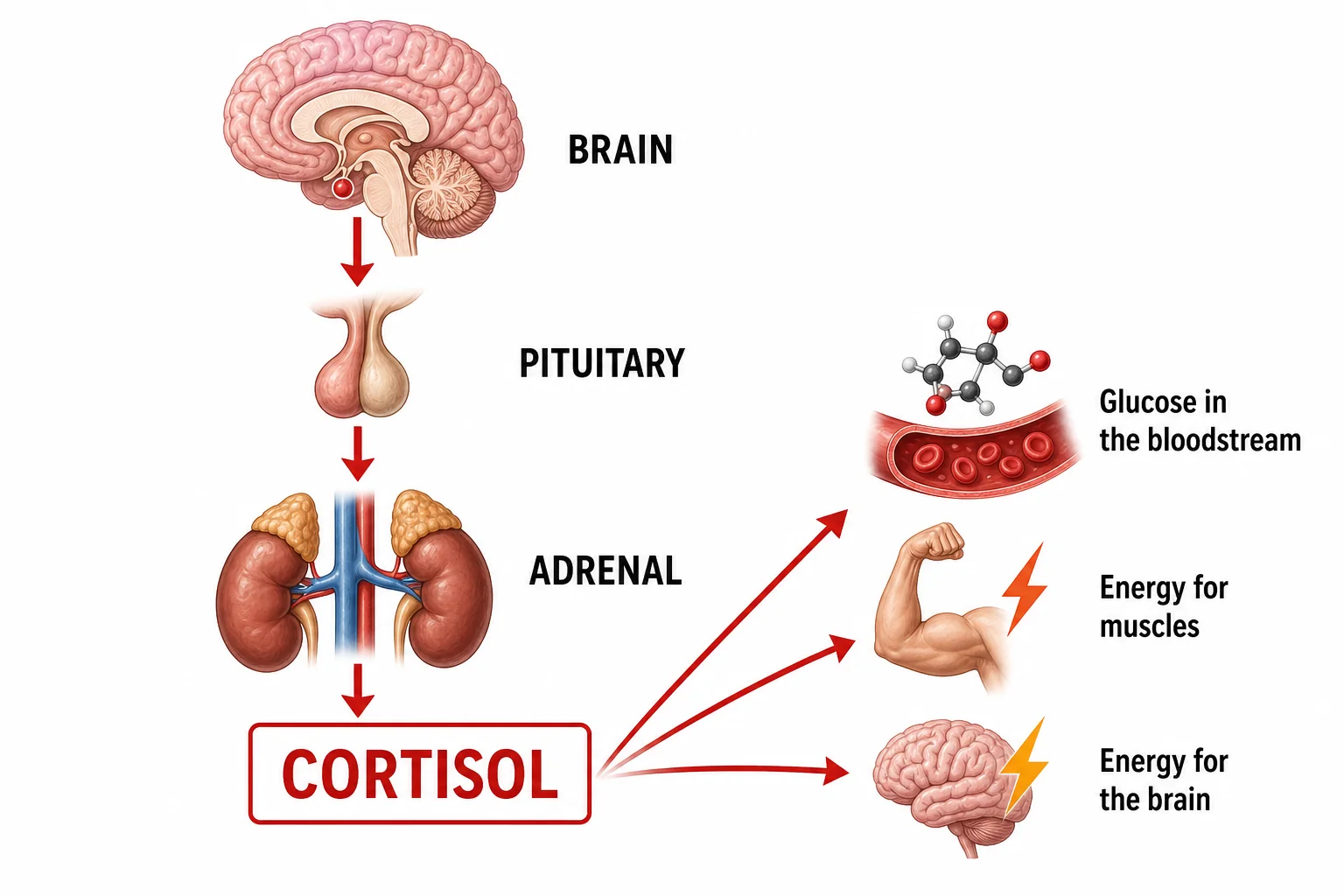
Hormone pathway from hypothalamus to pituitary to adrenal cortex, ending with cortisol effects on fuel availability.
Cortisol is part of the slower stress pathway
A second stress pathway works more slowly. The hypothalamus signals the pituitary gland, which signals the adrenal cortex. This pathway leads to the release of cortisol. Cortisol helps keep blood glucose available and affects inflammation, memory, and daily energy rhythms. In a short-term challenge, cortisol can support survival by helping the body maintain fuel. It rises more slowly than adrenaline and can stay elevated longer. That timing matters. A short stress response can end when the challenge ends. A long stress response can keep the body in a high-alert state. Over time, high cortisol patterns are linked with sleep problems, changes in appetite, higher blood pressure, and weaker immune function. Cortisol is not bad by itself. The issue is balance, timing, and how often the system is activated.

Cortisol helps during short stress, but timing matters.

Recovery protects the body
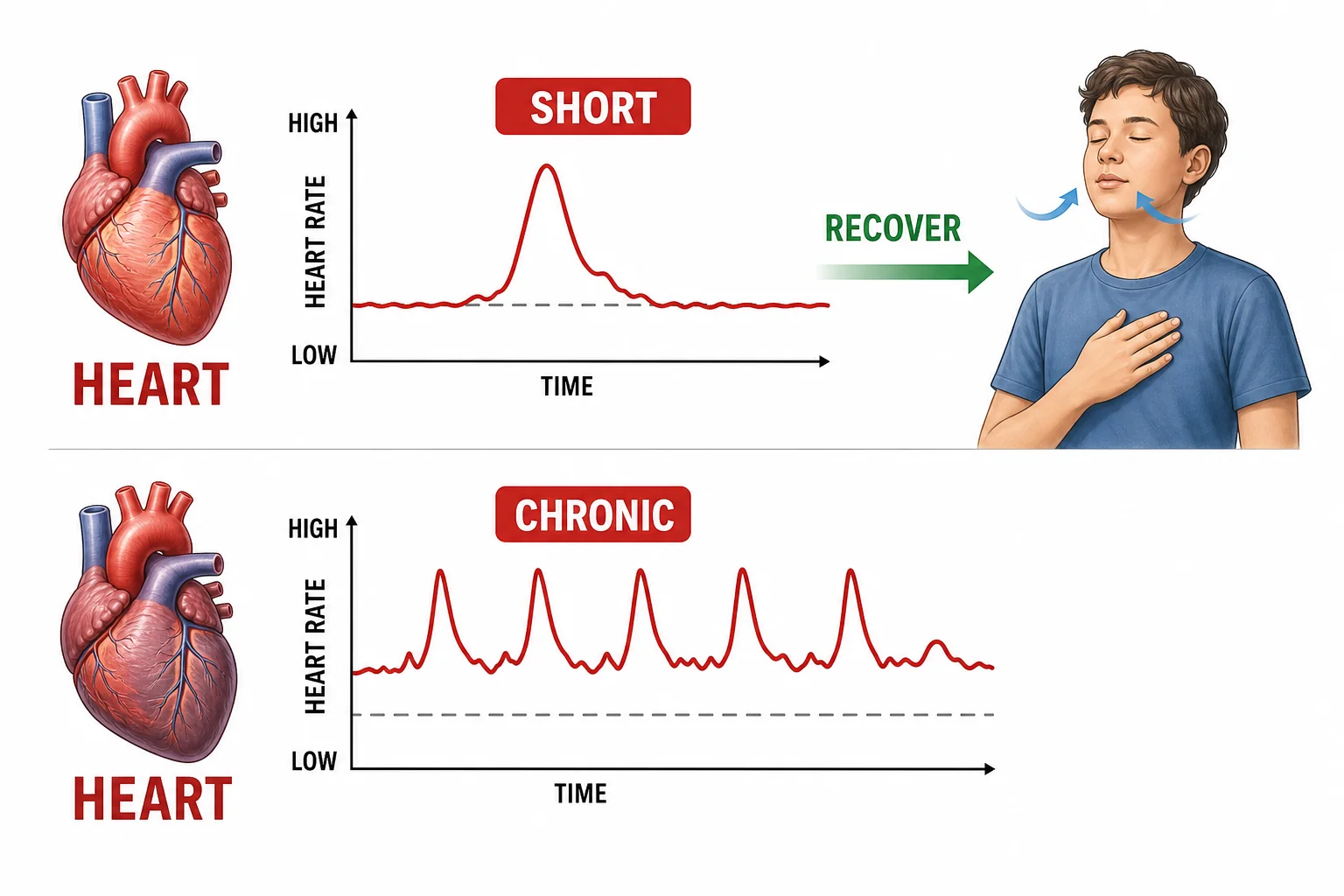
Comparison of short stress and chronic stress, showing recovery after a brief spike versus repeated high-alert signals.
Short stress can recover, repeated stress can add strain
The fight-or-flight response likely helped ancestors survive sudden danger. It is useful when quick movement or sharp attention is needed. Modern stress can be different because it often repeats and lasts. A person may sit still while the body prepares for action. Homework, work shifts, family problems, money pressure, and online conflict can keep stress systems active. Chronic stress can increase wear on the cardiovascular system because the heart and blood vessels face repeated pressure. It can also affect sleep, mood, digestion, and immune responses. Recovery is part of the biology. Exercise, sleep, steady meals, social support, planning, and breathing practice can help the body shift out of high alert. These tools do not erase every stressor. They help the nervous and hormone systems return closer to balance.

Recovery time is what keeps a useful response from becoming harmful.

Vocabulary

Sympathetic nervous system
The fast automatic control pathway that prepares the body for action during stress.
Adrenaline
A hormone released during acute stress that helps raise heart rate, open airways, and move fuel.
Cortisol
A slower stress hormone that helps manage fuel use, inflammation, and longer stress responses.
Fight-or-flight response
A body response that prepares a person to face danger, escape it, or react quickly.
Homeostasis
The process of keeping internal body conditions within a healthy range.

In the Classroom

Pulse and recovery lab

25 minutes | Grades 9-12

Students measure resting pulse, then measure pulse after light activity such as step-ups or marching in place. They graph how heart rate changes during recovery and discuss why stress can create some similar body signals.

Stress pathway model

30 minutes | Grades 9-12

Small groups build a flow model using cards for brain regions, nerves, hormones, and organs. They arrange the cards to show which signals act fast and which signals act more slowly.

Short-term versus chronic stress discussion

20 minutes | Grades 9-12

Students compare brief stress examples with repeated stress examples and identify possible effects on body systems. They connect the examples to homeostasis and propose recovery habits supported by biology.

Key Takeaways

  • Stress can make the heart race because the brain turns on fast body-control pathways.
  • The sympathetic nervous system sends quick nerve signals that raise heart rate.
  • Adrenaline spreads the stress signal through the blood and affects many organs.
  • Cortisol supports longer stress responses by helping manage fuel and other body processes.
  • Chronic stress can strain the heart and other systems when recovery does not happen often enough.